
 Worksheets
Course Review Quiz (ED810)
Total questions: 12
Worksheet time: 8mins
According to Dr. Howard Pitler in Week 1's materials, "hundreds and thousands of years ago, children educated themselves through ________."
the rise of agriculture and working.
self-directed play and exploration.
going to small schools created to teach life skills.
observing those around them.
(a) (acronym) is responsible for creating a list of the current year's Best Digital Tools for Teaching and Learning.
In chapter 3 ((titled Models, Methods, and Modalities) of Dr. Howard Pitler's textbook, the three models covered are what?
SAMR Model
TPACK Model
PICRAT Model
Maslow's Heirarchy
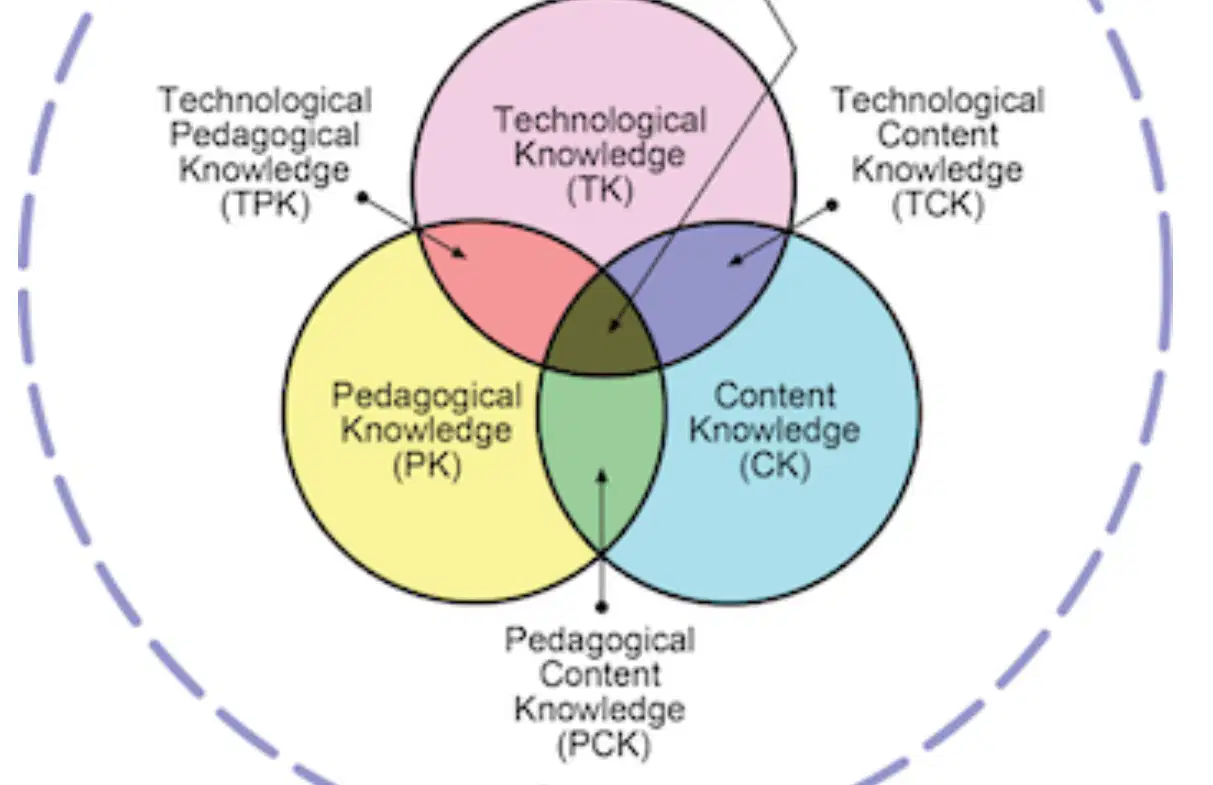
The model shown in the image is what model?
Technological, Content, and Pedagogical Model
PICRAT Model
TPACK Model
According to Dr. Med Kharback, there are four models of blended learning that teachers should be familiar with, they are
1. station rotation model
2. _______
3. _________
4.__________
Lab rotation station model
Transformational model
Flex model
Flipped learning
Self-directed model
Chapter 5 (titled Differentiated Learning) in Dr. Howard Pitler's textbook focuses on 3 types of differentiation that can be done in the classroom, what are the three types?
Differentiation for Gifted Learners
Differentiation by Product
Differentiation for Research
Differentiation by Process
Differentiation for Bevahior
According to Morris and Burt, there are many benefits to students creating digital portfolios. One of those benefits is that "portfolios can capture the ____ ______ in a way that standardized tests or summative assessments simply cannot."
(a)
True or False: It is important to talk to students about what it means to have productive conversations in digital spaces.
True
False
According to Ribble in "Digital Citizenship for Educational Changes," the term "Digital Etiquette" is defined as.....
electronic responsibility for actions and deeds--having an awareness of laws (rules, policies) that govern the use of digital technologies. Discuss with students the technology rules that are in the school as well as in their homes. Have them explain why these rules are necessary.
electronic precautions to guarantee safety--protecting personal information while taking precautions to protect others' data as well. Provide examples of not sharing and protecting information online; define how much information may be too much.
electronic standards of conduct or procedure--being considerate of others when using digital technologies. Explain that technology use is often personal, but its use can affect others (e.g., talking loudly on a cell phone around others). Allow students to provide experiences they have had with technology and discuss how situations might have been handled better.
electronic exchange of information--understanding the options of the digital communication methods and when they are appropriate. Help students understand when different tools might be most effective, such as using e-mail for more formal communication and tweeting for casual conversations with friends.
________ is a nonprofit organization that helps overcome legal obstacles to the sharing of knowledge and creativity to address the world’s most pressing challenges. (Pitler, Chapter 6; Digital Safety and Digital Citizenship.
Borrowing Commons
Creative Commons
Copyright Commons
Copyright Laws
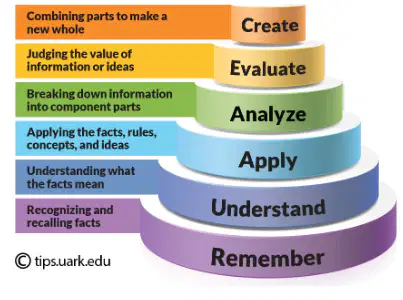
The picture shows what model/method?
CRAAUR
PICRAT Model
Bloom's Taxonomy
Differentiated Learning
The 4 C's of 21st Century Learning are....
Communication
Context
Critical Thinking
Collaboration
Creativity

