
 Worksheets
1a,1b,1c, 2a,2b, 3c Final Review
Total questions: 178
Worksheet time: 2hrs 22mins


If an organism is made entirely of one cell it is called...
Multicellular
Prokaryotic
Unicellular
Eukaryotic
The smallest unit of life is the cell.
True
False
Living things that are made up of only one cell.
Unicellular
Multicellular
Which list is ordered from least complex to most complex?
Organism--> Cell --> Organ
Cell --> Tissue--> Organ
Organ System --> Tissue--> Cell
Cell --> Organ --.Tissue

Which level of organization completes the graphic?
organelles
organ systems
tissues
molecules

Which choice describes the heart?
an individual cell
a group of one cell type working together
a series of organs working together
a structure made of tissues that work together
Which example has the most complex level of cellular organization?
brain
muscle
bone cell
nervous system
What does an organ system depend on in order to properly function?
organs working together properly
random tissues working together
organs working independently of one another
cells from all over the body making the same types of tissues
Tiny cellular structure that performs specific functions within a cell
organelle
nucleus
mitochondria
eukaryotic cell
Rigid, strong, stiff outer layer. Supports the plant (allows it to grow tall)
cell membrane
cell wall
organelle
chloroplast
Supports and protects the cell. Controls movement of materials in and out of the cell. Maintains homeostasis
vacuole
cell wall
nucleus
cell membrane
Controls cell activities. Controls hereditary materials.
nucleus
cytoplasm
mitochondria
vacuole
Controls cell activities. Controls hereditary materials.
nucleus
cytoplasm
mitochondria
vacuole
Found in both plant and animal cells. the brain
hereditary
mitochondria
nucleus
cytoplasm
Clear, thick jelly like material. Protects the organelles.
cell wall
vacuole
chloroplast
cytoplasm
Breaks down sugar molecules into energy
cytoplasm
mitochondria
nucleus
cell membrane
“Power House” of the cell
eukaryotic
vacuole
nucleus
mitochondria
Store large amounts of food (sugars) and water
vacuole
mitochondria
nucleus
cytoplasm
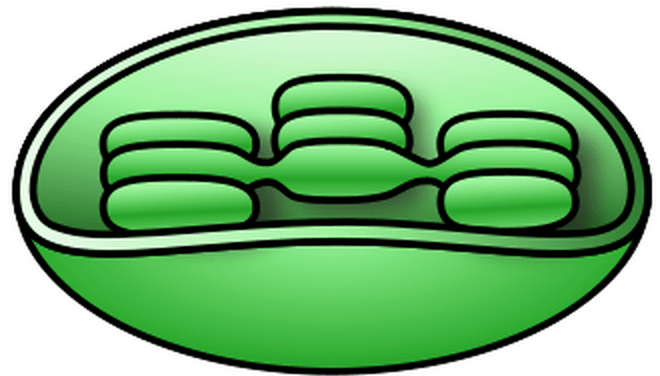
Found in plant cells only Green, oval
cell wall
mitochondria
chloroplast
cell membrane
Uses energy from the sun to make food (sugar and oxygen) for the plant (photosynthesis)
cell wall
chloroplast
mitochondria
plant cell
What is the ultimate ORIGINAL source of energy for living things
Sugar
Sun
Moon
Carbon Dioxide


Animal cells do not have chloroplasts.
TRUE
FALSE
C6H12O6 + 6O2 → 6CO2 + 6H2O + ATP
Which of the following is produced during the process of cellular respiration?
carbon dioxide
sodium chloride
oxygen
sugar
The products of cellular respiration are:
Carbon Dioxide, Energy (ATP) and Water
Oxygen and Glucose
Water and Glucose
Oxygen and Water
The reactants in photosynthesis are ____________
Sunlight, Water, and Carbon Dioxide
Glucose and Water
Carbon Dioxide and Water
Oxygen and Glucose
Surrounds the plant cell and maintains the cell shape and structure.
Cell wall
Cell membrane
Nucleus
Ribosome
Makes food for the plant cell.
Ribosome
nucleus
chloroplast
cytoplasm
The "garbage can" of the cell; digestion and waste removal.
cell wall
cell membrane
lysosome
nucleus
Controls what goes in and out of the cell.
cell membrane
cell wall
organelle
cell
Houses gel-like fluids that support cell organelles and holds them in place.
cytoplasm
endoplasmic reticulum (e.r.)
golgi bodies
nucleus
The control center for the cell.
ribosome
cytoplasm
nucleus
cell membrane
Storage space for water, wastes, food, and other cellular material
mitochondria
cell membrane
cell wall
vacuoles
The "powerhouse" of the cell; breaks down food to make energy for the cell.
organelles
cell
mitochondria
cytoplasm
The basic unit of structure and function in living things.
cell
cell wall
plant cell
cell membrane
The basic unit of structure and function in living things.
cell
cell wall
plant cell
cell membrane

Choose 3:
What are the three main differences in plant and animal cells?
Cell Wall
Mitochondria
Chloroplast
Larger Vacuole
Cell Membrane


Plants and animal cells have...
Mitochondria and chloroplasts
Nucleus and chloroplast
Cell wall and chloroplast
Mitchochodria and cytoplasm
Which organelle is the command center for eukaryotic (plant and animal) cells?
Cell wall
Nucleus
Mitochondria
Lysosome
what is the function of a lysosome?
To create energy for the cell
To command the cell what to do
To remove waste using digestive enzymes from the cell
To protect the cell
What is the difference between a prokaryotic cell and a eukaryotic cell?
Prokaryotes do not have a nucleus or organelles, but a eukaryotic cell does
Eukaryotic cells do not have a nucleus or organelles, but prokaryotes do

How can you tell that this is a prokaryote or eukaryote cell?
It is a prokaryote because it doesn't have a nucleus
It is a eukaryotic cell because it has a cell wall and a nucleus
It is eukaryotic because it does not a nucleus nor a cell membrane
It is prokaryote because it has a cell wall
What is the purpose of the nucleus?
It is the command center, contains DNA, and cell division
It protects the cell
It stores energy for the cell
It gets rid of waste in the cell
What is the difference between mitochondria and chloroplast?
Mitochondria produces energy and chloroplasts breaks down energy
There is no difference. They are the same.
Mitochondria breaks down energy from food and chloroplasts produce energy from sunlight.
Mitochondria contains DNA and chloroplasts are green
The outermost layer of a plant cell and animal cell is...
Plant cell - cell membrane, animal cell - cell wall
Plant cell - cell wall; animal cell - cell membrane
Plant and animal cell - cell wall
Plant and animal cell - cell membrane
What does a plant cell have that an animal cell doesn't have?
Cell Membrane and Cell Wall
Cell Wall and Mitochondria
Cell Wall and Nucleus
Cell Wall and Chloroplast
What is the jelly-like substance that keeps the organelles floating?
Cell Membrane
Nucleus
ER
Cytoplasm
A ________ is a group of 2 or more organs working together to keep an organism alive.
cell
tissue
organ
Organ system
The ________ system works with the skeletal system to help you move and provides shape and warmth.
skeletal
integumentary
muscular
digestive
The _____ system's function is to break down food into molecules that the body (cells) can use for energy.
muscular
digestive
respiratory
endocrine
The _____ system is a transport system, carrying oxygen, carbon dioxide, and wastes to and away from cells using the heart and blood.
endocrine
circulatory
respiratory
excretory
The ______ system's function is gas exchange. It brings oxygen in and exhales carbon dioxide with the lungs, trachea, and diaphragm
endocrine
excretory
circulatory
respiratory
This system controls the body using the brain, spinal cord, and nerves.
nervous system
endocrine system
excretory system
digestive system
The ______ system removes the body's wastes through the kidneys (cell wastes), digestive (feces), respiratory (CO2), and integumentary (salts/sweat)
excretory
digestive
respiratory
circulatory
What is the function of the respiratory system?
To digest your food
To remove waste from the body
To take in oxygen and remove carbon dioxide
To fight disease
What is the function of the digestive system?
It transports blood and oxygen to your cells
It breaks down food so the nutrients can be absorbed by your body
It helps you breathe by taking in oxygen and transporting carbon dioxide out of your body
It helps you move
Which statement best describes the relationship between the nervous system and the muscular system?
The nervous system controls the muscular system.
The muscular system controls the nervous system.
The nervous system provides nutrients for the muscular system.
The muscular system provides nutrients for the nervous system.
Which system moves oxygen to the cells and obtains structures that help the body fight infections?
muscular system
digestive system
circulatory system
endocrine system
The nervous system is most like which cell organelle?
mitochondria
nucleus
chloroplast
cell membrane
The function of the digestive system is most like which cell organelle?
cell membrane
mitochondria
nucleus
cytoplasm

Gathers oxygen from the environment and gets rid of carbon dioxide from the body.
cardiovascular system
respiratory system
endocrine system
lymphatic system

Breaks down food into nutrients that can be used by the body.
excretory system
cardiovascular system
digestive system
nervous sytem

Moves blood through the body.
cardiovascular system
skeletal system
muscular system
nervous system

Responds to sensory information by transmitting signals to and from different parts of the body.
lymphatic system
endocrine system
cardiovascular system
nervous system

Removes wastes from blood.
excretory system
lymphatic system
endocrine system
digestive system

Analyze the image to the right and answer the following true/false question. In the image, the person is sweating. Sweating helps cool the body down and keep the body at a stable internal temperature. Keeping the body at a stable temperature is called mitosis. True or false?
True
False
Connect your learning by choosing the correct comparison of the function of the digestive system to the function of the mitochondria inside cells.
the digestive system breaks food down into nutrients and energy; the mitochondria breaks food down into nutrients and energy for the cell
the mitochondria captures sunlight and creates energy for the cell; the digestive system captures sunlight and created energy
the digestive system has nothing in common with the mitochondria
The digestive system and the mitochondria both function to send nutrients throughout the body to cells
Mark each of the following that are functions of the circulatory system.
Pumps blood throughout the body
Carries oxygenated blood to muscles
Breaks down nutrients into energy the body can use
Carries essential nutrients to other cells
The same or identical
Asexual Reproduction
Sexual Reproduction
Diverse
Uniform
Being different
Asexual Reproduction
Sexual Reproduction
Diverse
Uniform
Combining of egg and sperm
Asexual Reproduction
Sexual Reproduction
Diverse
Uniform
Involves only one parent
Asexual Reproduction
Sexual Reproduction
Diverse
Uniform
Which is NOT an Asexual reproduction DISADVANTAGE
No genetic variation
Only need one parent
Bad characteristics are passed on
difficult for organisms to adapt
Which is NOT a Sexual reproduction DISADVANTAGE
High genetic variation
Can be complicated
smaller population
requires courtship or mating
Combining of egg and sperm
Asexual Reproduction
Sexual Reproduction
Diverse
Uniform

Using the diagram, which type of asexual reproduction is being demonstrated by the bacterial cell?
Binary Fission
Budding
Spore Formation
Regeneration
Asexual reproduction and sexual reproduction both involve one parent
Sexual reproduction involves making clones and asexual reproduction creates diverse/different offspring
Asexual reproduction creates clones and sexual reproduction creates diverse/different offspring
Which results in offspring that are genetically unique and display a combination of traits from each parent?
Sexual
Asexual
Neither
Both
A bee flies from one apple blossom to another and transfers pollen as it goes. Which type results from pollination?
Sexual
Asexual
Neither
Both
Reproduce faster
Unicellular
Multicellular
Both
Not very complex
Unicellular
Multicellular
Both
kittens
when some molecules can cross the membrane while others cannot.
Define homeostasis.
Maintaining balance in a living organism.
The imbalance inside of an organism.
None of the above.
Check all that apply. Which of the following are examples of an organism maintaining homeostasis?
Shivering when cold
Sweating when hot
Fever - an immune response when sick
Vomiting - releases toxins and wastes
Define stimulus.
Change in an organism’s environment that causes it to react.
How the organism reacts to the stimulus.
Define response.
Change in an organism’s environment that causes it to react.
How the organism reacts to the stimulus.
Stimulus is like the "cause" and response is like...
the cause
the effect
the reaction rate
the response time
What are the two types of stimuli?
External and internal stimuli
External and intermediate stimuli
Internal and extraterrestrial stimuli
External stimuli...
Stimuli happening outside of the organism
Stimuli happening inside the organism
Internal stimuli...
Stimuli happening outside of the organism
Stimuli happening inside the organism
The presence of food causes the dog to drool. What kind of stimuli is the food?
External
Internal
A plant vacuole does not have enough water stored in it so it begins to shrink. What kind of stimuli is this?
External
Internal
The weather temperature is cold outside and you start to shiver. Which part is the stimulus?
weather temperature
shivering
You are sick and have an upset stomach. You then vomit. Which part is the stimuli?
sick/upset stomach
vomiting
You are sick and have an upset stomach. You then vomit. Which part is the response?
sick/upset stomach
vomiting
A plant vacuole starts to shrink due to very little water. This causes the plant to start to wilt. Which part is the response?
Plant wilting
Vacuole shrinking due to decreased water
A plant vacuole starts to shrink due to very little water. This causes the plant to start to wilt. Which part is the stimuli?
Plant wilting
Vacuole shrinking due to decreased water
True or False: All organisms must maintain a stable internal balance in order to survive.
False
True

homozygous
having 2 different alleles for a trait
characteristic that an organism can pass onto its offspring
having two identical alleles for a trait
the study of heredity
heterozygous
the scientific study of heredity
the children of an organism
having two different alleles for a trait
having two identical alleles for a trait
trait
the different forms of a gene
a characteristic that an organism can pass onto its offspring through its genes
set of information that controls a trait
when characteristics are passed from parent to offspring
DNA
having two different alleles for a trait
the scientific study of heredity
a parents child or offspring
deoxyribonucleic acid; the genetic material that carries information about an organism passed from parent to offspring
allele
an allele that is masked when the dominant allele is present
the different forms of a gene
a parents child or offspring
when characteristics are passed from parent to offspring
dominant
an allele that is masked when a dominant allele is present; lowercase letters
the set of information that controls a trait
an allele whose trait always shows up in the organism when the allele is present; capital letters
when characteristics are passed from parent to offspring
recessive
an allele that is masked when a dominant allele is present; lowercase letters
the set of information that controls a trait
the different forms of a gene
when characteristics are passed from parent to offspring
gene
an allele whose trait always shows up
the different forms of a gene
the set of information that controls a trait; a segment of DNA on a chromosome that codes for a specific trait
when characteristics are passed from parent to offspring
Heredity
a parents child or children
the passing of traits from parents to offspring
made of DNA
organism's genetic make up
Offspring
made of DNA and carry genetic information
the passing of traits from parent to offspring
a parent's child or children
an organism's genetic makeup
Genotype
an organism's physical appearance
an organism's genetic makeup or allele combination
Phenotype
an organism's physical appearance
an organism's genetic makeup or allele combination
Purebred
an organism's physical appearance or visible traits
an organism's genetic makeup or allele combination
the offspring of many generations that have the same traits
a change in a gene or chromosome
Hybrid
the offspring of many generations that have the same traits
a change in a gene or chromosome
a pair of chromosomes that determine gender
an organism that has 2 different alleles for a trait; an organism that is heterozygous for a trait
the passing of traits from parent to offsprint
heredity
genetics
botany
the genetic make-up; the actual gene pair
genotype
phenotype
the physical or visible appearance of an organism; a trait we can see
genotype
phenotype
blue eyes, curly hair
genotype
phenotype
Tt, BB, rr
genotype
phenotype
controls the trait; you only need one gene for the trait to show up in an organism
dominant
recessive
the weaker trait; you need 2 genes for the trait to show up in an organism
dominant
recessive
the different forms of a trait that make up a gene, R OR r
allele
dominant
recessive
purebred; the same gene pair
homozygous
heterozygous
hybrid; a different gene pair
homozygous
heterozygous
TT, tt
homozygous
heterozygous
Rr, Ff
homozygous
heterozygous
BB, RR, TT
heterozygous
homozygous dominant
homozygous recessive
nn, ww, gg
heterozygous
homozygous dominant
homozygous recessive
Tt, Bb, Ww
heterozygous
homozygous dominant
homozygous recessive
CC, DD, EE
heterozygous
homozygous dominant
homozygous recessive
aa, bb
heterozygous
homozygous dominant
homozygous recessive
a tool used to predict the results from crossing 2 sets of allelles
microscope
Punnett square
Jawsome trapezoid
The trait represented by a lower case letter
Recessive
Dominant
Phenotype
Incomplete Dominance
A feature that has different forms in a population ( CATEGORIES) Examples: Seed color, Eye color
Trait
Characteristic
Allele
Dominant
The different forms within a characteristic (blue eyes, brown eyes)
Dominant
Recessive
Characteristic
Trait

