wayground logo

Free Printable Worksheets

Font size

S
M
L
XL
Worksheets

Semester Test Review fall

Total questions: 85

Worksheet time: 1hrs 23mins

Name
Class
Date
1.
If there is a fire in the lab, immediately...
a)
Notify your teacher
b)
Run for the fire alarm
c)
Throw water on the fire
d)
Open the windows
2.
Goggles are worn in the lab...
a)
To avoid eye strain
b)
To improve your vision
c)
Only if you don't have personal glasses on
d)
Any time chemicals and glassware are used, and when told to by the teacher
3.
If you do not understand directions...
a)
Figure it out as you go
b)
Try different things until something works
c)
Ask the teacher before proceeding
d)
Skip it and move on
4.
You cut your finger during a lab experiment. The first course of action is to...
a)
Visit the school nurse after class
b)
See a doctor after school
c)
Tell the teacher at once
d)
Apply first aid yourself
5.
During a lab experiment, which should NOT be worn?
a)
Loose or bulky clothing
b)
Dangling jewelery
c)
Sandals
d)
None of these should be worn
6.
Long hair in the lab must be...
a)
Cut shorter
b)
Held away from the experiment with your free hand
c)
Neatly groomed
d)
Tied back to be kept out of the way
7.
Horseplay and practical jokes in the library are...
a)
Always against the rules
b)
Alright
c)
Not dangerous
d)
Okay if working alone
8.
If a piece of equipment isn't working, you should stop, turn it off, and tell...
a)
The teacher
b)
Your lab partner
c)
Your best friend
d)
The front desk
9.
If a chemical splashes on your skin, wash the skin at once with...
a)
Soap
b)
Oil
c)
An acid
d)
Plenty of water
10.
After completing an experiment, all chemical wastes should be...
a)
Left at your lab station for the next class
b)
Disposed of according to the teacher's instructions
c)
Dumped down the sink
d)
Taken home
11.
When you finish working with chemicals and lab equipment, always...
a)
Treat your hands with skin lotion
b)
Wash your hands with soap and water
c)
Wipe your hands on a towel
d)
Wipe your hands on your clothes
12.

What is this lab tool?

a)

flask

b)

beaker

c)

test tube

d)

specimen

13.

What is this lab tool?

a)

thermometer

b)

microphone

c)

stopper

d)

microscope

14.

Always point a test tube or bottle that is being heated towards you and others.

a)

True

b)

False

15.

What is this lab tool?

a)

test tube

b)

plyers

c)

tongs

d)

stopper

16.

What is this lab tool?

a)

test tube

b)

petri dish

c)

flask

d)

beaker

17.

What is this lab tool?

a)

beaker

b)

flask

c)

petri dish

d)

test tube

18.

285 kg = ____ g

1 kilogram = 1,000 grams

a)

285,000

b)

285

c)

2,850

d)

28,500

19.

285 kg = ____ g

1 kilogram = 1,000 grams

a)

285,000

b)

285

c)

2,850

d)

28,500

20.

285 kg = ____ g

1 kilogram = 1,000 grams

a)

285,000

b)

285

c)

2,850

d)

28,500

21.

285 kg = ____ g

1 kilogram = 1,000 grams

a)

285,000

b)

285

c)

2,850

d)

28,500

22.

Which state of matter has a definite volume or size and a distinct shape at a given temperature?

a)

liquid

b)

gas

c)

solid

d)

all of the above

23.

Which state of matter has a definite volume or size and a distinct shape at a given temperature?

a)

liquid

b)

gas

c)

solid

d)

all of the above

24.

Which state of matter has a definite volume or size and a distinct shape at a given temperature?

a)

liquid

b)

gas

c)

solid

d)

all of the above

25.

Which state of matter has a definite volume or size and a distinct shape at a given temperature?

a)

liquid

b)

gas

c)

solid

d)

all of the above

26.

Which state of matter has a definite volume or size and a distinct shape at a given temperature?

a)

liquid

b)

gas

c)

solid

d)

all of the above

27.

Which state of matter has a definite volume or size and a distinct shape at a given temperature?

a)

liquid

b)

gas

c)

solid

d)

all of the above

28.

Which state of matter has a definite volume or size and a distinct shape at a given temperature?

a)

liquid

b)

gas

c)

solid

d)

all of the above

29.

Which state of matter has a definite volume, but it takes the shape of its container with the help of gravity?

a)

solid

b)

liquid

c)

gas

d)

all of the above

30.

Which state of matter has a definite volume or size and a distinct shape at a given temperature?

a)

liquid

b)

gas

c)

solid

d)

all of the above

31.
all matter is made of what 
a)
energy 
b)
atoms 
c)
electrons 
d)
compounds 
32.
The positive particles of an atom are 
a)
electrons 
b)
positrons 
c)
neutrons 
d)
protons 
33.
Particles in an atom that are neutral and have no charge are 
a)
negatrons 
b)
electrons 
c)
neutrons 
d)
protons 
34.
The particles that are found in the nucleus of an atom are
a)
neutrons and electrons
b)
electrons only
c)
protons and neutrons
d)
protons and electrons
35.
The central region of an atom where its neutrons and protons are is called the
a)
nucleus 
b)
electron cloud
c)
core 
d)
center 
36.
The smallest part of an element is known as the 
a)
Periodic Table
b)
Atom
c)
Group
d)
Period
37.
Something that takes up space and has mass.
a)
volume
b)
matter
c)
mass
d)
density
38.
The amount of space something takes up
a)
density
b)
volume
c)
mass
d)
matter
39.
The amount of matter something contains is its ______________.
a)
gas
b)
solid
c)
weight
d)
mass
40.

Two or more atoms joined together for a(n)...

a)

Element

b)

Compound

c)

Molecule

d)

Mixture

41.
What cannot be broken down into other substances?
a)
Compound
b)
Mixture
c)
Solids
d)
Element
42.
An element is made up of only one kind of _____.
a)
isotope
b)
plastic
c)
atom
d)
metal
43.

The smallest particle into which an element can be divided and still be the same element is a(n)

a)

proton

b)

neutron

c)

electron

d)

atom

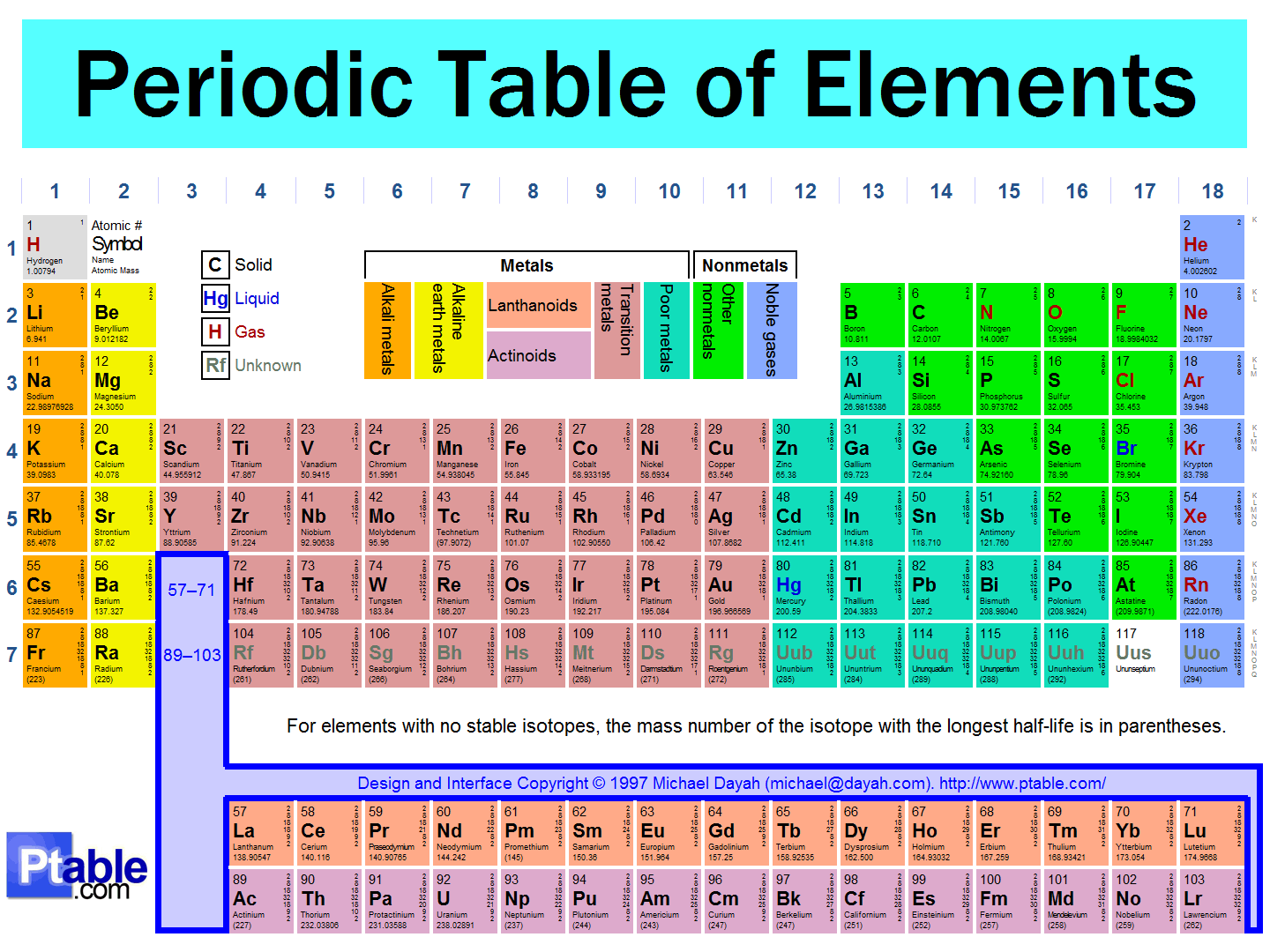
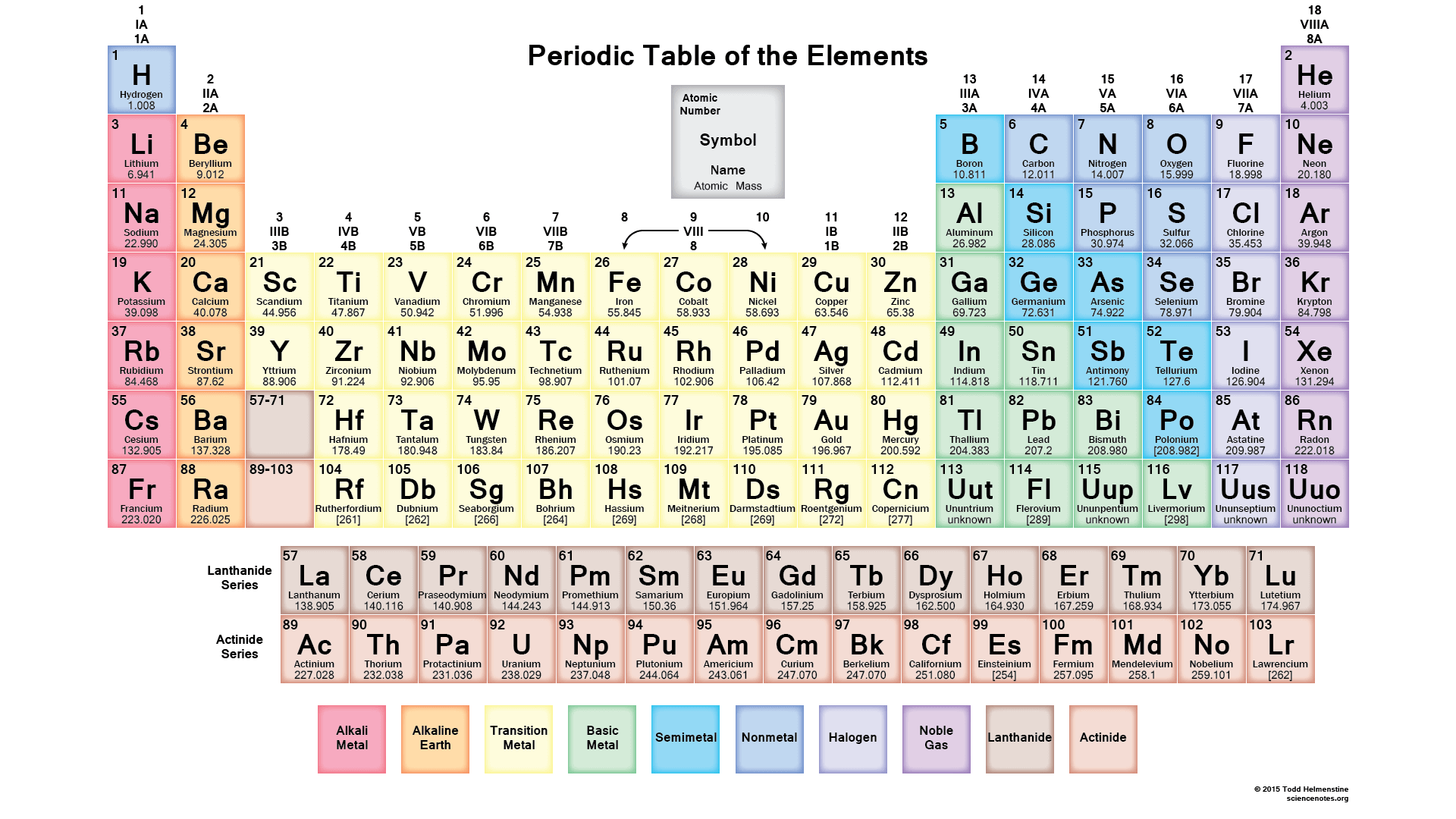
44.

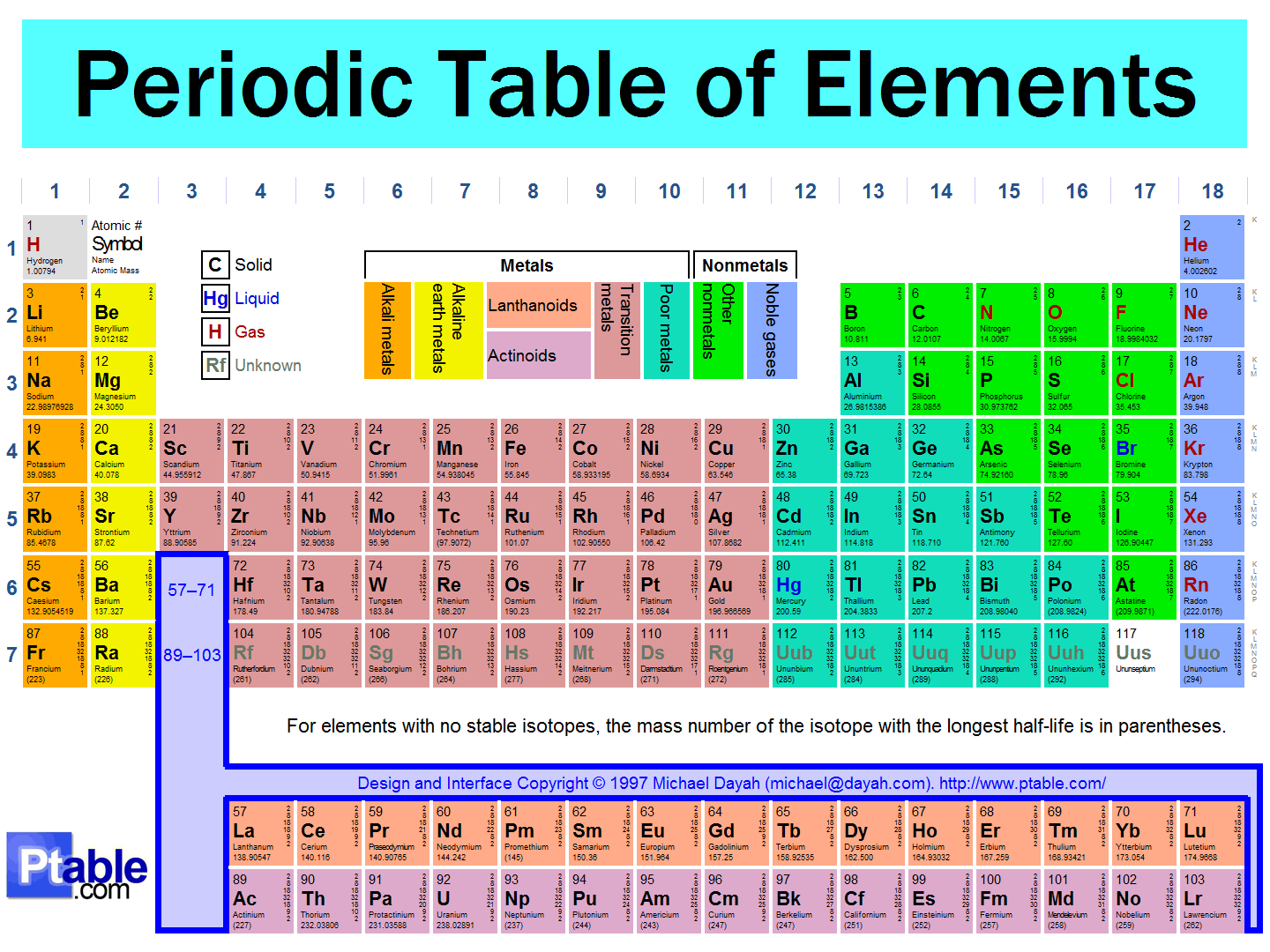
The vertical (up and down) columns in the Periodic Table are called

a)

groups

b)

towers

c)

periods

d)

atomic numbers

45.
The Modern Periodic Table of Elements is arranged by
a)
atomic mass
b)
atomic number
c)
valence electrons
d)
number of isotopes
46.
Sodium (Na) is found in period 
a)
3
b)
2
c)
4
d)
1
47.
Sodium (Na) is found in group 
a)
1
b)
2
c)
3
d)
4
48.
The atomic number tells you what?  READ THE ANSWERS CAREFULLY
a)
only the number of electrons
b)
 only the number of protons
c)
only the number of neutrons
d)
the number of both electrons and protons in an atom.
49.
What does the atomic mass tell you? 
a)
Basically,the number of electrons and protons
b)
The number of neutrons
c)
Basically, the number of protons and neutrons
d)
The number of protons.
50.
The atoms we study in 6th grade are neutral, which means they have the same number of
a)
protons and electrons
b)
protons and neutrons
c)
electrons and neutrons
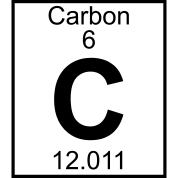
51.
What does the 6 represent?
a)
atomic mass
b)
atomic number
c)
element name
d)
chemical symbol 
52.
What does 12.011 represent?
a)
atomic mass
b)
atomic number
c)
element name
d)
chemical symbol 
53.
What does the C represent?
a)
atomic mass
b)
atomic number
c)
element name
d)
chemical symbol 
54.
These are found on the Periodic Table.
a)
Compounds
b)
Elements
c)
Mixtures
55.

The horizontal (side to side) rows in the Periodic Table are called

a)

groups

b)

families

c)

periods

d)

atomic numbers

56.

This type of heat transfer takes place with direct contact and at least one solid object. Example a burner on a stove heating the bottom of a pot.

a)

convection

b)

radiation

c)

conduction

57.

Heat is transferred from the sun to Earth by which kind of heat transfer

a)

convection

b)

radiation

c)

conduction

58.

The air is warmer near the ceiling of a room. The warm air rises because of ____________.

a)

convection

b)

radiation

c)

conduction

59.

The heat from a lamp allows a lizard to remain warm. This is an example of which type of heat transfer?

a)

convection

b)

radiation

c)

conduction

60.

You hold a solid chocolate bar in your hand, which then starts to warm up and soften. This happens due to what?

a)

convection

b)

radiation

c)

conduction

61.

The kind of heat transfer that travels through space in electromagnetic waves is

a)

convection

b)

radiation

c)

conduction

62.

In heat transfer, heat always flows from the _________ substance to the ____________ substance.

a)

hotter to colder

b)

colder to hotter

63.

In which direction will the heat flow while a person holds a cup of hot tea. (The cup is hotter than the person's hand.)

a)

from hand to cup

b)

from cup to hand

c)

no heat will be transferred

64.

What type of heat transfer is happening here?

a)

The pot sitting on the burner is conduction and the water in the pot is convection

b)

The pot sitting on the burner is convection and the water in the pot is conduction

c)

The pot sitting on the burner is radiation and the water in the pot is convection

d)

The pot sitting on the burner is conduction and the water in the pot is radiation

65.

This sunbather is getting a warm because ______

a)

The heat from the sun is travelling through electromagnetic waves and conduction is occurring.

b)

The heat from the sun is travelling through electromagnetic waves and radiation is occurring.

c)

The heat from the sun is travelling through electromagnetic waves and convection is occurring.

d)

the sun is transferring energy

66.
What happens when you increase the amplitude of a sound?
a)
it makes the sound louder
b)
it makes the sound travel faster
c)
it increases the wavelength of the sound
d)
it increases the frequency of the sound
67.

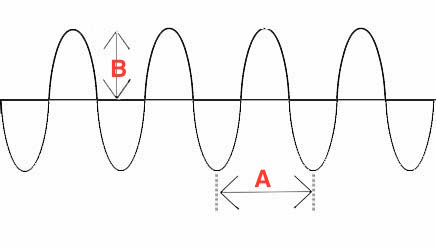
What kind of wave is pictured below?

a)

compressional wave

b)

transverse wave

c)

sound wave

d)

mechanical wave

68.
What property of this wave is represented by the letter "A"
a)
amplitude
b)
crest
c)
trough
d)
wavelength
69.
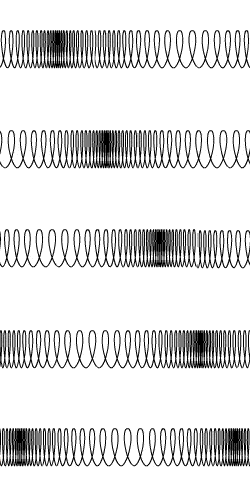
What type of wave is this?
a)
Longitudinal
b)
Transverse
70.
The highest point on a wave is:
a)
the crest
b)
the trough
c)
the top
d)
the coast 
71.
The lowest point on a wave is the:
a)
Amplitude
b)
Crest
c)
Trough
d)
Wavelength
72.
The number of wavelengths that pass a point each per second is:
a)
frequency
b)
period
c)
longitudinal 
d)
transverse wave 
73.
When the frequency of a wave increases, what happens to the wavelength?
a)
The wavelength is not directly affected by the frequency of a wave.
b)
The wavelength increases.
c)
The wavelength decreases.
d)
More specific information is needed to form a conclusion about the wavelength.
74.
crest to crest or trough to trough
a)
crest
b)
trough
c)
amplitude
d)
wavelength
75.
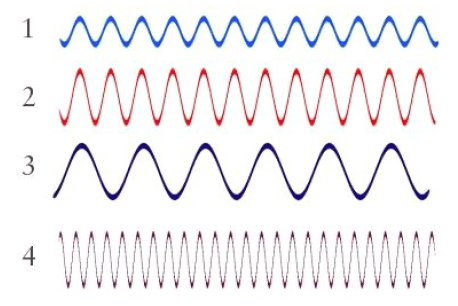
Which wave in the diagram has the greatest frequency?
a)
1
b)
2
c)
3
d)
4
76.
Which wave in the diagram has the greatest wavelength?
a)
1
b)
2
c)
3
d)
4
77.
1.  A wave has frequency of 50 Hz and a wavelength of 10 m. What is the speed of the wave?
a)
500 m/s
b)
50 m/s
c)
5 m/s
d)
0.5 m/s
78.

The highest point on a wave is:

a)

the crest

b)

the trough

c)

the top

d)

the coast

79.

All waves carry ________ as they travel from one place to another.

a)

matter

b)

space

c)

energy

d)

water

80.
What types of waves carry energy at a right angle or perpendicular to the direction of the energy flow?
a)
Longitudinal waves
b)
Transverse waves
c)
Sound waves
d)
P-waves
81.
Question Image

Identify an example of each of the three states of matter present when the candle is burning.

a)

Solid

1.

The hard wax of the candle

b)

Liquid

2.

The melting wax

c)

Gas

3.

The fire/flame

82.
Question Image

Match the following

a)
1.

gas

b)
2.

liquid

c)
3.

solid

83.

Label each state of matter

84.

Label the diagram with the correct state of matter.

85.

There are four forms, or states, of matter.

Pizza, Solids, Liquids, & Gasses.

​ (a)  

Choose from the below words
False
true