
 Worksheets
6th Grade Science Midterm Review
Total questions: 36
Worksheet time: 18mins
Name
Class
Date
1.

What is another name for the water cycle?
a)
hydrosphere
b)
watershed
c)
hydrologic cycle
d)
high quality H2O
2.
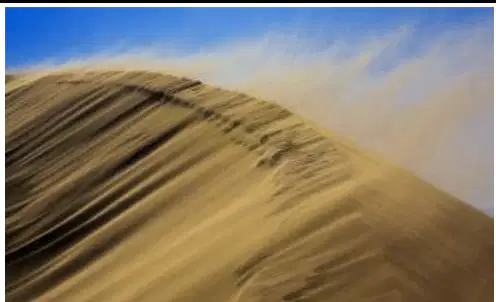
What agent of change causes a sand dune?
a)
ice
b)
wind
c)
water
d)
roots
3.
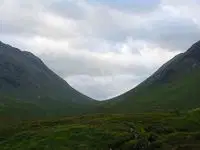
What agent of change causes a U-shaped Valley?
a)
wind
b)
water
c)
ice
d)
roots
4.
Which land forms are a result of deposition?
a)
trenches and valley
b)
bays and peninsulas
c)
beaches and river deltas
d)
plateaus and mesas
5.

What is a type of chemical weathering?
a)
acid rain
b)
rain
c)
snow
d)
ice
6.
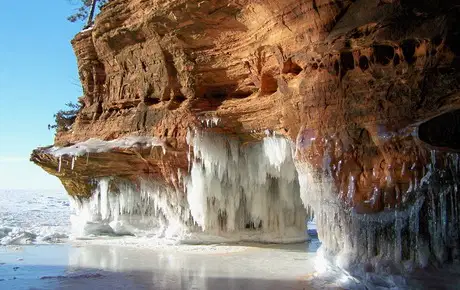
The wearing away of rocks and soil is ?
a)
depostion
b)
convection
c)
weathering
d)
erosion
7.
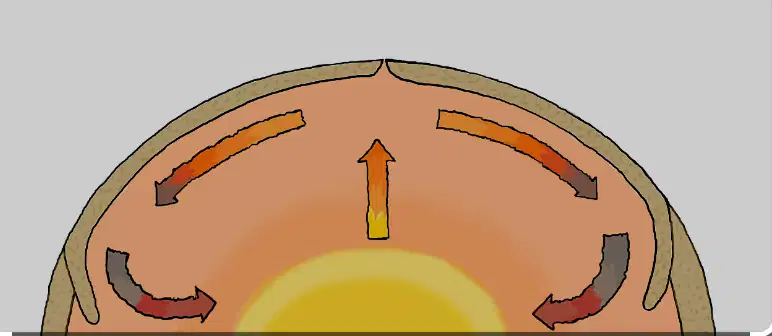
How do tectonic plates move?
a)
Convection currents
b)
wind
c)
water
d)
ice
8.

The ______ is the layer of the Earth under the crust.
a)
the sun
b)
mantle
c)
none of the other answers
d)
core
9.

Which of these is NOT a type of plate boundary?
a)
convergent
b)
divergent
c)
transform
d)
bivergent
10.
What is a wall across a river that controls the flow of river water?
a)
dam
b)
levee
c)
floodway
d)
flood
11.
How much of the Earth's surface is covered by water?
a)
97%
b)
71%
c)
29%
d)
17%
12.
What percentage of the Earth's water is saltwater, and cannot be used by people?
a)
99%
b)
97%
c)
71%
d)
3%
13.
All of the water on Earth makes up this?
a)
water table
b)
atmosphere
c)
none of these
d)
hydrosphere
14.
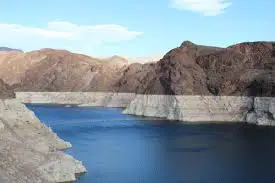
An artificial or man made lake used to store water for human usage is a?
a)
aquifer
b)
water bed
c)
water table
d)
reservoir
15.

When water changes from a liquid to a gas, it is called?
a)
evaporation
b)
transpiration
c)
condensation
d)
runoff
16.

Most of the frozen water on Earth is found in?
a)
glaciers
b)
groundwater
c)
geysers
d)
hail
17.

When plants lose water through pores in their leaves?
a)
evaporation
b)
percolation
c)
runoff
d)
transpiration
18.
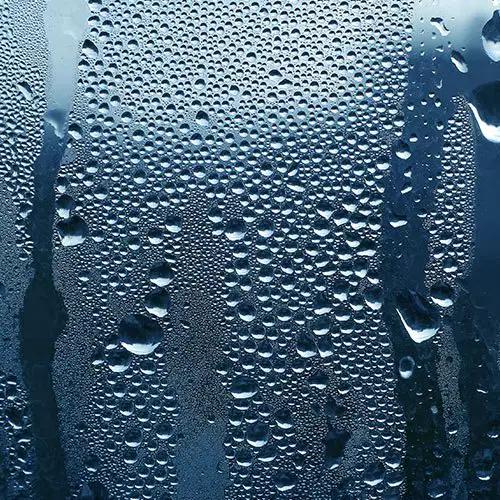
Gas turns into a liquid.
a)
Evaporation
b)
Transpiration
c)
Condensation
d)
Sublimation
19.

Any form of water that falls from clouds back to Earth.
a)
Evaporation
b)
Transpiration
c)
Precipitation
d)
Condensation
20.
The total amount of dissolved salts in a sample of water is its
a)
pressure
b)
salinity
c)
strength
d)
effect
21.
The ______________ ocean is the largest ocean.
a)
Indian
b)
Atlantic
c)
Pacific
d)
Artic
22.
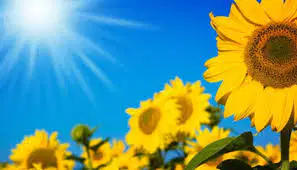
This is responsible for keeping water constantly moving in the water cycle?
a)
sunlight
b)
wind
c)
earthquakes
d)
molten core of the Earth
23.
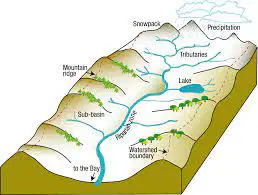
An area of land that catches all of the precipitation and surface runoff in an area?
a)
water table
b)
aquifer
c)
watershed
d)
reservoir
24.
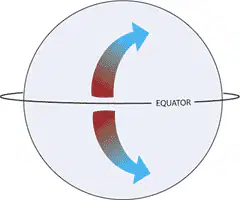
The Coriolis Effect causes currents in the Northern Hemisphere to rotate
a)
clockwise
b)
counter clockwise
25.
The large, flat part of the ocean floor is called the _____________.
a)
trench
b)
continental shelf
c)
abyssal plain
d)
continental slope
26.
How does light travel?
a)
Light travels in unpredictable ways.
b)
Light travels like a river, wherever there is an open path.
c)
Light travels in straight lines only.
d)
It depends; if the light is bright enough it can change direction.
27.

Three students made the diagrams above to show what they think the Moon looks like when it is seen from above (top view). In these diagrams, the sunlight is coming from the left, as shown by the arrows. Which diagram is accurate and why?
a)
Diagram A is accurate because the whole Moon is bright as long as there are no shadows covering parts of it.
b)
Diagram B is accurate because the Moon is almost as close as it can be to the sun, so the Moon is almost fully lit by the sun.
c)
Diagram C is accurate because the half of the Moon that is facing the sun is lit by the sun, and the other half is dark.
d)
All three diagrams are sometimes accurate because the Moon has some lighter-colored rock and some darker-colored rock, and the half of the Moon with the lighter-colored rock rotates to face different directions.
28.
All objects are attracted to each other by the force of
a)
weight
b)
inertia
c)
gravity
d)
mass
29.
One complete revolution of Earth around the sun takes how long?
a)
1 day
b)
365.25 days
c)
24 hours
d)
29.5 days
30.
In the Northern hemisphere, the summer solstice occurs in
a)
March
b)
June
c)
September
d)
December
31.
Earth has seasons because
a)
axis is tilted as it moves around the sun
b)
the sun gets closer and farther from the sun
c)
it has an axis
d)
the sun gets hotter
32.
When the moon is a full moon a(n) _______ eclipse can occur.
a)
solar
b)
lunar
33.

When is the only time that the moon would be dark when seen from earth at this position?
a)
During a full moon
b)
During a lunar eclipse
c)
At midnight
d)
At noon
34.
The gravitational force of the _________ keeps oursolar system together.
a)
Moon
b)
Sun
c)
Earth
d)
Mars
35.
The yearly path of Earth around the Sun is called
a)
rotation
b)
revolution
c)
equniox
d)
solstice
36.
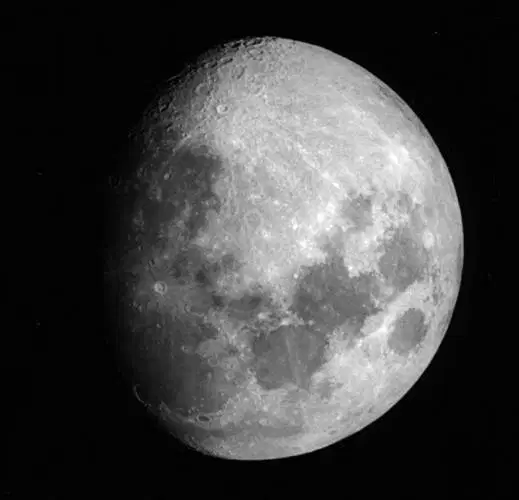
What does the term waxing mean when related to the moon?
a)
growing larger
b)
getting smaller
c)
rotating
d)
revolving
100 %

