
 Worksheets
Physics 1st Semester Review 1 of 2
Total questions: 41
Worksheet time: 2hrs 48mins
A car going 50mph accelerates to pass a truck. Five seconds later the car is going 80mph. Calculate the acceleration of the car
6
500
16
10
A cat is chasing after a mouse. How long will it take for it to have a final velocity of 6m/s if we assume the initial velocity was 0 m/s and the acceleration is 0.738 m/s2?
8.13 seconds
4.428 seconds
5.262 seconds
6.738 seconds
A stone is thrown vertically upward with a speed
of 15.5 m/sec from the edge of a cliff 75 m high.
What total distance did it travel?
74.25
99.52
45
66.97

4 Points - Look at the vector arrows.
Because the velocity vector is pointing to the right, the car is (a) .
Because the acceleration is to the left, the car is (b)

A car speeding up shortly after a stoplight turns green.
A car slowing down as it comes to a red light
A car moving at a constant velocity.
A car making a turn at an intersection at a constant speed.

4 Points
What is the final velocity of a rocket that travels for 4 seconds, has an initial velocity of 1200 m/s and an acceleration of 200 m/s2? (Answer in m/s)
The velocity-time graphs represent the motion of three different objects. Identify any object that is changing directions. Check all that apply.


None of the above
2 Points
The velocity-time graphs represent the motion of four different objects. Identify any object that is changing its velocity or accelerating. Check all that apply.


Which segment shows the faster speed?
A to B
C to D
B to C
E to F
The standard acceleration due to gravity (or standard acceleration of free fall),is the nominal gravitational acceleration of an object in a vacuum near the surface of the Earth. It is defined by standard as:
9.8 m/s.
9.8 m.
9.8 m/s2.
9.8 s.
If a 50-N person is to fall at terminal speed, the air resistance needed is
50 N
More than 50N
Less than 50N
There is not air resistance in nonfreefall

Which of the dot diagrams best describe the motion of a free-falling object that is dropped from rest?
A
B
C
At the instant a ball is thrown horizontally with an initial velocity, a ball held at the same height is released from rest and drops to the ground. If we ignore air resistance, which ball hits the ground first?
Same Time
Ball released from rest
Ball thrown horizontally
never hit the ground

A soccer ball is kicked with an initial velocity of 36 m/s at an angle of 50 degrees. What is the vertical speed at point C?
50 m/s
-9.8 m/s
0 m/s
36 m/s

Which force diagram matching the following description:
A ball is moving upward after it leaves your hand.
(a)
(b)
(c)
(d)

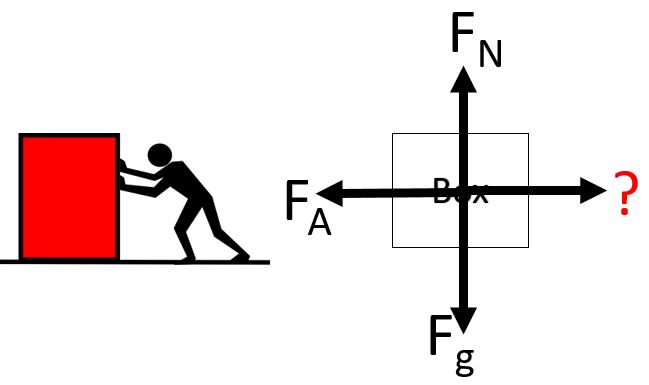
What is the name of the missing force?
frictional force
normal force
gravity
applied force
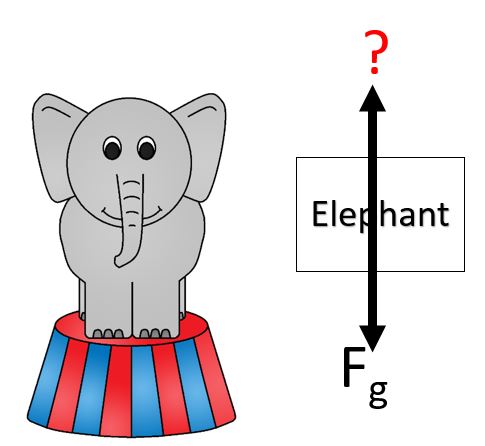
What is the name of the missing force?
gravity
normal force
applied force
frictional force
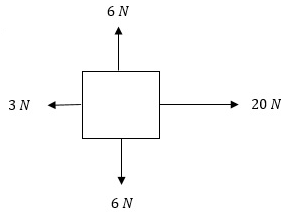
What is the NET FORCE of this diagram?
17 N, right
17 N, left
23 N, right
12 N, up

What is the net force?
40 N left
0 N Balanced
400 N right
40 N right

A stone is thrown horizontally at 7.50 m/s from a cliff that is 68.4 m high. How far from the base of the cliff does the stone land?
27.8 m
45.3 m
12.2 m
A baseball is thrown horizontally with a velocity of 44 m/s. It travels a horizontal distance of 18 m, to the plate before it is caught. How far does the baseball drop during its flight?
1.32 m down
0.84 m down
0.4 m up
0.84 m up
A soccer ball is kicked horizontally off a 22.0-meter high hill and lands a distance of 35.0 meters from the edge of the hill. Determine the initial horizontal velocity of the soccer ball.
15.6 m/s
12.4 m/s
16.5 m/s
for 8 s until it finally lifts off the ground.
Determine the velocity at take-off.
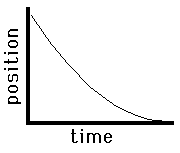
States that force equals mass x acceleration
Newtons 1st law
Newtons 2nd law
Newtons 3rd law
Claims if an object exerts a force on another object, the second object exerts a force of equal strenght in the opposite direction back towards the first object
Newtons 1st law
Newtons 2nd law
Newtons 3rd law
States an object at rest will remain at rest unless acted on by an unbalanced force
Newtons 1st law
Newtons 2nd law
Newtons 3rd law
The amount of matter in an object in the object's ________.
Inertia
Weight
Mass
Density
When the force of an object remains constant, then an increase in mass corresponds with a decrease in acceleration.
Newtons 1st law
Newtons 2nd law
Newtons 3rd law
A white pool cue ball strikes a striped billiard ball at rest with a speed of 5 m/s. How fast does the striped billiards ball move, and in what direction?
5 m/s2 forward
5 m/s2 backward
5 m/s forward
5 m/s backward
What is the acceleration (a) of a 92 kg (m) downhill skier that skis with a force of 118 kg ⋅ m/s2 (F)?
.77 m/s2
1.3 m/s
1.3 m/s2
.77 m/s

If we put the same force on a bowling ball and a soccer ball, the soccer ball will move faster! Which law explains this?
1st
2nd
3rd
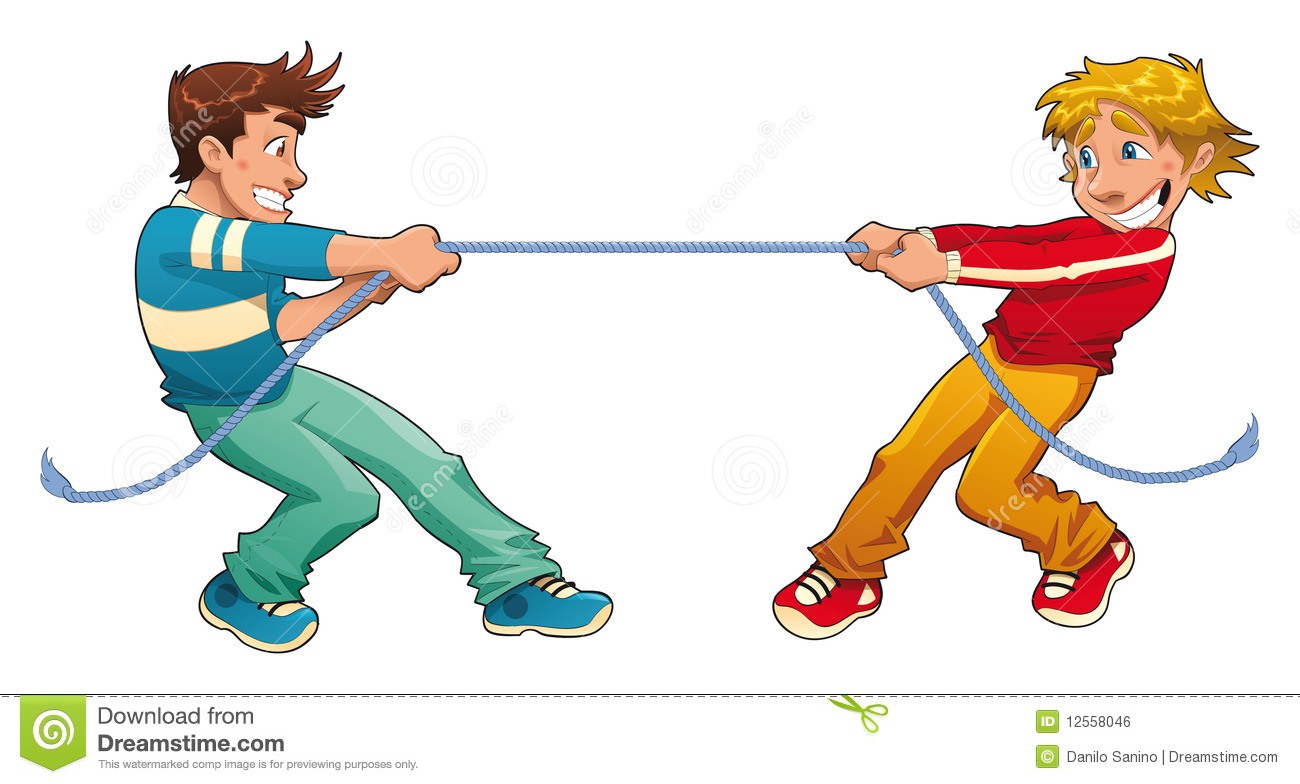
What is the unit for FORCE?
N (Newtons)
lbs (pounds)
g (grams)
m/s (meters per second)
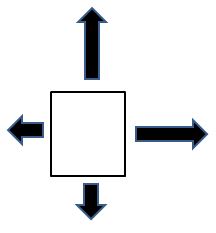
The down-arrow in this diagram is most-likely:
gravity
normal
a push or pull
friction
If this object were moving right, the left-arrow in this diagram is most-likely:
gravity
normal
a push or pull
friction
An object with a net force of 0 cannot be moving
True
False

Given the FBD, which of the following must be true?
The frictional force must be accelerating the system to the left.
The box must be accelerating to the right.
The box must be moving to the right.
The FBD is incorrectly drawn. This situation isn't possible

