
 Worksheets
AP Environmental Science Exam Fall 2023
Total questions: 65
Worksheet time: 2hrs 38mins

Which describes the situation that any resource open to everyone will eventually be overused and depleted because everyone can use the resource but no one is responsible for it?
“Tragedy of the Commons”
Sustainability
Industrial Revolution
Agricultural Revolution
The "Tragedy of the commons" describes the problem between
Short-term interests of individuals & long term interests of the Earth
Farmers & industrialized society
Poor people & rich people
People & animals
Which of the following is a global Common (Check all that apply)
Food
Hair
Rocks
Water
Paint
Which of the following are Abiotic factors?
plants
weather
predators
sunlight
temperature
The study of environmental science primarily considers
interactions among human systems and those found in Earth
the effect of human systems
abiotic factors that influence the state of our environment
factors that affect global climate change
An ecosystem is a location on Earth that includes
only biotic components
only abiotic components
interacting biotic and abiotic components
positive and negative feedback loops
Which of the following is a qualitative observation?
15 inches
a liquid
a green solution
6 feet 1 inches
Place the ecology levels of organization in proper order (smallest to largest)
organism > population > community > ecosystem > biosphere
community > organism > ecosystem > biosphere > population
organism > community > biosphere > population > ecosystem
population > biosphere > ecosystem > community > organism
A tapeworm lives in the small intestines where it feeds and grows, robbing the human of essential nutrients. This is a _____ type of relationship.
Commensalism
Parasitism
Symbiotic
Mutualism
The cattle egret follows herds of cattle and eat the insects that the cattle stir up as they move through the grassland. The cattle appear to be unaffected by the egrets. This is a _____ type of relationship.
Commensalism
Parasitism
Symbiotic
Mutualism
Which is a biotic factor?
producers
pH
energy
humidity
What law best relates to energy loss within an ecosystem?
First law of thermodynamics
Second law of thermodynamics
Third law of thermodynamics
Law of conservation of matter
Which best describes the concept of net primary production?
total amount of energy available from the Sun
total amount of cellular respiration conducted within an ecosystem
energy captured minus energy lost
total amount of energy available from the producer

In which biome would you expect to find an area with an average temperature of 10oC and 200 cm of precipitation annually?
Temperate seasonal forest
Temperate rainforest
Woodland/shrubland
Tropical seasonal forest
Which biome is characterized by the presence of permafrost?
temperate seasonal forest
woodland/shrubland
tundra
boreal forest
Terrestrial biomes are defined by ____ and ____ variables.
temperature; precipitation
temperature; animals
precipitation; plants
animals; plants
What is a herbivore?
receives energy from the sun
only eats meat
only eats plants
eats both plants and meat
All of the following is true about a niche generalist EXCEPT
thrives in multiple environments
feeds on specific food only
lives in various habitats
feeds on various food
What is an omnivore?
receives energy from the sun
only eats meat
only eats plants
eats both plants and meat
Which of the following is not an example of an invasive species?
Kudzu vine
Carp
Elephants
Fire ants
Which of these is an aquatic indicator species?
Shrimp
Coral
Plankton
Sea Anemone
Which of these human actions impacts multiple nutrient cycles?
Deforestation
Driving gasoline cars
Burning sulfur- containing coal
Making fertilizers
Which of the following is an example of a keystone species?
Beavers
Elephants
Kudzu vine
Sea otters
Which of the following statements is true?
Biodiversity decreases with increased sunlight
Biodiversity decreases as you move away from the equator
Biodiversity decreases as you decrease in altitude
Biodiversity increases as you go further down in the oceans
The continent with the most amount of biodiversity in the world is
Asia
North America
South America
Europe
Match the organisms with their role in the ecosystem
Kudzu vine- invasive, beaver- keystone, sea urchin- foundation
Kudzu vine- keystone, beaver- invasive, sea otter- keystone
kudzu vine- foundation, beaver- keystone, sea otter- invasive
kudzu vine- invasive, beaver- foundation, sea otter- keystone
Which of the following statements is true?
Primary succession is followed by secondary succession
Primary succession occurs over a shorter time span
Forest fires and hurricanes lead to primary succession because a soil base still exists
Volcanoes creating igneous rock formations lay based for primary succession to take place
Pioneer species like moss and lichen are most likely to show up after
primary succession
secondary succession
Organisms that make physical changes and help create habitats are known as
Invasive species
Keystone species
Foundation species
Endangered species
Which of the following is true about island biodiversity?
Small islands are more likely to have more immigrated species
Small islands have more biodiversity
Small islands have more species
Small islands have less resources
A role played by an organism in an ecosystem is known at its
Niche
Job
Role
Duty
A role played by an organism in an ecosystem is known at its
Niche
Job
Role
Duty
What is the difference between primary and secondary succcession?
Primary succession already has soil
Lichen and moss come in for secondary succession
Secondary succession already has soil
Climax community is achieved quickly in primary succession
Which of the following has a negative impact on biodiversity?
Accidental introduction of invasive species
Burning fossil fuels
Burning the Amazon forest
Population growth
Overconsumption
Jay has 3 green marbles, 4 red skittles, and 5 twix. What is the species richness?
3
12
1.5
0.50
True or False: Mass extinctions are common.
True
False
Which pair of biogeochemical cycles are most associated with inorganic fertilizer and sewage waste?
Carbon and Nitrogen cycles
Carbon and Sulfur cycles
Phosphorus and Nitrogen cycles
Sulfur and Nitrogen cycles
Sulfur and Water cycles
In which biogeochemical cycles are humans most affecting the natural greenhouse affect?
Carbon, Nitrogen, and Water cycles
Carbon and Phosphorous cycles
Phosphorus and Nitrogen cycles
Sulfur and Nitrogen cycles
Sulfur and Water cycles
A forest has a GPP of 3.8 kilograms C/m^2/year and the rate of cellular respiration is 2.4 kilograms C/m^2/year. What is the NPP?
6.2 kg C/m^2/year
1.4 kg C/m^2/year
1.0 kg C/m^2/year
9.12 kg C/m^2/year
1.58 kg C/m^2/year
Greenhouse gases in the Earth's atmosphere
are in steady state
are decreasing
are increasing
can not be measured
Which of the following is not an abiotic factor?
sunlight
pH
water temperature
bacteria
soil texture
Choose the correct sequence for energy flow within an ecosystem
Herbivores --> producers --> carnivores --> scavengers
Producers --> herbivores--> carnivores --> scavengers
Producers --> carnivores --> herbivores--> carnivores
Scavengers--> carnivores --> herbivores--> producers
Which of the following statements best describes the concept of NPP
Energy captured minus energy lost
total amount of energy available for the sun
Total amount of energy produced from photosynthesis
Total amount of cellular respiration conducted within an ecosystem

What type of plate boundary is shown here?
Convergent
Subduction
Divergent
Transform

What type of plate boundary is shown here?
Convergent
Subduction
Divergent
Transform
What type of plate boundary is most likely to cause earthquakes?
Convergent
Subduction
Divergent
Transform
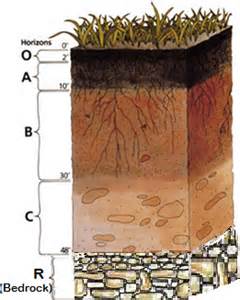
Which soil particle is largest in diameter?
Clay
Silt
Sand
Loam
In which layer of the atmosphere does weather take place?
Troposphere
Stratosphere
Mesosphere
Thermosphere
Exosphere
Which layer of the atmosphere contains the ozone layer?
Troposphere
Stratosphere
Mesosphere
Thermosphere
Exosphere
What is the ozone layer?
A layer of pollution
A layer of still air with no wind
A zone that absorbs UV radiation from the sun
A zone that absorbs air pollution
Which wind system is closest to the equator?
Doldrums
Westerlies
Polar easterlies
Trade winds
As altitude increases, what happens to temperature?
Temperature increases
Temperature decreases
Temperature does not change with altitude
Which gas is there the most of in the atmosphere?
Oxygen
Nitrogen
Water vapor
Carbon dioxide
Which of the following items has the highest albedo?
Asphalt
Grass
Rooftops
Snow
ENSO events take place in which ocean basin?
Atlantic
Indian
Pacific
Arctic
Why does the Earth have seasons?
Tilt of the Earth on its axis
Earth's shape
Earth's rotation around the Sun
Earth's rotation on its own axis

Which month has the highest precipitation?
July
August
September
June
If a primary consumer contains 1,000 kcal of energy, the secondary consumer gains how much energy when it eats the primary consumer?
1,000 kcal
100 kcal
10 kcal
10,000 kcal



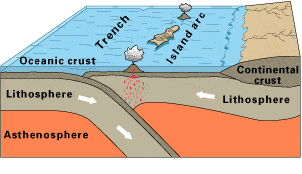
Observe this diagram of a plate boundary. One statement BEST describes what is happening. It is that
the oceanic crust is melting.
the denser ceanic crust is subducting under the less dense oceanic crust
volcanic islands are forming.
the tectonic plates are moving away from each other.

