Wayground logo

Free Printable Worksheets

Font size

S
M
L
XL
Worksheets

Geography and Government of Greece and Rome

Total questions: 72

Worksheet time: 1hrs 6mins
Name
Class
Date
1.

What geographical term best describes Italy?

a)

subcontinent

b)

island

c)

peninsula

d)

mountain range

2.

Which body of water was surrounded by the Roman Empire?

a)

Pacific Ocean

b)

Atlantic Ocean

c)

Red Sea

d)

Mediterranean Sea

3.

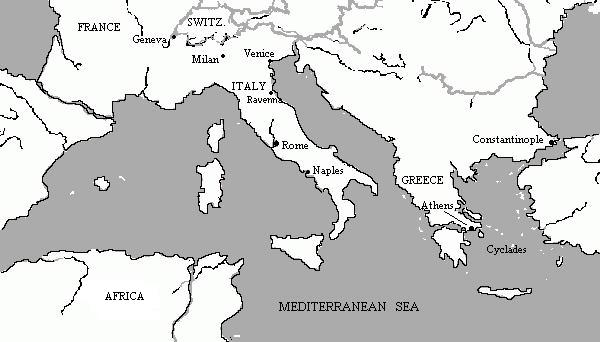
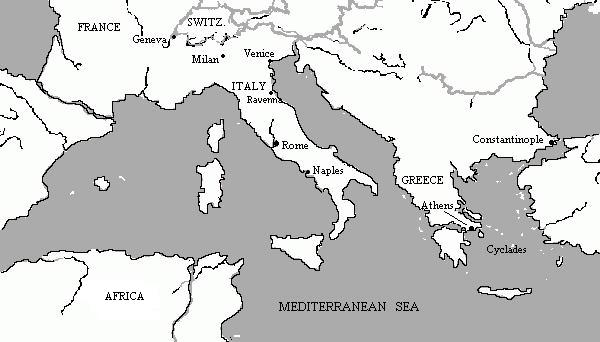
Which letter indicates the location of Gaul (modern day France)?

a)

A

b)

E

c)

G

d)

D

4.
How did the Mediterranean Sea impact the development of Rome? 
a)
It allowed enemy forces to easily enter the city
b)
It limited the city's interaction with other people
c)
It provided numerous sea-borne trade routes
d)
It prevented Rome from expanding its empire
5.
Which of the following geographical features MOST benefitted Rome's ability to trade with other societies?
a)
The Alps
b)
The Mediterranean Sea
c)
The Tiber River
d)
The Apennine Mountains
6.
Which of these is the best reason why Rome's geography was beneficial to their development?
a)
Their location on a peninsula protected them very well from attack.
b)
Their unique location gave them access to trade routes, fresh water, and protection from attack.
c)
Their unique location in the mountains protected them, but forced them to trade for all of their goods.
d)
None of these are true
7.

Why was Rome's geographic setting important?

a)

Strong winds brought heavy spring rains to the land.

b)

Its position was central to Italy and the known Western world.

c)

It was surrounded by deserts which kept is safe from invasion.

d)

Farmers depended on yearly flooding to plant crops.

8.
Why was communication difficult between communities in Ancient Greece?
a)
They did not have telephones
b)
Mountains and Water
c)
communication was easy
d)
most people had horses
9.

What are the names of the major bodies of water around Greece?

a)

Adriatic Sea and Sea of Cortes

b)

Mediterranean Sea and Aegean Sea

c)

Atlantic and Pacific Oceans

d)

Lake Michigan and Lake Superior

10.
Greece is a peninsula which means
a)
a mountain range with a river running through it. 
b)
land surrounded by water on 3 sides
c)
an area with major rivers running through it
d)
a very mountainous region
11.
How did Greece's mountainous land affect life for the Ancient Greeks?
a)
It did not affect life for the Greeks.
b)
The Greeks could only grow certain kinds of crops.
c)
The Greeks mostly ate at restaurants.
d)
The Greeks could grow any kind of crop they wanted.
12.
The Greeks depended on ____________ because their land was limited in resources.
a)
farming
b)
specialization
c)
fishing
d)
trade
13.

Because of their location, the ancient Greeks became skilled

a)

foresters.

b)

horse riders.

c)

sailors.

d)

road builders.

14.

Greece is a peninsula that has a southern peninsula called

a)

Athens.

b)

Phoenicia.

c)

Peloponnesus.

d)

Sparta.

15.
The Greek civilization began in an area dominated by
a)
rivers
b)
seas
c)
mountains
d)
mountains and seas
16.
Greeks believed that they lived on Mount Olympus.
a)
Greek criminals
b)
All Greek people
c)
Greek gods
d)
Kings of Greece
17.
______________ is the largest of the Greek islands.
a)
Rhodes
b)
Knosses
c)
Sparta
d)
Crete
18.
Where was Knosses located?
a)
Athens
b)
Sparta
c)
Crete
d)
Persia
19.
Another word for city-state is
a)
polis
b)
country
c)
village
d)
capital
20.
What crops can be grown in Greece?
a)
olives, grapes
b)
wheat, barley
c)
corn, oats, potatoes
d)
olives, grapes, wheat and barley
21.
Communities in many parts of ancient Greece became
a)
united
b)
fiercely independent
c)
friendly with all
d)
united and friendly with all
22.
Inland communities were separated by
a)
lakes
b)
rugged mountains
c)
deep valleys
d)
rugged mountains and deep valleys
23.
Although each polis was very different, all city-states
a)
spoke Greek
b)
Wrote Greek
c)
prayed to the same gods and goddesses
d)
spoke and wrote Greek and also prayed to the same gods and goddesses
24.
This group lived on the island of Crete which is south of mainland Greece.
a)
Minoans
b)
Myceneans
25.
This group lived on mainland Greece
a)
Minoans
b)
Myceneaens
26.
How did the Minoans get their wealth?
a)
With the help of aliens
b)
With the help of Ancient Egyptians
c)
Through Trade
d)
Through warfare 
27.
What civilization conquered the Minoans in 1400 B.C?
a)
Trojans
b)
Spartans
c)
Pericles
d)
Mycenaeans
28.

Two of the earliest Greek civilizations were the _______________ and _____________.

a)

Knossos and Mediterraneans

b)

Athenians and Minoans

c)

Minoans and Mycenaeans

d)

Mycenaeans and Phoenicians

29.

What natural disaster weakened the Minoan society and allowed the Mycenaeans to take control of Greece?

a)

Volcanic eruption

b)

Earthquake

c)

Hurricane

d)

Tsunami

30.

What was the name of the upper class in Ancient Rome?

a)

plebeians

b)

patricians

31.

What was the name of the lower class of Ancient Rome?

a)

plebeians

b)

patricians

32.

If a law is vetoed, it means:

a)

it is passed

b)

it has to be re-written

c)

it is rejected

d)

it is approved, but only with majority vote

33.

Why were the Twelve Tables created?

a)

Because eleven tables was simply inadequate.

b)

To provide written laws for Patricians to follow.

c)

To provide written laws for the Plebeians to follow.

d)

To provide written laws for all Romans to follow.

34.

The Conflict of Orders was

a)

A struggle for written laws

b)

What happened when you asked one parent for something and they said no, and then you asked the other for the same thing.

c)

A response to the political injustice felt by the Plebeians

d)

The idea that Plebeians pay taxes, but do not serve in governement

35.
________are 2 officials elected by the senators who serve for 1-year terms. 
a)
Consuls
b)
Senate
c)
Tribunes
d)
Dictators
36.
Representatives from the Plebeian class that were elected to protect Plebeian interests.
a)
Consuls
b)
Slaves
c)
Plebeians
d)
Tribunes
37.
Composed of 300 men that advised consuls and dictated political appointments.
a)
Consuls
b)
Senate
c)
Tribunes
d)
Tribal Assembly
38.
What type of government did Rome have, after they threw out their king?
a)
Democracy
b)
Oligarchy
c)
Monarchy
d)
Republic
39.
What term describes an action taken by a leader in which they say no to a law?
a)
consul
b)
legion
c)
tribune
d)
veto
40.
In times of crisis, what did the Roman Republic do differently?
a)
They elected new Senate members who took full control of the government.
b)
They allowed the army to run the country.
c)
They selected a dictator to rule with absolute power for a short time.
d)
They elected a king to permanently take control.
41.
These two members of the Roman government commanded the army and directed the city's government. 
a)
Legionaries
b)
Senators
c)
Kings
d)
Consuls
42.
How long did a dictator's term last? 
a)
1 year
b)
4 years
c)
for life
d)
6 months
43.
Rome is situated along which river?
a)
Tiber
b)
Rubicon
c)
Adige
d)
Po
44.
We were posted in the Forum for all to see, the recorded laws of Rome
a)
The Ten Commandments
b)
Hammurabi's Code
c)
The Twelve Taboos
d)
The Twelve Tables
45.

What does the senate do?

a)

Protect plebeian rights

b)

Rule the empire

c)

Veto laws

d)

Makes laws

46.

What type of government did the Roman Republic have?

a)

Direct Democracy

b)

Representative Democracy

c)

Oligarchy

d)

Tyranny

e)

Monarchy

47.

What's the defining difference between a Patrician and a Plebeian?

a)

Its just how the Sorting Hat divided them

b)

Their income and status

c)

What they eat

d)

Whether or not they could participate in government

48.

Splitting government into several branches so that each has its own responsibilities is:

a)

what creates a republic

b)

Checks and Balances

c)

Democracy

d)

Separation of Powers

49.

Power was divided among the three branches of government which included the

a)

Assemblies

b)

Senate

c)

Magistrates

d)

All of the above

50.

How long could consuls be in power?

a)

1 year

b)

4 years

c)

10 years

d)

until they died

51.
The public meeting place in Rome where Roman laws were displayed.
a)
Agora
b)
Forum
c)
Circus Maximus
d)
Colisseum
52.
A government of three parts is called a _____________ government.
a)
Tricycle government
b)
Tripartite government
c)
Plebeian council 
d)
Triumvirate government
53.
What form of government was present in Rome's earliest period 
a)
Monarchy
b)
Empire
c)
Dictatorship
d)
Republic
54.

A form of democracy in which all citizens can participate firsthand in the decision-making process.

a)

Direct Democracy

b)

Representative Democracy

c)

Citizen

d)

Aristocrat

55.

A form of government in which citizens elect officials to govern on their behalf.

a)

Direct Democracy

b)

Representative Democracy

c)

Citizen

d)

Aristocrat

56.

A person who searches for wisdom or enlightenment

a)

Merchant

b)

Philosopher

c)

Citizen

d)

Aristocrat

57.

To attach a sense of importance to something

a)

Emphasize

b)

Philosopher

c)

Tyrant

d)

Aristocrat

58.

A member of a democracy, who has certain rights and responsibilities

a)

Emphasize

b)

Philosopher

c)

Citizen

d)

Aristocrat

59.

To go with someone as a companion

a)

Emphasize

b)

Philosopher

c)

Citizen

d)

Accompany

60.

A government in which a small group of people have control.

a)

Oligarchy

b)

Democracy

c)

Tyranny

d)

Monarchy

61.

A government by the people

a)

Oligarchy

b)

Democracy

c)

Tyranny

d)

Monarchy

62.

A government with an absolute ruler that does not have to abide by the law.

a)

Oligarchy

b)

Democracy

c)

Tyranny

d)

Monarchy

63.

A government whose ruler inherits the position from a parent

a)

Oligarchy

b)

Democracy

c)

Tyranny

d)

Monarchy

64.

A 10 year period

a)

Decade

b)

Century

c)

Sufficent

d)

Millennium

65.
What is a city-state?
a)
A small area that was independent, had its own government, army and currency.
b)
A continent
c)
A type of army
d)
A government where one man ruled
66.
What is a Tyrant?
a)
Leadership that was passed down from generation to generation
b)
A small group of rich and powerful people
c)
Leaders that took control of the government by force
d)
A place where people met
67.
What is a Democracy?
a)
A government where one man ruled
b)
A government by the people, where people voted on issues
c)
A government lead by a small group of rich people
d)
A place where people met to discuss the government
68.
What was the Assembly?
a)
A place where people when to talk about government matters and approve laws
b)
A small area that was independent, had its own government, army and currency
c)
The people that had rights and responsibilities
69.
What is an Oligarchy?
a)
An old church
b)
A system of government where one man rules all
c)
A government where the people rule and vote on laws
d)
A system of government where a small group of rich and powerful men rule
70.
What is a Monarchy?
a)
Leaders that took control by force
b)
A government where one man rules. It was passed father to son
c)
A government where people voted on laws and government issues
d)
A type of butterfly
71.
Aristocrats were.......
a)
All citizens living in Ancient Greece
b)
Government meaning ruled by the Best and Richest
c)
Government rules by one tough leader
72.
What is a citizen?
a)
The people that had right and responsibilities in a city-state
b)
A rich, land owner
c)
A place where people met and talked about the government
d)
Rule passed from father to son