
 Worksheets
Unit 4 Review - Age Industrialism & Imperialism
Total questions: 148
Worksheet time: 2hrs 2mins
A reason some businesses hired children was:
To provide the children a bright future and opportunities
So they could save money by paying the children less money
So the children could take care of the heavy labor required for their business
To improve their public image
In pre-industrial times (before the industrial revolution), most people lived…
on very large farms
on rented lands
in cities
in rural villages
The agricultural revolution led to Britain’s industrialization (mass production) because…
It created new inventions that could be used for urban industrialization
It greatly increased the number of people working in agricultural fields
It encouraged the fair and equal treatment of workers on farms and in factories
It destroyed the cottage industry and made people look for work to work in factories
The agricultural revolution would allow for….
Larger populations
Increase in wealth of peasants
Decreased populations
More small family farms
Which term refers to “money to invest in labor, machines and raw materials” necessary to start a factory and industrialize?
Capital
Industrialization
Entrepreneur
Factory system
All of the following were effects of the conditions in factories on children EXCEPT…
They could lose hands or other body parts in machines
They could be beaten by the owners/managers of the factories
They were paid very well for the work that they did
They could work up to 16 hours a day with very few breaks for little pay
The movement of people into cities is called…
Emigration
Immigration
Urbanization
Absorption
What is Jacob Riis describing in the quote below?
“Bedrooms in tenements [run down apartments] were dark closets, utterly [completely] without ventilation [windows]. There couldn’t be any. The houses were built like huge square boxes, covering nearly the whole lot. Some light came in at the ends, but the middle was always black.”—Jacob Riis, The Battle with the Slum, 1902
Why governments should build parks in cities
The poor ventilation and lack of light in tenements
The homes immigrants had before arriving in the United States
The poor ventilation and lack of light in factories

What was the most important source of power for the early Industrial Revolution?
the steam engine
animals
the windmill
the dynamo

The Industrial Revolution began in this country.
The United States
Great Britain
Germany
Russia

What natural resources gave Great Britain an advantage in the Industrial Revolution?
water and forests
wildlife and precious gems
coal and iron
good harbors

What invention made possible the growth of railroads?
the spinning jenny
the factory
macadamized roads
the steam locomotive

Which of the following was NOT true of poor urban neighborhoods?
They were filled with overcrowded tenements.
The living conditions were dirty and squalid.
Most urbanites lived in factory-owned apartments.
The incidence of diseases was increasing.
New economic theories came about during the Industrial Revolution in response to —
the demands of wealthy industrialists for laws to regulate economies
the economic disparities between the wealthy and the working class
the lack of economic power women had in industrialized societies
the successful efforts of abolitionists to bring an end to the slavery trade
Women were paid ____ than men for doing the same work.
Less
More
1. For businesses, how did railroads impact the prices of goods & services?
Made goods and services more expensive & harder to ship
Made goods and services cheaper & easier to ship
Gave people safer transportation
Opened new land for exploring and settlements
These workers negotiate as a group to try and argue for better pay, better hours, and better working conditions.
Abolitionists
Labor Unions
Temperance Movement
Capitalists
How did the Industrial Revolution change the way we create goods? Choose the BEST answer
Made fewer products
Made more products from home
Made better quality products
Mass production & cheaper goods

Why did people move to cities during the Industrial Revolution?
People were looking for work in factories
People were looking on farms.
People wanted to buy a house.
People wanted to sell their crops.

This picture shows which problem of the factory system in Great Britain? Choose the BEST answer.
Unsafe working conditions
Unfair wages for women
Urbanization
Child Labor
Which of the following was NOT associated with early factory working conditions?
Low wages
Dangerous working conditions
Safe working conditions
Widespread pollution
In the early days of the Industrial Revolution, which item was manufactured in great numbers at newly built factories? In what industry did the Industrial Revolution begin?
Cars
Textiles
Food service
Household goods
Which of the following best describes the term industrialization? Choose the BEST answer.
Nations began to rely on one another for trade of various goods and resources after the beginning of the Industrial Revolution
Smaller nations needed assistance from their larger neighbors, so they formed trade alliances
More and more people began to move to cities, away from rural areas
Advancement in technology (machines) to produce goods on a larger scale and a reliance on manufacturing of goods instead of individuals producing goods by hand
The Industrial Revolution began in which country?
France
Great Britain
Germany
China

Which thesis (big idea) statement is supported by the graph above?
In the late 19th and early 20th centuries, the population distribution shifted as the urban population began to increase more dramatically than the rural population.
Most immigrants to the United States in the late 19th century settled in rural areas.
By the early 20th century, the population of cities grew while the population in rural areas declined.
The population center of the United States moved westward in the late 19th and early 20th
centuries.

What is the movement of people from farms to cities?
Utilitarianism
Urbanization
Proletariat
Enclosure Movement

A place where people and machines join together to mass produce goods.
Cartel
Corporation
Factory
Urbanization

Some of the machines invented in the 18th and 19th centuries are:
telephones, geographic positioning system, radios, airplanes
steam engine, railroads, flying shuttle, phonograph, steam ships, light bulb
sailboats, automobiles, wheel barrels, clocks, word processors
automatic washer, hair dryer, rockets, space shuttles

Which of the following is considered an impact of Industrialization during the 18th and 19th centuries?
Increased competition between industrialized nations
Rise of global inequalities
Transformation of society.
All of the above

The Steam engine
was originally invented to pump water out of coal mines
originally used petroleum to function
was originally invented to improve transportation
originally used electricity to function
The Industrial Revolution began in England because
It had lots of resources
It had banks that encouraged trade and investing
It had colonies that produced lots of raw materials
All of the above
During the 19th century, both Europe and the United States experienced massive growth in population as well as an increase in rural to urban migration. These changes can be described as
effects of industrialization
effects fo feudalism
causes of the French Revolution.
a. causes of the Enlightenment.
The Industrial Revolution that occurred in 19th century Great Britain directly caused
a decline in industrialization throughout the world.
an increase in industrialization around the world.
a decline in urbanization around the world.
an increase in urban to rural migration around the world

What effect of industrialization is shown in the images below?
increased emigration from Europe to the United States
the growth of railroads
increased child labor
increased environmental pollution
The ______________ is the machinery that is used to create a final product. This includes the facotries, buildings and supplies that are needs.
means of production
method of production
What is one impact of the Industrial Revolution on society in Europe during the nineteenth century?
It weakened the middle class.
It raised the standard of living.
It limited opportunities for women.
It decreased international investments.

Which of the following best completes the above diagram?
Results of the Cultural Revolution
Causes of the Agricultural Revolution
Results of the Scientific Revolution
Causes of the Industrial Revolution

Which of the following best completes the graphic organizer?
Decline of middle classes
Rise of industrial labor unions
Mass migration away from cities
Mechanization of agricultural methods

Which of the following best completes the graphic organizer?
Decrease in cost of goods
Increase in rural populations
Increase in cost of production
Decrease in international trade
A reason some businesses hired children was:
To provide the children a bright future and opportunities
So they could save money by paying the children less money
So the children could take care of the heavy labor required for their business
To improve their public image
The agricultural revolution led to Britain’s industrialization (mass production) because…
It created new inventions that could be used for urban industrialization
It greatly increased the number of people working in agricultural fields
It encouraged the fair and equal treatment of workers on farms and in factories
It destroyed the cottage industry and made people look for work to work in factories
Which term refers to “money to invest in labor, machines and raw materials” necessary to start a factory and industrialize?
Capital
Industrialization
Entrepreneur
Factory system
All of the following were effects of the conditions in factories on children EXCEPT…
They could lose hands or other body parts in machines
They could be beaten by the owners/managers of the factories
They were paid very well for the work that they did
They could work up to 16 hours a day with very few breaks for little pay

What was the cause of these effects:
The Agricultural Revolution
The Industrial Revolution
The Capitalist Revolution
The Enclosure Movement

Adam Smith, who took up for laissez-faire economics, believed that:
mercantilism was the only way to insure a truly free trade.
the government should regulate the economy.
the government should not interfere with the economy.
colonies were an important source of conpetition.

How did industrialization impact women?
Many women entered the paid workplace.
Many women practiced traditional economic activities.
It had no impact on the lives of women.
Women moved from cities to rural areas.
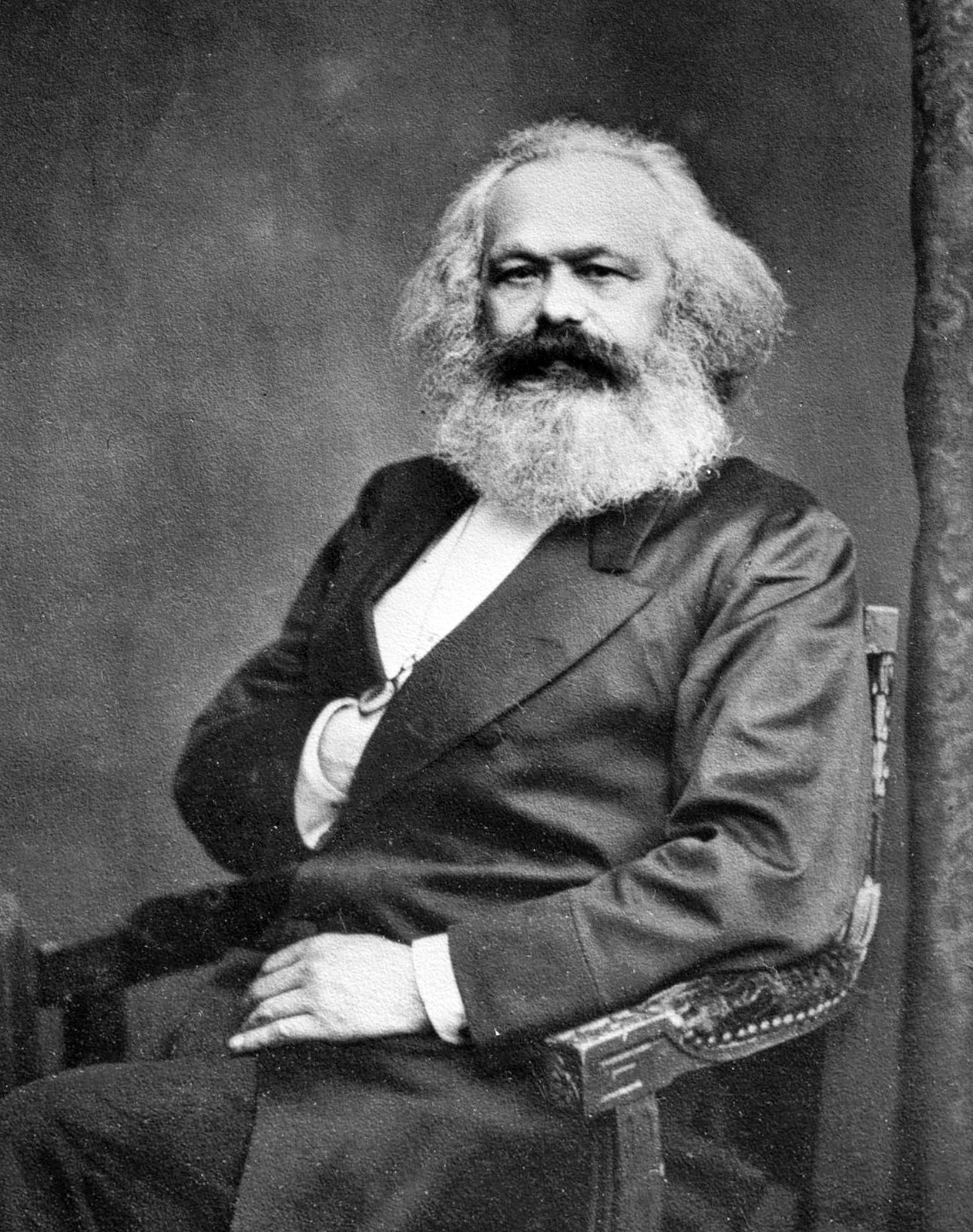
Karl Marx spelled out how he believed that workers should rise up against factory owners, outlining the basic principles of
capitalism
socialism
communism
command economies
During the Industrial Revolution, the expansion of free enterprise economic principles resulted in —
an increase in government regulation of factories
the workers sharing in the profits of the factory
an accumulation of wealth by factory owners
the passage of additional protective tariffs
New economic theories came about during the Industrial Revolution in response to —
the demands of wealthy industrialists for laws to regulate economies
the economic disparities between the wealthy and the working class
the lack of economic power women had in industrialized societies
the successful efforts of abolitionists to bring an end to the slavery trade
Capitalism fueled industrialization by
Ensuring all workers received high wages
Encouraging entrepreneurs to establish businesses
Giving the country many natural resources
Requiring inventors to file patents
Why was the formation of labor unions an effect of U.S. industrialization in the late 1800s?
Factory owners set up labor unions in order to control their large workforce.
Union were needed to guarantee a steady supply of workers.
Union membership was required for employment in new industries.
Unions organized industrial workers to protest unsafe working conditions and long workdays.
In the late 19th century, industrialization led to harsh working conditions in the United States. Which policies of the U.S. government allowed such conditions to develop and later led to the growth of labor unions to correct abuses of workers?
Antitrust policies toward monopolies
Isolationist policies regarding international alliance
Laissez faire policies toward big business
Imperialist policies regarding territorial expansion
Which of the following is a French term that means to "let do," "let alone," or “leave it alone?”
laissez faire
Je ne comprends pas.
Parlez-vous francais?
Je t'aime.
James Watt
steam engine
Henry Bessemer
Bessemer Process
Karl Marx
Communist Manifesto
Adam Smith
The Wealth of Nations
Laissez-faire
no government interference
capitalism
style of economy was based on competition, self interest and supply/demand
bourgeoisie
business owners during the Industrial Revolution
proleteriat
factory workers during the Industrial Revolution
socialism
style of economy based on spreading wealth more evenly and treating all people fairly
communism
style of economy where goods are owned in common and available to all as needed
"The Industrial Revolution was the period in which the production of goods shifted from hand production methods to complex machines. This period of industrialization resulted in social and economic changes." What is an EFFECT of the Industrial Revolution according to the statement?
It resulted in social and economic changes
The land was ideal for farming
The Industrial Revolution happened in Great Britain
Machines were used during the Industrial Revolution
Mass production led to:
Products being high quality
goods became less expensive
workers received high wages
industries moved to farming areas
Which of the following is not an accurate description to working conditions during the Industrial Revolution?
Workers often worked more than 12 hours a day
Workers were given multiple breaks
Children, even younger than ten, worked in factories
Workers received low wages
Which of the following is a reason why workers gained better pay, a shorter work day , as well as safer working conditions?
Workers revolted against factory owners and took over the means of production.
Workers unions formed and threaten to strike if employers did not meet their demands
Employers believed that paying workers more money would help their profit
Employers granted better pay out of their own care for their workers
1. For businesses, how did railroads impact the prices of goods & services?
Made goods and services more expensive & harder to ship
Made goods and services cheaper & easier to ship
Gave people safer transportation
Opened new land for exploring and settlements
During the Industrial Revolution, a new social and economic class that developed was called the:
Serfs
Nobles
Upper class
Middle Class
How did the industrial revolution change the economy in Europe?
It fell to communism
Mercantilism remained strong
Production moved from the countryside to factories
Less goods were produced leading to inflation
Which of the following doesn't relate to a "Free Market" economy?
Laissez faire
Private Ownership
Public ownership
Adam Smith
Which Group would agree with the philosophy of Capitalism?
Aristocrats
Factory owners
Karl Marx
Absolutists
Which of the following described history as a conflict between the "haves" (bourgeoisie) and the "have-nots" (proletariat)?
Adam Smith
John Stuart Mill
Voltaire
Karl Marx
Which market is known as a 'mixed economy,' with aspects of both free-market and command economies?
Mercantilism
Capitalism
Socialism
Communism
What impact did the Industrial Revolution have on the world?
increased economic competition
more equality
end of democracy
textile industry
an economic system in which private individuals, as opposed to the government, own and profit from businesses.
laissez-faire
patent
corporation
Capitalism
philanthropy
A period of rapid growth in the use of machines in manufacturing and production that began in the mid-1700s
Industrial Revolution
Gilded Age
Patent
Trust
What book, written by Smith, is considered by many to be the cornerstone of capitalism and was Smith's most famous work?
The Wealth of Nations
Capitalism and its Implications
Economics and Political Systems
Smith argued that a free exchange should be created because ...........
countries can import goods
it promotes fairness
countries are better off from the exchange.
Adam Smith believed that people naturally think of their own self-interest, but that we also have the capacity to understand and be concerned about other people.
True
False
Adam Smith believed in free markets and free trade where the government stayed out of the economy as much as possible.
True
False
Adam Smith started the idea that the best way to measure a nation’s wealth is its factors of production (land, labor, capital).
True
False
Adam Smith’s idea about the advantages of a division of labor is based on having workers specialize in a certain aspect of production.
True
False
One important role that Adam Smith said we need government to fulfill is to finance and plan major public works programs like roads, bridges, canals, etc.
True
False
Who is the "Father of Economics and Modern Capitalism"?
Adam Smith
Karl Marx
John Keynes
Alfred Marshall
Wealth of Nations introduced this theory that we should each do what we are best at and trade for other things we want and need
The Invisible Hand
Laissez Faire
Division of Labor
Equilibrium
What is a key principle of a market economy?
The means of production are controlled by the state.
Supply and demand determine production and price.
Employment opportunities are determined by social class.
Businesses are owned by the people collectively.
During the 1800s, the writings of Marx, Engels, and Dickens focused attention on the problems faced by
factory owners
investment bankers
farm laborers
industrial workers
Karl Marx and Friedrich Engels encouraged workers to improve their lives by
electing union representatives
participating in local government
overthrowing the capitalist system
demanding pensions and disability insurance
According to Karl Marx, the history of all societies is a struggle between what?
religions
countries
economic classes
race
“. . . They [the Communists] openly declare that their ends can be attained [achieved] only by the forcible overthrow of all existing social conditions. Let the ruling classes tremble at a Communist revolution. The proletarians have nothing to lose but their chains. They have a world to win. Working men of all countries, unite!”
— Friederich Engels and Karl Marx, Communist Manifesto, 1848 from the NYS Global History and Geography Regents Exam, August 2002.
These views, expressed by Engels and Marx, were developed in reaction to the
unification of Germany
Commercial Revolution
Congress of Vienna
Industrial Revolution
In the 19th century, European powers engaged in a land grab known as the "Scramble for _______."
Africa
Antarctica
Austrialia
North America
According to Social Darwinism
Weaker nations need the support of stronger ones
It is natural for weak nations to be conquered by stronger ones
There is no such thing as nations
Natural resources should be shared equally by all nations
Britain forcing the people of India to go to British-style schools, speak English and convert to Christianity is which type if imperialism?
Cultural
Political
Economic
National
The Boxer Rebellion was a response to European influence in
South Africa
China
India
Korea
Arguments in favor of European imperialism included all of these EXCEPT
better education and Christianity for natives
new hospitals, roads, and bridges
greater freedom and independence for natives
colonies get more stability and security
What is Imperialism?
A peaceful transfer of power
Economic, political, or military controll over a nation
Unrestricted warfare on a populace
The transfer of goods from one group to another
Reorder the following
Age of Exploration
Colonization
Industrial Revolution
Imperialism
Which of these BEST describes the scramble for Africa?
Imperialist powers sliced Africa amongst themselves by drawing borders on a map.
Diplomats worked with tribal leaders to determine how to colonize countries in Africa.
European countries worked to finance capital expansion in African nations through
loans.
The United States used the Roosevelt Corollary to prevent nations from colonizing
Africa.
Which of these European nation-states held the most colonial possessions during the New
Imperialism?
France
China
the United States
Great Britain
How did native people in Africa react to imperialist expansion?
They accepted European control peacefully and resolved to use colonization to their
advantage.
They resisted imperialist powers, but could not overcome the superior firearms of
Europeans.
They fought against European countries and often developed successful strategies to
defeat them.
They reluctantly accepted colonization after they saw how imperialism improved their
economies.
Which of these BEST describes the relationship between imperialist powers?
Countries respected territories of other nations.
Countries worked together to divide raw materials.
Countries formed fierce rivalries with other nations.
Countries staked land far from colonies of other nations.

A policy in which a strong nation seeks to dominate other countries politically, socially. or economically.
Militarism
Imperialism
Nationalism
Sphere of Influence

Theory based on “survival of the fittest” and was used by Europeans to justify imperializing Africa.
Survivalism
Nationalism
Racism
Social Darwinism

The belief that it was up to Europeans to civilize lesser cultures
Imperialism
Manifest Destiny
White Man's Burden
Ethnocentrism

Which of the following was not a social reason for Imperialism?
Nationalism
Prestige
Security
New Markets

Which of the following was not an economic reason that European nations participated in Imperialism?
Expand their economy
Racism
Gain raw materials
New Markets

Imperialist style of management that relied on existing political leaders.
Direct Control
Indirect Control
Economic Imperialism
Sphere of Influence

Imperialist style of management in which Europeans brought in their own leaders to run the colony, and did not train locals.
Indirect Control
Direct Control
Sphere of Influence
Economic Imperialism
Stronger nations taking over weak nations..
Nationalism
Industrialism
Imperialism
WWI
Which of the following could be a major cause for Imperialism in Europe?
Many nations wanted to go to war with one another
Religious freedom was needed in the un-claimed countries
Natural resources and more room for industries was needed
Land was cheaper in the weaker nations, which was needed for power
An area in which an outside power claims exclusive investment or trading privileges
Colony
Protectorate
Sphere of Influence
Economic Imperialism
A Country/territory governed internally by a foreign power
Colony
Protectorate
Sphere of Influence
Economic Imperialism
A country/territory with it's own internal government but under the control of an outside power
Colony
Protectorate
Sphere of Influence
Economic Imperialism
Which of the following are evidence of European Racism?
Christian missionaries going to other nations to spread their religion
European nations involving other smaller nations in their industry
European nations claiming it is their "burden" to bring western culture to smaller nations
European nations creating new jobs in less developed nations

Which generalization would best be supported by the image?
Nationalism caused tense competition among the imperial powers for more territory.
Liberalism drove superpowers to create equitable distribution of land in colonies.
Imperialism resulted in new political alliances between African and Asian countries.
Colonial societies welcomed imperialists to obtain better technology and education.

Which piece of technology did NOT aid global trade?
combustion engines to power railroads
steam powered ships
building of massive new canals
building of massive new rail networks
Materials, money, staff, and other assets necessary for effective operation.
Militarism
Imperialism
Protectorate
Resources
Which type of imperialism is when a large population moves into another area to establish towns, farms, and businesses?
Protectorate
Settlement Colony
Dependent Colony
Intervention
Which two continents did Europeans begin to imperialize?
Africa
Asia
South America
Austrialia


Which of the following factors contributed to the Boxer Rebellion?
poor treatment of foreigners by Chinese leaders
the breaking of the alliances between Russia and China
Chinese nationalists' anger at foreign involvement in the country
American socialism and its effects on China

The main reason industrialized nations wanted to imperialize non-industrialized nations was______.
to gain raw materials
to show national pride
Imperialism started because of which of the following reasons?
Nationalism - Empire Building
Economic - desire for new markets and resources
Western belief in cultural superiority
None of the options are a reason the policy of Imperialism was adopted
Who benefited most from imperialism?
European nations
Native Americans
African Kingdoms
Indian Kingdoms

Countries want to use imperialism to gain colonies for all of the following reasons except
gain new resources
show their power
learn about other cultures
spreading their greatness
Imperialism led to political tensions between European countries?
True
False

All of these were NEGATIVE EFFECTS of imperialism.
Africans lose land and independence; many lose lives.
African colonies began to slowly industrialize.
Traditional cultures began to break down.
Division of Africa created problems still in existence today.
Define "exploit."
To give someone their fair share of the credit or pay.
To clearly define something.
To treat unfairly by using someone’s work or ideas and giving them very little in return
A secret agreement or cooperation especially for an illegal or deceitful purpose
Which of these was NOT a reason European powers colonized Africa and Asia?
They wanted to acquire power and prestige
They wanted to gain access to natural resources such as gold, rubber, timber, and metals
They had a mission to civilize "inferior races"
They wanted to protect weaker nations from other foreign influences
What does the phrase "the sun never sets over the British Empire" mean?
it's always sunny in Britain
it shows how large their empire was
it shows how dangerous they were
is a reference to the shiny money they had

What motivation for imperialism is depicted in this image?
Exploratory
Religious
Political
Economic
What was the impact of Imperialism?
Africa and Asian countries were exploited
European countries became rich
Tensions grew around the world
The native populations loved the Europeans

