wayground logo

Free Printable Worksheets

Font size

S
M
L
XL
Worksheets

World History Fall Semester Exam

Total questions: 150

Worksheet time: 2hrs 58mins
Name
Class
Date
1.
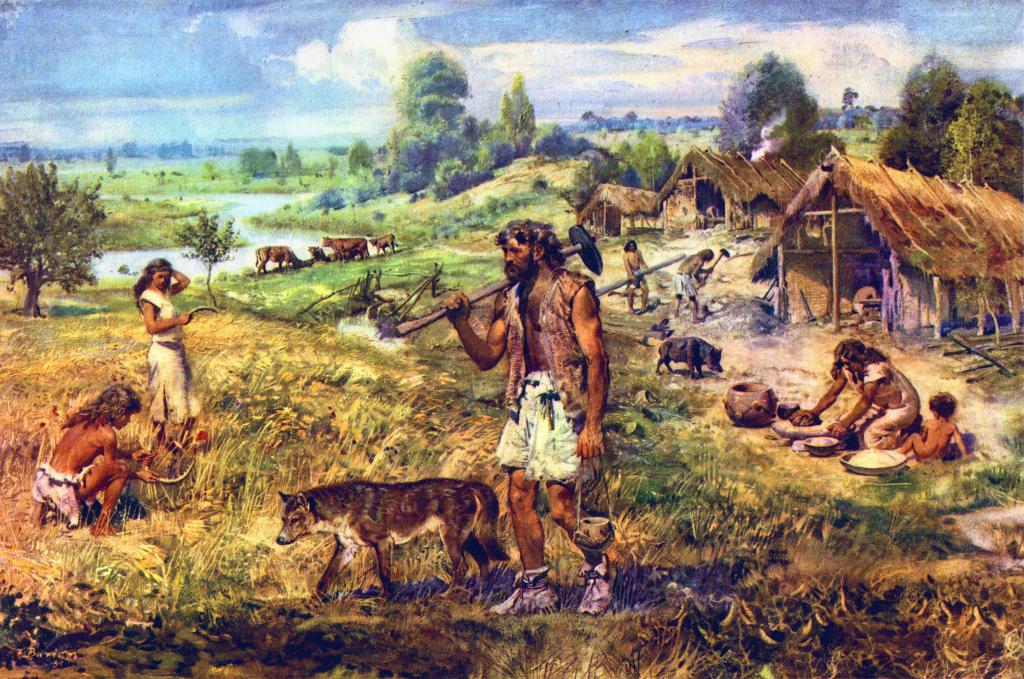
What is another name for the Neolithic Age?
a)
New Stone Age
b)
Old Stone Age
c)
Prehistoric Period
d)
The Ice Age
2.
What change marked the beginning of the Neolithic Revolution? 
a)
beginning of hunting and gathering
b)
man learned to write
c)
man began farming
d)
man built towns and cities
3.
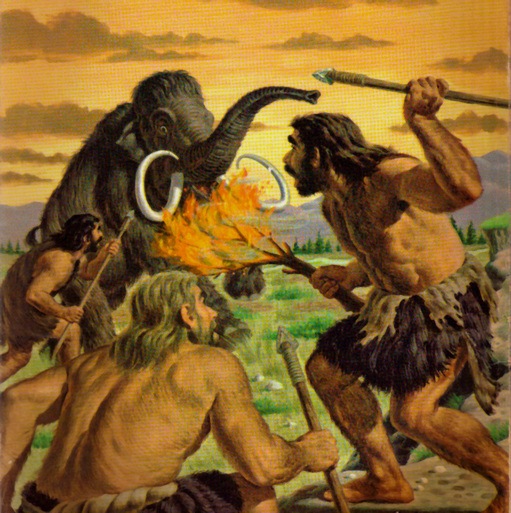
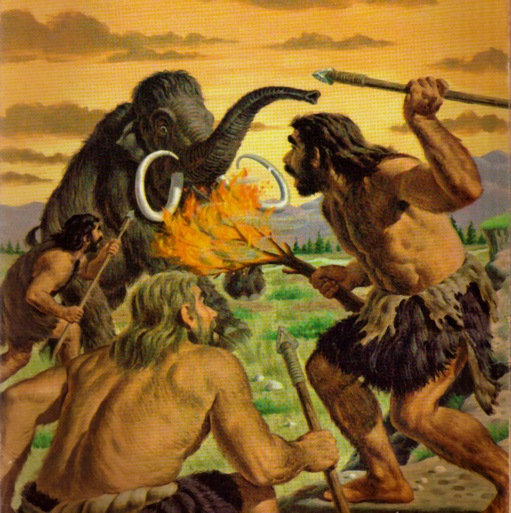
How did man get his food during the Paleolithic Age?
a)
Growing crops
b)
Hunting and Gathering
c)
Stealing from others
d)
Scavenging
4.
What was one benefit of having a permanent home?
a)
safety from wild animals
b)
less disease
c)
less children so fewer people
d)
more space to live
5.
Which of the following happened when man began to farm?
a)
There were communities where people could do jobs other than farming jobs 
b)
They had more meat in their diet
c)
They were constantly attacked by wild animals
d)
They had to move from place to place following crops
6.
How did the "Stone Age"get its name?
a)
Man made his homes out of stone.
b)
Man made tools and weapons out of stone.
c)
Man carved sculptures out of stone.
d)
Man worshiped statues made of stone.
7.
What did man use to build his first permanent shelters?
a)
wood and straw
b)
sun baked mud or clay
c)
aluminum siding
d)
animal skins
8.
Which of the following would NOT be a job someone might have in a Neolithic village?
a)
trader
b)
stone cutter
c)
potter
d)
car salesman
9.
What did Neolithic man use obsidian (volcanic glass) for?
a)
make up
b)
knives
c)
plates and bowls
d)
windows
10.

A large land mass smaller than a continent is know as a ___________.

a)

subcontinent

b)

mini-continent

c)

euro-asia

d)

Mesopotamia

11.

Seasonal wind patterns that cause dry and wet seasons are called ____________.

a)

hurricanes

b)

monsoons

c)

Himalayas

d)

cold fronts

12.

A stamped image with images of humans and animal is know as a(n) ________________.

a)

cuneiform

b)

pictograph

c)

seal

d)

otter

13.

As in ___________________, the flooding river created fertile plains where people first settled.

a)

Mesopotamia

b)

Pakistan

c)

Ganges

d)

Greece

14.

India's first known civilization is call the __________________ civilization.

a)

Egyptian

b)

Harappan

c)

Sumerian

d)

Babylonian

15.

What is today's problem with the Harappan writing system?

a)

The Harappan civilization had no writing system.

b)

Scholars have not yet learned to read it.

c)

The "Seals" only tell stories about animal legends.

d)

It disappeared with the Harappan civilization.

16.

The longest River that flows out of the Himalaya Mountain range is the _______________River.

a)

Nile

b)

Mississippi

c)

Ganges

d)

Indus

17.

Harappan ________________ have been found in Mesopotamian cities, showing that the people traded goods with other civilizations.

a)

seals

b)

religious texts

c)

boats

d)

hydroelectric designs

18.
The Nile River flows through two important regions in Egypt called
a)
Mesopotamia
b)
Upper and Lower Egypt
c)
Eastern and Western Egypt
d)
Nubia and Cairo
19.
What is a dynasty?
a)
a collection of queens
b)
a collection of kingdoms
c)
series of rulers from different families
d)
series of rulers from the same family
20.
Why were tombs filled with art, jewelry, etc.....?
a)
Tombs were museums.
b)
Tombs were private storage for the pharaoh.
c)
Tombs were the safest place in the kingdom.
d)
They believed the dead enjoyed their materials in the afterlife.
21.
Whose tomb was discovered in 1922?
a)
King Tutankhamen
b)
Ahmose
c)
Ramese
d)
Queen Hatsheput
22.
The worship of many gods.
a)
monotheism
b)
irrigation
c)
polytheism
d)
epic
23.
Who would write and record information?
a)
slaves
b)
scribes
c)
farmers
d)
craftspeople
24.
Who would write and record information?
a)
slaves
b)
scribes
c)
farmers
d)
craftspeople
25.
Egyptian writing system
a)
papyrus
b)
alaphabet
c)
cuneiform
d)
heiroglyphics
26.
What is papyrus?
a)
mud used in building
b)
plant from which paper is made
c)
rock used to make tools
d)
animal skin
27.
Rich soil carried and mixed with water is 
a)
pebbles
b)
silt
c)
dust
d)
clouds
28.
Why was the Rosetta Stone so important?
a)
It helped archaeologists decipher Egyptian writing?
b)
It gave clues about building.
c)
It was a book of the dead.
d)
It told how pharaoh's rules.
29.
Who is at the top of the Egyptian social hierarchy?
a)
slaves
b)
pharaoh
c)
scribe
d)
merchant
30.
Steep river rapids, almost impossible to sail by boat
a)
delta
b)
canal
c)
dam
d)
cataracts
31.

What was the primary language of the Byzantine Empire?

a)

Greek

b)

Roman

c)

Latin

d)

Turkish

32.
Justinian's most famous achievement is the
a)
Wall of Constantine
b)
Holy Crusade 
c)
Crowning of Charlemagne 
d)
Justinian Code
33.

Where was Constantinople located?

a)

on a strait linking the Mediterranean Sea with the Atlantic Ocean

b)

on a river delta at the northern edge of Africa

c)

on a peninsula at the southeastern end of Europe

d)

on an island in the southern part of the Mediterranean Sea

34.
Which groups had the most influence on the government, culture and beliefs of the Byzantine Empire? 
a)
Arians, Huns and Vandals 
b)
Muslims and Persians 
c)
Jews and Visigoths 
d)
Romans, Greeks and Christians 
35.
Which of the following would most likely be found in Byzantine art? 
a)
woven tapestries of emperors 
b)
mosaics of Christian religious figures
c)
portraits of ordinary people 
d)
marble statues of Roman gods 
36.
What was the capital city of the Byzantine Empire? 
a)
Rome 
b)
Athens 
c)
Constantinople 
d)
Italy 
37.

Why was Constantinople such a prosperous city?

a)

Trade hub for Europe, Asia, and Africa

b)

Great architecture

c)

Autocratic rulers

d)

The pope lives there

38.
In AD 330, what did Emperor Constantine do that led to the beginning of the Byzantine Empire? 
a)
He angered Roman nobility, leading to a civil war between the east and the west.  
b)
He founded Constantinople and moved the Roman Empire's capital there.  
c)
He converted to Christianity and decreed that all other religions were banned. 
d)
He divided the Roman Empire into several different kingdoms and empires. 
39.
What was the Byzantine empire often called?
a)
Eastern Roman Empire
b)
Europa
c)
Persia
d)
World rulers
40.
Who overran Constantinople and ended the Byzantine Empire in 1453? 
a)
Christian Crusaders
b)
Ottoman Turks
c)
Seljuk Turks
d)
Mongols
41.
The Byzantine Empire finally came to an end in 1453 when the ______________ Turks took the city of Constantinople
a)
Seljuk
b)
Kurdish
c)
Ottoman
d)
Armenian
42.
What is this a picture of? 
a)
The split of the Roman Empire
b)
Mesopotamia
c)
The split of the New Rome
d)
Roman Republic after the Punic Wars.
43.

Art using small bits of class and rock to form a picture is called.

a)

Finger Paints

b)

Stained Glass

c)

Mosaics

d)

Glossy Works

44.

Who was the first emperor to convert to Christianity?

a)

Justinian

b)

Constantine

c)

Theodora

d)

Diocletian

45.

Leader of the Eastern Church was called:

a)

Patriarch

b)

Pope

c)

Pastor

d)

Father

46.

Leader of the Western Church was called:

a)

Patriarch

b)

Pope

c)

Pastor

d)

Father

47.
Which River Valley is furthest East?
a)
China
b)
Mesopotamia
c)
Indus
d)
Egypt
48.
What river goes with Egypt?
a)
Nile
b)
Euphrates
c)
Egypt
d)
Indus
49.
What was the first form of writing?
a)
Alphabet
b)
Cave Art
c)
Writting
d)
Drawings
50.
What river valley would have been here?
a)
China
b)
Mesopotamia
c)
Indus
d)
Egypt
51.
What was the first river valley to appear?
a)
China
b)
Egypt
c)
Indus
d)
Mesopotamia
52.
Which of the following means one god?
a)
Monotheism
b)
Polytheism
53.
Belief in one God?
a)
Polytheism
b)
Monotheism
c)
Ditheism
d)
Diffusion
54.
Which animal is sacred to Hindus?
a)
Snake
b)
Monkey
c)
Elephant
d)
Cow
55.
What civilization is between the Tigris and Euphrates Rivers?
a)
Egypt
b)
China
c)
Mesopotamia
d)
Indus
56.
What is a similarity between Hinduism and Buddhism
a)
Similar number of member
b)
Many gods
c)
Reincarnation
d)
Caste system
57.
What river(s) is(are) nearby the Ancient Chinese civilization?
a)
Nile River
b)
Indus River
c)
Yangtze and Yellow Rivers
d)
Tigris and Euphrate Eivers
58.
Name the civilization: 
- Nile River
- Hieroglyphics
- Pyramids
a)
Egypt
b)
Mesopotamia/
Sumer
c)
India
d)
China
59.
Name the civilization: 
- Tigris and Euphrates
- Cuneiform
- City-States
a)
Egypt
b)
Mesopotamia/
Sumer
c)
India
d)
China
60.
Democracy means ________?
a)
demonstration of government
b)
government with a king
c)
government run by a few wealthy leaders
d)
government by the people
61.
What type of government is run by a single ruler?
a)
Democracy
b)
Monarchy
c)
Oligarchy
d)
Theocracy
62.
The Indian Caste system created _________ 
a)
greater opportunity for peasants
b)
social classes
c)
social justice
d)
a strong infantry
63.
The teachings of Jesus led to the rise of what new religion?
a)
Buddhism
b)
Zoroastrianism
c)
Judaism
d)
Christianity
64.
Buddhism is based on the idea that ___________?
a)
suffering is caused by desires
b)
people should be divided into a caste system
c)
polytheism is greater than monotheism
d)
there exists good and evil
65.
The first sailboat, first system of writing, and first wheel came from __________?
a)
Mesopotamia
b)
Egypt
c)
Ancient India
d)
Ancient China
66.
The geography of Ancient Greece allowed for _________
a)
the rise of city-states
b)
the spread of Hinduism
c)
growing of crops such as wheat
d)
the belief in one god
67.
A definition of Hellenistic culture is _____________?
a)
the blending of Egyptian, Persian and Greek influences
b)
the ruling of a small group of people
c)
cruel punishments to control behavior
d)
the spread of spiritual peace
68.
Which earlier civilization most influenced the Roman Empire?
a)
Greek
b)
Egyptian
c)
Persian
d)
Israeli
69.
The social class made up of craftsmen, merchants, and poor farmers. 
a)
Slaves
b)
Patricians
c)
Untouchables
d)
Plebeians
70.
The social class made up of wealthy, land owners.
a)
Slaves
b)
Patricians
c)
Untouchables
d)
Plebeians
71.
_______, shown here, were forms of irrigation that moved water to fields. 
a)
Canals
b)
Streams
c)
Aqueducts
72.
Who became the first emperor of Rome in 27 B.C.E.?
a)
Augustus
b)
Marc Antony
c)
Tiberius
d)
Caligula
73.
In the Roman Republic, what was the most powerful legislative or law-making body?
a)
The Tribunes
b)
The Senate
c)
The Consuls
d)
The Legion
74.
What are the two major rivers of Ancient India?
a)
Tigris & Euphrates
b)
Nile & Blue Nile
c)
Indus & Ganges
d)
Huang He & Yangtze
75.

What natural barrier makes India a subcontinent of Asia?

a)

Monsoons

b)

Deccan Plateau

c)

Himalayan Mountains

d)

Gobi Desert

76.

A social group that one is born into and cannot be change is called a

a)

citadel

b)

family

c)

raja

d)

caste

77.
Which things were determined based on a person's caste or place in society?
a)
Job, marriage, friends
b)
Foods to eat
c)
Clothes to wear
d)
Blessings
78.

Which country is NOT part of the Indian Subcontinent?

a)

Bhutan

b)

Bangladesh

c)

China

d)

Sri Lanka

e)

India

79.

Harappans traded with civilizations as far away as Mesopotamia.

a)

True

b)

False

80.

Historians call the civilization that developed along the Indus the ______________ civilization.

a)

Harappan

b)

Egyptian

c)

Mesopotamian

d)

Mohenjo-DAro

81.

Historians don't know much about the Harappan civilization religion because we can't read their writing.

a)

True

b)

False

82.

The Indian civilization developed on the Nile River.

a)

True

b)

False

83.

What body of water does the Indus River flow into?

a)

Indian Ocean

b)

Arabian Sea

c)

Pacific Ocean

d)

Ganges River

84.

Sources of information that provide first-hand accounts of the events, practices, or conditions you are researching. In general, these are documents that were created by the witnesses or first recorders of these events at about the time they occurred, and include diaries, letters, reports, photographs, creative works, financial records, memos, and newspaper articles (to name just a few types).

a)

Primary Source

b)

Secondary Source

c)

Thirdary Source

d)

Unreliable Source

85.

Examples of ___________ sources:

Bibliographies

Biographical works

Reference books, including dictionaries, encyclopedias, and atlases

Articles from magazines, journals, and newspapers after the event

Literature reviews and review articles (e.g., book reviews)

History books and other popular or scholarly books

Works of criticism and interpretation

Textbooks

a)

Secondary Source

b)

Primary Source

c)

Hearsay Source

d)

Best Source

86.

_______________ sources describe, discuss, interpret, comment upon, analyze, evaluate, summarize, and process primary sources. They are generally one or more steps removed from the event or time period and are written or produced after the fact with the benefit of hindsight.

a)

Secondary

b)

Primary

87.

An opinion or perspective presented by the author of a document, influenced by the author’s personal circumstances.

a)

Primary Source

b)

Point of View

c)

Historical Context

d)

Interpretation

88.

Often times, historians will come to different conclusions or having different ways of thinking about certain topics due to the way they _______________ the historical evidence.

a)

interpret

b)

perspective

c)

sequence

d)

source

89.
Where did Islam originate?
a)
Arabian peninsula
b)
China
c)
North Africa
d)
India
90.
What holy city are Muslims expected to make a pilgrimage to in their lifetime?
a)
Medina
b)
Mecca
c)
Jerusalem
d)
Damsacus
91.
Islam is a _______________ religion.
a)
pagan
b)
cult
c)
monotheistic
d)
polytheistic
92.
Who was the founder of Islam?
a)
Muhammad
b)
Moses
c)
Martin Luther
d)
Jesus Christ
93.
What is the Arabic word for God?
a)
Yahweh
b)
Allah
c)
Jesus
d)
Quran
94.
Whereas Christians believe in the Bible and Jesus, Muslims believe in the ___ and ____.
a)
Torah, Moses
b)
Mandate, Confucius
c)
Quran, Muhammad
d)
Umayads, Saladin
95.
What are the two holiest cities in Islam?
a)
Mecca and Medina
b)
Mecca and Damascus
c)
Damascus and Jerusalem
d)
Petra and Medina
96.
What forms the basis of Islamic faith?
a)
Four Noble Truths
b)
Five Pillars
c)
Eightfold path
d)
Three Wise Sayings
97.
What is a major holiday in Muslim culture?
a)
Ramadan
b)
Christmas
c)
Kwanzaa
d)
Hannukah
98.
What spread with Islam?
a)
Muhammad
b)
Arabic language
c)
political unity
d)
slavery
99.
During Ramadan Muslims are expected to:
a)
Refrain from almsgiving
b)
Make a pilgrimage to Mecca
c)
Fast from sunrise to sunset
d)
All of the above
100.
What is the name of the holy book of Islam?
a)
Bible
b)
Torah
c)
Qu'ran 
d)
Sunna
101.
What is the Islamic house of worship called?
a)
church
b)
mosque
c)
temple
d)
synagogue
102.
What city do Muslims need to face when they pray?
a)
Timbuktu
b)
Mecca
c)
Rome
d)
Sumer
103.
Greece's mainland can best be described as a(n)...
a)
peninsula
b)
archipelago
c)
island
d)
delta
104.
TRUE OR FALSE: Greece had lots of fertile valleys and rich soil.
a)
True
b)
False
105.
The geography of Greece was dominated by...
a)
rugged ocean coasts
b)
rich, fertile valleys
c)
mountains and seas
d)
vast desert plateaus
106.
Many communities in ancient Greece were separated by mountains and valleys which
resulted in...
a)
the development of many different languages
b)
the development of fiercely independent states
c)
the construction of an advanced system of roads
d)
alliances formed for group protection
107.
Where is the Mediterranean Sea?
a)
B
b)
G
c)
E
108.
Where is Crete?
a)
F
b)
C
c)
H
d)
A
109.
Where is Athens?
a)
F
b)
C
c)
H
d)
A
110.
Where is Sparta?
a)
F
b)
C
c)
H
d)
A
111.
Fill in the blank: When looking at a globe or a map, the lines of _________ run
lengthwise (north to south).
a)
Latitude
b)
Longitude
c)
Geography
d)
Immigration
112.
Fill in the blank: When looking at a map or globe, the lines of ____________ run west to east (from side to side).
a)
Latitude
b)
Longitude
c)
Geography
d)
Immigration
113.
Fill in the blank: Florida is a ______________ because it is surrounded by water on three
sides.
a)
Longitude
b)
Immigration
c)
Peninsula
d)
Latitude
114.
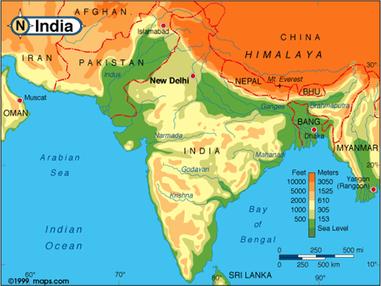
What river did these people in the ancient India settle along?
a)
Tigris
b)
Nile
c)
Indus
115.
Siddhartha Gautama is best known for which of the following?
a)
He was the king of the Harappan civilization.
b)
He was the founder of Hinduism.
c)
He was a great warrior from India.
d)
He was an Indian prince who founded Buddhism.
116.
The law of karma is:
a)
belief in many gods.
b)
code of law that covers all aspects of life.
c)
the belief that actions in this life effect the soul in the next life.
d)
the process of reaching heaven by rituals and prayer.
117.
A common building material in the Indus River Valley was
a)
stone
b)
bronze
c)
mud brick
d)
terracotta
118.
What was the largest trade item in ancient China?
a)
silk
b)
cattle
c)
metal
d)
coal
119.
What does Huang He translate to?
a)
red river
b)
blue river
c)
white river
d)
yellow river
120.
Shang China established a series of rulers from the same family.  What is each family rule called? 
a)
Monarchy
b)
Dynasty
c)
Dictatorship
d)
Empire
121.
Who is the founder of Buddhism?
a)
The Hebrews
b)
Hammurabi
c)
Pharaoh
d)
Siddhartha Gautama
122.
Confucius a very famous ____________, in Ancient China
a)
emperor
b)
philosopher
c)
army leader
d)
god
123.
Why did China call themselves the Middle Kingdom?
a)
They considered themselves the center of the world.
b)
They had older and younger countries around them.
c)
They had geographic barriers that isolated them.
d)
They didn't get along with other countries.
124.
What was the name of China's FIRST dynasty?
a)
Shang
b)
Zhou
c)
Hanfeizi
d)
Huang He
125.
Why did Qin Shihuangdi standardize laws, money, and the writing system?
a)
to maintain his power
b)
to unify the country
c)
to establish Confucianism
d)
to punish his ememies
126.

What type of landform covers the vast majority of the Arabian Peninsula?

a)

Rain Forest

b)

Desert

c)

Mountains

d)

Marshy Lands

127.

This prophet spoke to the Angel Gabriel in 610 AD which set up a whole new religion

a)

Jacob

b)

Abraham

c)

Jesus

d)

Mohammed

128.

The messages Mohammed received from the angel Gabriel form the basis of what religion?

a)

Christianity

b)

Judaism

c)

Confucianism

d)

Islam

129.

Mohammed was born in this now sacred Muslim city.

a)

Medinah

b)

Jerusalem

c)

Mecca

d)

Chicago

130.

The ___________ in Mecca is Islam's most sacred place.

a)

Shrine

b)

Qur'an

c)

Kaaba

d)

Taj Mahal

131.

Before Mohammed, the Kaaba was a shrine that contained what?

a)

Hundreds of Jewels and Diamonds

b)

Food for storage

c)

Hundreds of idols for worship

d)

Animals

132.

Mohammed was a prophet. A prophet is someone who ______________________.

a)

A person who tells messages from God

b)

A person who talks to angels sometime

c)

A person who reads the Qur'an

d)

Who is part god

133.

The merchant rulers of Mecca were very against Mohammed . Why?

a)

Thought his ideas criticized their conduct and attitudes and threatened their authority

b)

The merchant rulers were Christians

c)

Thought his ideas were too radical

d)

Were not against Mohammed. Actually supported him

134.

Muhammad and his followers left __________ and moved to ______________.

a)

Medina, Mecca

b)

Jerusalem, Mecca

c)

Mecca, Jerusalem

d)

Mecca, Medina

135.

What is the holy book of Islam is called?

a)

Torah

b)

Bible

c)

Qur'an

d)

Vedas

136.

A ____________ is a follower of Islam.

a)

Jew

b)

Christian

c)

Muslim

d)

Buddhist

137.

A building for Muslim prayer is also known as what?

a)

Mosque

b)

Church

c)

Temple

d)

Synagogue

138.

Medina was originally named Yathrib. It was renamed to mean what?

a)

Home of Allah

b)

House of God

c)

Sacred Vilalge

d)

City of the Prophet

139.

What do Muslims believe about Jesus?

a)

He was God's son but he did not die on the cross

b)

He was God's only son

c)

He was a great prophet but not God's son

d)

He was not real

140.

What are the basic tenets of the Islam faith called?

a)

Four Noble Truths

b)

Five Pillars

c)

Eightfold path

d)

Three Wise Sayings

141.

Islam is the _____________ biggest religion in the world.

a)

First

b)

Second

c)

Third

d)

Fourth

142.
Which of these is NOT one of the five pillars of Islam?
a)
There is no god but god.
b)
The pilgrimage to Mecca must be made.
c)
Fasting must be done every day.
d)
Donations to charity must be made annually.
143.
What is the pilgrimage to Mecca called?
a)
Kaaba
b)
Tajj
c)
Hajj
d)
Medina
144.
What starts the Neolithic Age?
a)
Cultural Revolution
b)
Agricultural Revolution
c)
Creation of Fire
d)
Information Revolution
145.
Why did farming start in Mesopotamia?
a)
The Gulf of Persia
b)
The Tigris and Euphrates Rivers
c)
The Arid Soil
d)
People there were smarter
146.
Which direction does the Nile flow?
a)
South
b)
Up
c)
North
d)
Down
147.
Which of the following came first?
a)
989 BCE
b)
746 CE
c)
873 BCE
d)
1903 CE
148.
Who invented the wheel?
a)
Mr. Sharples
b)
Nebuchadnezzar
c)
Hammurabi
d)
Sumerians
149.
What does nomadic mean?
a)
They travel from place to place
b)
Early humans
c)
Religious people
d)
Only travel for religion
150.
River Valleys were a good place for civilizations to grow because they offered
a)
religion
b)
rich soils for agriculture
c)
government
d)
401k's