
 Worksheets
10th Grade Midterm Exam Review
Total questions: 145
Worksheet time: 2hrs 12mins
During the Age of Absolutism, European monarchs looked to
Develop better relations with muslim rulers
Centralize political power in their nations
Encourage the growth of political farms
Increase human rights for citizens
Who was Peter the Great?
This man promoted Westernization campaigns to make his country more European
This man demonstrated absolutism by building the city Versailles as a way of distracting the French nobility
This man didn't believe that the average person was intelligent enough to participate in government, which led him to believe that enlightened monarchy was best
This man thought that humans were naturally greedy and chaotic and would need a large government to control them

Who was Louis XIV?
This man promoted Westernization campaigns to make his country more European
This man demonstrated absolutism by building Versailles as a way of distracting the French nobility
This man believed that humans were naturally good and would not need a large government to rule over them.
This man did not believe that the average person was intelligent enough to participate in government, which led him to believe that an enlightened monarchy was best.
Westernization means …
Traveling West in search of natural resources
To adopt or be influenced by the cultural, economic, or political systems of Europe
"A DEO REX, A REGE LEX — “the king is from God, and law is from the king.”
This quotation best reflects the concept of
constitutional monarchy
separation of powers
equal representation
divine right rule
"A DEO REX, A REGE LEX — “the king is from God, and law is from the king.”
This quotation best reflects the concept of
constitutional monarchy
separation of powers
equal representation
divine right rule

The actions described in the passage above demonstrate Peter the Great’s attempts to
Convert Russia to Islam
Improve Russia’s military
Westernize Russia
Model Russian culture after the Ottoman Empire

The actions described in the passage above demonstrate that Louis XIV was
Democratically elected
An absolute monarch
A traditionalist
A supporter of Martin Luther’s
What is the movement that believed everyone is born with natural rights?
Enlightenment
Evolution
Absolutism
Fundamentalism
John Locke believed in the specific natural rights of
life, liberty, and property
life, fraternity, and peace
peace, land, and bread
blood and iron
An agreement between the people and their government: people give up some of their personal freedoms, government provides peace order and safety
Scientific Revolution
Social Contract
Enlightenment
Scientific Method
According to the Enlightenment, the purpose of government is
to require unquestioning loyalty
to make harsh rules and punishments
to protect the rights of the people
an intellectual and educational movement that emphasized science and reason as guides to help see the world more clearly
Scientific Revolution
Scientific Method
Enlightenment
Social Contract
English philosopher who argued that people are born with natural rights (life, liberty, property), influenced U.S. Constitution
Adam Smith
Voltaire
John Locke
Jean-Jacques Rousseau
French philosopher believed government should have separation of powers; power should not be in the hands of one ruler/ruling family
Voltaire
Baron de Montesquieu
Adam Smith
John Locke
The Enlightenment leads to _____ because people began to question governments and the church
Revolutions worldwide
Peace among European nations
Social Equality across many societies
World War


Which of the following events was a reason the Edict of 1635 Ordering the Closing of Japan was issued?
War with China
Trade with Europeans
The Black Death
Korean influence
Which is the Japanese ruling dynasty that strove to isolate it from foreign influences such as Christianity?
Versailles
Mughal Empire
Tokugawa Shogunate
Ottoman Empire
Who was Louis XIV?
Great Ottoman leader, expanded the empire, and restructured laws.
The most famous Mughal leader, known for religious tolerance
Russian monarch who used Enlightenment ideas
Known as the Sun King, an absolute monarch of France

Click on the image to read the document, then answer the question.
Based on this passage, one way the castle at Edo and the palace at Versailles are similar is that both
became symbols of power and wealth
developed into monastic centers of learning
were meant to provide protection and prevent attacks
served as monuments to the military

The actions in the cartoon were taken as an attempt to
conform to Asian social values
bow to pressures from the Ottoman Empire
modernize the military
Make Russia more like Western Europe
Which heading best completes the partial outline below?
I.__________________________
A. Writings of Thomas Hobbes
B. Divine right theory
C. Centralization of political power
D. Reign of Louis XIV
Beginning of Global Trade
Growth of Democracy in Europe
Rise of Absolutism
Age of Exploration
Base your answer to the question on the speakers’ statements below and on your knowledge of social studies.
Speaker A: Although I spread serfdom in my country, I tried to modernize our society by incorporating western technology.
Speaker B: I promoted culture with my support of the arts. Unfortunately, I drained my country’s treasury by building my palace at Versailles and involving my country in costly wars.
Speaker C: I gained much wealth from my overseas empire in the Americas. I waged war against the Protestants and lost.
Speaker D: I inherited the throne and imprisoned my foes without a trial. I dissolved Parliament because I did not want to consult with them when I increased taxes.
Which type of government is most closely associated with all these speakers?
limited monarchy
absolute monarchy
direct democracy
constitutional democracy
Having a 'window to the west' made ___________ very important to Peter the Great.
access to a warm water port
shaving his beard
raising taxes
adopting sharia law
". . . Here a new city shall be wrought [built]. . . .
Shall break a window to the West. . .
Here flags of foreign nations all
By waters new to them will call. . .."
– Alexander Pushkin, The Bronze Horseman
Which Russian ruler's goals are described in the poem?
Ivan the Terrible
Sulieman the Great
Peter the Great
Cardinal Richelieu
In 1789, the King of France called _______ to discuss the financial issues they were experiencing.
Congress of the Estates
Estates General
The Great Meeting
The Convocation of France
The Bastille was ______________.
A symbol of the old system o absolute monarchy and oppression.
A prison in Paris.
A place of horrible punishment and filth.
All of the above are correct.
Who led the Committee for Public Safety and the Reign of Terror?
King Louis XVI
Napoleon Bonaparte
The First Estate
Maximilien Robespierre
How did Napoleon come to power in France?
He led a coup d'etat and overthrew the French Gov.
He was elected among several candidates after Robespierre's death.
He was chosen by the Pope.
He was chosen by the nobles of France because he was a distant relative of Louis XVI.

What cause of the French Revolution is represented by this image?
Weak leadership of the monarchy
Unequal social class system
Economic crisis
Inspiration from the Enlightenment

What does letter A represent in this image?
1st Estate
2nd Estate
3rd Estate
Estates General

Which event is associated with this image?
Reign of Terror
Meeting of the Estates General
Rise of Napoleon
Storming of the Bastille

Which leader would have used this machine to execute enemies of the Revolution?
Napoleon
Robespierre
Louis XVI
Metternich
Belief in the ideas of the Enlightenment and discontent within the Third Estate were causes of the
French Revolution
Counter Reformation
Industrial Revolution
Spanish Reconquista
Which issue was a cause of the French Revolution?
ineffective rule of Napoleon Bonaparte
nationalization of the Church
outrage over the use of the guillotine by the Committee of Public Safety
demand of the Third Estate for more political power
Which of these events related to the French Revolution occurred first?
Napoleon became emperor of France.
The Declaration of the Rights of Man was issued.
Louis XVI called the Estates General into session.
The Committee of Public Safety led the Reign of Terror.
“. . . Men are born and remain free and equal in rights. Social distinctions may be founded only upon the general good. . . .”
—Declaration of the Rights of Man and of the Citizen, 1789
Which principle of the Enlightenment philosophers is expressed in this quotation from the French Revolution?
natural law
nationalism
free trade
socialism
In which way did the ideas of the Enlightenment influence the French Revolution?
Superstition and ignorance were promoted.
The principles of mercantilism were glorified.
The divine right theory of kings was challenged.
Punishments for criminal acts were rooted in vengeance.
What revolutionary event is celebrated annually in France today?
The Tennis Court Oath
The Gathering of the Estates-General
The Storming of the Bastille
The March on Versailles
In what country did the Industrial Revolution begin?
The United States
Germany
France
England
Which of the following were reasons for the Industrial Revolution to begin in the country it began in?
Plentiful natural resources like coal and iron ore.
Geography - fast flowing rivers and harbors
A stable government which allowed for a free exchange of ideas.
For over a hundred years, stability in this country existed because of a very strong army.
Entrepreneurs had a surplus of capital that could be invested in machines, factories and new inventions.
In which of the following ways did steam power or the steam engine help ignite a modern Industrial Revolution?
It allowed factories to be built away from rivers.
It allowed factories to become more efficient in producing goods.
It allowed for lighting to be used in factories.
It revolutionized transportation.
What natural resource was used to fuel the Steam Engine during the Industrial Revolution?
Electricity
Petroleum
Water
Coal

What is the movement of people from farms to cities?
Utilitarianism
Urbanization
Proletariat
Enclosure Movement

A place where people and machines join together to mass produce goods.
Cartel
Corporation
Factory
Urbanization
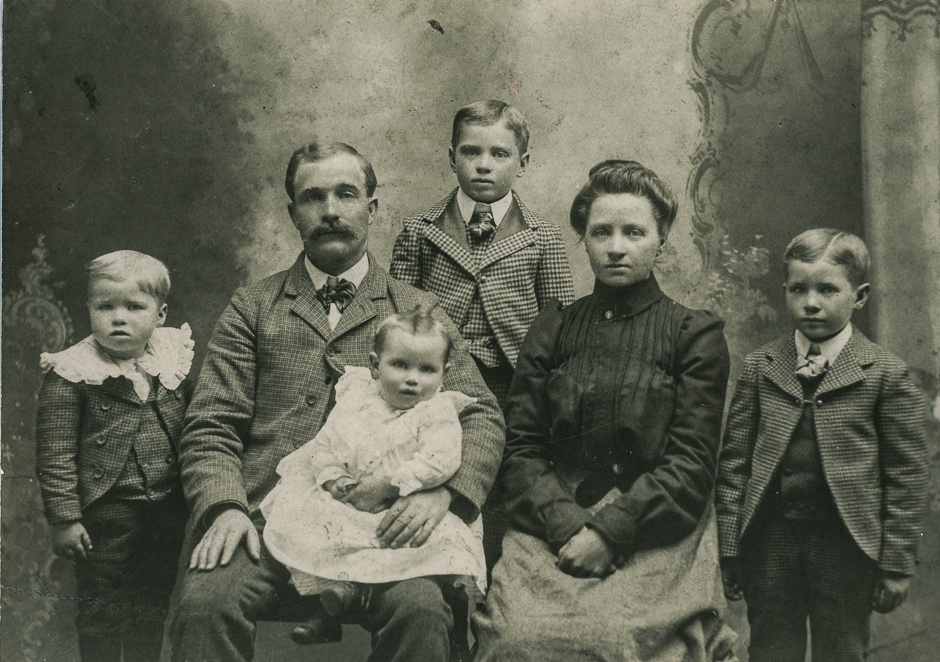
The Industrial revolution created a new ____________ class.
Upper
Poor
Lower
Middle

__________ is known as the Father of modern economics, who theorized Laissez-Faire, the idea that the market should have no political interventions?
Adam Smith
Karl Marx
Thomas Malthus
Frederick Engels

In which European country did the Industrial Revolution begin?
France
Britian
Prussia
Spain

Capitalism is
An economic system in which the means of production are privately owned and money is invested to make profits.
An economic system in which the means of production are owned by the public (government) and operate for the welfare of all.
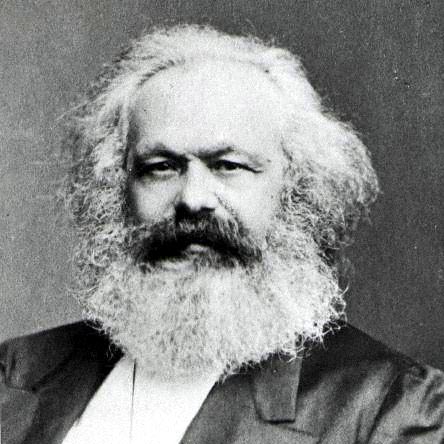
__________________ predicted a violent revolution that would result in the working class taking over in a classless political and economic systems known as communism.
John Adams
Thomas Smith
Karl Marx
Edward Jenner
What is one result of the enclosure movements?
New crops were developed
Profits fell
Farm laborers lost their jobs
Farm output decreased
The ability to have necessities of life, such as food, clothing, and shelter and wants like vacations, concerts, and other amusements is referred to as
middle class
upper class
standard of living
purchasing power
This revolutionary of the Latin American Revolutions helped liberate the northern part of South America from Spain. He was also known as the "Great Liberator".
Simon Bolivar
Toussaint L' Ouverture
Jose San Martin
Father Miguel Hidalgo
This revolutionary of the Latin American Revolutions helped liberate the southern part of South America from Spain.
Simon Bolivar
Toussaint L' Ouverture
Jose San Martin
Father Miguel Hidalgo
This revolutionary of the Latin American Revolutions helped liberate the Haiti from France. This freed slave led one of the only successful slave rebellions in the western hemisphere.
Simon Bolivar
Toussaint L' Ouverture
Jose San Martin
Father Miguel Hidalgo
This revolutionary of the Latin American Revolutions started the Mexican War for Independence. Mexico would eventually gain its independence from Spain.
Simon Bolivar
Toussaint L' Ouverture
Jose San Martin
Father Miguel Hidalgo
What influenced L'Ouverture to make this statement about natural rights and lead a slave rebellion in Haiti?
* President of Gran Colombia, Peru, and Bolivia
* Born in Venezuela
Who is this historical figure?


The unification of Italy and the unification of Germany show that
socialism was an effective way of organizing the economy
nationalism could be used to consolidate political interests
colonialism could be used to spread European civilization
interdependence was a significant obstacle to waging war
• Appointment of Otto von Bismarck as Chancellor
• Austro-Prussian War, 1866
• Franco-Prussian War, 1870–1871
These events led directly to
the unification of Germany
foreign rule in Italy
the rebellion of the Sepoys
an alliance between Serbs and Russians
One political objective of both Otto von Bismarck and Giuseppe Garibaldi was to
overthrow divine right monarchies
unify their nations
establish communist systems
form an alliance with Great Britain
The Sword/Muscle of Italian Unification: Kicks the Spanish out of Southern Italy
The slogan “Blood and Iron” and a united Germany are most closely associated with
Prince Metternich
Simón Bolívar
Camillo Cavour
Otto von Bismarck
“To him who wishes to follow me, I offer hardships, hunger, thirst and all the perils of war.”
— Garibaldi’s Memoirs
This quotation from Garibaldi is most closely associated with Italian
exploration
nationalism
imperialism
neutrality
The unification of Italy and the unification of Germany show that
socialism was an effective way of organizing the economy
nationalism could be used to consolidate political interests
colonialism could be used to spread European civilization
interdependence was a significant obstacle to waging war
The unification of Germany under Otto von Bismarck demonstrates the
influence of Marxist ideology
impact of nationalism
force of civil disobedience
power of democratic ideals
Which 19th century ideology led to the unification of Germany and of Italy and to the eventual breakup of Austria-Hungary and of the Ottoman Empire?
imperialism
nationalism
liberalism
socialism
Which individual is associated with the phrase blood and iron as related to the unification of Germany?
Otto von Bismarck
Giuseppe Garibaldi
Kaiser Wilhelm II
Count Camillo di Cavour
The Heart of Italian Unification: Starts the Young Italy Movement
Cavour
Mazzini
Garibaldi
Bismarck
How did British imperialism contribute to the devastation of the famine?
By implementing policies that favored the British landlords
By providing aid and support to the Irish population
By encouraging the cultivation of diverse crops
By promoting equality and fair distribution of resources
Why were the Irish heavily reliant on potatoes as a food source?
British mercantilism and a capitalist system took many other sources of food
No other food would grow in Ireland
Due to cultural preferences for potatoes
the Irish did not eat potatos
What were some of the long-lasting consequences of the Irish Potato Famine?
Nationalist sentiments and calls for independence
Improved relations between Ireland and Britain
Economic prosperity and growth in Ireland
Increased population due to emmigration
How many people died during the Irish Potato Famine?
Approximately 100,000
Approximately 500,000
Approximately 1 million
Approximately 5 million
What is a major result of the Irish Potato Famine
the migration of millions to America and Canada
The need for reliance on a single crop
The benefits of imperialism and capitalism
The significance of British rule in Ireland
What was a major economic cause of imperialism?
Interest in cultural exchange
Desire to spread democracy
Need for new markets for mass-produced goods
Need for more agricultural land
Which ideology justified the belief in European superiority during imperialism?
Isolationism
Liberalism
Communism
Social Darwinism
What was the outcome of the Berlin Conference of 1884?
End of the Opium War
Independence of India
Formation of the United Nations
Division of Africa among European powers
Which country was known as the 'Crown Jewel of the British Empire'?
Australia
India
China
South Africa
What was a positive effect of imperialism mentioned in the text?
Improved transportation systems
Increased local governance
Equal rights for native peoples
End of all wars
Which nation successfully resisted European colonization in Africa?
Kenya
Ghana
Nigeria
Ethiopia
What was the result of the Opium War for China?
Signing of the Treaty of Nanjing
Gaining control over Hong Kong
Victory over Britain
End of foreign trade
Which of the following countries was the only to remain independent in Africa?
Angola and Mali
Chad
South Africa
Ethiopia and Liberia
What does the phrase "the sun never sets over the British Empire" mean?
it's always sunny in Britain
it shows how large their empire was
it shows how dangerous they were
is a reference to the shiny money they had
The Berlin Conference split up ________ among European nations.
Africa
Asia
Australia
South America
The race for European countries to claim land in Africa was called the _________.
Scramble for Africa
African Marathon
Great Competition
Monopoly
Why were European countries interested in colonizing Africa during the Age of Imperialism?
They wanted Africa's natural resources
They wanted land to develop new types of ships
They wanted to create a perfect society
They wanted to learn new languages
Why did many industrialized or advanced countries need to takeover less advanced countries?
For better climate and cleaner environment
To create a democratic government
To teach the local population about recycling
To claim or takeover natural resources located in those countries
What was the name of the meeting of European countries where they decided on how to divide up Africa?
Conference of Paris
Treaty of Versailles
Berlin Conference
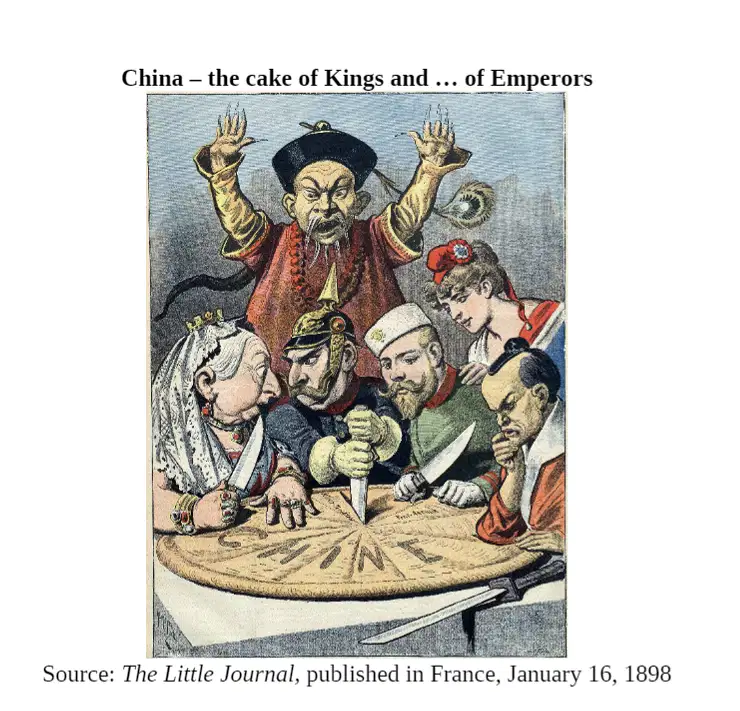
In this cartoon, the Chinese are reacting to the process of:
nationalism
industrialization
communism
imperialism
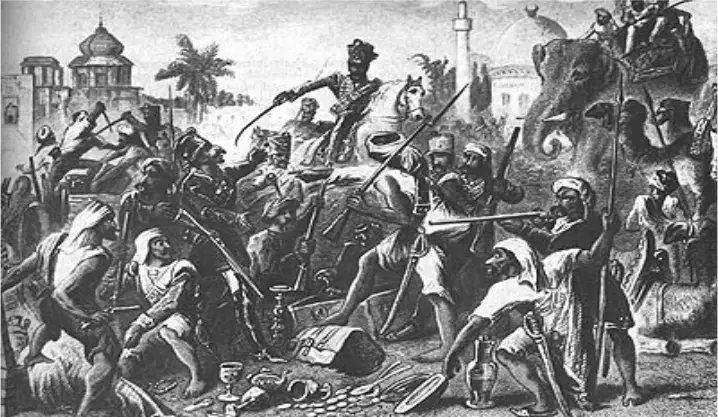
The primary cause of the Sepoy Rebellion was...
the implementation of the draft
an increase in taxes
a shortage of food
British violation of traditional Hindu culture
The phrase “White Man’s burden” refers to...
negative attitude of Europeans toward peoples of the non-Western world
advantages Europeans would gain by colonizing Africa, Asia, and Latin America
positive role of the Roman Catholic Church in Africa and Asia
challenges non-Europeans faced when trading with the Europeans
During the 18th and 19th centuries, increased contact between Europe and the continents of Africa, Asia, and South America resulted in...
closer cultural cooperation between Europe and these continents
the exploitation of the labor and resources of these continents
a return to the political and economic systems of feudal Europe
preservation of the rights of the indigenous peoples
Which term refers to the situation described in this statement: "In the past, European nations have conquered other lands, made them into colonies, and controlled their economies."?
socialism
isolationism
imperialism
monotheism
The Berlin Conference of 1884-1885 showed that European nations:
wanted to end the African slave trade
were ready to carve up Africa among themselves
wanted to convert Africans to Christianity
were ready to begin exploring the interior of Africa
During the 18th and 19th centuries, Europeans improved roads and bridges and built railroads in their colonies primarily to...
provide jobs for the colonists
obtain raw materials needed for industrialization
impress the colonists with their technological knowledge
help missionaries spread Christianity
How did the Industrial Revolution encourage imperialism?
It made Europeans feel sorry for their “little brothers”
It created a need for land
It created a need for raw materials and markets
It made westerners feel obligated to improve the human species
What was the primary reason for the Scramble for Africa among European powers?
To spread Christianity
To find new lands for settlement
To access natural resources and new markets
To establish health resorts in a warmer climate
Which of the following was a direct consequence of European imperialism in Africa?
The rapid industrialization of African economies
The establishment of democratic governments across Africa
The arbitrary division of Africa into colonies without regard for ethnic or cultural boundaries
The immediate improvement in healthcare and education
What role did the Opium Wars play in imperialism in Asia?
They led to the decline of opium production in Asia.
They resulted in the opening of Asian markets to European trade.
They promoted peace and cooperation between European powers and Asian states.
They decreased European interest in Asian territories.
What was the "White Man's Burden" as it relates to imperialism?
The belief that Europeans had a moral obligation to civilize primitive cultures
The financial cost of maintaining colonies
The responsibility of white men to resist imperialism
The burden of developing new technologies for colonized lands
What was the name of the war where Britain sent navy to force China to allow Britain to sell opium in China
Opium War
War of 1812
War of the worlds
English war
What is the name of the reform in education, military, and industrial changes made after Japanese studied western nations
Sushi
Tokyo
Western
Meiji

Emperor Meiji promoted what in Japan?
isolation and nationalism
capitalism and democracy
revolution and absolutism
reform and modernization

Source: James L. Huffman, Modern Japan, A History in Documents, Oxford University Press
During which period of Japanese history did the changes shown in this wood block print occur?
Heian court
Tokugawa Shogunate
Meiji Restoration
United States occupation

Source: James L. Huffman, Modern Japan, A History in Documents, Oxford University Press
Identify one effect of the historical period depicted in this image.
Modernization of Japan
Isolation of Japan
Invasion of Japan
Chinese influence of Japan

Base your answer to question #30 on the 19th century song lyrics below and on your knowledge of social studies.
Which event is most closely associated with the conditions described in these lyrics?
civil war in England
famine in Ireland
famine in England
The English government providing humanitarian aid to Ireland
Which of the following was a consequence of the New Imperialism in Africa?
Colonial borders that ignored ethnic and cultural divisions
Development of a single African language
Unification of African tribes
Immediate independence for African nations
What was the primary reason for the Tokugawa Shogunate's isolationist policy?
To encourage cultural exchange with Europe
To modernize Japan's military
To expand Japan's trade with neighboring countries
To prevent foreign influence and maintain control over Japan
Which event marked the end of Japan's isolationist policy under the Tokugawa Shogunate?
The establishment of the Edo period
The Battle of Sekigahara
The Meiji Restoration
The arrival of Commodore Perry and the signing of the Treaty of Kanagawa

