

wayground logo

Free Printable Worksheets

NEW

Font size

S
M
L
XL
Worksheets

Physical Science Science Bee

Total questions: 51

Worksheet time: 37mins

Name
Class
Date
1.

Subatomic particles with a negative charge

a)

Electrons

b)

Neutrons

c)

Protons

d)

Quarks

2.
Subatomic particles with a positive charge
a)
neutrons
b)
atomic mass
c)
protons
d)
isotopes
3.
Value representing the number of protons in an element
a)
Atomic Mass
b)
Mass Number
c)
Valence Electrons
d)
Atomic Number
4.
Subatomic particles that are neutral in charge
a)
Neutrons
b)
Protons
c)
Nucleus 
d)
Electrons
5.
Which two subatomic particles make up the nucleus of an atom?
a)
Protons and Electrons
b)
Neutrons and Electrons
c)
Electrons and Protons
d)
Protons and Neutrons
6.
Where are the Electrons found in the structure of an atom?
a)
In the nucleus
b)
In spaces around the nucleus
7.

What is the mass number?

a)

the number of protons in the nucleus

b)

the number of protons and neutrons in the nucleus

c)

the number of neutrons in the nucleus

d)

the number of protons and electrons in the atom
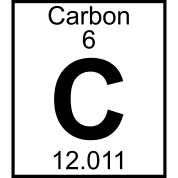
8.
In order for an atom to be neutral what has to be true?
a)
The atom has more protons than neutrons
b)
The atom has more neutrons than protons
c)
The atom has the same number of protons and neutrons
d)
The atom has the same number of protons and electrons
9.
What does the C represent?
a)
atomic mass
b)
atomic number
c)
element name
d)
chemical symbol 
10.

What does the 6 represent?

a)

Atomic mass

b)

atomic number

c)

chemical symbol

d)

element name

11.
How is the number of neutrons in the nucleus of an atom calculated?
a)
Add the number of e- and p+ together
b)
Subtract the number of e- from p+
c)
Subtract the number of p+ from the mass number
d)
Add the mass number to the number of e-
12.
If an atom has 12 positively charged subatomic particles, which of the following must it also have to be considered a neutral atom?
a)
12 neutrons
b)
12 electrons
c)
12 protons
d)
24 protons and neutrons
13.

An atom has 10 protons, 15 neutrons and 10 electrons what is its mass number.

a)

20

b)

10

c)

35

d)

25

14.
The atomic number of an element that has 9 protons, 9 electrons, and 10 neutrons is _____.
a)
9
b)
10
c)
19
d)
28
15.
An element with a mass number of 11 and an atomic number of 5 has how many neutrons?
a)
11
b)
5
c)
6
d)
16
16.

How many protons does indium have?

a)

49

b)

66

c)

114

d)

115

17.

The vertical (up and down) columns in the Periodic Table are called

a)

groups

b)

towers

c)

periods

d)

atomic numbers

18.
The Modern Periodic Table of Elements is arranged by
a)
atomic mass
b)
atomic number
c)
valence electrons
d)
number of isotopes
19.
Which is an alkali metal?
a)
Magnesium
b)
Iron
c)
Sodium
d)
Europium
20.

Which color on the image of the periodic table corresponds with the transition metals?

a)

Red

b)

Blue

c)

Black

d)

Orange

e)

Yellow

21.

Elements in the same group or family have _____________.

a)

the same number of valence electrons and different properties.

b)

the same number of valence electrons and similar properties

c)

different number of valence electrons and similar properties.

d)

different number of valence electrons and different properties.

22.

What is the name of Group 1 elements?

a)

Alkali Metals

b)

Alkaline Earth Metals

c)

Transition Metals

d)

Halogens

23.

What is the name of the elements that are unreactive and have a full octet?

a)

Halogens

b)

Noble Gases

c)

Alkali Metals

d)

Transition Metals

24.
Name group 18 on the periodic table.
a)
alkali metals
b)
alkaline earth metals
c)
transition metals
d)
noble gases
25.
The period for Bromine is ___________.
a)
3
b)
2
c)
4
26.

What is the atomic number of nitrogen?

a)

7

b)

14

c)

N

d)

nitrogen

27.

The vertical (up and down) columns in the Periodic Table are called

a)

groups

b)

towers

c)

periods

d)

atomic numbers

28.
These are found on the Periodic Table.
a)
Compounds
b)
Elements
c)
Mixtures
29.

What are valence electrons?

a)

Any of an atom's electrons

b)

Electrons located on the first energy level

c)

Electrons not attached to any atom

d)

Electrons located on the outer energy level

30.
The subatomic particle with a negative charge is the
a)
electron
b)
proton
c)
neutron
d)
nucleus 
31.

What two types of atoms make a covalent bond?

a)

2 Nonmetals

b)

1 Nonmetal and 1 Metal

c)

2 Metals

d)

2 Noble Gases

32.
Ionic Bonding involves...
a)
The transfer of protons
b)
The transfer of nuetrons 
c)
The transfer of electrons
d)
None Of the above
33.

What is a covalent bond?

a)

A bond between atoms where electrons are shared.

b)

A bond between atoms where one atom gains an electron and another loses an electron.

c)

A bond where electrons dance in a 123 pattern.

d)

A bond between two atoms where they send each other special BFF messages.

34.

Octet rule states that ...

a)

elements need 8 electron

b)

the element that has atomic number 8 is stable

c)

there are 8 elements with the highest stability

d)

elements tend to have 8 electrons in their outermost shell because that makes them more stable

35.

8. Predict what type of bond would form between Mg and Cl.

a)

Ionic

b)

Covalent

c)

Metallic

d)

Polar Covalent

36.

10. If an atom loses two electrons what charge will it have?

a)

+2

b)

-2

c)

+1

d)

-1

37.

13. How many valence electrons do elements in the group 14 contain?

a)

3

b)

4

c)

13

d)

14

38.

5. Why do atoms bond?

a)

They typically don't bond

b)

To add or take away energy levels

c)

To satisfy the octet rule

d)

To have a full inner shell

39.

What do atoms that form positive ions tend to do?

a)

lose electrons

b)

gain electrons

c)

lose protons

d)

gain protons

40.
Which of the following is an ionic bond?
a)
H3N
b)
CaCl2
c)
NO2
d)
SCl
41.
In a ________ circuit there are multiple paths for the current to take.
a)
Series
b)
Parallel
42.
In a _________ circuit, if one bulb goes out then the entire circuit doesn't work.
a)
Series
b)
Parallel
43.
What kind of circuit is this?
a)
Series
b)
Consecutive
c)
Parallel
d)
Training
44.
Which statement best explains why the lamp does not glow? 
a)
Circuit 1 is an open circuit.
b)
 Circuit 1 is a closed circuit.
c)
 The negative terminal of Circuit 1 is connected to the cell.
d)
The positive terminal of Circuit 1 is connected to the cell.
45.

Electricity is ____________________.

a)

the movement of the sun

b)

the movement of electrons

c)

the movement of the moon

d)

the movement of air

46.

When electrons move through a circuit ____________ electricity is created.

a)

current

b)

electron

c)

solar

d)

static

47.

When electricity passes through a light bulb it is changed to _______________________.

a)

motion energy

b)

light energy

c)

static electricity

d)

magnetic energy

48.

The flow of electricity is an _____________________.

a)

battery

b)

resistor

c)

electric current

49.
Which of these substances conducts electricity the best?
a)
wood
b)
brick
c)
copper
d)
plastic
50.
What material would be safest to use as an insulator to cover electrical wires?
a)
rubber
b)
tin
c)
aluminum
d)
water
51.
This instrument can be used to see if materials conduct electricity.  Which of these groups contains items that could all conduct electricity to complete the circuit?
a)
rubber ball, plastic comb, nail
b)
paper clip, penny, screw
c)
cork, dollar bill, tweezers
d)
pencil, eraser, spoon

