wayground logo

Free Printable Worksheets

Font size

S
M
L
XL
Worksheets

Standard SPS7 Mid-Term Review

Total questions: 183

Worksheet time: 1hrs 1mins

Name
Class
Date
1.

What type of energy transformation occurs, when a hawk eats a mouse and then uses the energy from the mouse to fly?

a)

mechanical energy to chemical energy

b)

thermal energy to mechanical energy

c)

chemical energy to mechanical energy

d)

mechanical energy to thermal energy

2.
Which of the following energy transformations occur when a lamp that is plugged into a wall socket is functioning correctly?
a)
Chemical to light
b)
Electrical to chemical
c)
Electrical to light
d)
Chemical to electrical
3.

The roller coaster cart has the most kinetic energy at position-

a)

W

b)

X

c)

Y

d)

Z

4.

Where is the kinetic energy the greatest?

a)

A

b)

B

c)

C

d)

D

5.

What type of energy is stored in batteries or food?

a)

Potential energy

b)

Thermal energy

c)

Chemical energy

d)

Mechanical energy

6.
Gravitational potential energy depends on the ________ and ________ of the object. 
a)
Height and mass
b)
Friction and movement
c)
Mass and Movement
d)
Height and Friction 
7.

The baby chickens kept warm by the heat lamps. This is an example of ________.

a)

conduction

b)

convection

c)

radiation

8.

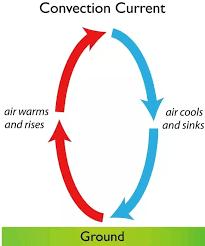
Near the ceiling of a room the air is warmer. The warm air rises because of ________.

a)

conduction

b)

convection

c)

radiation

9.
There are four cups of hot cocoa. The cup sizes are shown. The temperature of the cocoa in each cup is 25 degrees celsius. Which cup has the MOST thermal energy?
a)
Large cup (Trenta)
b)
Small cup (Tall)
c)
Medium cup (Venti)
d)
All three are the same temperature so they have the same thermal energy
10.
Copper, Stainless Steel, Carbon Steel, and Zinc were all heated using 10,000 JOULES of thermal energy.  What material would be have the LARGEST change in temperature?
a)
Copper
b)
Carbon Steel
c)
Zinc
d)
Stainless Steel
11.
A high specific heat means...
a)
It requires less energy to change temperature
b)
It requires more energy to change temperature
c)
It heats up very quickly
12.
Copper, Stainless Steel, Carbon Steel, and Zinc were all heated using 10,000 JOULES of thermal energy.  Based on the chart, which material would be have the SMALLEST change in temperature?
a)
Copper
b)
Carbon Steel
c)
Zinc
d)
Stainless Steel
13.

A 9 kg bike accelerates at 0.5 m/s2. What net force was exerted on the bike by the frog? Use your equation sheet....looking for F =.....

a)

18 N

b)

4.5 N

c)

9.5 N

d)

9.8 m/s^2

14.
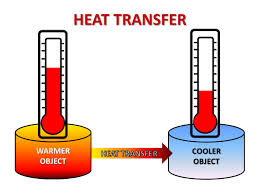
Heat transfers from an area of ____temperature to an area of ___ temperature.
a)
high to low
b)
low to high
c)
high to high
d)
It can travel high to low and low to high. 
15.

How does heat energy reach the Earth from the Sun

a)

Convection

b)

Radiation

c)

Conduction

d)

Insulation

16.
The transfer of heat by currents through liquids of gases is called
a)
Perspiration
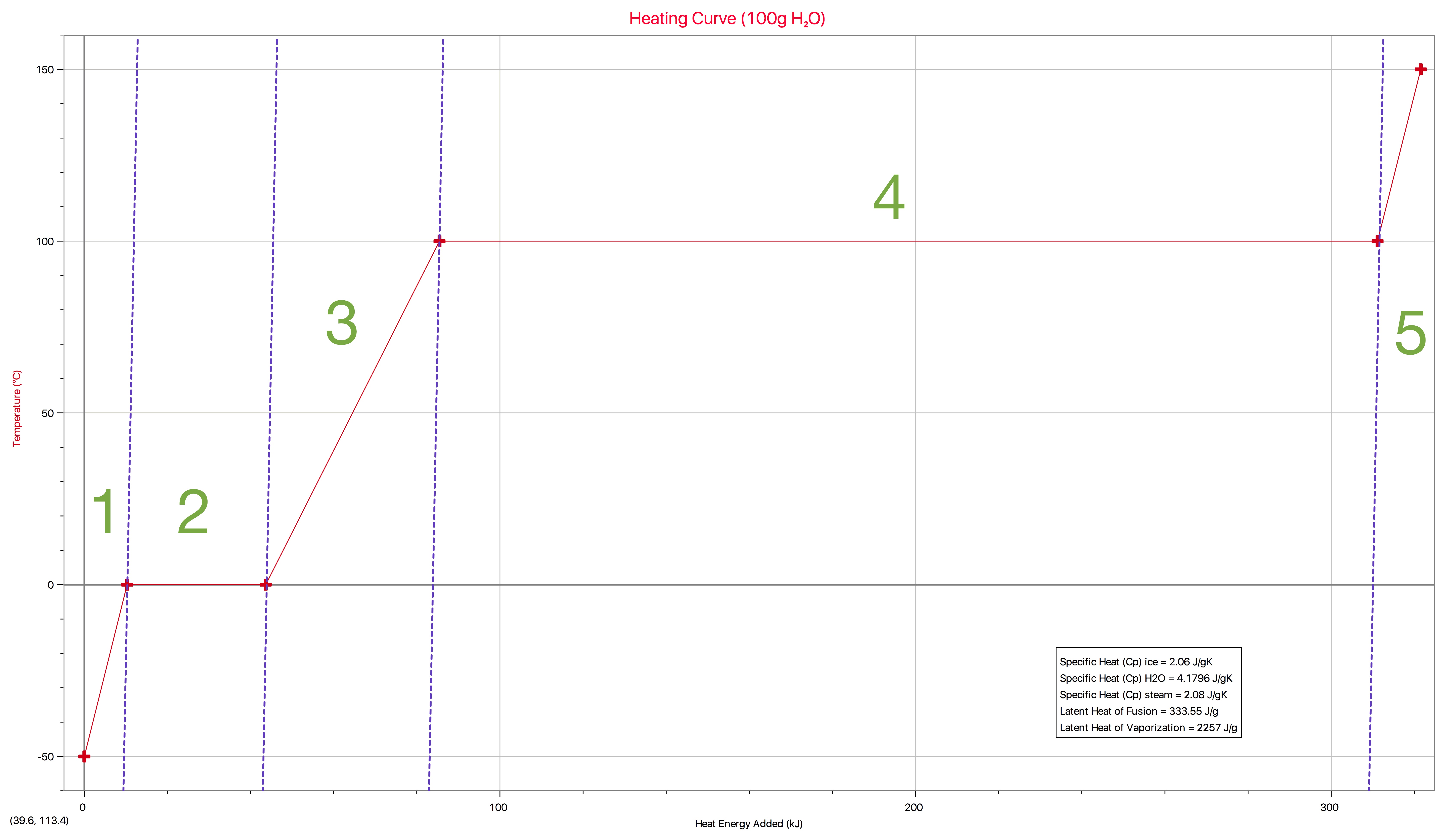
b)
Radiation
c)
Conduction
d)
Convection
17.
The heat from a lamp allows a lizard to remain warm. This is an example of which type of heat transfer?
a)
radiation
b)
conduction
c)
convection
d)
insulation
18.
Jordan places a hot spoon into a container of ice cream. How does this help him scoop  out the ice cream? 
a)
The coolness from the ice cream is conducted to the spoon making it easier to scoop out.
b)
The coolness from the ice cream is radiated to the spoon making it easier to scoop out.
c)
The warmth of the spoon is conducted to the ice cream  making it easier to scoop out.
d)
The warmth of the spoon is radiated  to the ice cream making it easier to scoop out.
19.
A crayon placed on a dark driveway in bright sunlight melted into a colorful puddle. What caused the crayon to melt?
a)
Solar radiation heated the driveway and then heat transferred to the crayon by conduction.
b)
Solar radiation heated the driveway and then heat transferred to the crayon by radiation.
c)
Solar convection heated the driveway and then heat transferred to the crayon by radiation.
d)
Solar convection heated the driveway and then heat transferred to the crayon by conduction.
20.

You are in the top bunk of a bunk bed and you want to turn down the air conditioner while your friend on the bottom bunk is fine. This is caused by ...

a)

Conduction

b)

Radiation

c)

Convection

21.

You hold an ice cube in your hand. The particles in your hand will move

a)

slower as heat moves into the ice.

b)

faster as heat moves into your hand.

c)

slower as heat moves out of the ice.

d)

faster as heat moves out of your hand.

22.
The law of conservation of ___________ states that energy, like matter, cannot be created nor destroyed; it can only be changed from one form of energy to another.  Energy takes takes many forms in the world around us.  Each form of energy can be converted to and from other forms of energy.
a)
energy
b)
solubility
c)
conduction
d)
radiation
23.
__________ energy is used in our homes to produce stereo sound through speakers.
a)
potential
b)
kinectic
c)
thermal
d)
sound
24.
______ energy produces current from which a fluorescent lamp will work.
a)
Sound
b)
thermal
c)
light
d)
nuclear
25.
______ energy, which is stored in the nucleus of atoms, is harnessed to produce electrical energy in moden power plants.
a)
thermal
b)
nuclear
c)
kinetic
d)
potential
26.
_____ energy used for cooking and heating
a)
Light
b)
sound
c)
kinectic
d)
nuclear
27.
____ energy is stored in the bonds that hold atoms together in molecules.  When fuels or foods are broken down, this energy is converted to heat or kinectic energy.
a)
Nuclear
b)
chemical
c)
kinetic
28.
_____ energy is the energy contained by moving objects due to their motion.
a)
Kinectic
b)
potential
c)
sound
d)
light
29.
______ energy, also known as stored energy, is the energy of position. When a boulder sits on top of a cliff, it has gravitational _____energy as a result of its height above the ground.  When the boulder tumbles off the cliff, its gravitational ______ energy is converted to kinectic energy.  
a)
Kinetic
b)
Potential
c)
Mechanical
d)
Nuclear
30.
Kinetic and potential energy are types of _______ energy.
a)
Nuclear
b)
Mechanical
c)
Sound
d)
Light
31.
________________
Define: The transfer of heat energy between materials that are in direct contact with each other
a)
convection
b)
conduction
c)
radiation
32.
Circulation of air or water
a)
conduction
b)
convection
c)
radiation
33.
transfer of energy through space or air
a)
conduction
b)
convection
c)
radiation
34.
The amount of heat energy gains or loses (Q), depends on the mass (m), the specific heat, and the change in temperature (ΔT) of the substance.  The formal for finding heat energy is the product of 3 factors:
a)
T= mΔQ
b)
Q=mcΔT
35.
A copper ornament has a mass of 0.0693 kg and changes from a temperature of 20.0°C to 27.4°C.  How much heat energy did it gain?  Cooper's Specific Heat is 390 J/k X 
°C.  °
Q=Mc∆T
a)
200 J
b)
400 J
c)
390 J
36.
Amount of energy needed to raise the temperature by kg//C
a)
Specific heat capacity
b)
Specific temperature
c)
temperature of substance
37.
A______ diagram shows how a pure substance changes from one phase to another based on the temperature, T, and the pressure, P.
a)
trend diagram
b)
temperature diagram
c)
phase diagram
38.
What is the change called from a solid to a liquid?
a)
melting
b)
sublimation
c)
freezing
d)
evaporation
39.
What is the change called from a solid to a gas?
a)
melting
b)
sublimation
c)
freezing
d)
evaporation
40.
What is the change called from a liquid to a solid?
a)
melting
b)
sublimation
c)
freezing
d)
evaporation
41.
What is the change called from a liquid to a gas?
a)
melting
b)
sublimation
c)
freezing
d)
evaporation
42.
What is the change called from a gas to solid
a)
deposition
b)
sublimation
c)
freezing
d)
evaporation
43.
What is the change called from a gas to liquid
a)
deposition
b)
sublimation
c)
freezing
d)
condensation
44.
These reactions are __________ (or give off heat)
-- freezing
--depostion
-condensation
-getting colder
a)
exothermic
b)
endothermic
45.
These reactions are __________ (or take in heat)
-- melting
-sublimation
-evaporation-
-getting hotter
a)
exothermic
b)
endothermic
46.
When the temperature of matter increases the particles...
a)
speed up and move closer
b)
speed up and move farther apart
c)
slow down and move closer together
d)
slow down and move farther apart
47.
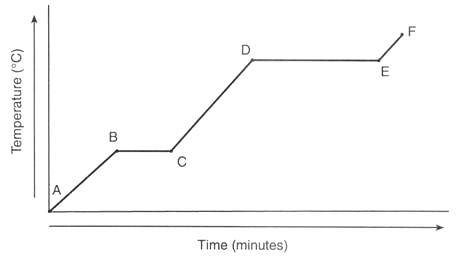
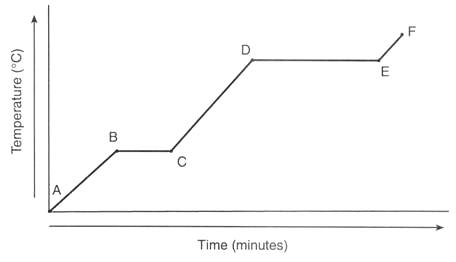
Describe the substance between letters D and E. 
a)
Gas
b)
Liquid
c)
Melting
d)
Evaporating
48.

NaCl(s) was heated up starting at an initial temperature of 0°C. The heating curve is shown in the picture. What is the melting point of this substance?

a)

0°C

b)

801°C

c)

1000°C

d)

1465°C

49.
In which region(s) does temperature remain constant?
a)
Region 1, 3, & 5
b)
Region 2 & 4
c)
Region 1 only
d)
Region 1 & 2
50.
Describe the substance between letters C and D. 
a)
Gas
b)
Liquid
c)
Melting
d)
Evaporating
51.

Which state of matter has the most amount of kinetic energy?

a)

solid

b)

liquid

c)

gas

d)

plasma

52.

Which phase change goes from a gas to plasma?

a)

ionization

b)

deionization

c)

vaporization

d)

condensation

53.

Which is an example of vaporization?

a)

ice sitting outside on a hot day

b)

lightning

c)

water boiling on a stove into steam

d)

morning dew on the grass

54.

Which state of matter does not a definite shape or volume?

a)

solid

b)

liquid

c)

gas

d)

plasma

55.
Mechanical energy
a)
energy built up before being in motion
b)
energy released in a chemical reaction
c)
energy of motion
d)
sum of kinetic and potential energy
56.
According to the Law of Conservation of Energy, energy cannot be _________ or ____________. 
a)
destroyed, destroyed
b)
created, saved
c)
created, destroyed
d)
lost, found
57.
The faster an object moves, the ________ kinetic energy it has. 
a)
more
b)
less
c)
none of the above
d)
all of the above 
58.

What is potential energy?

a)

moving energy

b)

stored energy

c)

renewable energy

d)

non renewable energy

59.
If the specific heat of water is 4,186 J/kg∙°C, how much heat is required to increase the temperature of 1.2 kg of water from 23 °C to 39 °C? 
a)
-80,371.2 J
b)
44,938.6 J
c)
80,371.2 J
d)
112,575.9 K
60.

The specific heat of platinum is 0.133 J/g°C. How much heat(Q) is released when a 10 g piece of platinum cools from 100°C to 50°C?

a)

66.5 J

b)

665 J

c)

0.0266 J

d)

0.665 J

61.
_______________ describes how much energy is required to raise an object's temperature.
a)
Conduction
b)
Convection
c)
Specific Heat
d)
Radiation
62.
There are four cups of hot cocoa. The cup sizes are shown. The temperature of the cocoa in each cup is 25 degrees celsius. Which cup has the MOST thermal energy?
a)
Large cup (Trenta)
b)
Small cup (Tall)
c)
Venti
d)
All three are the same temperature so they have same thermal energy
63.
Eggs cooking in a frying pan.
a)
Conduction
b)
Convection
c)
Radiation
64.
Snowman melting in the sun.
a)
Conduction
b)
Convection
c)
Radiation
65.

Which of the following is an example of convection?

a)

A hair dryer is drying up your hair.

b)

When the AC or heater changes the temperature.

c)

When a car engine turns hot after being turned on.

d)

When you are making soup and the water is rising and lowering.

66.

In which of the following state are the particles closest together?

a)

Fluid

b)

Gas

c)

Liquid

d)

Solid

67.

How does heat move?

a)

In many directions

b)

from warm places to cooler places

c)

from cold places to warm places

d)

Both B and C

68.

If a door was left open between the bedroom (74 degrees) and the living room (68 degrees), what would likely happen to the temperatures after several hours?

a)

nothing, they would not change

b)

both rooms would become hotter 

c)

both room would become colder

d)

the bedroom temp. would lower and the living room temp. would rise

69.

Everything has thermal energy

a)

False

b)

True

70.

All matter is made up of atoms that are constantly moving

a)

True

b)

False

71.

Temperature is the __________ _________ energy of moving particles

a)

average potential

b)

average kinetic

c)

total potential

d)

total kinetic

72.
When you leave your cold drink outside, the glass may have water drops on it.  This is an example of...
a)
condensation
b)
evaporation
c)
precipitation
d)
estuary
73.

This appliance dries clothes primarily by converting —

a)

electrical energy to heat and mechanical energy

b)

mechanical energy to heat and electrical energy

c)

electrical energy to heat and light

d)

mechanical energy to heat and vaporization

74.

During a warm summer day, a car became extremely hot. When a student went to open the car door, he burned his fingers. What two forms of energy were responsible for the student burning his fingers?

a)

radiation and conduction

b)

conduction and convection

c)

radiation and electricity

d)

convection and radiation

75.
Energy of motion is which type of energy?
a)
Potential
b)
Kinetic
c)
Sound
d)
Gravitational
76.
What type of energy is in this picture?
a)
Kinetic
b)
Potential
c)
Chemical
d)
Sound
77.
When plants convert the sun's energy into food, which type of energy is it?
a)
kinetic
b)
chemical
c)
thermal
d)
radiant
78.
What kind of energy is represented in this picture?
a)
Thermal
b)
Potential
c)
Nuclear
d)
Mechanical
79.
What kind of energy does this device use?
a)
Chemical
b)
Electrical
c)
Thermal
d)
Chemical
80.
A battery converts what type of energy to another?
a)
sound to kinetic
b)
light to heat
c)
mechanical to electrical
d)
chemical to electrical
81.
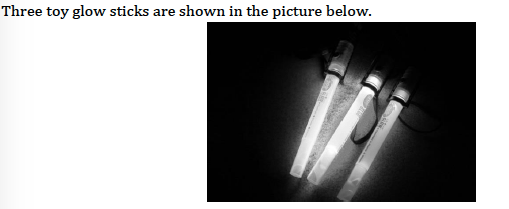
The glow sticks produce light for a short amount of time. The light from the glow stick is a conversion from what to what?
a)
thermal to light
b)
gravitational to potential
c)
radiant to electrical
d)
chemical to light
82.
A 15.75-g piece of iron absorbs 1086.75 joules of heat energy, and its temperature changes from 25°C to 175°C.  Calculate the specific heat capacity of iron.    
a)
0.46 J/gxoC
b)
1.654 J/gxoC
c)
2,567,446.875 J/gxoC
83.
 How many joules of heat are needed to raise the temperature of 10.0 g of aluminum from 22°C to 55°C, if the specific heat of aluminum is 0.90 J/gx°C?    
a)
297 Joules
b)
0.003 Joules
c)
297 J/gx°C
d)
0.003 J/gx°C
84.
The symbol for specific heat is .......
a)
c
b)
Q
c)
m
d)
t
85.
Specific heat is....
a)
The measure of kinetic energy of an objects particles
b)
A measure of the energy needed to increase the average kinetic energy of the particles
c)
The heating caused by the motion of flluid due to temperature difference
d)
The transfer of energy by electromagnetic radiation
86.
A high specific heat means...
a)
It heats up quickly with energy added
b)
It requires more energy to change temperature
87.
The Gulf Stream is a current that brings warm ocean water from the south to the north. What type of heat transfer is this?
a)
conduction
b)
convection
c)
radiation
d)
Insolation 
88.
Ironing a shirt is an example of...
a)
condensation
b)
conduction
c)
convection
d)
radiation
89.
The heat from a lamp allows a lizard to remain warm. This is an example of which type of heat transfer?
a)
radiation
b)
conduction
c)
convection
d)
insulation
90.
In which segment is the kinetic energy remaining constant?
a)
A-B
b)
B-C
c)
C-D
d)
E-F
91.
Between which points is the substance changing state?
a)
A-B only. 
b)
A-B, C-D, E-F
c)
B-C only. 
d)
B-C, D-E
92.

NaCl crystals were heated starting at an initial temperature of 0°C. The heating curve is shown in the picture. What is the melting point of this sodium chloride?

a)

0°C

b)

801°C

c)

1000°C

d)

1465°C

93.

In which regions of the graph would heat be absorbed by the system?

a)

Region 1

b)

Region 2

c)

Region 3

d)

Region 4

e)

Region 5

94.
What is the equation to measure change in Thermal Energy?
a)
Q=mc∆t
b)
Q=mc
c)
Q= ∆mct
d)
m=QC
95.
Water has a specific heat of 4184 J/KgºC.  Wood has a specific heat of 1760 J/KgºC.  What material needs more energy to raise the temperature 1ºC
a)
Wood
b)
Water
c)
Both are the same
96.

Which will heat up faster?

a)

copper

b)

granite

c)

iron

d)

basalt

97.

Which will heat up slower?

a)

water

b)

lead

c)

granite

d)

iron

98.

As the average kinetic energy of the molecules in a substance increases, the temperature of the substance __________.

a)
increases
b)
decreases
99.

A group of friends gather around a fire to stay warm. This is an example of ________.

a)

conduction

b)

convection

c)

radiation

100.

Which is an example of heat being transferred by conduction?

a)

a furnace heating the air in a school

b)

an ice cube melting in a person’s hand

c)

a pot of water on a stove boiling

d)

the sun heating water in a swimming pool

101.

Near the ceiling of a room the air is warmer. The warm air rises because of ________.

a)

conduction

b)

convection

c)

radiation

102.

What is the energy transformation that occurs in an electric pencil sharpener?

a)

mechanical energy to electrical energy

b)

electrical energy to mechanical energy

c)

radiant energy to sound energy

d)

chemical energy to mechanical energy

103.

Which object shows an energy transformation from electrical to mechanical?

a)
b)
c)
d)
104.

What type of energy transformation happens in a hydroelectric power plant?

a)

kinetic to potential

b)

sound to mechanical

c)

chemical to electrical

d)

mechanical to electrical

105.

What is the energy of motion?

a)

GPE

b)

KE

c)

velocity

d)

chemical potential energy

106.

What kind of energy transfer is represented in the picture?(Rockets have fuel)

a)

electrical->thermal

b)

chemical->nuclear

c)

chemical-> thermal/sound/radiant ->kinetic

d)

solar->kinetic

107.

What are the units of energy?

a)

Watts(W)

b)

Newtons(N)

c)

Kilograms(kg)

d)

Joules(J)

108.

What type of energy is represented by the letter Q?

a)

Kinetic

b)

Chemical Potential

c)

Thermal

d)

GPE

109.

What are the units of c?

a)

Js\frac{J}{s}  

b)

Jkg C\frac{J}{kg\ C}  

c)

kgJ\frac{kg}{J}  

d)

QJ\frac{Q}{J}  

110.

If a box is pushed 10 m to the left with a force of 15.5 N, what is the work done?

a)

155 W

b)

155 J

c)

1.55 W

d)

1.55 J

111.

If the work in the last question (155 J) is completed in 20 seconds, what is the power?

a)

7.75 J

b)

3100 J

c)

7.75 W

d)

3100 W

112.

A 5 kg rock is thrown with a velocity of 10 ms\frac{m}{s}  . What is its kinetic energy?

a)

50 J

b)

25 J

c)

250 J

d)

0.025 J

113.

The rock from the last question (250 J of KE) is thrown to a height of 5.1 m, how much GPE does it have?

a)

510 J

b)

2.5 J

c)

250 J

d)

.51 J

114.

Temperature is a measure of ________________.

a)

kinetic energy

b)

potential energy

115.

Thermal energy will leave areas of ____________ thermal energy and go to areas of _____________ thermal energy.

a)

high, low

b)

low, high

c)

kinetic, potential

d)

potential, kinetic

116.

Which of the following are methods of heat transfer?

a)

insulation

b)

conduction

c)

convection

d)

temperature

e)

radiation

117.

What kind of materials prevent heat transfer?

a)

conductor

b)

insulator

118.

Which of the following are examples of conductors?

a)

foam

b)

metals

c)

wood

d)

air

e)

plastic

119.

What kind of heat transfer occurs in weather patterns?

a)

conduction

b)

convection

c)

radiation

d)

none of the above

120.

What type of energy transfer occurs to make the clock work?

a)

electrical to mechanical

b)

GPE to mechanical

c)

GPE to KE

d)

elastic potential to kinetic

121.

What type of energy transfer occurs at the Hoover Dam?

a)

kinetic to electrical

b)

chemical to kinetic

c)

chemical to electrical

d)

kinetic to chemical

122.

The two main categories for energy are:

a)

Mechanical & Chemical

b)

Potential & Kinetic

c)

Kinetic & Mechanical

d)

Potential & Chemical

123.

The Law of Conservation of Energy states that energy is never __________________ or _________________, only transferred.

a)

created, destroyed

b)

created, subtracted

c)

added, subtracted

d)

destroyed, subtracted

124.

Energy that is stored in a system, ready to be used, is called ____________ energy.

a)

Kinetic

b)

Potential

c)

Conserved

d)

Power

125.

Energy in a system that is moving is called _______________ energy.

a)

Kinetic

b)

Potential

c)

Mechanical

d)

Power

126.

The faster an object moves, the _______________ kinetic energy it must carry.

a)

more

b)

less

c)

constant

d)

varying

127.

What is the KE at point B?

a)

14 J

b)

12 J

c)

6 J

d)

8 J

128.

What is the Total Energy of the system?

a)

14 J

b)

12 J

c)

6 J

d)

8 J

129.

What is the GPE at point E?

a)

14 J

b)

12 J

c)

6 J

d)

8 J

130.

What is the KE at point D?

a)

14 J

b)

12 J

c)

6 J

d)

8 J

131.

What is the Total Mechanical Energy at point A?

a)

500,000 J

b)

400,000 J

c)

200,000 J

d)

50,000 J

132.

What type of energy conversion takes place in photosynthesis?

a)

Chemical to Radiant

b)

Electrical to Thermal

c)

Thermal to Kinetic

d)

Radiant to Chemical

133.

What does the word dissipate mean?

a)

shock

b)

seem to vanish

c)

to let someone down

d)

to expect with excitement

134.

When the temperature of matter decreases the particles...

a)

speed up and move closer

b)

speed up and move farther apart

c)

slow down and move closer together

d)

slow down and move farther apart

135.

When the temperature decreases then the volume will _____ (at constant pressure).

a)

Increase

b)

decrease

136.

What type of relationship do pressure and volume have?

a)

direct

b)

inverse

c)

no relationship

137.

Which of the following would decrease the (gas) pressure of a system?

a)

Decrease the temperature

b)

Pump in more gas

c)

Decrease the volume

d)

All of these

138.

What state of matter does this picture show?

a)

Solid

b)

Liquid

c)

Gas

139.

You hold a piece of ice in your hand...

Choose all that are correct!

a)

The ice releases energy into your hand.

b)

The temperature of your hand goes up.

c)

Your hand transfers heat to the ice.

d)

The removal of heat caused your hand to get cold.

140.
What line segment represents only the solid state?
a)
A-B
b)
B-C
c)
C-D
d)
D-E
141.
Which process takes the longest to occur?
a)
melting
b)
boiling
c)
freezing
d)
heating the solid
142.
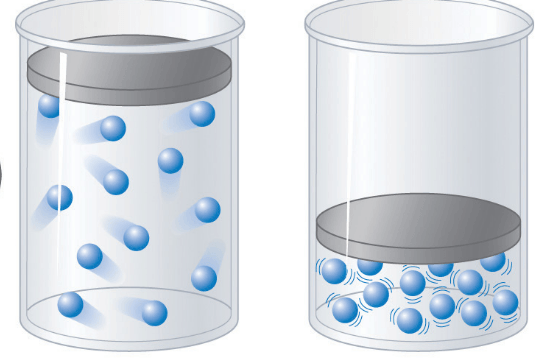
Which container will have a lower pressure?
a)
left
b)
right
c)
they both have the same pressure
d)
I don't know
143.
Boyle's law : When _______ is held constant, the pressure and volume of a gas are ________  proportional
a)
temperature,  equally
b)
mass, inversely
c)
temperature, inversely
d)
mass, equally
144.

The substance doing the dissolving

a)

solute

b)

solvent

c)

solution

d)

solubility

145.

The substance that dissolves in a solution

a)

solvent

b)

solution

c)

solute

d)

solubility curve

146.

if 150g of NaClO3 were added to a 100g of water at 60 degrees Celsius the solution would be...

a)

saturated

b)

supersaturated

c)

unsaturated

d)

over saturated

147.

if 60g of KNO3 were added to a 100g of water at 20 degrees Celsius the solution would be...

a)

over saturated

b)

supersaturated

c)

saturated

d)

unsaturated

148.

if the pH level is between 1 and 6 it is

a)

basic

b)

acidic

c)

neutral

d)

soluble

149.

Which is a characteristic of a base?

a)

tastes sour

b)

found mostly in foods

c)

feels slippery

d)

turn litmus paper red

150.

A sour taste is a characteristic of:

a)

acids

b)

bases

c)

neutral

d)

pH scale

151.
If a solution is basic which ion will be more present?
a)
H+
b)
K+
c)
OH-
d)
H-
152.

From point A to point E, the sample is going through an

a)

exothermic process by releasing heat to the surroundings

b)

exothermic process by absorbing heat from the surroundings

c)

endothermic process by releasing heat to the surroundings

d)

endothermic process by absorbing heat from the surroundings

153.
A substance's heating curve is shown in the graph.  What is its boiling point?
a)
100 C
b)
60 C
c)
80 C
d)
20 C
154.
What do a toaster, a hair dryer, and an
iron have in common?
a)
They convert electrical energy to heat
energy.
b)
They convert electrical energy to
mechanical energy.
c)
They convert mechanical energy to
electrical energy
d)
They convert heat energy to electrical
energy.
155.
Heterotrophs consume food to obtain
energy for biological processes. During
exercise, the chemical energy in food is
transformed into what other forms of
energy?
a)
potential and electrical energy
b)
electromagnetic and heat energy
c)
mechanical, kinetic, and heat energy
d)
potential, electromagnetic, and heat
energy
156.
Convection is the transfer of energy by
the motion of the heated particles in a
fluid. According to this information, which
statement best describes an example of
convection?
a)
a shirt heated by an iron
b)
a puddle of rainwater heated by
sunlight
c)
a dark-color car heated by sunlight
d)
warm air rising in the atmosphere
157.
Which is NOT a process by which heat energy is transferred from a warmer object to a cooler one?
a)
conduction
b)
convection
c)
insulation
d)
radiation
158.
Adam placed a heated aluminum cube in
a beaker of water and then measured the
change in the temperature of the water.
The change in temperature he recorded
was most likely measured in ___________.
a)
calories
b)
degrees Celsius
c)
grams per cubic centimeter
d)
joules
159.
According to the chart, what material
requires the most heat to raise its
temperature 10°C?
a)
glass
b)
iron
c)
water
d)
wood
160.
While a block of ice is melting, the temperature of the ice ___________.
a)
goes up
b)
goes down
c)
remains constant
d)
varies depending on conditions
161.
When a pot of water reaches 100°C, its temperature remains constant even if heat is added to the pot. Where does this extra heat go?
a)
The extra heat overcomes the attractive forces between water molecules.
b)
The extra heat raises the temperature of the pot.
c)
The extra heat is radiated away into the air.
d)
The extra heat leaves the pot through
convection currents.
162.
Examine the heating curve for water. What is happening along the diagonal line in this graph?
a)
Solid water is melting.
b)
Liquid water is boiling.
c)
Liquid water is freezing.
d)
Liquid water is changing  temperature.
163.
Copper, Stainless Steel, Carbon Steel, and Zinc were all heated using the same thermal energy.  What material would be the coolest after being heated?
a)
Copper
b)
Carbon Steel
c)
Zinc
d)
Stainless Steel
164.
_______________ describes how much energy is required to raise an object's temperature.
a)
Conduction
b)
Convection
c)
Specific Heat
d)
Radiation
165.
Specific heat of water is  4.18 J/g°C. Specific heat of wood is 1.760 J/g°What material needs more heat energy to raise the temperature?
a)
Water
b)
Wood
c)
Both are same
166.
A high specific heat means...
a)
It heats up quickly with energy added
b)
It requires more energy to change temperature
167.
___________ is measured by the unit Joules.
a)
Heat energy
b)
Temperature
c)
Specific heat
168.
What is Specific Heat?
a)
The  amount of thermal energy required to increase the temperature of 1kg of a material by 1°C.
b)
The  amount of radiant energy required to increase the temperature of 1kgof a material by 1°C
c)
The  amount of energy required to increase the temperature of 1kgof a material by 1°C.
d)
The  amount of friction  required to increase the temperature of 1kgof a material by 1°C.
169.
What is the equation to measure change in Thermal Energy?
a)
Q=mc∆t
b)
Q=mc
c)
Q= ∆mct
d)
m=QC
170.
What is the symbol for Thermal Energy in the specific heat formula?
a)
Q
b)
t
c)
m
d)
C
171.
What unit do you use to measure Thermal Energy?
a)
J/Kg ºC
b)
Kg
c)
ºC
d)
J
172.
Copper, Stainless Steel, Carbon Steel, and Zinc were all heated using 10,000 JOULES of thermal energy.  What material would be have the LARGEST change in temperature?
a)
Copper
b)
Carbon Steel
c)
Zinc
d)
Stainless Steel
173.
A high specific heat means...
a)
It requires less energy to change temperature
b)
It requires more energy to change temperature
c)
It heats up very quickly
174.
The specific heat of aluminum is 0.21 cal/g°C.  How much heat(Q) is released when a 10 g piece of aluminum foil is taken out of the oven and cools from 100° to 50°?
a)
105 J
b)
10.5 J
c)
1.05 J
d)
50 J
175.
20 g of water. specific heat of water is 4.18 J/g°C.  temperature changes from 25° C to 20° Chow much heat energy (Q) moves from the water to the surroundings?
a)
418 Joules
b)
209 J
c)
83 J
d)
4.18 J
176.
The specific heat(c) of copper is 0.39 J/g °C. What is the temperature change(∆t) when 100 Joules of heat(Q) is added to 20 grams of copper?
a)
12.82 °C
b)
24.12°C
c)
351 °C
177.
lowest possible temperature on the Kelvin scale
a)
boiling point
b)
insulation
c)
absolute zero
d)
heat
178.
How does heat flow?
a)
Always from cold to warm
b)
Always from warm to cold
c)
Both warm to cold & cold to warm
d)
It depends on the temperature
179.
A student listens to music with a digital music player, similar to the one shown below. Which best describes the energy transformations that take place in the music player?
a)
Mechanical to chemical to electrical
b)
Chemical to sound to electrical
c)
Chemical to electrical to sound
d)
Electrical to heat to sound
180.

The picture showing the energy conversion

Chemical → heat

is:

a)
b)
c)
d)
181.

The picture showing the energy conversion

Light → chemical

is:

a)
b)
c)
d)
182.

The picture showing the energy conversion

Chemical → light & heat

is:

a)
b)
c)
d)
183.

What is the energy transformation in the picture

a)

Electrical to thermal

b)

Dads home 2

c)

Electrical to mechanical

d)

Mechanical to electrical