
 Worksheets
Early Ren and much more!
Total questions: 80
Worksheet time: 51mins
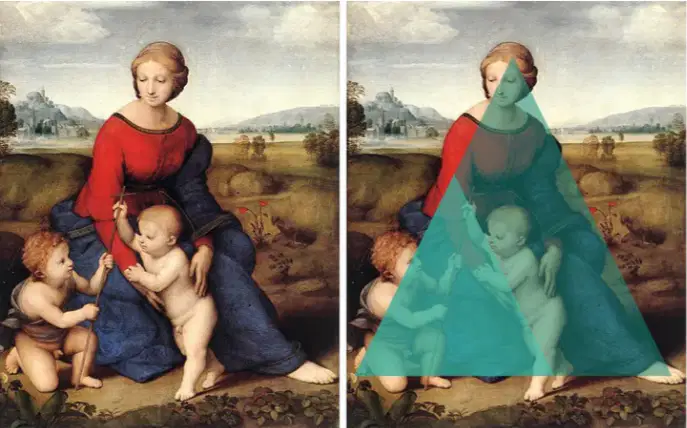
The Renaissance "pyramidal" form
creates asymmetrical balance
must include Jesus in the center
is always a grouping of "3's"

How is Michelangelo portrayed in the Sistine Chapel Last Judgement fresco?
Dangling skin
An angel
As one of the disciples
Smoky haze effect, used by Leonardo da Vinci
smeery


Who created this dome?
Masaccio

Which one of these is the Birth of Venus?


Who is she?
(a)
Using ideas from the ancient Greeks and Romans, Brunelleschi began to favor what kind of architecture?
complex architecture with many asymmetrical towers
modest architecture that blends well with the environment
architecture with balance and symmetry
frightening architecture that could be used as forts in times of war
According to legend, what did St. George do?
battles a wizard
casts a spell on a wizard
slays a dragon
was a religious man
How did the architect Brunelleschi inspire Renaissance artists?
by convincing Renaissance artists to take religion seriously
by inventing new colors of paint that had never been seen before
by leading rebellions against wealthy kings and patrons
by showing how a vanishing point can show depth on a flat surface
tempera on canvas


______________ is a defining feature of Renaissance art.
dogs playing poker
The Mona Lisa
realistic looking clouds
linear perspective
Match the following

Apollo 11 Stones

Ambum Stone

Lapita Terra Cotta Fragments

Anthropomorphic Stele

Jade Cong
Match the following

White Temple and Ziggurat

The Great Pyramids at Giza

The Votive Statues

The Sphinx

King Menkaure and Queen
Match the following

Audience Hall of Darius and Xerxes

Sarcophagus of the Spouses

Niobides Krater

Great Altar of Zeus and Athena

Forum of Trajan
Match the following

Grave Stele of Hegeso

Nike Adjusting her Sandal

Ludovisi Battle Sarcophagus

Peplos Kore

Anavysos Kouros
Match the following

Pantheon

Parthenon

Colosseum

Tomb of the Triclinium

Athenian Agora
Match the following - What culture created each of these items?

Islamic

Buddhism

Hindu

New Spain

Merovingian
Place these items under the category they belong to.


These are items we have not covered. Identify them by looking at the pictures and selecting the best option to match.

The Palace of Versailles

Indian and a Spaniard Produce a Mestizo

The Forbidden City

Under the Great Wave

Night Attack on the Sanjo Palace

Santa Sabina

Hagia Sophia

Basilica of San Vitale

Great Mosque of Cordoba

Alhambra
Mesopotamia is the land between which two rivers?
Tigris and Euphrates
Mediterranean and Black
Mississippi and Ohio
Nile and Euphrates
Layering narratives into horizontal bands is called?
Registers
Frieze
Sequential Ordering
Hierarchy
Bull-headed capitals would most likely be found in?
Lascaux
Jericho
Persia
Israel
The earliest form of writing is called?
Wedge-writing
Sanskrit
Cuneiform
Conical
The Stele of Hammurabi is
Sumerian
Akkadian
Assyrian
Babylonian

The work was originally used as a
columnar support
frieze decoration
grave marker
jamb figure

The work was created during which of the following periods?
Early Classical
Late Classical
Archaic
Hellenistic

How did the Medici family contribute to the Renaissance?
They were patrons of the arts
They killed off anyone who challenged their power
They went on a crime spree
They formed the first government that collected taxes

Which of the following buildings holds the Giotto fresco?
Padua Chapel
Scrovegni Chapel
Stave Church
Notre Dame

Name of the artwork
Arena Chapel
The Resurrection Pulpit
Dream of the Palace
Campanile

A feature of Donatello’s David that reflects Italian Renaissance interest in reviving the classical Greco-Roman sculptural tradition is the figure’s
imperial gesture
contrapposto stance
stylized form
monumental size
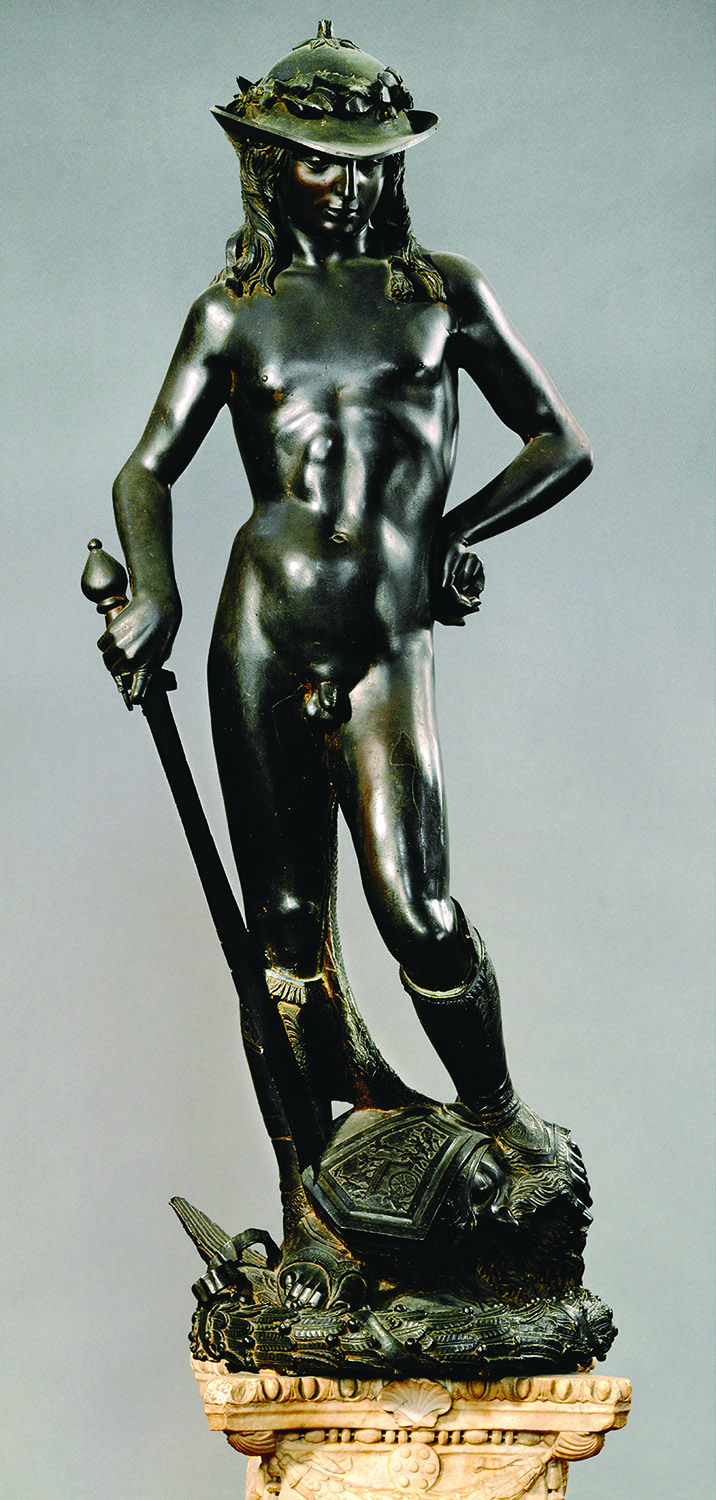
The sculpture represents
David
Isaac
Trajan
Apollo
Which of the following italian city-states is considered the birthplace of the Renaissance?
Genoa
Venice
Florence
Milan
The figure of Venus in Botticelli's Birth of Venus was based on
an Ancient Greek sculpture of a market woman.
an ancient sculpture of Aphrodite/Venus.
an Ancient Egyptian sculpture of a goddess.
a Minoan sculpture of a priestess.
The Renaissance was marked by a renewed interest in ____?
The Byzantine Empire
Ancient Greek and Roman culture
The Ottomans and Turks
The Catholic Church
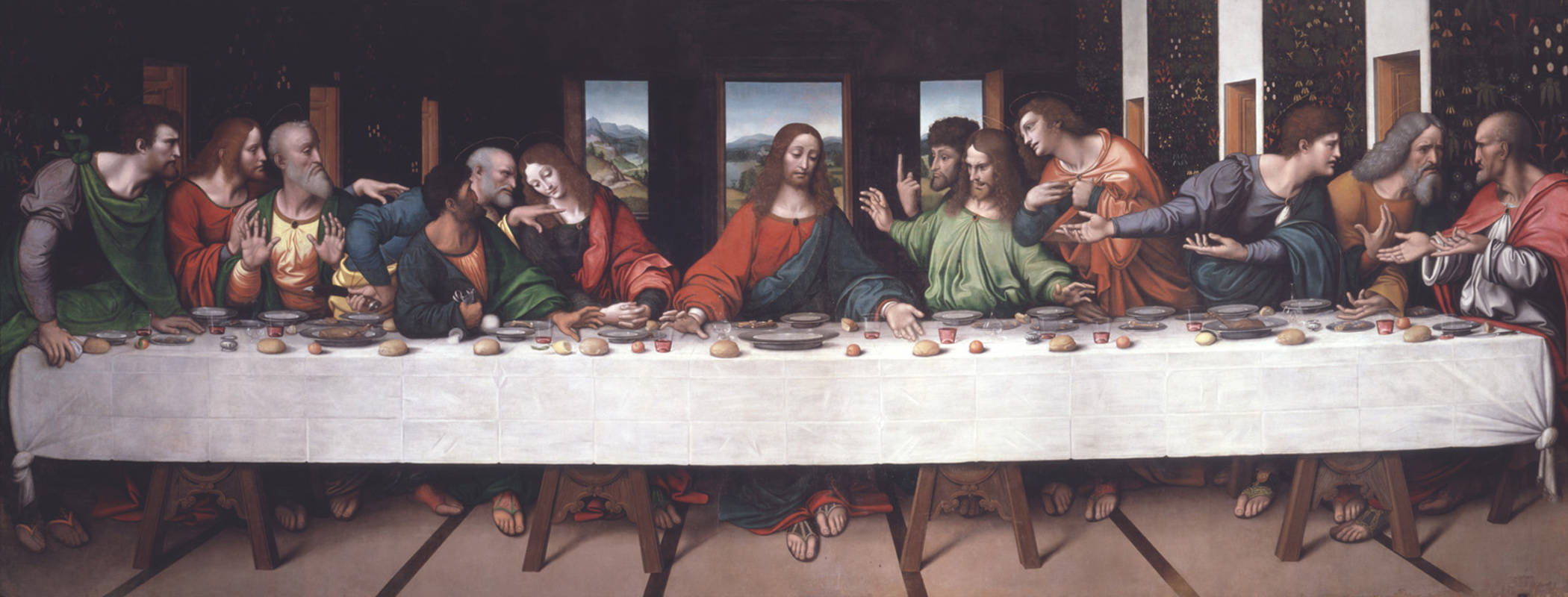
Massacio
Botticelli
Raphael
Da Vinci

Who painted the ceiling of the Sistine Chapel
Michelangelo
Massacio
Raphael
Donatello

Which artist sculpted "David" out of marble?
Donatello
Leonardo da Vinci
Michelangelo
Raphael
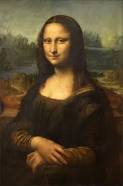
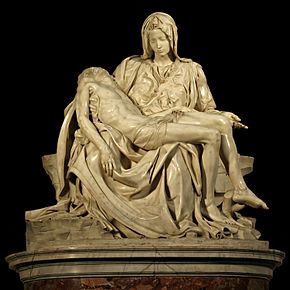

Who painted this?
Raphael
Paolo Veronese
Leonardo de Vinci
Bernardino Luini
How did the Medici family contribute to the Renaissance?
They were patrons of the arts
They killed off anyone who challenged their power
They went on a crime spree
They formed the first government that collected taxes
Which of the following depicts the term "contrapposto"?


Which of the following is most likely Medieval art?


Which of the following best defines "secularism"?
focussing on religion and Jesus
focussing on 'this world' (not the next)
focussing on individual excellence
focussing on Greek and Roman culture
Which term refers to the technique of making objects look far away by making them paler or without detail.
linear perspective
chiaroscuro
portraiture
atmospheric perspective

This painting by Caravaggio (showing Judith beheading Holofernes from the Biblical Book of Judith) is a great example of which of the following terms?
secularism
sfumato
portraiture
chiaroscuro
Which Renaissance artist is the best example of a "Renaissance Man"?
Donatello
Leonardo da Vinci
Michelangelo
Rafael
Which Renaissance artist, best known for being a sculptor, painted the Sistine Chapel?
Donatello
Leonardo da Vinci
Michelangelo
Rafael
What event developed the baroque art style?
Age of Exploration
The printing press
The Commercial Revolution
The Catholic Reformation
The Romantic movement was a reaction to what?
The Renaissance
Religious toleration
Scientific Revolution
The Enligthenment
What kind of people would have commissioned art from Northern Renaissance artists like Albrecht Dürer?
Middle class elites who wanted art that showed everyday life and naturalist style
The Church who wanted to see more emotion in paintings
Monarchs who wanted classic mythology paintings
Protestant leaders who wanted art that broke from the Church
Albrecht Durer was..
Italian
Russian
English
German
In his self-portrait at the age of 28, considering himself to be a talented creator, he portrayed himself as...
a confident artist
a man of wealth
Christ
a man of humility
What was the period of great cultural change and achievement called?
The Middle Ages
The Renaissance
Medieval Times
The Gothic Period
In which city did Titian become the city's greatest painter?
Nuremberg
Florence
Venice
Fayetteville
Define a Fresco Painting............
Painting on a wet wall
a painting made on the wet plaster of a wall or ceiling
Wet paint that has to dry like cement
Painting on a wet ceiling

