
 Worksheets
WH Semester 1 Final Exam Prep
Total questions: 164
Worksheet time: 2hrs 3mins
Match the following definition:
"a government where the leader is believed to be divine."
Theocracy
Monarchy
Neolithic Revolution
Reincarnation
Match the following definition:
"form of government in which a single individual rules."
Monarchy
Theocracy
Reincarnation
Secondary Sources
What important shift occurred because of the Neolithic Revolution?
shift from food-gathering to food-producing civilization
mass migration of people following game animals
a great flood that wiped a large portion of the population away
the neoliths conquered the cave-men
Why did most early civilizations develop in river valleys?
Rivers provided favorable conditions for agriculture
Travel
They were pretty
For Protection
What were the major benefits for humans in domesticating animals?
(pick two)
Steady food supply
No longer needed to hunt for food
Travel
Plowing land
An increase in food led to and increase in the world's _______.
population
trade
lazyness
obesity


Which event would most likely have caused early agricultural civilizations to interact with each other?
the expansion of a civilization's territory
the conquest of one people by another
the migration of one people to another location
the outbreak of disease
Which statement best explains why early civilizations were located in large river valleys/
Rivers contributed the resources needed for widespread agriculture to develop.
River valleys provided the natural obstacles needed to protect against conquest.
River valleys had the kind of temperate climate that humans are adapted to the best.
Rivers made it easier for people to travel the long distances needed to trade with others.
Which advances did the most to help sustain the growing human population during the Neolithic Era?
increased scientific knowledge
improved hunting methods
new construction techniques
the development of agriculture
How did early civilizations develop a stable food supply?
gathering
hunting
nomadic lifestyle
agriculture
What type of social structure was common in early civilizations?
People were ranked into social classes based on their religion.
People were ranked into social classes based on the job they did.
People were ranked into social classes based on their use of technology.
People were ranked into social classes based on their culture.
Early civilization established this the help explain the world around them
culture
government
religion
social structure
Specialized workers were possible with the invention of agriculture because:
people had more time on their hands instead of looking for food
farming was super easy to do
farming was done mostly by animals now anyway
farming didn't lead to specialized workers in any way
The reason RECORD KEEPING or writing began is so that officials and traders could keep track of their laws and records of sale.
TRUE
FALSE
_____ formed when people moved near water and were able to grow their own food.
Civilizations
Religions
Social structure
Technology
____________ defined how people acted with each other, e.g. slaves, religions leaders, merchants, farmers, etc.
Government
Writing
Social Structure
Religion
What is the name given to the scale we use to represent different governments?
Liberty-Order Scale
Liberty-Freedom Scale
Freedom and Order Scale
All of the following are characteristics of governments on the left side of the scale EXCEPT
Most Freedom
Most Order
Most in Power
Democracies
Which of the following are characteristics of the state? (Click all that apply)
Body of People
Defined living space
Ruled with territory
Political Organizations
How do we define a nation?
large group of people united by common descent, history, culture, or language inhabiting a particular country or territory
large group of people living multiple places but united by history and langauge
just a group of people living a country together
body of people living in a defined place with the power to make and enforce laws and a government to do this
Why did some people decide to create a state?
People didn't have a choice, they were forced into it only
people saw the benefits of coming together
There was no benefit of coming together
Most peoples decided that it wasn't worth it to come together
Name of the theory for those people who willing came together to form a state
Coercive
Force
voluntaristic
willing state formation
This is a deal between the people and the state in which people give up their natural state (freedom) to an extent to the state in exchange for order, protection, and peace.
Government Contract
Hobbes Contract
Locke's Contract
Social Contract
What is the coercive theory of state formation?
People willingly give up their rights to the government in exchange for protection, order, peace
people willingly decide to join together to create a state
People are forced to join together by one group towards another group to exploit them for labor
People make the decision not to join together because they don't see the benefits
This philosopher believed that a king and a monarchy was the best form of government
Rousseau
Locke
Hobbes
Thomas Jefferson
What type of government would locke think is best?
Representative Democracy
Junta
Dictatorship
Monarchy
All of the following are characteristics of governments on the right hand side of the scale EXCEPT?
most order
most freedom
one in power
Which side of the scale would you find Democracies?
Left Side
Middle
Right Side
Can float between all three
What type of governments would you find in the middle of the scale?
Democracies
Oligarchy
Autocracy
Theocracy
Which type of governments are on the right part of the scale?
Democracies
Oligarchies
Autocracy
Theocracy
What type of "government" would you find on the far left of the scale?
Dictatorship
Representative Democracy
Anarchy
Junta
Which type of government would you find on the far right of the scale?
Anarchy
Direct Democracy
Junta
Dictatorship
Which of the following would be an example of the type of government you would find in the middle of the scale?
Anarchy
Direct Democracy
Junta
Dictatorship
Identify the following type of government: This government requires that it's citizens propose and vote on all laws.
Direct Democracy
Representative Democracy
Junta
Theocracy
Identify the government: This type of government is ruled by one person, who makes all the decisions, and citizens live in fear of talking poorly of their leader.
Anarchy
Direct Democracy
Representative Democracy
Dictatorship
Identify the government: Citizens elect individuals to serve in a legislative body, which passes laws that all citizens have to follow.
Direct Democracy
Junta
Dictatorship
Representative Democracy
Identify the government: This government is led by a small group of military officers, who overthrew the last government.
Anarchy
Direct Democracy
Representative Democracy
Junta
Identify the government: This government is ruled by a King, who inherited the throne from his father.
Anarchy
Direct Democracy
Monarchy
Junta
Identify the government: This country is ruled by God, led by a religious leader.
Theocracy
Monarchy
Representative Democracy
Anarchy
Identify the government: This government is ruled by no one leader, and actually there is no government at all.
Theocracy
Direct Democracy
Monarchy
Anarchy
What would be an advantage of a direct democracy?
All in power
voting for people to represent you in government
one leader in charge
a small group of people ruling and making decisions
What is the advantage of a dictatorship?
quick to make a decision
all in power
a few in power
potential for a bad leader
What would be an advantage of a representative democracy?
Citizens vote for people to make decisions for them
all are in power
no one is in power
terrible leadership
Shi Huangdi ruled using which philosophy?
Buddhism
Confucianism
Legalism
Daoism
Which of these is NOT a part of Legalism?
strong leader and army
harsh punishments
strict laws
treat others with respect
The Han Dynasty was marked by _____________ governments based on the ideas of __________________.
harsh, Legalism
harsh, Confucianism
stable, Legalism
stable, Confucianism
Emperor Wudi ruled during which of these dynasties?
Han
Qin
Shang
Zhou
children’s respect for their parents and elders
Confucius
filial piety
bureaucracy
Daoism
Legalism
philosophy of Laozi that puts people in touch with the forces of nature
Confucius
filial piety
bureaucracy
Daoism
Legalism
powers that govern the natural rhythms of life and must be balanced
I Ching
yin and yang
Qin Dynasty
Shi Huangdi
autocracy
What did the Legalists believe that rulers should do?
offer advice to people
educate and train lawyers
reward and punish behaviors
encourage criticism of government
What is one way that Shi Huangdi prevented criticism of his rule?
by exiling noble families
by jailing political opponents
by limiting what people could read
by regulating when people could gather
How did Emperor Qin help reform the economy of ancient China?
He established a central bank
He only gave government positions to the rich people
He established a standard system of currency and measurements
He helped the poor
By ______ BC the QIn controlled the area between the Huang He and Chiang Jang RIvers.
321 BC
221 BC
121 BC
200 AD
What does Qin Shihuangdi mean?
First Dragon
Emperor for Eternity
First Qin Emperor
none of these
What year did Emperor Qin die?
221 BC
210 BC
206 BC
200 BC

China's civilization developed between which two rivers?
Yin and Yang
Chang Jiang and Yangtze
Shang and Zhou
Huang He (Yellow River) and Yangtze (Long River)

Which of the following was meant to protect Shi Huangdi in death?
the Great Wall of China
Confucian scholars
an army of terra cotta warriors
canals and irrigation systems
How did the Han government differ from the Qin government?
The Han lowered taxes and appointed Confucian scholars as advisors.
The Han used legalism to control the people.
The Han used warlords to control the warring states.
The Han burned books and censored anything that went against the government.
How did Shi Huangdi unite China?
He appointed Confucian scholars as advisors to the government.
He conquered warring states and centralized power using Legalism.
The Zhou rulers were corrupt and lost their mandate.
By creating treaties with other states.
The Qin Empire ended after Shi Huangdi died due to revolts over heavy taxes, forced labor, and cruel policies.
True
False
After the Emperor of Qin died,
rebellions broke out.
the emperor's son ruled.
the emperor's wife ruled.

Which is the Plateau of Tibet?
A
B
C
D

Which letter is the Gobi Desert?
A
B
C
D

Which is the Yangtze River
A
B
C
D

Which is the Yellow River?
A
B
C
D

Which is the Pacific Ocean?
A
B
C
D
What is the name given to the scale we use to represent different governments?
Liberty-Order Scale
Liberty-Freedom Scale
Freedom and Order Scale
All of the following are characteristics of governments on the left side of the scale EXCEPT
Most Freedom
Most Order
Most in Power
Democracies
Which of the following are characteristics of the state? (Click all that apply)
Body of People
Defined living space
Ruled with territory
Political Organizations
Name of the theory for those people who willing came together to form a state
Coercive
Force
voluntaristic
willing state formation
What is the coercive theory of state formation?
People willingly give up their rights to the government in exchange for protection, order, peace
people willingly decide to join together to create a state
People are forced to join together by one group towards another group to exploit them for labor
People make the decision not to join together because they don't see the benefits
All of the following are characteristics of governments on the right hand side of the scale EXCEPT?
most order
most freedom
one in power
Which side of the scale would you find Democracies?
Left Side
Middle
Right Side
Can float between all three
What type of governments would you find in the middle of the scale?
Democracies
Oligarchy
Autocracy
Theocracy
Which type of governments are on the right part of the scale?
Democracies
Oligarchies
Autocracy
Theocracy
Which type of government would you find on the far right of the scale?
Anarchy
Direct Democracy
Junta
Dictatorship
Which of the following would be an example of the type of government you would find in the middle of the scale?
Anarchy
Direct Democracy
Junta
Dictatorship
Identify the following type of government: This government requires that it's citizens propose and vote on all laws.
Direct Democracy
Representative Democracy
Junta
Theocracy
Identify the government: This type of government is ruled by one person, who makes all the decisions, and citizens live in fear of talking poorly of their leader.
Anarchy
Direct Democracy
Representative Democracy
Dictatorship
Identify the government: This government is ruled by a King, who inherited the throne from his father.
Anarchy
Direct Democracy
Monarchy
Junta
Identify the government: This country is ruled by God, led by a religious leader.
Theocracy
Monarchy
Representative Democracy
Anarchy
When Did The Han Dynasty Rule Ancient China
206 BC to 220 AD
510 BC to 245 BC
251 AD to 430 AD
650 AD to 790 AD
What Organization Founded Under The Han Dynasty Which Ran The Chinese Government For Over 2000 Years
Feudal System
Democracy
Civil Service
Communal Represintation
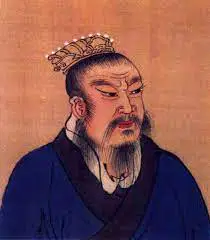
Which of the following phrases describes Daoism?
Give harsh punishments to those who disobey laws.
Lead by example.
Rule as little as possible.
Set clear laws.
Which of these describes a ruler who followed Legalism?
a ruler who believed in few rules and laws
a ruler who allowed people to write their own laws
a ruler who severely punished people who break laws
a ruler who ruled as little as possible
The Zhou claimed that they had the Mandate of Heaven, which they believed was
the majority of votes in an election.
permission from the people to rule.
a divine right to rule China.
a set of laws written by the first Zhou king.
According to the Mandate of Heaven, what was the meaning of disasters such as earthquakes and floods?
They meant that a dynasty needed to spend more money on the environment.
They meant that taxes would be raised to pay for disaster relief.
They meant that Heaven no longer gave a dynasty the right to rule.
They meant that Heaven was telling a dynasty to protect its people.
According to Confucianism, society worked well when
those in authority were kind, honest, wise, and faithful.
people followed basic rules in their relationships with others.
people respected and obeyed those who were above them in status.
all of the above
According to Daoism, people gained happiness by
following many laws and social rules.
working to achieve fame.
living in harmony with nature.
having many possessions.
According to the Dao De Jing, the best rulers were those who
ruled the least.
passed many laws.
governed harshly.
controlled forces of nature.
According to Hanfeizi, what should rulers do to create peace and order?
share power with the people
have absolute power
create few laws
live in agreement with the way of nature
Which belief system wanted the government to stay out of people's lives?
Confucianism
Daoism
Legalism
Which belief system believed that people were bad by nature and needed to be controlled?
Confucianism
Daoism
Legalism
"The universe is a balance of opposites" is a belief of which system?
Confucianism
Daoism
Legalism
Which philosophy would be placed on the left side of the liberty-order scale?
Confucianism
Legalism
Daoism
Which philosophy would you place in the middle of the liberty-order scale?
Legalism
Confucianism
Daoism
Which philosophy would you place on the right side of the liberty-order scale?
Daoism
Confucianism
Legalism

Monarch of france during the 1780s
Louis XIV
Louis XV
Louis XVI
Louis XIII
Which of the following made up 1% of the French population, and included clergy?
First Estate
Second Estate
Third Estate
Middle Class
Which of the following made up 2% of the French population, and included nobles?
First Estate
Second Estate
Third Estate
Peasants
The ___ made up roughly 97% of the French population.
First Estate
Second Estate
Third Estate
Church officials
Which of the following is an accurate description of the tax system in France in the years preceding the French Revolution?
Only peasants and the clergy paid taxes.
Only about 2 percent of the nobility paid any taxes.
The nobility paid taxes only on land, not on income.
The members of the Third Estate paid almost all of the taxes.
Which of the following was NOT a cause of the French Revolution?
An unfair tax system among the Estates
Government debt from wars
An increase in the cost of living
Frequent attacks from the British
Which group imposed the Reign of Terror?
The Second Coalition
The Committee of Public Safety
The National Assembly
The King's Swiss guard
Who was Maximilien Robespierre?
army general
King of France
priest
Leader of the Committee of Public Safety
The Declaration of the Rights of Man guaranteed all of the following EXCEPT
freedom of speech
freedom of the press
freedom of religion
equal rights for women
The political prison, symbol of tyranny during the French Revolution
The Bastille
The Tennis Court
Versailles Palace
Paris
What happened on July 14, Bastille Day?
Robespierre was executed by the guillotine.
French women marched all the way to Versailles.
A mob stormed a prison looking for gunpowder.
All of the above are true.

An assembly of representatives from all three estates that met for the first time in 175 years when Louis XVI called them together.
Estates General
National Assembly
Legislative Assembly
Declaration of the Rights of Man and of Citizen


Nickname for Robespierre's period of rule that ended when he was executed?
100 Days
National Convention
Reign of Terror
Old Regime
Which government of the Revolution gave men the right to vote?
National Assembly
National Convention
Directory
Concordant
Which form of government was least effective and corrupt, it didn't last long?
National Assembly
Committee of Public Safety
National Convention
Directory
What were the series of laws passed by Napoleon that stabilized and unified France?
Declaration of Rights of men
Napoleonic Code
Bill of Rights
Constitution
This document was important in creating the French constitution and declaring its citizens equal.
Declaration of Rights of Man and the Citizen
Declaration of Sentiments
Declaration of French Independence
Declaration of Citizen and Rights

Social class consisting of the clergy.
1st Estate
2nd Estate
3rd Estate
The CHURCH!

The bourgeoisie lead this estate and it was made up of merchants, artisans, cooks, servants, peasants etc.
1st Estate
2nd Estate
3rd Estate
1.2.3.. BOURGEOISIE!

Statement of revolutionary ideals adopted by France's National Assembly.
Declaration of the Rights of Man and of Citizen
Declaration of Independence
Constitution
Articles of Confederation

Native nobles of France who left their country for political reasons during the peasant uprisings (Great Fear)
Sans-Cullotes
Radicals
Emigres
Jacobins

A radical group of Parisian wage-earners and small shopkeepers who wanted a greater voice in government, lower prices and an end of food shortages.
Sans-Cullotes
Moderates
Emigres
Jacobins

Radical political club during the French Revolution that wanted to remove the king and establish a republic. Both middle class men and women joined.
Sans-Cullotes
Radicals
Emigres
Jacobins

A committee established during the French Revolution to identify "enemies of the republic."
Committee of Public Safety
National Assembly
Legislative Assembly
Estates General

The period from mid-1793 to mid-1794, when Maximilien Robespierre ruled France nearly as a dictator and thousands of political figures and ordinary citizens were executed.
Great Fear
French Revolution
Reign of Terror
Tennis Court Oath
Where was Marie Antionette from?
France
Russia
Britain
Austria
The invasion of what country was a complete disaster for Napoleon and led to his downfall?
Austria
France
Britain
Russia
The following form of government consisted of 5 men that made all the decisions for France...
The Directory
The National Convention
The Assembly
Napoleon Bonaparte
Meeting between Austria, Prussia, Britain, and Russia where they set goals for Europe after the French Revolution
The Assembly
Congress of Vienna
Monarchy
The Directory
Why did foreign governments like Britain, Austria, and Prussia invade France during the revolution?
They wanted to take France for themselves.
They wanted to reinstate the monarchy.
They wanted to support the revolutionaries.
They wanted to make Napoleon the emperor of France.
Which of the following is true about Napoleon?
Was a lieutenant in the military
Viewed as a hero of France
The Directory relied on him and his military
All of the above
The goal of the Congress of Vienna was to
Reignite the spirit of the French Revolution
Restore European monarchs to power like Louis XVIII
Allow France to reclaim territories lost in the war
Select a nation to lead all of Europe
How did Nationalism defeat Napolean?
It was a new military weapon that the Spainish used against the Frnach
People of conquered nations came together to defeat Napoleon
The military strategy Russia used to defeat the French
The plan Russia and Great Britain used to defeat Napoleon

[p1] Why did Napoleon decide to invade Russia?
Russia refused to remain in the Continental System (which barred countries from trading with Britain)
Russia attacked Napoleon's allies in Poland & Austria
Russia refused to leave Britain's Continental System
Napoleon's empire was too small for his ambitions of world-conquest
The French Revolution ended when...
Robespierre died
Louis XVI died
When the son of the king died
When Napoleon became Consul of France
In 1792, the National Convention voted to abolish the monarchy and declare France.......
a republic
bankrupt
a communist country
a socialist country
![[CKII - 2025] LỊCH SỬ](https://cf.quizizz.com/image/image-loader.svg)
