wayground logo

Free Printable Worksheets

Font size

S
M
L
XL
Worksheets

Chemical Bonding 1

Total questions: 120

Worksheet time: 2hrs 57mins

Name
Class
Date
1.

Is H2O2 an element or a compound?

a)

element

b)

compound

2.

An atom that gains or loses an electron becomes

a)

an isotope

b)

a new element

c)

an ion

d)

a molecule

3.

When an atom gains an electron it becomes

a)

negatively charged

b)

positively charged

c)

neurtal

4.

Ionic bonds happen when valence electrons are

a)

shared

b)

too heavy

c)

transferred

5.

Valence electrons are

a)

neutral (no charge)

b)

found in the outer most energy level of the atom

c)

equal to the number of protons

6.

Which type of bonds create compounds?

a)

covalent bonds

b)

ionic bonds

c)

metallic bonds

d)

all type of bonds

7.

Which type of bond occurs between non metals?

a)

covalent bonds

b)

ionic bonds

c)

metallic bonds

d)

all types of bonds

8.

How many valence electrons does Oxygen have?

a)

0

b)

16

c)

6

d)

8

9.

How many different elements are in the C6H12O6

a)

3

b)

6

c)

12

d)

24

10.

How many total atoms are in C6H1206

a)

3

b)

6

c)

12

d)

24

11.

What type of bond forms CaF2

a)

covalent bond

b)

ionic bond

c)

metallic bond

d)

all answers are correct

12.

Which type of bond is creates MgFe?

a)

covalent bond

b)

ionic bond

c)

metallic bond

d)

all the bonds

13.

What is the charge of an aluminum ion that has 13 protons and 10 electrons?

a)

3+

b)

3 -

c)

no charge

14.

Is this equation balanced? C3H8 + 5O2 = 4H2O + 3CO2

a)

yes

b)

no

15.

How many oxygen atoms on each side of C3H8 + 5O2 = 4H2O + 3CO2

a)

2

b)

3

c)

5

d)

10

16.

In order for a chemical reaction to occur,

a)

there must be an explosion or fire

b)

bubbling or gas must be produced

c)

a new substance must be formed

d)

the substance must turn color

17.

After a chemical reaction occurs, atoms are not created nor destroyed,

a)

just rearranged into a new substance

b)

just changed into different elements

c)

just turned into unstable elements

18.

Most elements bond to create compounds because

a)

their outer electron level is full

b)

they are unstable

c)

they are positively charged

19.

Compounds that share specific valence electrons are formed by

a)

covalent bonds

b)

ionic bonds

c)

metallic bonds

d)

all types of bonds

20.

Compounds or elements that share their pooled valence electrons are

a)

covalent bonds

b)

ionic bonds

c)

metallic bonds

d)

all types of bonds

21.

Ionic bonding is between a

a)

nonmetal and nonmetal

b)

metal and nonmetal

c)

metal and metal

d)

Depends on the situation

22.

Covalent bonding is between a

a)

nonmetal and nonmetal

b)

metal and nonmetal

c)

metal and metal

d)

It depends on the situation

23.
Chemical bonds form when atoms
a)
combined nuclei
b)
give up neutrons
c)
gain protons
d)
share or transfer electrons
24.
Bonds that form between two metals are called ______________ bonds.
a)
ionic 
b)
covalent
c)
metallic
d)
pervasive
25.
A bond that forms when electrons are transferred is called a/an
a)
ionic bond
b)
covalent bond
c)
hydrogen bond
26.
Covalent compounds
a)
Share electrons
b)
transfer electrons
c)
contain a sea of electrons
d)
conduct electricity
27.

An atom that gains or loses an electron becomes

a)

an isotope

b)

a new element

c)

an ion

d)

a molecule

28.

Valence electrons are

a)

neutral (no charge)

b)

found in the outer most energy level of the atom

c)

equal to the number of protons

29.

How many different elements are in the C6H12O6

a)

3

b)

6

c)

12

d)

24

30.
What type of bond is formed when electrons are transferred (stolen, or given) from one atom to another?
a)
Ionic Bond
b)
Covalent Bond
c)
Metallic Bond
d)
Acidic Bond
31.
What type of bond forms when atoms share electrons?
a)
Ionic Bond
b)
Covalent Bond
c)
Metallic Bond
d)
Gold Bond Medicated Powder
32.
What does an atomic number tell you about an atom?
a)
Number of Protons in an atom or ion
b)
Number of Neutrons in an atom or ion
c)
Number of Nuclei in an atom or ion
d)
Number of fingers on a hand
33.

1. A covalent bond forms when atoms ___________ electrons.

a)

gain

b)

share

c)

increase

d)

transfer

34.

2. Which type of bond has a transfer of an electron from on atom to another?

a)

Polar Covalent

b)

Non Polar Covalent

c)

ionic

d)

metallic

35.

3. Covalent compounds

a)

Share electrons

b)

transfer electrons

c)

contain a sea of electrons

d)

conduct electricity

36.

4. What is the number of valence electrons for Oxygen?

a)

8

b)

6

c)

2

d)

1

37.

5. Why do atoms bond?

a)

They typically don't bond

b)

To add or take away energy levels

c)

To satisfy the octet rule

d)

To have a full inner shell

38.

6. Ionic bonding is between a

a)

nonmetal and nonmetal

b)

metal and nonmetal

c)

metal and metal

d)

Depends on the situation

39.

7. CaCl2 is an example of what type of bond?

a)

Covalent

b)

Metallic

c)

Ionic

d)

Polar Covalent

40.

8. Predict what type of bond would form between Mg and Cl.

a)

Ionic

b)

Covalent

c)

Metallic

d)

Polar Covalent

41.

9. Which of the following has a full valence electron shell?

a)

Hydrogen

b)

Carbon

c)

Oxygen

d)

Xenon

42.

10. If an atom loses two electrons what charge will it have?

a)

+2

b)

-2

c)

+1

d)

-1

43.

11. How many valence electrons in this structure?

a)

2

b)

7

c)

17

d)

not enough information to answer

44.

12. Which elements generally make covalent bonds?

a)

metal and nonmetal

b)

2 or more nonmetals

c)

multiple metals

d)

none of the above

45.

13. How many valence electrons do elements in the group 14 contain?

a)

3

b)

4

c)

13

d)

14

46.

14. Using the image, identify what type of chemical bond would most likely be formed?

a)

An ionic bond because there are positive and negative charges found between the aluminum atoms.

b)

A covalent bond because the electrons are being shared.

c)

A metallic bond because the electrons are being pooled and shared between metal atoms.

d)

An ionic bond because a bond is formed between metal and nonmetal atoms.

47.

15. How many valence electrons would the following element have: Helium

a)

2

b)

4

c)

8

d)

18

48.

16. Which of the following compounds would form a double covalent bond?

a)

CO2

b)

H2

c)

N2

d)

P2

49.

17. Which of the following is NOT a characteristic of ionic compounds?

a)

Usually liquids or gases at room temperature

b)

dissolve in water

c)

good conductor of electricity

d)

high melting points

50.

18. Which of the following compounds would be identified as covalent? Check all that apply

a)

CO2

b)

NaCl

c)

CaCl

d)

H2O

e)

FBr

51.
What are ionic bonds?
a)
valence electrons transferred between atoms
b)
Inner most electrons transferred between atoms
52.
What is the ionic compound formed between K and F?
a)
KF
b)
K2F
c)
KF2
d)
K2F2
53.
Write the formula when Al and O bond?
a)
Al3O2
b)
AlO
c)
Al2O3
d)
O2Al3
54.
Nonmetals tend to 
a)
gain electrons
b)
lose electrons
55.
Metals tend to 
a)
gain electrons
b)
lose electrons
56.
When metals bond with non-metals they form what type of bonds
a)
covalent
b)
ionic
c)
cooperative
d)
lewis
57.
When a nonmetal gains electrons, it becomes this type of ion.
a)
Anion
b)
Cation
58.
A chemical bond that involves the sharing of nonmetal electrons.
a)
ionic bond
b)
an Ion
c)
covalent bond
d)
a anion
59.
With the ________ you must have 8 electrons on the outside ring.
a)
anions
b)
ionic bonds
c)
cations
d)
octet rule
60.
How are covalent bonds explained?
a)
When one atom takes the other atom's electron
b)
When the atom shares an electron with an another atom
c)
When the two nucleus merge
d)
When the neutrons leave the nucleus
61.
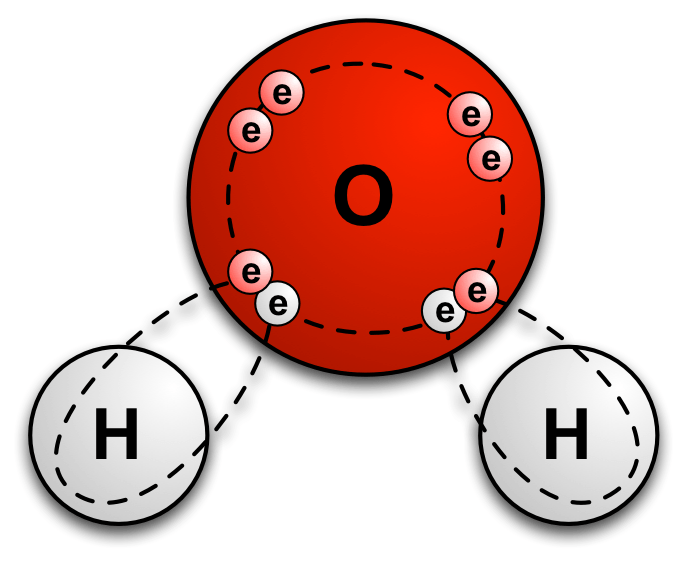
What would you name this molecule?
a)
SNa3
b)
H3O
c)
NaCl
d)
H2O
62.
What is the proper name for S2O2?
a)
Sulfur oxide
b)
Sulfur dioxide
c)
sulfur (II) oxide
d)
disulfur dioxide
63.
Which of the following is NOT formed by a covalent bond?
a)
K2S
b)
H2O
c)
I2
d)
CO2
64.
What does the prefix "penta" mean?
a)
5
b)
10
c)
7
d)
4
65.
P2O5
a)
Phosphorus Oxide
b)
Pentaphosphorus Dioxide
c)
Diphosphorous pentoxide
d)
Phosphoric Oxygen
66.
Name the following compound: 
N2O4
a)
dinitrogren tetraoxide
b)
tetranitrogen dioxide
c)
nitrogen oxide
d)
dinitrogen tetraoxygen
67.
Write the formula for:
disulfur decafluoride
a)
2SF10
b)
SF5
c)
S2F10
d)
F10S2
68.
Beryllium, Be, and chlorine, Cl, form an ionic compound. In order for the compound to be neutral, what must the formula look like?
a)
Be2Cl
b)
2BeCl
c)
BeCl2
d)
Be2Cl2
69.
What is the proper name for the covalent compound, CCl4
a)
Carbon Chloride
b)
Carbon Quadrachloride
c)
Carbon Tetrachloride
d)
Carbon Dichloride
70.
What is the proper name for the covalent compound N3F8?
a)
Nitrogen Flouride
b)
Nitrogen Fosfate
c)
Trinitrogen Octaflouride
d)
Nitrogen Pentaflouride
71.
Which part of the atom is responsible for chemical bonding?
a)
Inner/Core Electrons
b)
Outer/Valence Electrons
c)
Protons
d)
Neutrons
72.
What best describes valence electrons?
a)
Electrons in the inner-most shell.
b)
Electrons in the outer-most shell.
c)
Electron that became a beta particle.
73.
Where are valence electrons located?
a)
In the inner-most shell of an atom.
b)
In the outer-most shell of an atom.
c)
Between the inner and outer shells of an atom.
d)
Inside the nucleus of an atom.
74.
How many valence electrons do most atoms need to have a complete outer shell and be happy?
a)
1
b)
8
c)
10
d)
5
75.
Which two elements only need two valence electrons to be happy?
a)
Hydrogen and Helium
b)
Lithium and Neon
c)
Copper and Iron
d)
Californium and Berkelium
76.
Why do Hydrogen and Helium only need two valence electrons?
a)
The first electron shell can only hold two electrons.
b)
They are both metals.
c)
They both begin with H.
d)
They are both gases.
77.
How many valence electrons do elements in Group 1, the Alkali Metals, have?
a)
1
b)
2
c)
6
d)
7
78.
How many valence electrons do elements in Group 2, the Alkaline Earth Metals, have?
a)
1
b)
2
c)
6
d)
7
79.
If Oxygen has 6 valence electrons and is in Group 16 while Chlorine has 7 valence electrons and is in Group 17, what is the rule between group number and valence electrons?
a)
Multiply by 2.
b)
Take the absolute inverse of the square root.
c)
e=mc2
d)
Subtract 10.
80.
How do ions form?
a)
Atoms gain or lose electrons to fill or empty the valence shell.
b)
Atoms like cats so they become "pawww-sitive".
c)
Atoms gain or lose electrons to change their atomic mass.
d)
Atoms gain or lose electrons to match the number of neutrons.
81.
If an element gives away an electron, will it form a positive ion or a negative ion?
a)
Positive.
b)
Pawww-sitive.
c)
Negative.
d)
Neutral.
82.
If an element gains an electron, will it form a positive ion or a negative ion?
a)
Positive.
b)
Negative.
c)
Neutral.
d)
Square root of -1.
83.
Why does an ion have a charge?
a)
There are different numbers of protons and neutrons.
b)
There are different numbers of neutrons and electrons.
c)
There are different numbers of protons and electrons.
d)
There are different numbers for atomic mass and atomic number.
84.
How do ionic bonds form?
a)
Atoms share electrons to fill their valence shell.
b)
Atoms gain or lose electrons to fill their valence shell.
c)
Atoms donate electrons to a "sea" of electrons.
85.
How do covalent bonds form?
a)
Atoms share electrons to fill their valence shell.
b)
Atoms gain or lose electrons to fill their valence shell.
c)
Atoms donate electrons to a "sea" of electrons.
86.
What ending is used for the names of negative ions formed when atoms gain (steal) electrons?
a)
ade
b)
ate
c)
ion
d)
ide
87.
What type of bond is formed when electrons are transferred (stolen, or given) from one atom to another?
a)
Ionic Bond
b)
Covalent Bond
c)
Metallic Bond
d)
Acidic Bond
88.
What is an interaction that holds 2 atoms together called?
a)
Chemical Bond
b)
Covalent Bond
c)
Ionic Bond
d)
Metallic Bond
89.
What is a repeating three-dimensional pattern that forms when ions bond called?
a)
Crystal Lattice
b)
Crystal Lettuce 
c)
Crystal Configuration
d)
Quartz
90.
What are the electrons in the outer most level called?
a)
Outer level electrons
b)
Protons
c)
Neutrons
d)
Valence Electrons
91.
What type of bond forms when atoms share electrons?
a)
Ionic Bond
b)
Covalent Bond
c)
Metallic Bond
d)
Gold Bond Medicated Powder
92.
What does an atomic number tell you about an atom?
a)
Number of Protons in an atom or ion
b)
Number of Neutrons in an atom or ion
c)
Number of Nuclei in an atom or ion
d)
Number of fingers on a hand
93.
How many more electrons are needed to fill an outermost energy level of a Carbon atom?
a)
its already full, 0 needed
b)
2
c)
4
d)
carbon is a nonmetal, it has no electrons
94.
Which of the following is an example of a diatomic element found in nature?
a)
Gold
b)
Potassium
c)
Oxygen
d)
Plutonium
95.
Which of the following properties of metal means it can be drawn into wires?
a)
malleability
b)
ductility
c)
electrical conductivity
d)
flexibility
96.
What allows metals to bond?
a)
overlapping valence electrons
b)
low number of valence electrons
c)
high number of valence electrons
d)
nonmetals
97.
What is a charged atom called?
a)
ion
b)
ide
c)
bond
d)
Tyler
98.
What do metal atoms form when they lose (give away) valence electrons?
a)
negative ions
b)
positive ions
c)
negative nonmetals
d)
positive semiconductors
99.
Neutral atoms covalently bonded together form a _________________.
a)
Molecule
b)
Ion
c)
Cation
d)
Anion
100.
Where does the energy come from when ionic bonds are formed?
a)
Energy comes from the positive metal
b)
Energy comes from the negative metal
c)
Energy comes from the positive nonmetal
d)
Energy comes from the negative nonmetal
101.
What is used to show the valence electrons in an atom?
a)
Electron-dot diagram
b)
lines
c)
molecule
d)
covalent bond
102.
The ability of metal to be hammered into thin sheets is called _________________.
a)
ductility
b)
malleablility
c)
moving electrons
d)
construction work
103.
How many atoms of carbon are used to make a molecule of sugar, C12H22O11?
a)
12
b)
22
c)
11
d)
Sugar is not a molecule
104.
What are the only parts of atoms that make chemical bonds?
a)
Protons in the nucleus
b)
Neutrons in the nucleus
c)
Electrons in the nucleus
d)
Valence Electrons
105.
Why don't noble gases normally form chemical bonds?
a)
They have only 2 valence electrons
b)
Their outer level electrons are empty
c)
They have 8 neutrons
d)
They have a full valence electron shell
106.
What type of bond forms when metals react with nonmetals?
a)
ionic
b)
covalent
c)
metallic
d)
James
107.
What type of bond forms when a nonmetal reacts with a nonmetal?
a)
ionic
b)
covalent
c)
metallic
d)
James
108.
What type of bond forms when a metal reacts with another metal?
a)
ionic
b)
covalent
c)
metallic
d)
James
109.
What type of bond is formed with Sodium (Na) bonds with Chlorine (Cl) to make sodium chloride (table salt)?
a)
ionic
b)
covalent
c)
metallic
d)
James
110.
What type of bond is formed when carbon reacts with 2 oxygen atoms to form CO2 (carbon dioxide)
a)
ionic
b)
covalent
c)
metallic
d)
James
111.
Elements on the LEFT side of the periodic table will most likely form:
a)
Positive ions
b)
Negative ions
c)
Neutral Ions
d)
None of these
112.
An ionic bond forms when atoms ___________ electrons.
a)
gain
b)
share
c)
increase
d)
transfer
113.
Bonds that form between two metals are called ______________ bonds.
a)
ionic 
b)
covalent
c)
metallic
d)
pervasive
114.
Covalent compounds
a)
Share electrons
b)
transfer electrons
c)
contain a sea of electrons
d)
conduct electricity
115.
If an atom gains one electron what charge will it have?
a)
-2
b)
-1
c)
+1
116.
How many valence electrons in this structure?
a)
6
b)
5
c)
4
d)
7
117.

Which of the following pairs of atoms are unlikely to form a covalent bond?

a)

Neon and Argon

b)

Nitrogen and Oxygen

c)

Potassium and Chlorine

d)

Magnesium and oxygen

118.
This could be the dot diagram of
a)
Mg
b)
Cl
c)
C
d)
O
119.

How many valence electrons does Aluminum Have?

a)

1 Valence electron

b)

2 Valence electron

c)

3 Valence electron

d)

4 Valence electron

120.

How would you draw a Lewis dot diagram for Magnesium?

a)
b)
c)
d)