
 Worksheets
Semester 1 Final Review
Total questions: 61
Worksheet time: 56mins
What are the three main types of plate boundaries?
Subduction, collision, and spreading boundaries
Trench, ridge, and fault boundaries
Oceanic, continental, and island boundaries
Convergent, divergent, and transform boundaries
How do scientists use science and engineering practices to study the environment?
By reading books and articles about the environment
By guessing and making assumptions about the environment
By ignoring the environment and focusing on other topics
By conducting experiments, making observations, collecting data, and analyzing the results.
What is biodiversity and why is it important for ecosystems?
Biodiversity is the variety of life forms in a habitat, and it is important for ecosystem stability, resilience, and productivity.
Biodiversity is the variety of life forms in a habitat, and it is important for ecosystem stability, resilience, but not productivity.
Biodiversity is the variety of life forms in a habitat, and it is important for ecosystem stability, but not resilience and productivity.
Biodiversity is the variety of life forms in a habitat, and it is not important for ecosystem stability, resilience, and productivity.
What evidence supports the idea of common ancestry among different species?
Comparative anatomy, astrology, and folklore
Fossil records, comparative anatomy, embryology, and molecular biology
Fossil records, astrology, and mythology
Molecular biology, astrology, and superstition
Explain the concept of earth systems and how they interact with each other.
The interactions between the atmosphere, hydrosphere, lithosphere, and biosphere through processes like the water cycle, carbon cycle, and rock cycle.
The interactions between different layers of the earth's atmosphere
The interactions between the moon, sun, and stars through gravitational forces
The interactions between different animal species in an ecosystem
What happens at a divergent plate boundary?
The plates move towards each other
The plates do not move at all
New crust is formed
The plates move parallel to each other
How can technology be used to monitor and protect biodiversity?
By using ancient scrolls and prophecies
By using telepathy and mind reading
By using remote sensing, data collection and analysis, and creating monitoring systems.
By sending smoke signals and carrier pigeons
What is the role of natural selection in the process of evolution?
Natural selection has no role in the process of evolution
Natural selection allows for the adaptation of species to their environment and drives the process of evolution.
Natural selection causes species to remain unchanged over time
Natural selection only affects physical appearance, not evolution
Describe the impact of human activities on earth systems.
Human activities can have negative impacts on earth systems such as deforestation, pollution, and climate change.
Human activities can only impact one earth system
Human activities only have positive impacts on earth systems
Human activities have no impact on earth systems
What are the consequences of living near a convergent plate boundary?
Droughts, wildfires, and heatwaves
Avalanches, landslides, and mudslides
Tornadoes, hurricanes, and blizzards
Earthquakes, volcanic eruptions, and tsunamis

Which SEP does this image fit into?
Asking questions and defining problems
Developing and using models
Analyzing and interpreting data
Engaging in argument from evidence
True or false: An ecosystem with high genetic diversity is healthier than an ecosystem with low genetic diversity.
True
False
An endangered species is
a species in danger of extinction
a plant growing on public land
an organism brought to a place where it has not lived before
a species that has disappeared entirely
How do people benefit from biodiversity?
aesthetic or personal enjoyment
variety of food sources
source of new products
all of these
According to scientists, whales are more closely related to lemurs than to clownfish.
Which evolutionary tree correctly shows the relationship between whales, lemurs, and clownfish?


Which statement about evolution is true?
Evolution occurs in individual organisms.
Evolution involves a change in non-inherited traits.
Evolution occurs over multiple generations.

The evolutionary tree below shows the relationships between three groups of organisms: fish, amphibians, and reptiles.
the common ancestor of fish and reptiles, but not amphibians
the common ancestor of fish and amphibians, but not reptiles
the common ancestor of fish, amphibians, and reptiles
Which word refers to the process by which populations change over time?
Evolution
Natural Selection
Adaptation
Darwinism

Which fossil in the diagram is the youngest?
fern
shell
coral

Which fossil in the diagram is the oldest?
shell
mollusk
plant

The image shows part of the humerus bone in different genera of primates. Which statement is best supported by the observable structures of the different humerus bones?
the primates lived in similar environments
the primates shared a common ancestor
the primates interbreed with similar organisms in a population
the primates had diets that consisted of similar types of foods

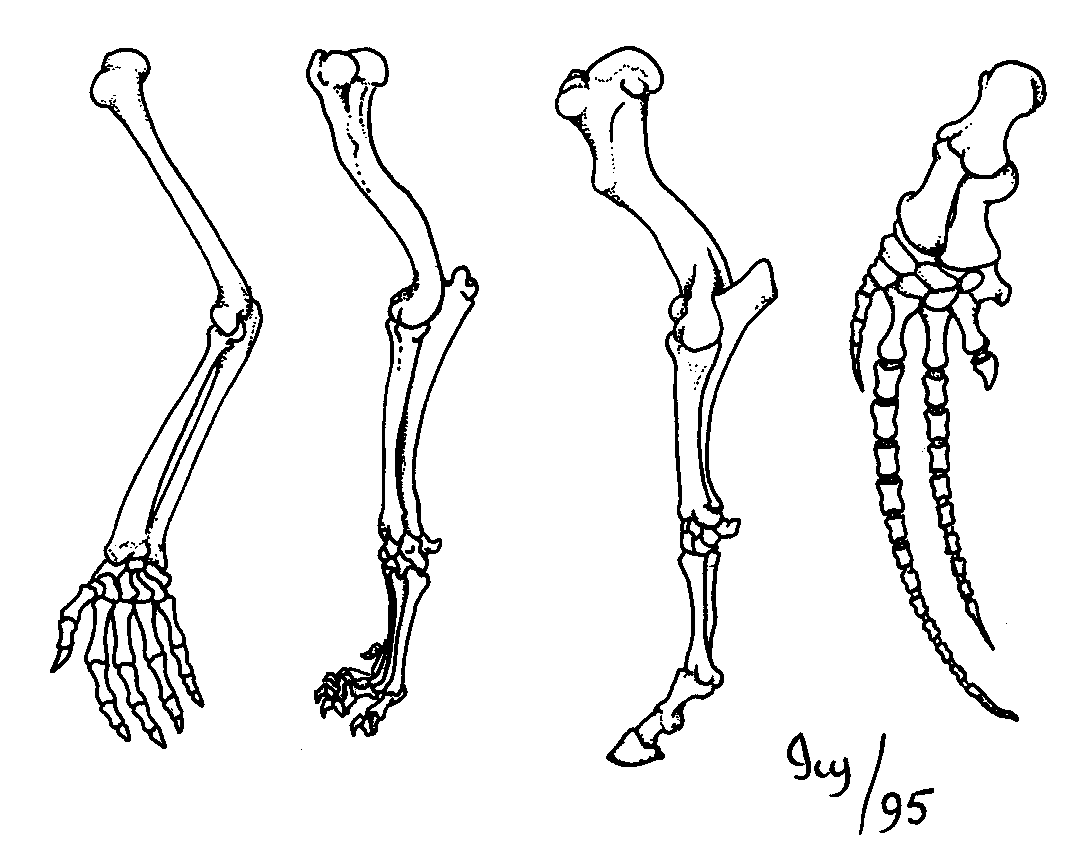
The limbs of several organisms are shown in the illustrations below. Scientists sometimes compare the limbs of these organisms to look for evidence of common ancestry. These limbs provide evidence of common ancestry because they -
have the same basic structure
perform the same function
are the same size
are parts of mammals

All living things on earth are part of the....
Biosphere
Geosphere
Hydrosphere
Cryosphere

The Geosphere is...
All liquid water on Earth
A 100km thick layer of gases
frozen water on earth
Earths entire solid body
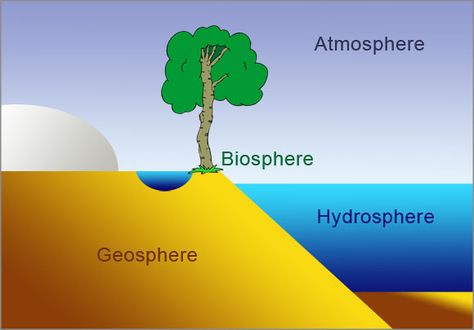
Earth is divided into four different spheres. Which statement is true about the interaction between two of these spheres?
Weather is an interaction between the hydrosphere and the geosphere.
A plant receiving water from precipitation is an interaction between the biosphere and the hydrosphere.
An ice cap providing shelter for an arctic animal is an interaction between the biosphere and the hydrosphere.
The formation of the Grand Canyon is an example of an interaction between the geosphere and the atmosphere.

What is the hydrosphere's function?
a recycling planet powered by the flow of solar energy to support a network of life.
sustains various life forms and plays an important role in ecosystems and regulating heat on earth.
sustains life forms on the surface of the earth, absorbs and interacts with harmful solar rays.It protects the earth from natural and human-caused space debris.
controls the distribution of minerals, rocks and soils and generates natural hazards that shape the land and impact humans

What is the atmosphere's function?
a recycling planet powered by the flow of solar energy to support a network of life.
sustains various life forms and plays an important role in ecosystems and regulating heat on earth.
sustains life forms on the surface of the earth, absorbs and interacts with harmful solar rays.It protects the earth from natural and human-caused space debris.
controls the distribution of minerals, rocks and soils and generates natural hazards that shape the land and impact humans

"Bio" in biosphere means ____.
air, vapor
rock, earth
water
life

"Atmo" in atmosphere means ____.
air, vapor
rock, earth
water
life

"Hydro" in hydrosphere means ____.
air, vapor
rock, earth
water
life

"Geo" in geosphere means ____.
air, vapor
rock, earth
water
life

Which of the following is the name of the ancient supercontinent formed 280 Million Years ago.
Pangea
Gondwanda
Laurasia
Neverland
What do we call an area where more then two plates interact in different ways
plate boundary zones
hot spots
convergent boundaries
subduction



Penguin flipper and fish fin
Homologous
Vestigial
Analogous
None of the above
Possible human solutions for limiting global warming and climate change are...
being more energy-efficient
using renewable sources of energy
removing carbon from fossil fuel emissions
all of the above
MAIN greenhouse gas responsible for Climate Change is:
nitrogen
carbon
carbon dioxide
methane
Which natural process removes carbon dioxide from the atmosphere?
forest fires
volcanic eruptions
cellular respiration
photosynthesis
Which human activity contributes the MOST carbon dioxide to the atmosphere?
fishing
farming
breathing
burning fossil fuels
Which of the following are Science and Engineering Practices ?
(Choose all that apply)
Asking questions and defining problems
Planning an investigation
Memorizing the first ten elements on the periodic table
Analyzing and interpreting data

