
 Worksheets
Robotics SLO End of Semester Review
Total questions: 50
Worksheet time: 25mins
Name
Class
Date
1.
True or False: A sequence with fewer steps (or blocks) is less likely to contain errors than a sequence with many steps (or blocks).
a)
True
b)
False
2.

What is the name of theses parts?
a)
Connector Pins
b)
Pitch Standoff's
c)
Corner Connectors
d)
Beams
3.
True or False: You can program your robot to move without using a block that sets velocity.
a)
True
b)
False
4.
When would it be appropriate to use a block that sets velocity in your project?
a)
To change the robot's direction from driving forward to driving in reverse.
b)
To drive the robot forward a certain number of inches.
c)
To allow the robot to have more control when carefully completing a task such as maneuvering through an obstacle course or maze.
d)
To stop all of the motors from moving.
5.
True or False: There is only one block that sets velocity for both driving and turning.
a)
True
b)
False
6.
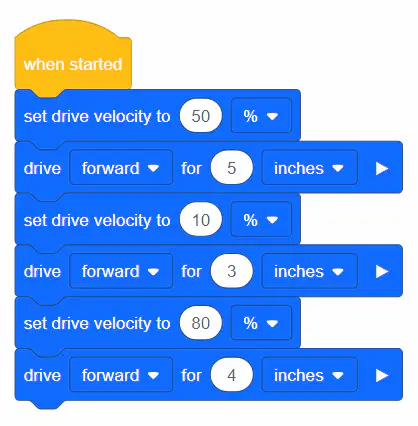
In this example project, how far does the robot move at 10% velocity?
a)
4 inches
b)
12 inches
c)
5 inches
d)
3 inches
7.
True or False: The default velocity for the VEX IQ Smart Motor is 25%
a)
True
b)
False
8.
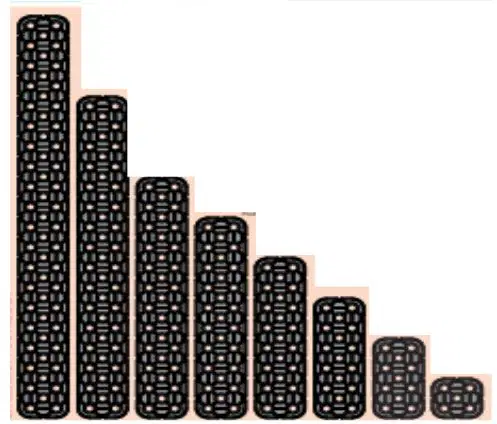
What is the name of theses parts?
a)
2x Beams
b)
Pitch Standoff's
c)
Corner Connectors
d)
1x Beams
9.
True or False: Thinking like a robot means the robot needs to be told exactly what to do, step-by-step.
a)
True
b)
False
10.
Structures were only able to be so tall until the invention of...
a)
Steel
b)
Brackets
c)
Glue
d)
Rubber
11.
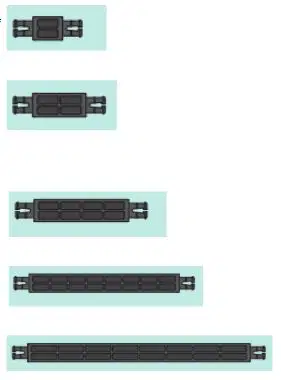
What is the name of theses parts?
a)
Connector Pins
b)
Pitch Standoff's
c)
Corner Connectors
d)
Beams
12.
Which of the following professions is NOT likely to use a scissor lift?
a)
Carpenter
b)
Warehouse worker
c)
Restaurant worker
d)
Electrician
13.
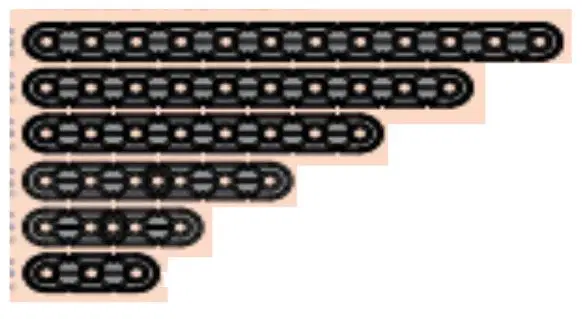
What is the name of theses parts?
a)
2x Beams
b)
Pitch Standoff's
c)
Corner Connectors
d)
1x Beams
14.
Which is the correct order for the Engineering Design Process?
a)
Ask, Imagine, Plan, Create, Improve
b)
Plan, Imagine, Create, Improve, Ask
c)
Ask, Create, Improve, Imagine, Plan
d)
Imagine, Plan, Ask, Improve, Create
15.

What is the name of this part?
a)
30mm Pulley
b)
60 Tooth Gear
c)
200 mm Rubber Tire
d)
Shaft Washer
16.
A gear ratio has two types of gears: a driving gear and a driven gear. Which of the following is the best definition of a driven gear?
a)
It is turned by the driving gear.
b)
It is always smaller than the driving gear.
c)
It turns first.
d)
It is always larger than the driving gear.
17.
Which of the following best describes a gear ratio that has the mechanical advantage of torque?
a)
The driving gear is smaller than the driven gear and power is increased.
b)
The driving gear is larger than the driven gear and speed is increased.
18.
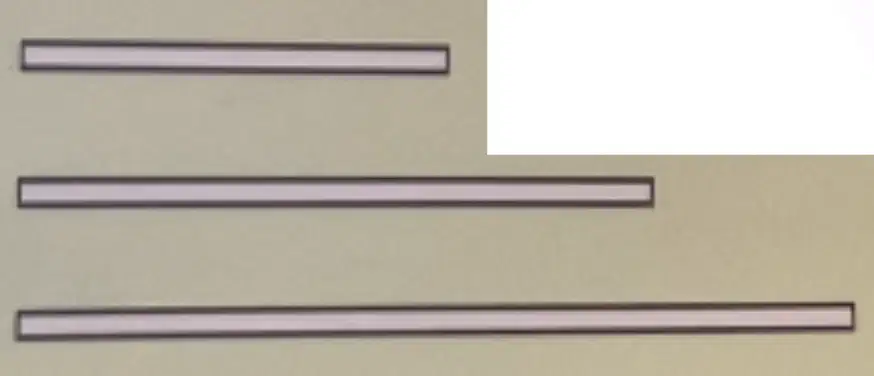
What is the name of the following parts?
a)
Lock Plates
b)
Pitch Shaft
c)
Tooth Gears
d)
40mm Pulley
19.
If you didn’t have a ruler to measure how far the Autopilot robot moved, which VEX piece would be the best for you to choose to act as a measuring stick?
a)
Beams (1x/2x/4x)
b)
Standoff
c)
Metal Shaft
d)
Smart Cable
20.

What is the name of the following parts?
a)
200 mm Rubber Tire
b)
Lock Plates
c)
Tooth Gears
d)
Pitch Plastic Capped Shaft
21.
True or False: The M.A.D. Box showed both speed and torque advantages at the same time.
a)
False
b)
True
22.
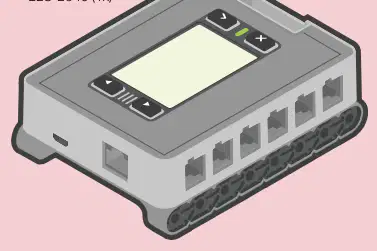
What is the name of this part?
a)
2.4 GHz Radio
b)
VEX Controller
c)
Bumper Switch
d)
Robot Brain
23.
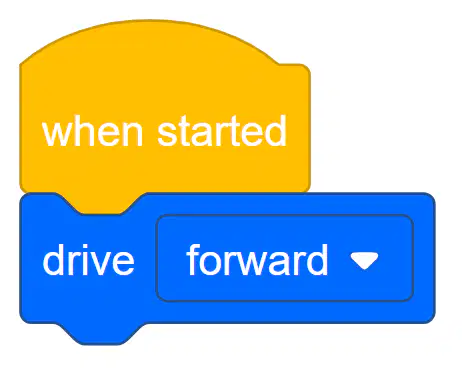
In this example program, the robot will continuously move forward. How could you make the robot stop moving forward?
a)
Add a command to only move forward a certain number of inches.
b)
Add a command to only move forward a certain amount of time.
c)
Press the X button on the robot brain while the program is running.
d)
All of these answers are correct.
24.

What is the name of this part?
a)
Smart Radio
b)
Touch LED
c)
Bumper Switch
d)
Color Sensor
25.
If you expect your robot to turn left 90 degrees, and it turns right instead, how would you fix the problem?
a)
Disconnect and reconnect the VEX IQ Gyro Sensor.
b)
Check the robot configuration is properly configured for Autopilot.
c)
Change the direction in the turn for block from right to left.
d)
Pick up the robot, and rotate it manually in the direction you’d like it to turn.
26.
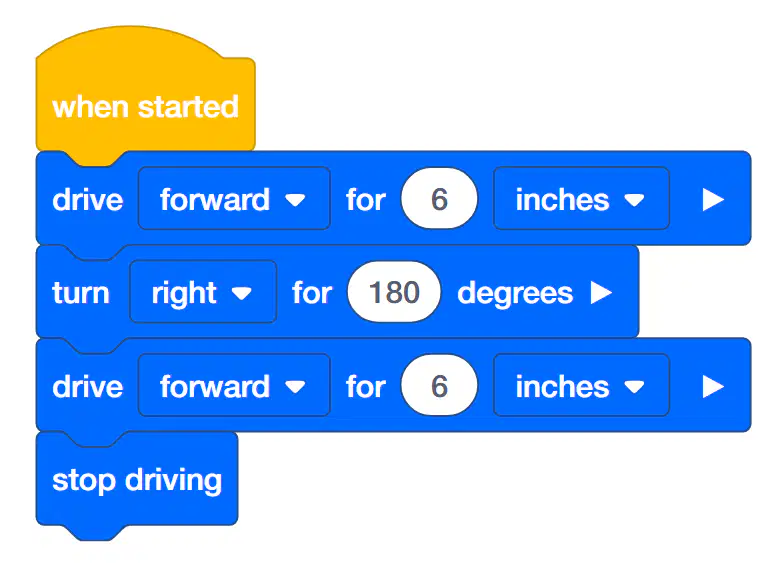
Susie was asked to program her robot to drive forward six inches, turn around, and return to its starting location. To successfully accomplish this task, is Susie’s code (below) correct?
a)
Yes
b)
No
27.
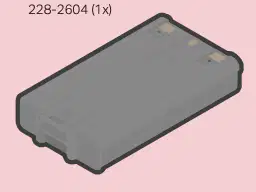
What is the name of this part?
a)
Robot Battery
b)
Smart Motor
c)
Bumper Switch
d)
VEX Controller
28.
How are torque and speed advantages related to changing gears on a bicycle?
a)
Changing gears lets you pedal more easily or makes you need more force to pedal.
b)
Changing gears lets you pedal easily up steep hills or quickly across even surfaces.
c)
All of these answers are correct.
d)
Changing gears lets your pedaling make you move farther or shorter distances.
29.
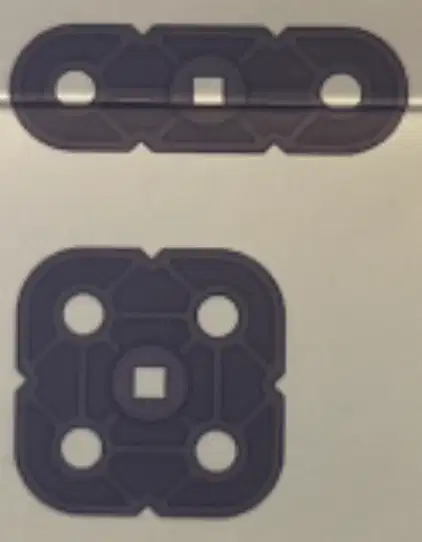
What is the name of the bottom part?
a)
Shaft Brushing
b)
2x2 Shaft Lock Plate
c)
Shaft Washer
d)
1x3 Shaft Lock Plate
30.
You should use gears in your robot to
a)
None of these answers is correct.
b)
Create a torque advantage.
c)
Create both torque and speed advantages, depending on the part of the robot and what it needs to do.
d)
Create a speed advantage.
31.
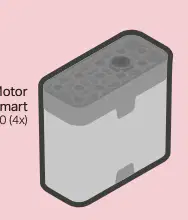
What is the name of this part?
a)
2.4 GHz Radio
b)
Smart Motor
c)
Bumper Switch
d)
Robot Brain
32.
A mechanical advantage is an advantage gained by the use of a mechanism in transmitting force. Did the Grabber have a mechanical advantage(s)? If so, what is the mechanical advantage?
a)
The Grabber did NOT have a mechanical advantage
b)
The Grabber had a mechanical advantage of Increase of Speed
c)
The Grabber had a mechanical advantage of Increase of Torque
d)
The Grabber had a mechanical advantage of Transfer of Power
33.
Iterative Design is when...
a)
None of these answers is correct.
b)
You plan the different versions you are going to create.
c)
You try to make a design once.
d)
You create, test, and revise your design several times.
34.
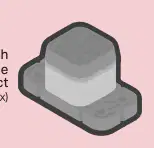
What is the name of this part?
a)
2.4 GHz Radio
b)
VEX Controller
c)
Bumper Switch
d)
Smart Cable Pack
35.
True or False: Skyscrapers typically are made so that the top is wider than the base to ensure stability.
a)
True
b)
False
36.
Yes or No: Are there rules for how high a skyscraper can be?
a)
Yes
b)
No
37.
True or False: The robot can be programmed to travel in both inches and millimeters.
a)
True
b)
False
38.
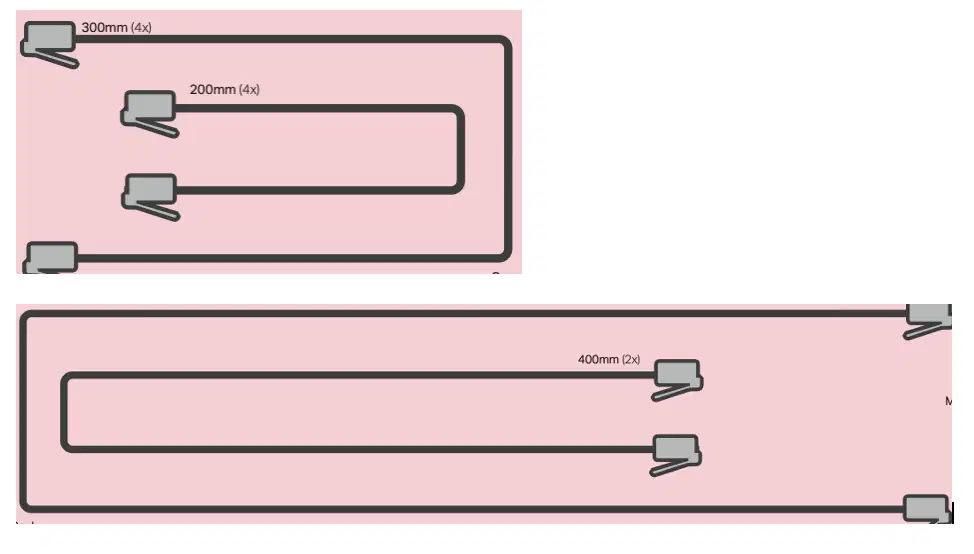
What is the name of this part?
a)
Smart Cable Pack
b)
Touch LED
c)
Bumper Switch
d)
USB Cable
39.
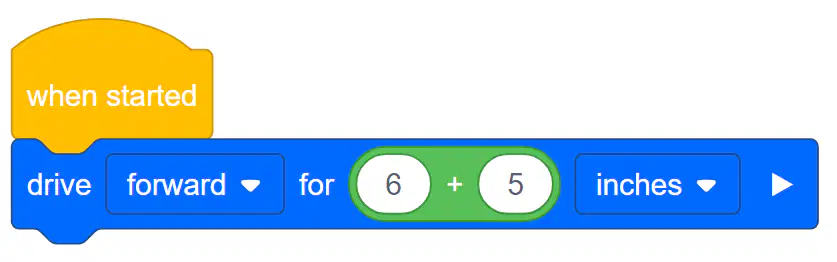
In this example program, the robot will:
a)
Move forward 11 mm.
b)
Move forward 11 inches.
c)
Move forward 6 inches, wait and then move 5 inches.
d)
Move forward 1 inch.
40.
The autopilot robot is programmed to move (5+13) inches forward, and (3+8) inches in reverse. How many inches will the robot be from the starting position once the entire program is complete?
a)
11 inches
b)
0 inches
c)
-7 inches
d)
7 inches
41.
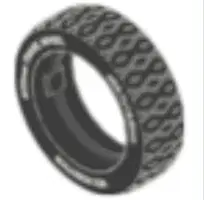
What is the name of this part?
a)
100 mm Rubber Tire
b)
60 Tooth Gear
c)
200 mm Rubber Tire
d)
Shaft Washer
42.
What are some benefits to using robots
a)
They are capable of lifting heavy loads without injury.
b)
They are more precise in their movements.
c)
They can work at a constant speed with no breaks.
d)
All of the above
43.
Which block would be best to turn Autopilot 90 degrees?
a)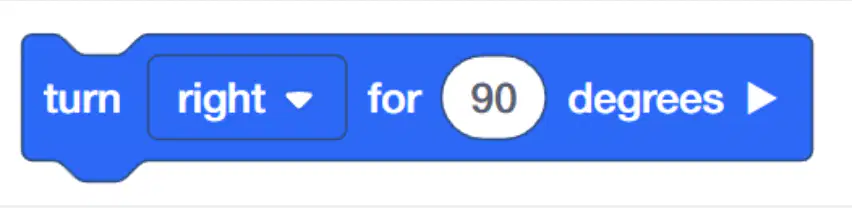
Option 1
b)
Option 2
c)
Option 3
44.
True or False: The Autopilot may not make 100% accurate turns due to turning scrub.
a)
True
b)
False
45.
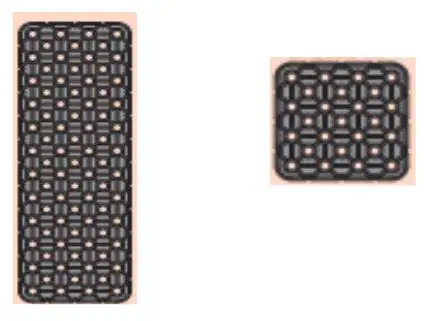
What is the name of theses parts?
a)
2x Beams
b)
Pitch Standoff's
c)
4x Plates
d)
1x Beams
46.
If you wanted the Autopilot to turn around and go the opposite direction as it started, how many degrees would you program the turn for block to go?
a)
180 degrees
b)
90 degrees
c)
270 degrees
d)
360 degrees
47.
If you wanted the Autopilot to turn clockwise, would it move to the right or left?
a)
Right
b)
Left
48.
What is the MAXIMUM velocity for the VEX IQ Smart Motor?
a)
100%
b)
50%
c)
500%
d)
200%
49.
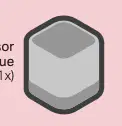
What is the name of this part?
a)
Gyro Sensor
b)
Distance Sensor
c)
Bumper Switch
d)
VEX Controller
50.
What is the default velocity for the VEX IQ Smart Motor?
a)
100%
b)
50%
c)
25%
d)
10%
100 %

