
 Worksheets
Populations and Ecosystems Unit Post Test
Total questions: 47
Worksheet time: 40mins
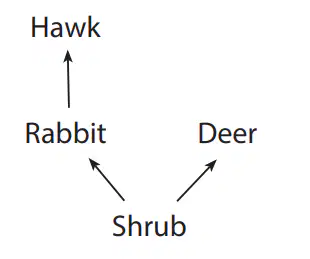
Consider the feeding relations between hawks, rabbits, deer, and shrubs in this ecosystem. What would be the greatest effect if a disease wiped out the rabbit population?
The deer population would increase.
The hawk population would increase.
The hawk population would decrease.
The shrub population would increase.
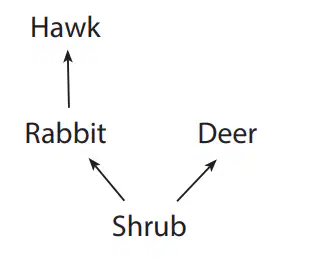
If you were to build a trophic pyramid using this food web, which population would you put on the bottom?
Deer
Rabbit
Shrub
Hawk
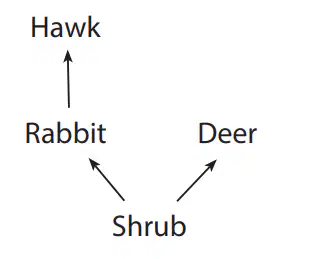
Which population would need the largest amount of biomass to support it, using the 10% rule?
Hawk
Rabbit
Shrub
Deer
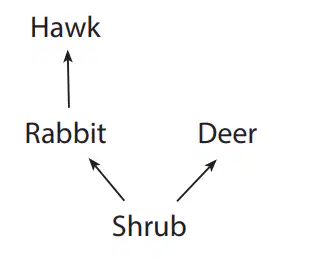
Which trophic level is missing from this feeding relationship model?
Producer
Primary Consumer
Decomposer
Secondary Consumer
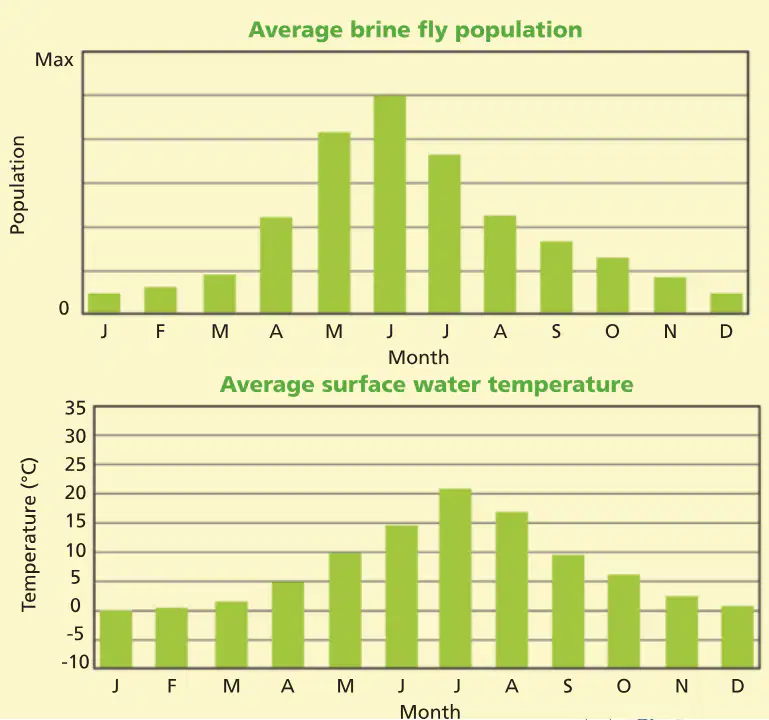
The data in the graphs provide evidence for which conclusion?
As the water temperature cooled, all of the brine fly died.
Brine fly prefer warmer water.
All of the brine fly are gone by January.
As the water gets colder, the brine fly population decreases.
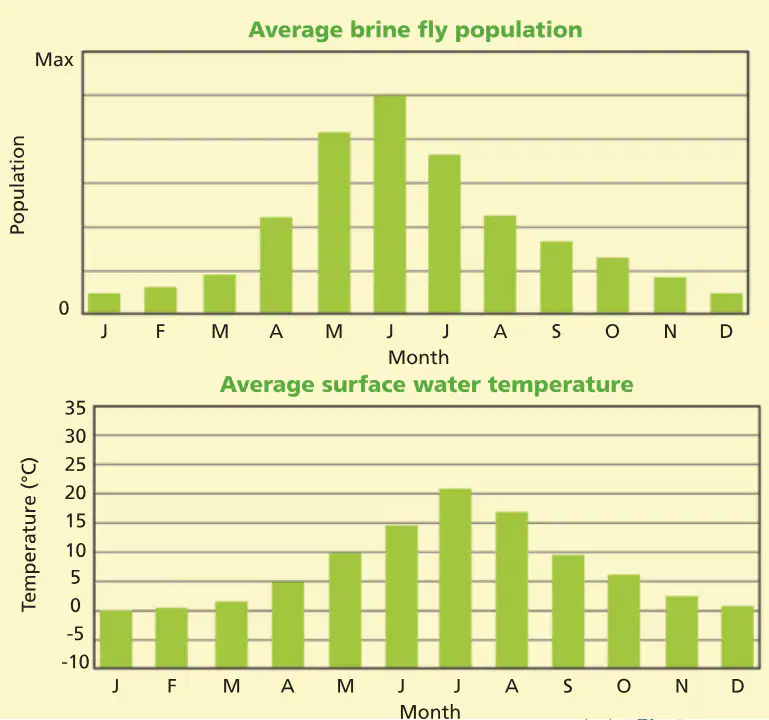
Why do you need both graphs to determine how water temperature affects the brine fly population?
Abiotic factors are the main cause for changes to brine fly populations.
You need more than one graph to explain what happens to the Mono Lake water temperature over time.
Patterns in two types of graphs can help show relationships between temperature and brine fly populations.
Without the brine fly graph, you wouldn't know the temperature range over the year.
Coyote eat California gulls and snowy plovers. Gull and plovers eat brine fly and brine shrimp. Brine fly and brine shrimp eat algae. Which distribution would create a more stable ecosystem?
More coyotes, less California gull.
Equal numbers of organisms.
A small amount of coyote and a lot of algae.
A small amount of algae, some snowy plovers, and a lot of coyote.
If decomposers were removed from an ecosystem, which of the following would happen:
Biomass would decay faster
Producers would have less sunlight for photosynthesis
Nutrients would never recycle
Food would decay
Which of the following is not an ecosystem service:
Fresh water from a local river
Natural water filtration in a local stream
Public swimming pool in a city
Swimming area at a lake
A farmer wants to raise pigs. Which of the following questions is the most important for calculating reproductive potential of the pig population in 5 years?
How many male pigs are in the pen?
What kind of food do pigs eat?
What predators do pigs have?
How many piglets are born each litter?
Ecosystem services are benefits that humans receive from the ecosystems on Earth.
True
False
Ecosystems can better recover from stresses on the ecosystem if there are fewer species, but larger populations of each species.
True
False
A river is polluted with nutrients, causing algae populations to grow out of control. Why might this negatively impact the ecosystem?
It might negatively impact the ecosystem because then there would be more predators to eat the other organisms.
It might negatively impact the ecosystem because too much algae will reduce the amount of food for primary consumers.
It could only positively impact the ecosystem because a larger algae population would benefit many other organisms.
It might negatively impact the ecosystem because big changes to one population could affect other populations in ways we can not predict.
The chemical equation for photosynthesis is 6CO2 + 6H2 O + light energy ---> sugar + 6O2. Which of the following is not a required component for photosynthesis?
Oxygen
Carbon Dioxide
Water
Sunlight
The chemical equation for photosynthesis is 6CO2 + 6H2 O + light energy ---> sugar + 6O2. Which of the following is not a required component for photosynthesis?
Carbon Dioxide
Sugar
Sunlight
Water
The chemical equation for aerobic cellular respiration is sugar + 6O2 --> 6CO2 + 6H2 O + usable energy. Which of the following best describes aerobic cellular respiration?
An organism's body breaking down food into usable energy.
Producers creating their own sugar.
Breathing in carbon dioxide and exhaling oxygen.
An organism using sunlight energy to create their own food source.
Which of the following gives your body energy?
Sleep
Water
Food
Caffeine
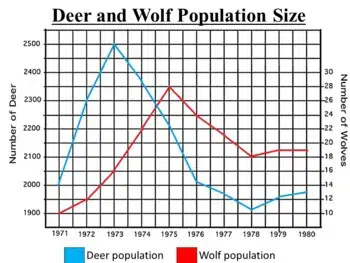
Which claim is best supported by the data?
There are more deer when the wolf population is at its highest.
More wolves causes an increase in the deer population.
When the deer population increases, the wolf population also increases
The deer population is at its highest when the wolf population is at its highest.
All organisms need food to survive and grow. What do producers use to create their food?
Plants use sunlight as food.
Plants use leaves to create food.
Plants do not convert food to energy like animals.
Plants use the sugars they create for food.
The chemical equation for photosynthesis is 6CO2 + 6H2 O + light energy ---> sugar + 6O2. How does this equation help explain the role of producers in the ecosystem?
Producers create energy for organisms to consume.
Producers convert sunlight into usable energy.
Producers convert carbon dioxide and water into biomass.
Producers create oxygen for other organisms.
Aerobic Cellular Respiration is important to organisms because ______.
it allows plants to produce sugar for food.
it releases the oxygen needed by plants for photosynthesis.
it converts sugars into usable energy that all organisms need.
it helps animals digest the sugars when they eat plants.
A producer makes sugar in order to ______.
provide food for consumers.
increase the biomass of an ecosystem.
make energy for consumers.
provide food for itself.
Which of the following is not a necessary ingredient for producers to make sugar?
Carbon dioxide
Water
Soil
Light
How does biomass transfer from one trophic level to another?
All the biomass consumed at the primary consumer level becomes biomass at that trophic level.
All the biomass available at a trophic level becomes biomass at the next level.
A small fraction of the biomass at a trophic level becomes biomass at the next higher level.
An equal amount of biomass transfers between trophic levels.
How does energy enter an ecosystem?
Decomposers
Primary Consumers
Nutrients
The Sun
Which word describes a system of interacting organisms and nonliving factors in a specified area?
Population
Community
Biome
Ecosystem
A collection of ecosystems that have similar environments and organisms.
Environment
Community
Ecosystem
Biome
Examples of how humans negatively affect local ecosystems are
Creating laws to prohibit fishing from local streams.
Allowing run-off from a local farm to enter coastal water-ways.
Planting trees and other plants to attract native species.
Removing non-native species from the environment.
Is water a biotic or abiotic factor?
biotic
abiotic
Is heat a biotic or abiotic factor?
biotic
abiotic
Is grass a biotic or abiotic factor?
biotic
abiotic
Abiotic factors are an unimportant part of ecosystems.
True
False
Which of the following is an example of an interaction between a living and nonliving organism?
A snake using a mouse for food.
A bird using an insect for food.
A worm using the soil as shelter.
A bird using a tree as shelter.
In an ecosystem, which of the following organisms is most likely to be a primary consumer?
Bacteria
Snake
Hawk
Rabbit
What is the primary role of decomposers in an ecosystem?
To produce energy from sunlight
To recycle nutrients back into the soil
To provide food for primary consumers
To compete with producers for resources
What is the role of primary consumers in an ecosystem?
To recycle nutrients back into the soil
To produce energy from sunlight
To decompose organic matter
To consume producers and transfer energy to higher trophic levels
Which of the following is an example of a biotic factor affecting an abiotic factor?
Plants absorbing sunlight for photosynthesis
Animals breathing oxygen from the air
Water evaporating from a lake
Tree roots breaking rocks into soil
How does the removal of a top predator affect an ecosystem?
It increases biodiversity by allowing more species to thrive
It can lead to an overpopulation of prey species
It decreases the amount of sunlight available to producers
It has no significant impact on the ecosystem
Which of the following is a major threat to biodiversity?
Migration of birds
Habitat destruction
Increased rainfall
Natural selection
How does pollution affect biodiversity in an ecosystem?
It increases the number of species
It only affects abiotic factors
It can reduce species diversity and harm sensitive organisms
It has no effect on biodiversity
True or False: Invasive species can threaten biodiversity by outcompeting native species for resources.
False
True
Which of the following best describes biodiversity?
The number of individual organisms in an area
The variety of species, genes, and ecosystems in an area
The amount of sunlight an ecosystem receives
The number of predators in a food web
What is one major threat to biodiversity in many ecosystems?
Increased rainfall
Habitat destruction
Natural selection
Photosynthesis
Why is high biodiversity important for an ecosystem?
It increases the risk of extinction for all species
It reduces the amount of available water
It decreases the number of food chains
It makes the ecosystem more resistant to environmental changes
What does the term 'biomass' refer to in an ecosystem?
The volume of water in an ecosystem
The total number of species in an ecosystem
The total mass of living organisms in a given area
The amount of sunlight received by an ecosystem
Which trophic level typically contains the greatest amount of biomass in a terrestrial ecosystem?
Producers
Primary consumers
Decomposers
Secondary consumers
Why does the amount of biomass decrease at higher trophic levels in a food chain?
Because there are more predators than prey
Because producers are less efficient than consumers
Because energy is lost as heat at each trophic level
Because decomposers consume all the biomass

