
 Worksheets
(AI enhanced) Bohr Model, Waves, Electrons, Energy Test Practice
Total questions: 30
Worksheet time: 15mins
The speed of light is constant, so if the frequency of light increases, the wavelength
increases
decreases
What is the relationship between the frequency and wavelength of a wave?
Directly proportional
Inversely proportional
No relationship
Depends on the type of wave
What is the relationship between frequency and wavelength in a wave?
They are directly proportional
They are inversely proportional
They are not related
The relationship depends on the type of wave
What is the energy of a photon with a wavelength of 5.000 × 10⁻⁷ m?
3.986 × 10⁻¹⁹ J
1.234 × 10¹² J
Energy can't be found from wavelength
4.567 J
What is the energy of a photon with a frequency of 5.60 × 10²⁰ s⁻¹?
3.71 × 10⁻¹⁴ J
2.34 × 10⁻¹⁵ J
Energy can't be found from frequency
1.12 × 10⁻¹³ J
What happens to the energy of a photon when its frequency increases?
Decreases
Increases
Remains the same
Cannot be determined as these two concepts are unrelated
What is the frequency of light if the wavelength is 3 × 10⁸ m?
1 Hz
10⁸ Hz
1 × 10⁻⁸ Hz
What is the wavelength of light if the frequency is 6 × 10¹⁴ Hz?
5 × 10⁻⁷ m
3 × 10⁻⁹ m
1.67 × 10⁻¹⁵ m
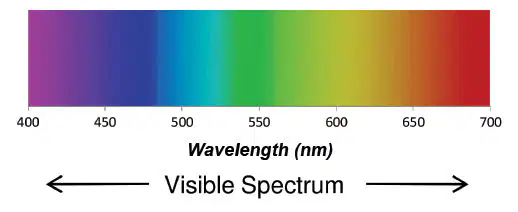
Which of these colors of light has the shortest WAVELENGTH?
green
yellow
violet
red
orange
Which color has a wavelength closest to ultraviolet radiation?
Red
Orange
Purple
Yellow
Blue
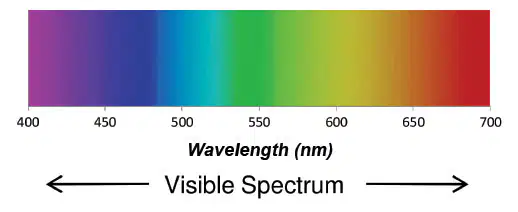
Which of these colors has the lowest WAVELENGTH?
violet
yellow
green
red
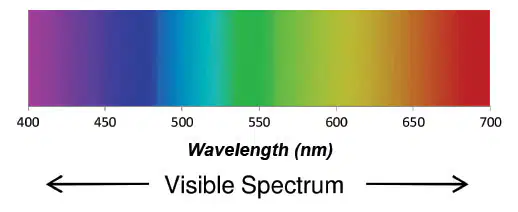
Which color has the HIGHEST frequency?
Red
Orange
Purple
Yellow
Blue
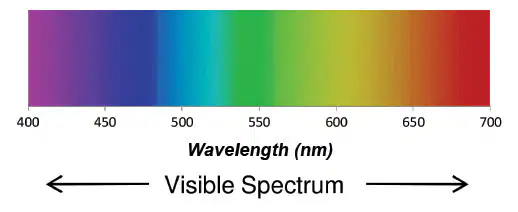
Which color of light has the lowest FREQUENCY?
Red
Blue
Violet
Ultraviolet
All colors of light have the same frequency
Which color of light has the shortest WAVELENGTH?
red
green
blue
all colors of light have the same wavelength
In the flame test lab, the color of the flame changes due to the excitation of electrons. What causes this excitation?
The heat of the flame
The chemical compound added to the flame
The color of the flame
The atomic spectra
What occurs when an electron transitions from a LOWER energy level to a HIGHER energy level?
light is absorbed
light is emitted
the nucleus absorbs a neutron
the nucleus emits a neutron
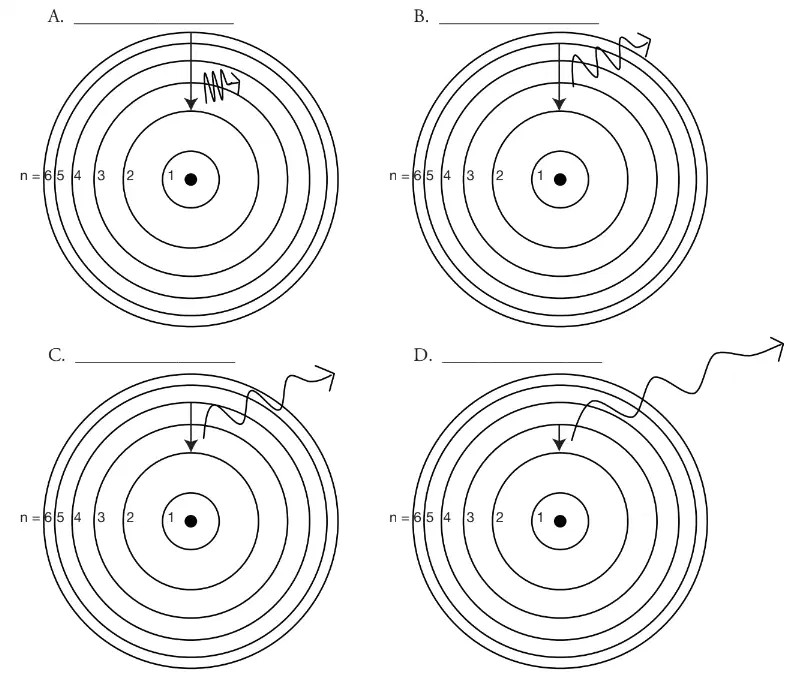
Which of these electron transitions will absorb the LEAST amount of energy?
X
Y
Z
W
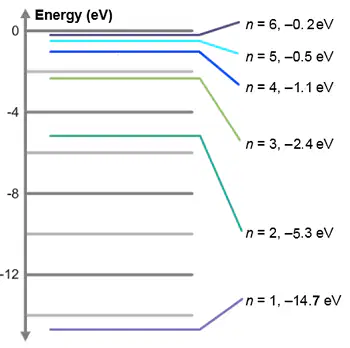
The energy level diagram shown below represents a hypothetical atom. What is the energy of a photon that would move an electron from level 3 to level 6?
6.3 eV
5.2 eV
4.9 eV
3.75 eV
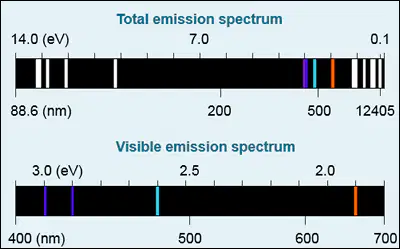
In certain experiments, the emission spectra of helium gas is observed. What could be the reason for the lines appearing in the spectra?
When photons of specific energies collide with electrons, the electrons are excited to higher energy levels.
After being excited to higher energy levels, electrons fall back to lower energy levels, releasing photons of light with the energies observed in the spectra.
When light interacts with helium gas, most wavelengths are absorbed by the gas. Only certain wavelengths of light are transmitted through the gas, resulting in the appearance of spectral lines.
Most wavelengths of light are not visible to the human eye. The bright lines are the only visible wavelengths of light. The helium gas does not influence this light.
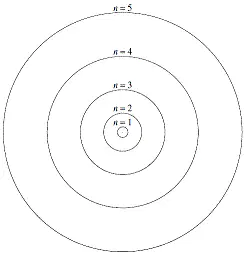
How many electrons can the first shell of an atom hold?
2
4
8
18
How many electrons can the fourth energy level (n=4) hold?
2
8
18
32
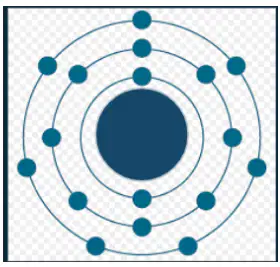
Consider the Bohr model for the neutral atom presented. Can you identify the element?
Oxygen
Nitrogen
Helium
Neon
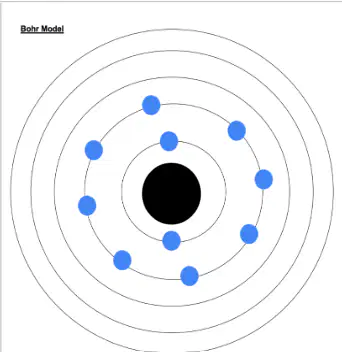
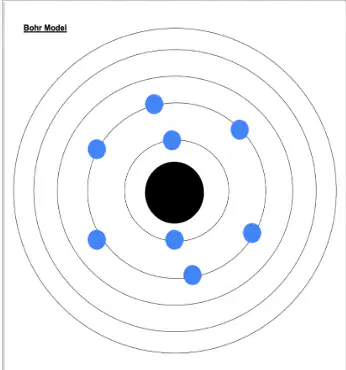
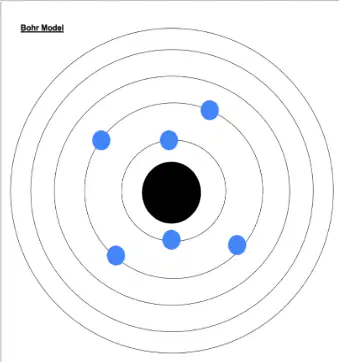
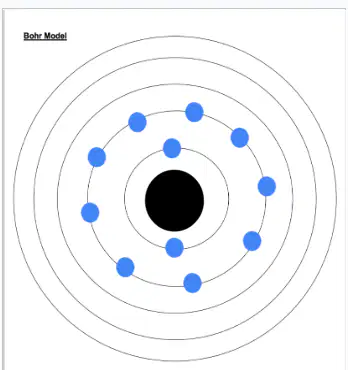
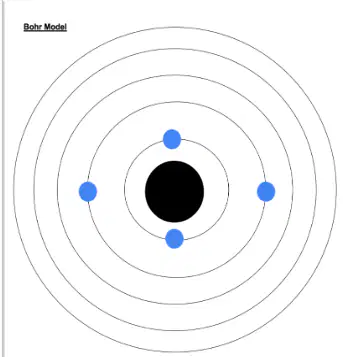
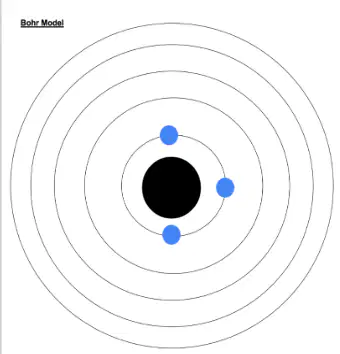
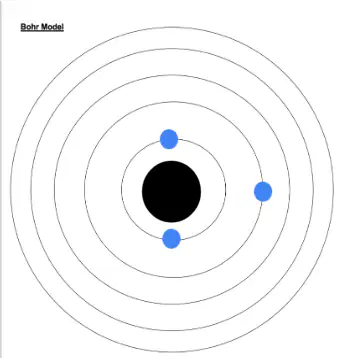
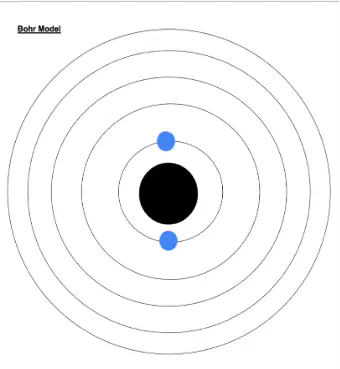
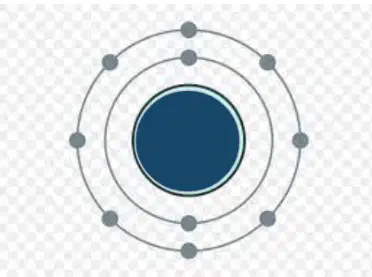
Which of the following elements could be represented by this Rutherford model? Select all that apply.
He-4
¹⁸O²⁻
¹²C³⁻
K¹⁺
Ca²⁺
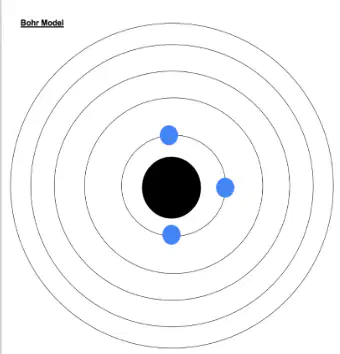
What is the issue with this Rutherford model?
Too many protons in the nucleus
Too few protons in the nucleus
Too few neutrons in the nucleus
No error
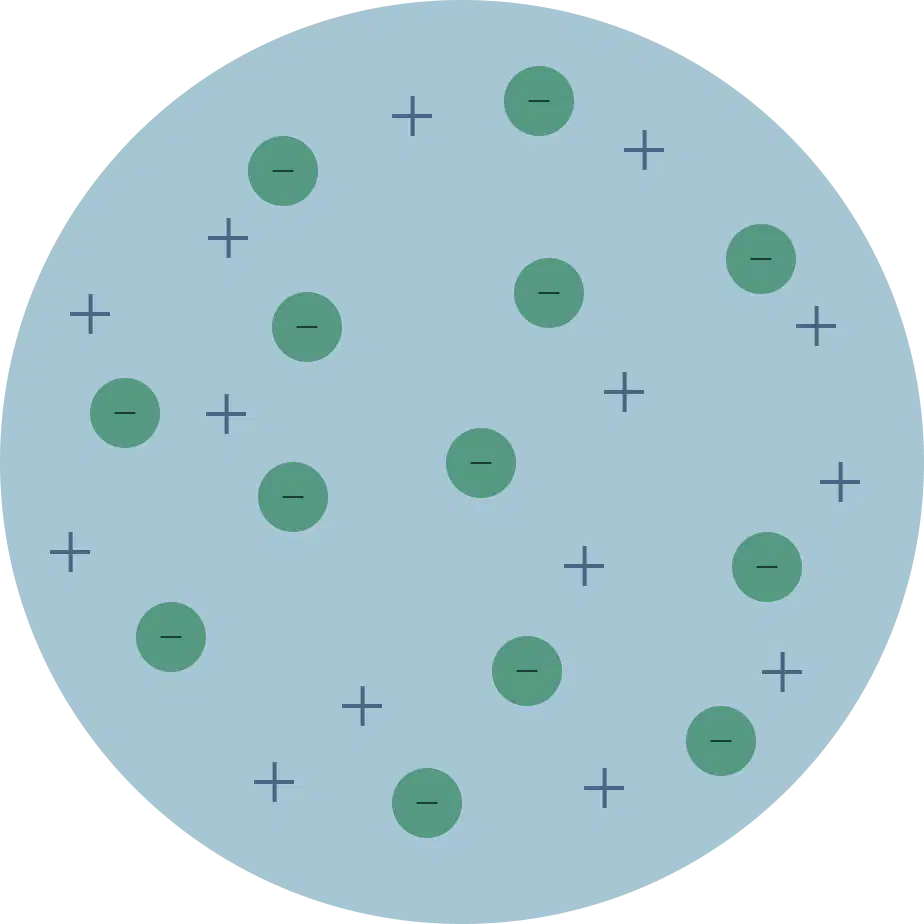
Which atomic model is characterized by electrons moving in fixed orbits around the nucleus?
Bohr Model
Rutherford Model
Plum Pudding Model
Quantum Model
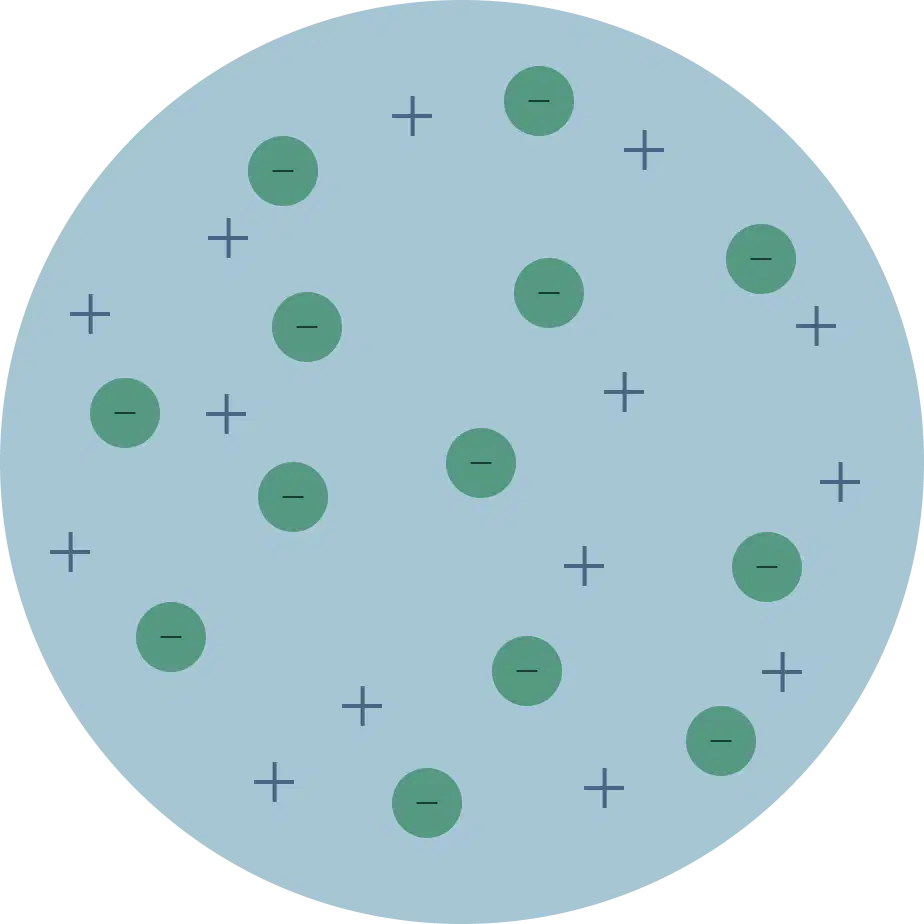


What conclusion can be drawn from Rutherford's gold foil experiment about the structure of an atom?
The atom is mostly empty space with a positively charged nucleus, as most of the alpha particles passed through the foil but a few were deflected.
The atom is a positively charged particle with negatively charged particles dispersed within, as most of the alpha particles passed through the foil but a few were deflected.
The atom is mostly empty space with a positively charged nucleus, as all of the alpha particles passed through the foil.
The atom is a positively charged particle with negatively charged particles dispersed within, as all of the alpha particles were deflected by the foil.
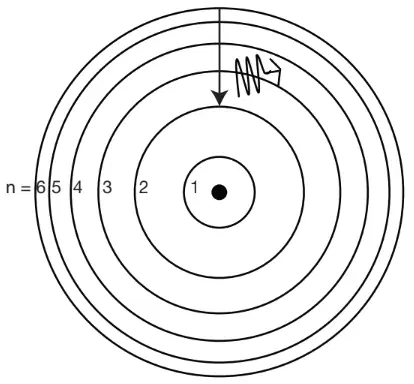
What does the straight line in an atomic model represent?
proton
neutron
energy level
nucleus

