
NEW
Font size
 Worksheets
grade 5 science midterm worksheet part 2
Total questions: 28
Worksheet time: 14mins
The kudzu vine was introduced to this country in the late 1800s. Today, it can be found in many Southern states. Kudzu eventually kills other plants it covers because it blocks out sunlight. Kudzu has been reported to grow roughly 1 ft per day. What can you conclude from this information?
Kudzu is an invasive species that can change an ecosystem.
Kudzu is an illustration of a predator-prey relationship in a community.
Kudzu is an example of a cyclic change where the forest land will eventually be restored.
Kudzu is an example of a pollutant that is destroying forest ecosystems in the southern United States.
In which of these ways would doubling a region’s human population most likely change the environment?
People will destroy more habitat by building homes and buildings.
People will protect more organisms than they did before the increase.
People will set aside more land for conserving endangered organisms.
People will use fewer resources that other organisms also need for survival.

Environmental changes happen all the time. Some of these changes are easy to spot. For example, the figure below shows a sign that you might see while riding along a road in many places.
What can you conclude about environmental changes after seeing this sign?
Changes in the environment happen in cycles.
The only changes to the environment happen naturally.
Humans can change the environment by destroying habitat.
Any change made to the environment will lead to species extinction.
What is the process that plants use to produce food?
carbon dioxide
photosynthesis
chloroplast
sunlight
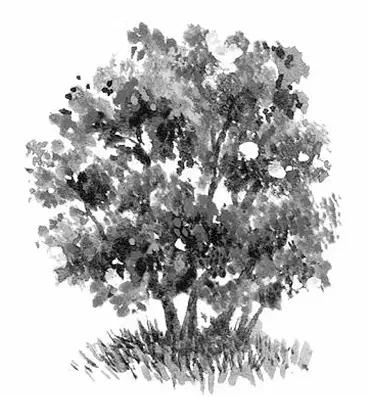
This producer uses a molecule called chlorophyll.
Which need does chlorophyll help to meet?
making food
releasing oxygen
absorbing soil nutrients
taking in carbon dioxide
Which type of organism makes its own food?
consumer
decomposer
producer
scavenger
What does a food web show?
how predators catch prey
what food organisms eat
why organisms find food
when organisms seek food
Which kind of diagram shows how much energy passes along as one organism consumes another?
decomposition
energy pyramid
food chain
food web
Which of these shows the flow of energy in a food chain?
decomposers consumers plants producers
sun consumers producers decomposers
producers predators decomposers consumers
sun producers consumers decomposers
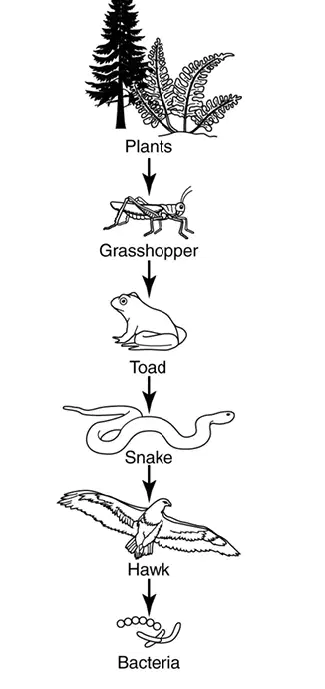
The picture below shows a food chain. The arrows show how energy flows from one living thing to the next.
In this food chain, what would be a possible energy source for the bacteria?
all the animals
all the organisms
only the hawk
only the predators
In a forest food chain, what is the connection between the sun and a tree?
The sun helps chlorophyll turn oxygen into carbon dioxide.
The tree shades animals from the sun and gives them nutrients.
The sun heats up the ground so the tree’s roots can take in water.
The tree uses the sun’s energy to make food through photosynthesis.
Alex notices a small spot of fungus growing on an orange in the back of his refrigerator. He doesn’t eat the orange. He looks at the orange again a week later. Which of these is he most likely to observe?
The fungus has gone away.
The fungus has not changed.
The fungus has grown larger.
The fungus has changed color.
Which of these happens during the time a fallen log is decomposing?
The fallen log slowly begins to die.
The fallen log continues to produce food.
The materials in the log combine into new, complex parts.
The materials in the log are broken into smaller, simpler parts.
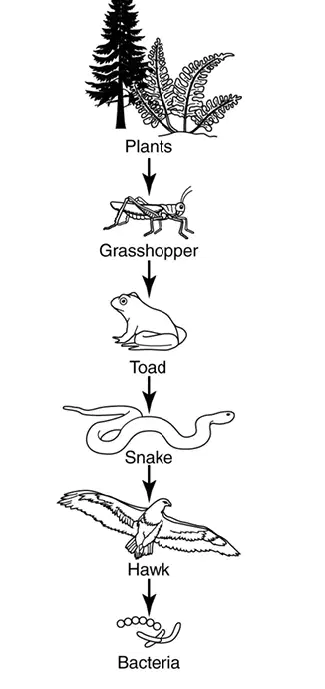
The picture below shows a food chain. The arrows show how energy flows from one living thing to the next. Notice the bacteria at the end of the food chain. Why are bacteria shown at the end of the food chain?
They are producers, and make food from sunlight.
They are consumers, and feed off of the dead hawk.
They are decomposers, and break down the dead hawk.
They are consumers, and the smallest organisms in this chain.
Hawks eat snakes. Snakes eat toads. Toads eat grasshoppers. Grasshoppers eat plants. Which of the statements below about this food chain is correct?
A toad is an herbivore.
A grasshopper is a producer.
A hawk is a second-level consumer.
A snake is a first-level consumer.
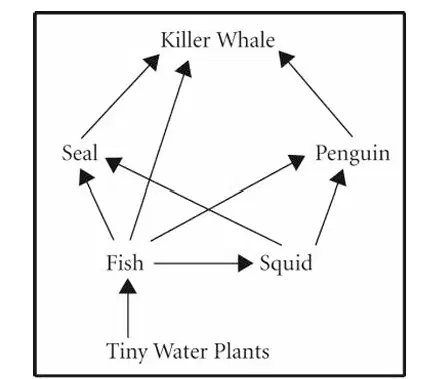
The picture below shows a food web. If the number of fish dropped suddenly, which of the following is a likely short term effect in the food web?
fewer squid
fewer tiny water plants
more penguins
more seals
Where does a deer fit in its food chain?
as both a first-level and a second level consumer
as both consumer and prey
as both producer and consumer
as both consumer and scavenger
Jackson and Kathryn were assigned to observe the growth of fungus on a hamburger bun. They sprayed one half of the bun with water and sealed it in a plastic bag. They left the other half of the bun dry and sealed it in a different plastic bag. Over time, what did they observe?
Mold grew faster on the dry bun.
Mold grew the same on both buns.
Mold did not grow inside sealed bags.
Mold grew faster on the moistened bun.
During the decomposition process, the wastes of living organisms and the remains of dead organisms are broken down and their nutrients are returned to the soil.
What is the most important cause of decomposition?
air
sunlight
scavengers
bacteria and fungi
Which of the following does a plant use in the process of photosynthesis?
oxygen, sugar, and water
sunlight, oxygen, and sugar
water, carbon dioxide, and sunlight
carbon dioxide, sugar, and sunlight
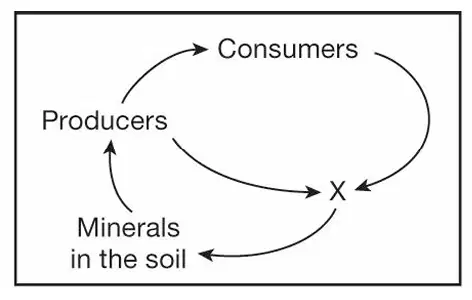
Below is a diagram of a basic food web.
What is the best word to put in to replace the letter X?
decomposers
first-level consumers
predators
second-level consumers
Which of the following is an example of a producer?
caterpillar
robin
tree
worm
Which of these is a decomposer?
bread
heat
mold
water
Some organisms break down dead things for food. Which word describes these organisms?
consumers
decomposers
producers
herbivores
How are decomposers like consumers?
They provide energy to producers.
They must capture prey in order to survive.
They can make their own energy from sunlight.
They get their energy from producers or other consumers.
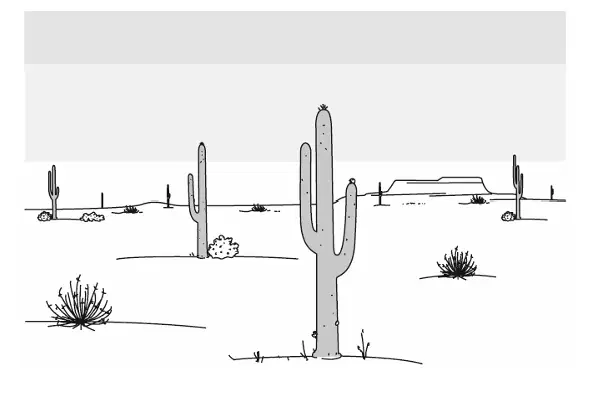
Look at the desert scene pictured below.
To picture all of the types of organisms listed below, which types would you need to add to the scene?
consumers, decomposers
herbivores, producers
producers, herbivores
scavengers, producers
In the carbon dioxide-oxygen cycle, which organisms take in carbon dioxide and release oxygen as part of the process of making food?
animals
consumers
plants
plants and animals
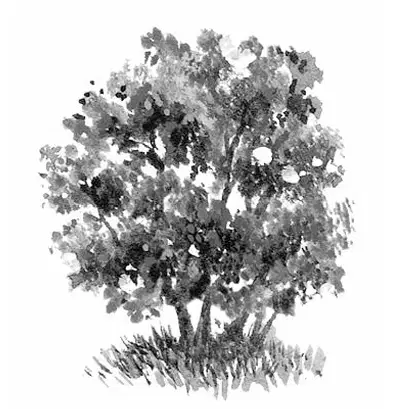
What is the primary source of energy for this organism?
carbon dioxide
oxygen
soil
sunlight

