
 Worksheets
Sankarathi SC
Total questions: 10
Worksheet time: 30mins
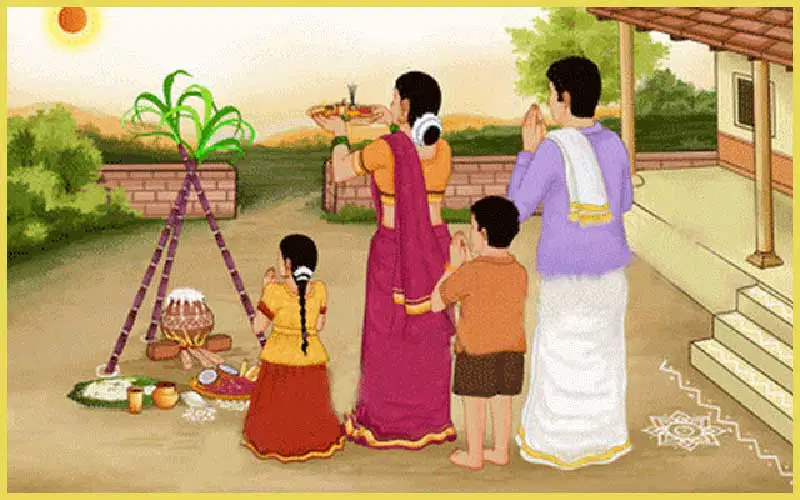
01: Swami says: Every month the Sun moves into a new house in the Zodiac. This movement is called Sankramana. In a year the Sun transits twelve houses of the Zodiac. Of these movements, four are important. Makara Sankramana is the first one. It relates to the entry of the Sun into Makara (Capricorn) from Dhanus (Sagittarius). The second one is Thula Sankramana - the entry of the Sun into the zodiacal sign Thula (Libra). The third is Mesha Sankramana - moving into the sign Mesha (Aries). The fourth one is Shashi Sankramana - entry into the Moon sign (Cancer).
One of these four marks the apparent movement of the sun from the south to the north and is the most sacred of the transits.
Which Sankramana or transit is this?
Makara
Thula
Mesha
Sashi

02: Talking about Sankranthi day marking the Uttarayana or the start of the northward journey of the sun, Swami says:
The day has an outer and an inner significance, the inner having greater value for aspirants for spiritual progress. I do not attach much value to the outer meaning: the sun taking a northward direction from today - the six months from now on being holier than the six that ended today and therefore, as pundits say, the Uttarayana being better suited for spiritual practices.
One’s life must be a perpetual spiritual practice, and any day is a good day for starting spiritual practices, whether it falls during the southward or northward movements of sun. One need not wait for the sun to turn north. The months and sun’s passage toward the north or south are all related to the subjective world (prakriti), so they have only relative value.
Swami then makes a very important point about Uttarayana.
He calls it a matter of --------, not a solstice point. What do you think it could be?
Latitude
Longitude
Attitude
Altitude
03: In the Gita Vahini, Swami says:
The yogis who practise action without desire for the fruit pass away in splendour (tejas) during the day, while there is light, in the bright half of the month and in the six-month period of the northward path of the sun (uttarayana). They have fire as their first state. Hence, their path is known as the path of the gods or, since fire is known also as archi in the Vedas, as archi-radi-marga (the path beginning with fire or the Sun’s rays). Such yogis emerge from effulgence (prakasa) and, traveling through effulgence, merge in effulgence itself. They attain Brahman and are not born again.
“The yogis who practise action with an eye on the fruit pass away in smoke (dhuma) at night, during the dark half of the month, during the six months of the southward path of the sun (dakshina-ayana). They go along the path beginning with smoke (dhuma-adi-marga), reach heaven, and there enjoy the pleasures they have yearned and worked for. When the stock of merit is exhausted, they get born again.
Both these categories are called yogis; they will exist as long as aspirants and active progressive individuals exist in the world.
What do you think is the spiritual significance of the bright fortnight (sukla paksha) and the 6 month period of northward path of sun (uttarayana) for time of death?
It is easier to perform the final rites
The days and nights are brighter in the specified period
Bhishma waited for Uttarayana to die
The mind is illumined with self-knowledge and the sun of wisdom shines in the inner sky
04: In the Gita Vahini, Swami narrates Krishna’s words to Arjuna:
Arjuna! I taught this sacred yoga of wisdom to Surya. Then it was handed down from one generation to the next until Manu and Ikshvaku, and, from them, saint-kings came to learn it. Then it was lost in the world. That ever-existing yoga had to be restored to the world, so I had to come.
He goes on to say that the Gita was first taught to Surya, the Sun because he is a great renunciant, a karma yogi.
Why does Swami address the sun as a karma yogi?
He works ceaselessly, but renounces the fruit of action
He performs duty (karma) because that is his innate nature
He is humble and steady in his work
All of the above
05: Explaining the Prasnopanishad, Swami says:
The world cannot exist independent of God. The world is full of Vishnu (God) - Visvam Vishnumayam jagat. All this is Brahma (Sarvam khalvidam Brahma). God resides throughout this world (Isavasyam idam sarvam). The world and God are not separate. Prasnopanishad investigates into the unity of God and the world.
Every object (padartha) has a higher basis (parartha). No material can exist without a basis. A living being ceases to exist when its life force departs. The object is a gross manifestation (sthoolam) while its basis is the foundation (moolam). The foundation is the cause (adharam) while the object is the effect (adheyam).
He elaborates further: The One has become many (Ekoham bahusyam). The will of God presiding over creation (Prajapati) created the pairs of basis and based (moolam and sthoolam), inert and conscious (jada and chaitanya), life force and living being (prana and prani), matter and energy. The interaction of these dualities resulted in the living and non-living universe. The foundation of the world is the union of the Sun and the Moon principles.
Which of the following statements do you think are correct?
Sun represents matter, Moon represents energy
Sun represents energy, Moon represents matter
Sun represents the based (sthoolam) Moon represents basis (moolam)
Sun represents the living being (prani), Moon represents the life force (prana)
06: Elaborating on the Prasnopanishad during the Summer Course in 1991, Swami explained that Pippalada said that those who pass on during Dakshinayana reach the Chandra Loka or the Lunar plane of existence, while those who pass on during the Uttarayana reach the Surya Loka or the solar plane of existence. Those who reach the Lunar plane would return to the physical world on exhaustion of their stock of merits whereas those who reach the solar plane would never return to the physical plane again.
How do you think Swami explained the reason why one who reaches the solar plane is delivered from rebirth?
Individual life force gets merged into universal life force
The Northward bound traveller gets attached to Brahman and therefore gains knowledge of Brahma
Likes and dislikes are nullified in the awareness of Brahman and mind is destroyed
All of the above

07: Swami says: The lunar world (chandra loka) is not to be confused with the physical moon, which astronauts from America and Russia have set foot on! From His mind emerged the moon and from His eyes, the sun (Chadrama manaso jatah, chakshoh suryo ajayata). When I speak of chandra (moon) and surya (sun) principles, students should not confuse them with the physical sun and moon.
The moon is a representation of the mind, meaning that with thoughts pertaining to the world, one attains the chandra loka - a plane of existence where mental delights are experienced. The sun represents the light of the eyes. When our vision (drishti) is merged with creation (srishti), we perceive the truth of the scriptures. Therefore, the term scripture (sastra) does not refer only to certain books. The command (sasana) of the eyes is sastra, meaning, direct proof available through a clarified vision is the real scripture.
For direct proof (pratyaksha pramana) the sun is the basis. For proof by inference (anumana pramana), the mind or moon is the basis. For proof by sound (sabda pramana), speech is the basis. Therefore, humanness is transformed into Divinity only when we have unity and purity in ____ , ______ , and ________.
What are the three that should have purity and unity in order to reach Divinity?
Sun, Moon and Sound
Thought, Word and Deed
Mind, Eyes and Scriptures
Sun, Moon and Stars
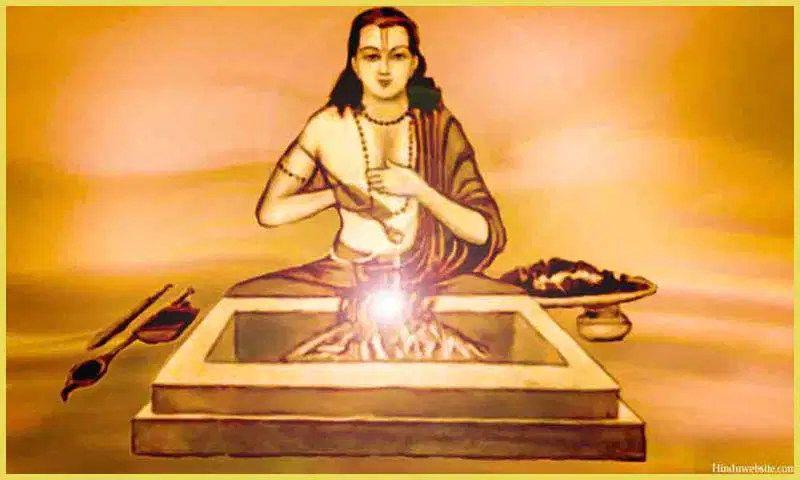
08: Swami says: When the Sun enters the sign of Capricorn, it begins its northward motion. The sun shines in every human body, illuminating the six chakras (spiritual centres in the body). Of these chakras, two are most important: the hridaya (heart) chakra and the sahasrara chakra.
The hridaya chakra has eight petals. God is the Lord of the eight-petaled hridaya chakra. These eight petals are regarded as eight consorts of the Lord. In this context, the Lord is adored in the form of the Sun. The world cannot survive without the Sun. The solar system is derived from the Sun. Hence, the Sun is worshipped as divine. The ancient sages adored the eight-petaled divine centre in the heart and thereby reached the sahasrara chakra and enjoyed supreme bliss.
He goes on to enumerate the qualities symbolized by the eight petals:
What do the eight petals of the heart represent? They are: love (prema), truth (sathyam), forbearance (sahanam), sacrifice (thyaga), compassion (daya), beauty (sundaram), bliss (ananda) and peace (santhi).
He then says one of the eight virtues is the most important. Which one do you think is that most important virtue which He mentioned?
Love
Truth
Sacrifice
Peace
09: Swami says: Soul-force can accomplish all the tasks of the world; and, since the Gayatri confers inner strength, to foster that force the Gayatri has to be cultivated with care at the right moment, without neglect. For the growth and development of the body, pure (satwic) food is necessary, isn’t it? So too, the effulgence of the Sun has to be drawn, to reinforce the inner effulgence in the form of creative thought (bhavana).
When soul-force waxes, the senses are activated and directed along fruitful lines. When it wanes, the senses fail and fail you. So, if the solar energy is drawn at that very juncture, it is like seeds planted in season, resulting in assured harvest. Can darkness hide and confuse when the sun has risen and bathed the earth in splendour?
Can sorrow prevail when one has infused oneself with that effulgence? How can one be devoid of strength, the strength derived from the very fountainhead of Brahman? The technique of this process has been laid down by the ancients for the benefit of all aspirants. Learn and practise it, and, by your own experience, you will be able to witness the truth of their path.
Which are the times when the soul force needs to be augmented with solar energy?
Autumn, Winter and Monsoon seasons
Full Moon and New Moon Days
Uttarayana and Dakshinayana
Dawn, Noon and Dusk everyday
10: Swami says: The Gayatri mantra (sacred formula) is a universal prayer that can be used by men of all climes and creeds, for, it calls upon the Glorious Power that pervades the Sun and the three worlds to arouse, awaken and strengthen the Intelligence, so that it may lead to intense Sadhana and Sadhana may lead to success.
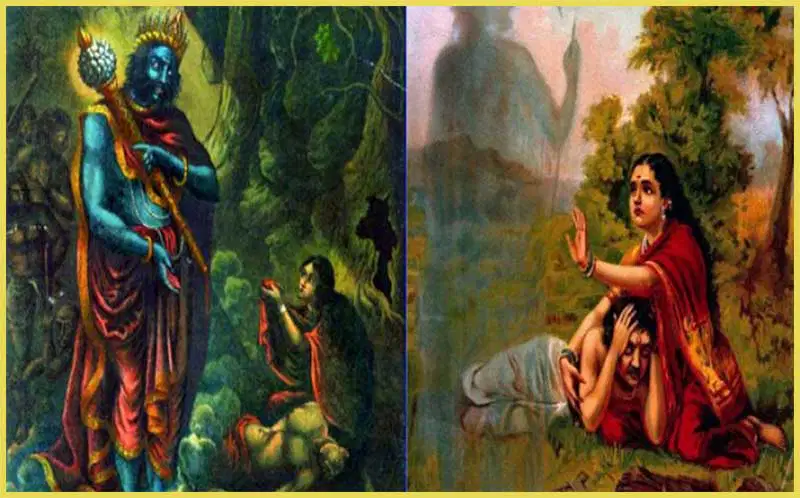
He has also elaborated: Gayatri is the protector of the five Pranas in man. Gayantam trayate iti Gayatri – ‘Because it protects the one who recites it, it is called Gayatri." When Gayatri acts as protector of the life-forces, she is known as Savitri. Savitri is known in the puranic story as the devoted wife who brought back to life her husband, Satyavan. Savitri is the presiding deity of the five pranas.
What do you think Swami has said is the inner meaning of the story of Savitri and Sathyavan?
Even Yama is afraid of women
Death cannot part a loving couple
The life force of one who adheres to Truth is protected
A husband should ensure his wife always accompanies him

