
 Worksheets
Rome Review
Total questions: 111
Worksheet time: 1hrs 11mins

Which man was stabbed to death on the Senate floor?
Brutus
Juluis Caesar
Caesar Augustus
Mark Antony

What achievement brought fresh water into Roman cities?
Laws
Arches
Dome
Aqueducts

What Roman Achievement allowed for quicker travel?
Roads
Aqueducts
Domes
Baths

What year did the Roman Empire fall?
410
455
476
500

Which Roman leader ended the Roman Republic?
Juluis Caesar
Nero
Constatine
Augustus
Which of these helped cause the decline of the Roman Empire?
Pax Romana
Punic Wars
the size of the empire
Marcus Aurelius
How did Diocletian deal with the size of the Roman Empire?
He divided it into parts.
He built a wall around Rome.
He built Constantinople.
He ceded Constantinople to the Turks.
Who converted to Christianity before his death?
Julius Caesar
Constantine
Caligula
Marcus Aurelius
The wars between Carthage and Rome were called
Puny Wars
Tunic Wars
Punic Wars
Carthaginian Wars
On what continent is Carthage located?
Africa
Asia
Europe
South America
The story of Romulus and Remus is a
true story about the founding of Rome.
myth about the founding of Rome.
myth about the death of Mars.
,myth about the conquest of the Etruscans.
On what river was Rome established?
Euphrates
Nile
Yellow
Tiber
What does the word Dictator mean?
government
someone who has total power over the government
someone who has no power over the government
someone who has total power over themselves.
What does the word "empire" mean
a large area
a person who fought other people or wild animals to entertain people in ancient Rome
a large area ruled by a single person, such as an emperor or empress
person
Who were the Plebians?
A wealthy and powerful group of nobles
A group of soldiers
The founders of ancient Rome
Ordinary (non-wealthy) Roman citizens
True or False: Plebeians protested for equal rights by going on strike.
True
False
Rome was successful in terms of trade because:
Caesar's calendar
Hannibal's Invasion
Nero's Leadership
They used a common system of money
True or False: Rome's lower class saw Julius Caesar as a terrible leader.
True
False
The Twelve Tables explained the legal rights to which two groups of Romans?
Greeks and Romans
Consuls and Triumvirate
Plebeians and Patricians
Slaves and Soldiers
How would you describe Rome's early religion?
Only men could participate in religious activities
The early Romans believed in only one god.
The Romans did not allow poor people to participate in religious worship
It was polytheistic- and they shared and adapted god from the Greeks
Roman ideas of literature, philosophy, religion, architecture and social structure was inspired by:
The Visigoth
The Egyptians
The Persians
The Greeks
The center of the Roman empire (Rome) was located on what type of geographical feature?
Peninsula
Desert
Island
Plains
What is a patrician?
A group of judges
A small group of powerful and wealthy nobles
Three Roman leaders
A group of ordinary Roman citizens
How many Punic wars were there?
7
3
1
2
What basic Roman principle from the Republic era is reflected in our U.S. government today?
One ruler with unlimited power within the government
Women having voting rights
Checks and balances to limit power within the government
What purpose did a Roman aqueduct serve?
It connected all parts of the Roman empire
It brought water from the hills to Roman cities
It held up the domed roofs in the temples
Which of these describes a central belief of Christianity?
polytheism
agnosticism
monotheism
Which of these Roman structures has a design similar to those used in modern athletic stadiums?
The Pantheon
The Roman Forum
The Colosseum
The language of Rome, a major influence on French, Italian, Spanish, Portuguese, and Romanian.
Chinese
Greek
Latin
Roman Law, has influenced law in many parts of the Western world including the United States
Hammurabi's Code
The Twelve Tables
The Golden Rule
During the first three centuries of Christianity, what relationship did the early Christians have with officials of the Roman Empire?
They were the only legal citizens of the Roman Empire
They were usually promoted to official government positions
They were persecuted under several Roman Emperors
What was one of the main reasons for building Roman roads?
to allow tribunes to travel throughout the empire
to allow Rome's armies to travel quickly across the empire
to allow invasions from barbarians throughout the empire
to allow slaves to travel the countryside in the empire
What building material did the Romans invent to help them build bigger and more stable structures?
tar stacco
asphalt
stacco
cement
a piece of land surrounded on 3 sides with water
island
plebeian
peninsula
A form of government in which citizens elect their leaders
legion
republic
patricians

Why was Rome's geographic setting important?
Strong winds brought heavy spring rains to the land.
Its position was central to Italy and the known Western world.
It was surrounded by deserts which kept is safe from invasion.
Farmers depended on yearly flooding to plant crops.
Hannibal attacked The Romans with
Horses
Elephants
Chihuahuas
Rhinos

This man was a general from Carthage who was raised to hate the Romans:
Manning
Hannibal
Ptolemy
Etruscan
The Punic Wars were fought between
The Delian League and the Peloponnesian league
Rome and Sicily
Rome and Carthage
Sicily and Cartridge
The paterfamilias was the oldest living female in the Roman household.
True
False

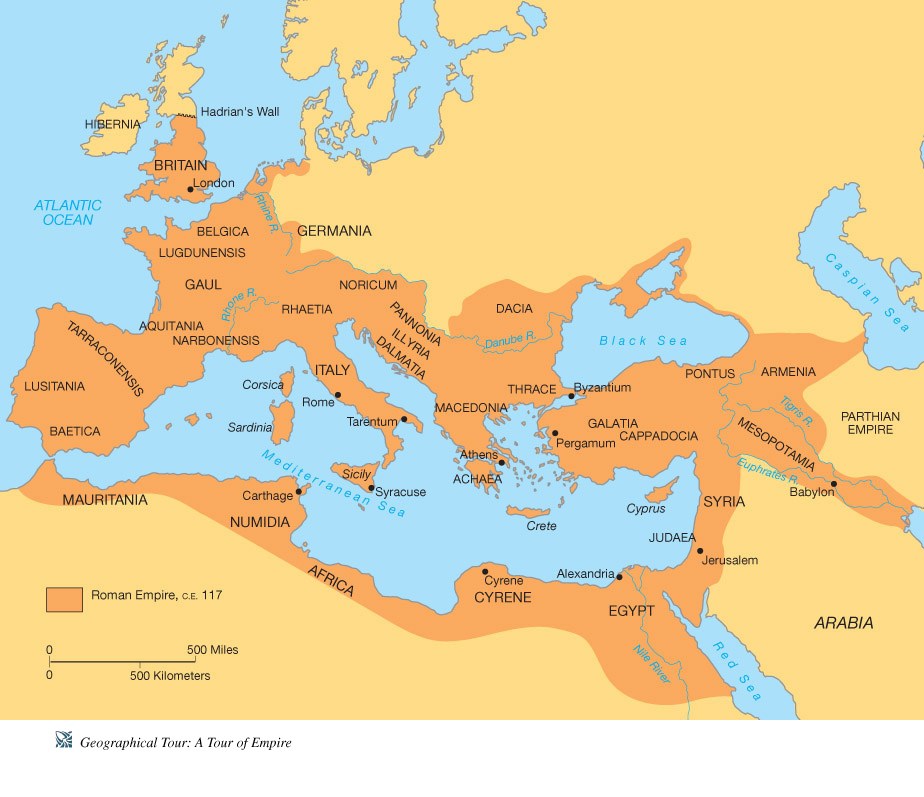
In this picture, Italy is an example of a
Desert
Continent
Peninsula
Mountain
Romans traded
on the Mediterranean Sea
on the Nile River
on the Atlantic Ocean
on the Niger River
Cultures must adapt to meet humans' needs when
people give or do something to help other cultures
resources are used to produce goods and services
there are changes in how people work together
the environment does not meet those needs
What THREE ways did Ancient Romans adapt to their physical environment?
Traded across the Mediterranean Sea
Built waterways to travel by ship to North America
Built roads to connect to land in western Europe and Africa
Limited farming due to mountains
Rome is a city located in?
East Asia westward
A peninsula with many islands surrounded by the Mediterranean Sea
Present-day Italy
Corner of Africa along the Nile River

What city is number 1?
Constantinople
Asia
Rome
Europe

What continent is number 2?
Europe
Mediterranean Sea
Africa
Rome

What city is number 3?
Africa
Europe
Constantinople
Rome

What does number 4 represent?
Danube River
Black Sea
Mediterranean Sea
Africa

What does number 5 represent?
Europe
Africa
Asia
Rome
a time of Roman peace and great achievement in construction of monuments, public buildings, and roads
empire
Twelve Tables
Pax Romana
republic
Slaves and prisoners of war forced to fight for Roman entertainment.
gladiator
senate
republic
forum
How did Rome profit from the provinces (colonies?)
resources
protection
invaders
plebeians
How did the provinces profit from Rome?
resources
protection
plebeian
invaders
What Roman Numeral represents the number 11?
XX
XI
IX
IV
A group of 5-6 thousand soldiers
Legion
Century
Legionnaires
Centurions
The capital of the Eastern Roman Empire
Rome
Constantinople
Jerusalem
Carthage
The capital of the Western Roman Empire
Rome
Athens
Constantinople
Sparta
After the collapse of the Western Roman Empire, the ________________ empire arose in what was Eastern Rome
Ottoman
Mongol
Persian
Byzantine
Which group invaded Rome and caused its fall?
Celts
Germanic
French
Mongols
Augustus was the first ____________ of Rome.
dictator
general
emperor
gladiator
Augustus was Julius Caesar's
great nephew
son
brother
grandson
The main rival of the Roman Republic, competing for control of the Mediterranean region during the Punic Wars, was ____.
Sicily
Greece
Carthage
Persia
A ruler with complete control over the country
President
Dictator
Patrician
Plebeian
Changes to make things better
Veto
Reforms
Laws
Civic Duty
People in Rome and the US are considered innocent until proven guilty?
True
False
People in Rome and the US have the right to defend themselves before a judge?
True
False
Judges in Rome and the US are required to consider all evidence before making a decsion.
True
False
How did the Mountains impact the Roman civilization?
It provided them with food
It provided them with protection against invaders
It helped create different city-states in the Roman empire

Who won the Punic Wars?
Greece
Rome
Persia
Carthage
What was ‘bread and circuses’?
A party
Roman leaders began offering cheap food and free entertainment
An event only for the plebeians.
An even only for the patricians

How did the Roman idea of citizenship facilitate political stability throughout Roman territories?
Romans granted citizenship to both men and women.
Romans allowed conquered peoples to become citizens.
Romans educated citizens about representative government.
Romans extended citizenship to powerful landowners only.

In a direct democracy -
power is given to a dictator
the city state holds all power
political parties are given power
citizens vote directly on proposed legislation


How did Rome obtain most of the land in their empire?
trade
alliances
treaties
war
How were the Twelve Tables similar to the U.S. Constitution?
both were first written on bronze tablets
both were written to protect people's rights
both were written over 1,000 years ago
both were only written to protect the wealthy
This building hosted gladiator fights
The Pantheon
The Parthenon
The Colosseum
The Bath House
Zeus is to Greece what _______ is to Rome
Hercules
Pericles
Jupiter
Apollo
What was Rome considered because it elected Representatives to create laws.
direct democracy
republic
monarchy
dynasty
This person was a general that invaded Rome with elephants.
Tribune
Legion
Diocletian
Hannibal
Which of the following was a POLITICAL cause of the decline of Rome?
no clear succession of power with corrupt leaders
There were too many slave revolts
free bread and entertainment for the majority
Rome was experiences high inflation
What was an ECONOMIC cause for the decline of Rome?
new resources to create new roads
the Roman Legions were to spread out
high inflation that ruined business
corrupt leaders with no clear line of succession
Constantine, Diocletian and Theodosius were:
Roman gods
Germanic Barbarian rulers

