
 Worksheets
chpt 2 "sound" physics
Total questions: 55
Worksheet time: 30mins
T/F
all waves carry energy from one location to another
true
false
Variations in all of the following identify specific waves as acoustic waves except.
pressure
parameters
density
acoustic variables

complete destructive interference
pair of in-phase waves results in formation of a single wave greater of amplitude than either of its components
pair of out-of-phase waves results in the formation of a single wave of lesser amplitude than at least one of its components
when waves of different frequencies interfere, waves are in-phase , while others are out-of-phase
when two out-of-phase waves are of equal amplitude

constructive interference
pair of in-phase waves results in formation of a single wave greater of amplitude than either of its components
pair of out-of-phase waves results in the formation of a single wave of lesser amplitude than at least one of its components
when waves of different frequencies interfere, waves are in-phase , while others are out-of-phase
when two out-of-phase waves are of equal amplitude
T/F
sound waves are transverse
true
false

Which of the following best describes waves B and C?
in phase, will interfere constructively
in phase, will interfere destructively
out of phase, will interfere constructively
out of phase, will interfere destructively
What do waves transfer from one location to another?
matter
molecules
energy
water
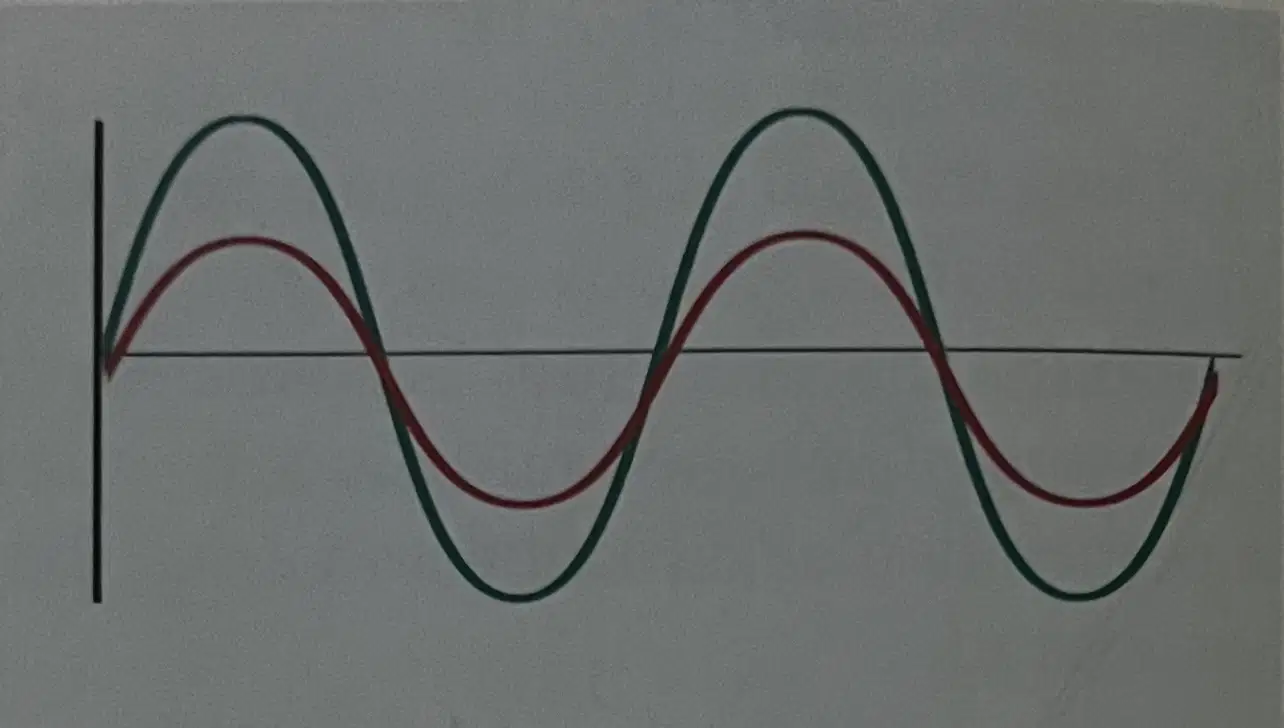
a pair of waves are considered In-phase waves when :
their peaks(maximum value) & their troughs (minimum values) occur at the same time
their peaks(maximum value) & their troughs (minimum values) occur at different times
formation of a single wave of greater amplitude than either of its components
formation of a single wave of lesser amplitude than that at least one of its components
when there's two pairs of waves where their peaks & troughs occur at different times at equal amplitude

in a longitudinal wave, particles move in _____ that the wave propagates
- ( wave is moving from left-right (black arrow) , particles are moving back & forth, and left-right)
same direction
perpendicular
different direction
transverse

in a _____ wave particles move in a direction that is perpendicular( at right angles) to the direction that the wave propagates
-( wave moves left-right (black arrow) , particles in wave move up & down)
14. What units are used to report the pressure of a sound beam ?
pounds
centimeters
pascals
kg/cm
wha are the 7 acoustic parameters
period & frequency
amplitude & power
intensity & wavelength
propagation speed
pressure & density
the acoustic variable in which : distance(cm, feet, mile)
concentration of force in an area
concentration of mass in a volume
measure of particle motion

a pair of waves are considered out-of-phase waves when :
their peaks(maximum value) & their troughs (minimum values) occur at the same time
their peaks(maximum value) & their troughs (minimum values) occur at different times
formation of a single wave of greater amplitude than either of its components
formation of a single wave of lesser amplitude than that at least one of its components
when there's two pairs of waves where their peaks & troughs occur at different times at equal amplitude
the acoustic variable in which : concentration of force in an area
pressure(pascals, pa )
density ( kg/cm3)
distance(cm, feet, mile)
match the 3 acoustic variables with their correct units
pressure
pascals(pa)
density
kg/cm3
distance
cm/mm
All of the following are acoustic parameters except.
pressure
period
propagation speed
frequency
what are the acoustic variables
pressure
density
distance
period
intensity
sound travels in a _____ line
perpendicular
parallel
diagnoal
straight
sound must travel through a medium where molecules are alternately _____ ( squeezed together) and _____ (stretched apart)
compressed
rarefied
densed
stiffened
sound waves are _______ waves
media
mechanical
longitudenal
electrical
All of the following are true of sound waves except.
they are acoustic
they are pressure waves
they are transverse
they move energy
sound waves are ______
transverse
longitudinal
the acoustic variable in which : density (kg/cm3)
concentration of force in an area
concentration of mass in a volume
measure of particle motion
all waves carry ____ from one location to another
effects
media
energy
not enough information
the effects of the sound waves upon the biological tissue through which it passes

when waves of different frequencies interfere, waves are in-phase , while others are out-of-phase
interference of waves with different frequencies
constructive interference
destructive interference
complete destructive interference
Which types of waves will exhibit both constructive and destructive interference?
waves of different amplitude
a pair of longitudinal waves
waves of different frequency
out-of-phase waves
True or False?
Acoustic variables allow us to determine which waves are sound waves and which are not.
true
false

when two out-of-phase waves are of equal amplitude
constructive interference
destructive interference
complete destructive interference
interference of waves with different frequencies
T/F
sound must travel through a medium where molecules are alternately compressed (stretched apart) and rarefied (squeezed together)
true
false
Which of the following terms does not belong with the others?
compression
region of high density
region of high pressure
wide molecular spacing
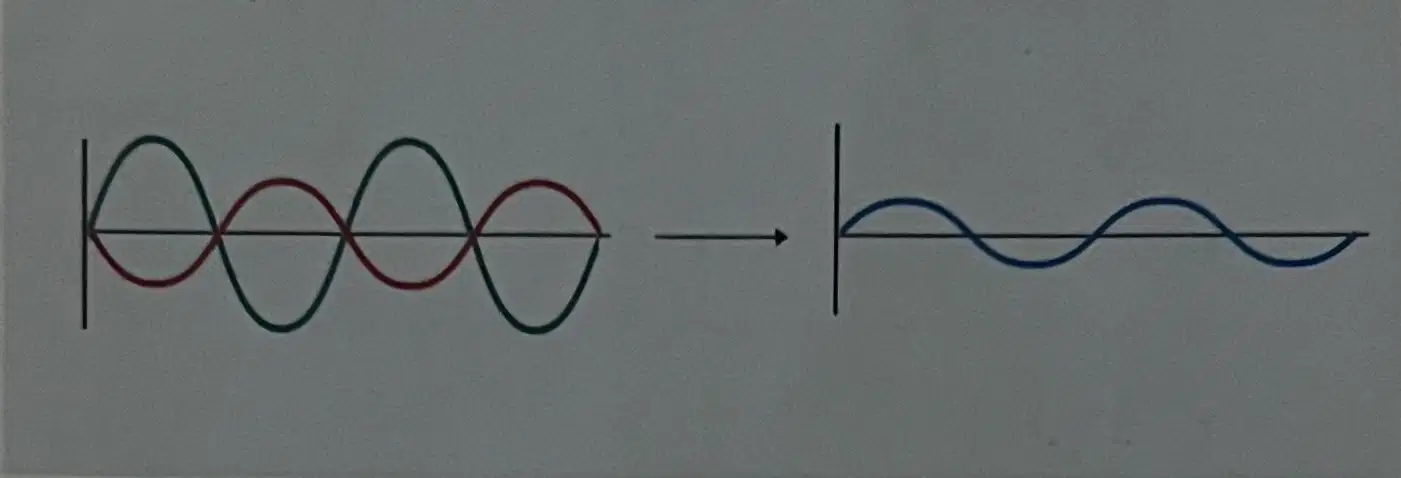
destructive interference
pair of in-phase waves results in formation of a single wave greater of amplitude than either of its components
pair of out-of-phase waves results in the formation of a single wave of lesser amplitude than at least one of its components
when waves of different frequencies interfere, waves are in-phase , while others are out-of-phase
when two out-of-phase waves are of equal amplitude

Which of the following best describes waves A and C?
in phase, will interfere constructively
in phase, will interfere destructively
out of phase, will interfere constructively
out of phase, will interfere destructively
T/F
sound waves travel in a straight line
true
false
pressure(pa), density(kg/cm3), distance(cm/mm)
- these are all acoustic ________
parameters
variables
bigness parameters
the acoustic variable in which : pressure(pascals, pa )
concentration of force in an area
concentration of mass in a volume
measure of particle motion
biological effects
the effects of the sound wave upon the biologic tissue through which it passes
the effects of a sound wave traveling in a straight line
the effect of a sound wave traveling through the media
not enough information

in a ________ wave, particles move in the same direction that the wave propagates
- ( wave is moving from left-right (black arrow) , particles are moving back & forth, and left-right)
Which of the following best describes sound waves?
transverse, pressure waves
transverse, longitudinal waves
longitudinal, out-of-phase waves
longitudinal, pressure waves
the acoustic variable in which : measure of particle motion
pressure(pascals, pa )
density ( kg/cm3)
distance(cm, feet, mile)
T/F
sound waves are known as acoustic waves
true
false

Which of the following best describes waves A and B?
in phase, will interfere constructively
in phase, will interfere destructively
out of phase, will interfere constructively
out of phase, will interfere destructively
- period , frequency , amplitude, power, intensity , wavelength and propagation speed
- these are all ____ _____
acoustic parameters
acoustic bigness parameters
acoustic variables
the acoustic variable in which : concentration of mass in a volume
pressure(pascals, pa )
density ( kg/cm3)
distance(cm, feet, mile)
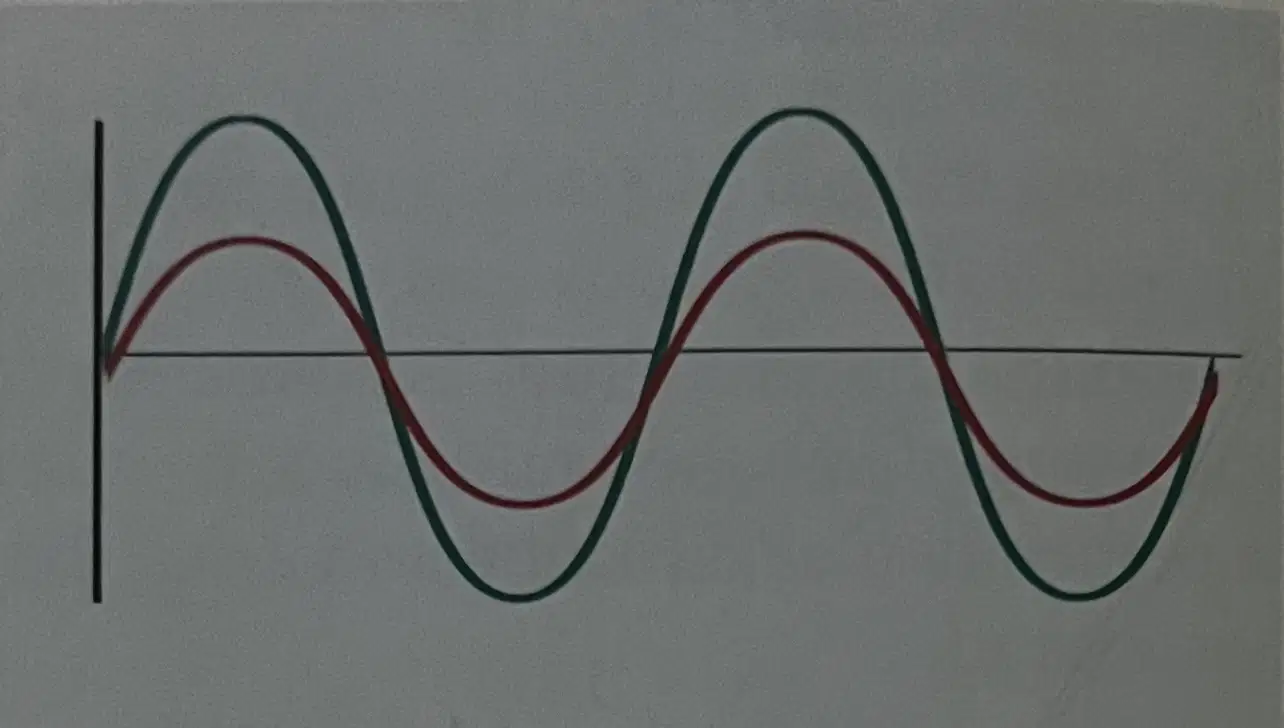
a pair of waves are considered ____ when their peaks (maximum values) & their troughs (minimum values) occur at the same time and place.
in-phase waves
out-of-phase waves
destructive interference waves
constructive interference waves
complete destructive interference
Which of the following best describes sound waves?
a series of compressions and rarefactions
waves that are heard by man
movement of molecules and energy from one location to another
waves that are used to make images of anatomy

in a transverse wave particles move in a direction that is _______ ( at right angles) to the direction that the wave propagates
- ( wave moves left-right (black arrow) , particles in wave move up & down)
parallel

pair of out-of-phase waves results in the formation of a single wave of lesser amplitude than at least one of its components
constructive interference
destructive interference
complete destructive interference
interference of waves with different frequencies

a pair of in-phase waves results in the formation of a single wave greater of amplitude than either of its components
constructive interference
destructive interference
complete destructive interference
interference of waves with different frequencies

a pair of waves are considered _______ when their peaks(maximum value) & their troughs (minimum values) occur at different times
in-phase waves
out-of-phase waves
destructive interference waves
constructive interference waves
complete destructive interference

interference of waves with different frequencies
when waves of different frequencies interfere, waves are in-phase , while others are out-of-phase
pair of in-phase waves results in formation of a single wave greater of amplitude than either of its components
pair of out-of-phase waves results in the formation of a single wave of lesser amplitude than at least one of its components
when two out-of-phase waves are of equal amplitude

Which of the following best describes waves D and E?
in phase, will interfere constructively
in phase, will interfere destructively
out of phase, will interfere constructively
out of phase, will interfere destructively
Two waves are traveling in a medium and arrive at a location at the same time. What event takes place?
constructive interference
destructive interference
interference
reflection
True or False?
Acoustic parameters are used to describe the features of sound waves.
true
false

