
 Worksheets
NYSSLS 8R Meteorology Unit FULL Review
Total questions: 71
Worksheet time: 2hrs 9mins
What type of weather might you notice near a LOW PRESSURE area?
Precipitation
Sunny skies
Dry air masses
Which factor might most affect weather on a small island in the ocean?
Isobars
Ocean surface currents
Plants on the island
True or False:
As air sinks, it gains moisture and forms rain clouds.
True
False
Which of the following is NOT a main type of weather front?
Warm front
Cold front
Stationary front
Active front
Isobars on a weather map show areas of EQUAL pressure. If the Isobars are close together, what does it tell you about the weather in that area on a map?
It is sunny and calm
It is humid and windy
It is windy
It is raining

Look at the point labeled A on the weather map. What kind of weather can you expect in this area?
Sunny and calm winds
Sunny and very windy
Rainy and windy
Cold, snow, and calm

Look at the point labeled B on the weather map. What kind of weather can you expect here?
Cold and windy
Rainy
Sunny and calm
Snow and wind
Meteorologists use many tools and instruments to study the weather. Which of the following is NOT used to help forecast weather?
Barometers
Anemometers
Thermometers
Telescopes

Look at the weather map. What type of air front is heading toward San Francisco?
Cold front
Warm front
Stationary front
Occluded front
What information, or data, on a weather map can be used to predict weather with 100% accuracy?
Isobar pressure lines
Direction of the warm and cold fronts
Location of the high and low pressure systems
Weather prediction is never 100% accurate
Climate is talking about the short-term weather changes that happen.
True
False
If I am located in the center of a continent, what type of climate can I expect to have?
Warmer
More constant temperatures/precipitation
Hot summer and cold winters
Colder temperatures than areas that surround
What type of climate can I expect to have if I live right along a coast?
More constant temperature and precipitation year-round
Hot summers and cold winters
Warmer than normal areas
Colder than surrounding areas
What type of climate would you expect areas along the equator to have?
Hot summers, cold winters
Consistent temperatures and precipitation year-round
Warmer temperatures because of it's latitude
Colder than surrounding areas
What type of climate would an area on top of a mountain have?
Colder temperatures than areas it surrounds.
Warmer temperatures than areas it surrounds.
Hot summers, cold winters
Consistent temperatures year-round
What happens as you increase your altitude?
Temperature decreases
Temperature increases
Temperature stays the same
Mountains can block the winds impacting an areas climate?
True
False


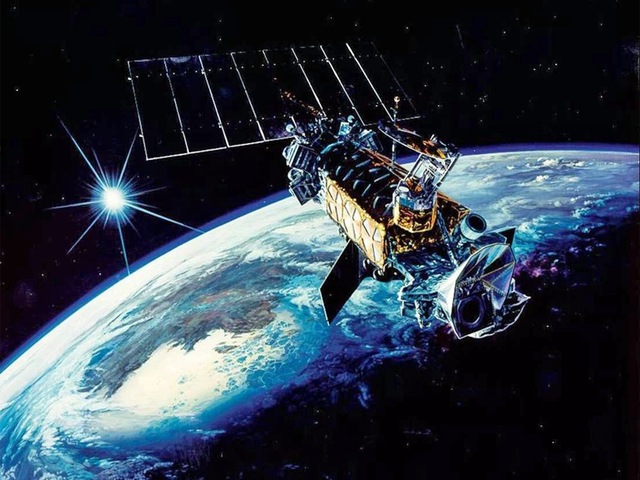

What is this an example of?
Weather map
Dopplar Radar
Weather Satelite
Rain Gauge
The temperature and humidity in an air mass stays about -
different
the same
100* C
The word that means water is ___________ .
polar
tropical
continental
maritime
Maritime air is very -
humid (moist)
dry
The word that means land is -
polar
tropical
continental
maritime
Continental air is very -
moist (humid)
dry
The temperature of air that comes from the tropics is very -
cold
warm
What drives the water cycle?
rain
temperature
the Sun
rotation

This picture shows -
evaporation
condensation
precipitation
transpiration
Water than flows downward on land
runoff
transpiration
evaporation
condensation
water vapor given off by plants
runoff
transpiration
evaporation
condensation
When water turns from liquid form to a gas
evaporation
precipitation
condensation
transpiration
What word do we give to water when it is the form of a gas
ice
rain
snow
water vapor


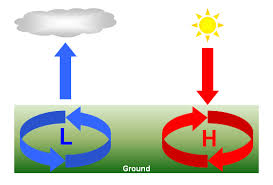

A Sea Breeze occurs during the
night.
day.
night and day.
alien encounter.

The arrow above the land is coming down and is blue because
the land is warm so it warms the air and warm air sinks.
the land is cool so it cools the air and cool air sinks.
the water is warm so it cools the air and warm air sinks.
the land is warm so it warms the air and cool air sinks.
The arrow above the water is going up and is red because
the water is warm so it warms the air and warm air sinks.
the water is warm so it cools the air and cool air sinks.
the water is warm so it warms the air and warm air rises.
the land is warm so it warms the air and cool air sinks.
What are isobars?
Lines connecting places of equal temperature
Lines drawn connecting places of equal pressure
Lines drawn to places of different temperatures
Lines drawn to places of different pressures
What is a hurricane?
warm, moist air rising rapidly, condensing, and forming a big storm cloud
clouds begin swirling, gaining speed, and increases in power
cold, dry air encounters warm moist air over the ocean
a lot of clouds in one area starts spinning and forming the 'eye'
Excess rain or a dam failure can cause a...
flash flood
hurricane
dust storm
water spout

How does a tornado form?
A levee or a dam failure, A sudden release of water from an ice jam, A few minutes or hours of heavy rain.
Tornadoes form when a thunderstorm meets horizontal winds at a high altitude. These winds cause the warm air rising in the thunderstorm to spin.
Tornadoes form when air cools and rises, water vapor condenses, heat is released and allows tornadoes to grow.
Tornadoes begin as a group of thunderstorms turn into violent low-pressure storms near the equator.
A _____________ is a large, rotating low-pressure system that forms over the warm waters of oceans near the equator.
tornado
hurricane
thunderstorm
flooding
Most hurricanes
cannot be seen from space.
cross large amounts of land.
become dangerous category 5 storms.
lose their power when they move into cooler waters or moves over land.
The calm area in the center of a hurricane is called the _____.
draft
funnel
eye
squall
What is one example of how a blizzard can be dangerous
roads can be slippery and icy
It can get really hot
There are no dangers
In order for a hurricane to form, the water must be ________.
Cool
Warm
Cold
temperate

How can people stay safe during a tornado?
Drop, cover, and hold on.
Get in your car and drive to the nearest school.
Go outside and stand under a tree.
Go into a basement or sturdy building away from windows and cover yourself with a blanket or mattress.
Long periods of rain can cause a...
thunderstorm.
hurricane.
drought.
flood.
Why do hurricanes inflict more damage than tornadoes?
Hurricanes are larger than tornadoes.
Hurricanes last longer than tornadoes.
Hurricanes are also associated with flooding and strong winds.
All of the above.

How can people stay safe during a Hurricane?
Evacuate.
Get to higher ground in a sturdy building.
Board up any windows to decrease flooding.
Keep food and water in case of being stranded for multiple days.
Thunderstorms, hurricanes, and tornadoes form at __________ pressure systems, where you have warm (typically moist/humid) air quickly rising.
low
high
This area is generally warmer in the winter and cooler in the summer because its near water! (Water moderates temperatures)
Coastal
Continental
Area here is normally warmer in the summer and colder in the winter, because it doesn't have any water around it to moderate the temperature
Coastal
Continental (inland)
Match the following words to the correct tool

Wind Vane

Thermometer

Anemometer

Barometer

Sling Psychrometer

