
 Worksheets
Final Exam Practice Test
Total questions: 67
Worksheet time: 35mins
A solid:
Has a definite shape and volume
Has a definite volume but no shape
Has a definite shape, but no volume
Has neither a definite volume or a definite shape
What is a pure substance?
It is a solid, liquid or gas that is made up of particles
It is made up of two or more particles
It is made up of at least two different particles, yet it appears to be one substance
It is a substance in which all of the particles are identical
Anything that takes up space and has mass is _________:
A compound
An element
Matter
Plasma
Which of the following statements does not describe fluids?
They take up space
They may be poured
They level out flat when poured
They always take the shape of their container
Which of the following statements are a part of the particle model of matter? i. All particles in a pure substance are the same ii. All substances are made of tiny particles iii. Solid particles are at a state of rest iv. Particles have spaces between them
i and iii
i, ii, and iv
ii and iv
All of them are part of the particle model of matter
Mixtures can be divided into the following 2 groups:
Elements and compounds
Homogenous and heterogenous
Solution and matter
Pure and impure
True or False: An inflated balloon is an example of an enclosed fluid transmitting pressure equally in all directions.
True
False
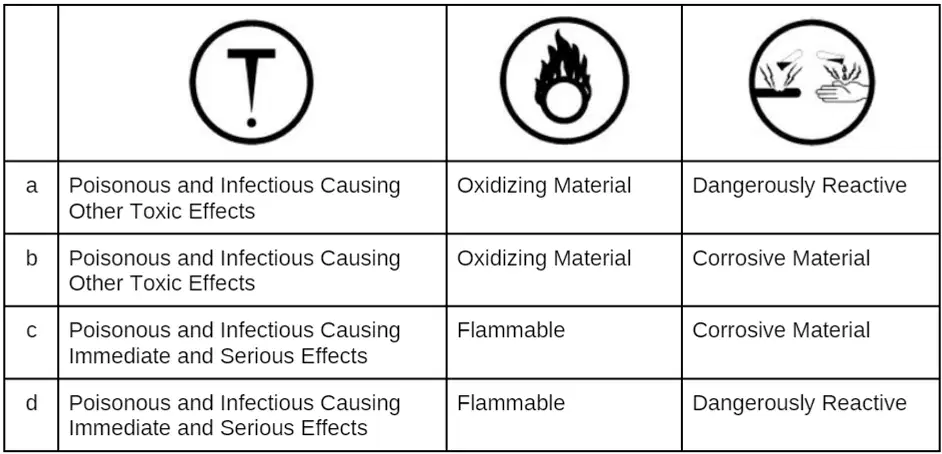
Match the following WHMIS symbols with their appropriate name.
Poisonous and Infectious Causing Other Toxic Effects
Oxidizing Material
Flammable
Dangerously Reactive
Which of the following statements apply to a hydraulic system? i. Applies a force ii. Is always in an open (not closed off) system iii. Uses the pressure of a liquid
i and ii
i and iii
ii and iii
All of them apply to hydraulic systems
When you are in a boat on a lake and it starts to fill with water, you need to take the water from the boat using a bucket and put it back into the lake in order to stay floating. Why is it that your boat floats with you inside of it, but it will start to sink when it fills with water?
The average density of the boat with water in it becomes higher than the average density of the body of water
The average density of the boat with water in it becomes lower than the average density of the body of water
The boat with water in it is adding too much pressure to the body of water
The boat with water in it is too heavy
If a cell membrane were said to be selectively permeable, what item from the list below would act most like that membrane?
Air
Aluminum Foil
Plastic
Strainer
If a child cries when his toy is taken away, what characteristic of living organisms does this show?
Living organisms grow
Living organisms need energy
Living organisms reproduce
Living organisms respond to their environment
Growth is one of the characteristics of living things. Each of the following things grow. Which one is NOT really a living thing?
The lawn that grows in the summer
Pond algae taking over a pond
A snowball that grows in size as it is rolled
An infant becomes a toddler
Plant and animal cells are different from each other because plant cells have a:
Cell membrane
Chloroplast
Cytoplasm
Mitochondria
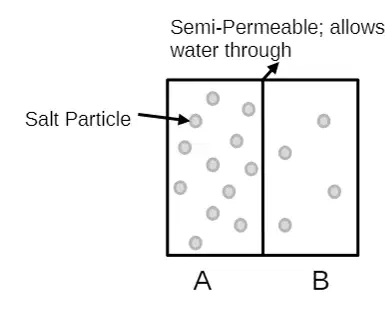
The container shown (right) is divided by a semipermeable membrane that allows the passage of WATER particles. If left over a period of time, you would notice:
Hint - Water does something different here...
Water particles would move from side A to side B
Water particles would move from side B to side A
Equal movement of particles
No movement
What do different organs working together form?
An organ
An organism
An organ system
A tissue
Which of the following systems helps move blood throughout your body?
Circulatory system
Respiratory system
Digestive system
None of the above
What is the basic unit of life?
Nucleus
Cell
Tissue
Organ
The main function of the respiratory system is to:
Break down food to obtain important nutrients and to eliminate wastes
Control and coordinate body activities
Move air and oxygen into the body and remove waste carbon dioxide from the body
Transport oxygen throughout the body and remove wastes produced by cells
The system controls and coordinates body activities; senses internal and external changes:
Circulatory system
Digestive system
Excretory system
Nervous system
Diffusion is:
Movement of particles from an area of high concentration to an area of low concentration
Movement of particles from an area of low concentration to an area of high concentration
Movement of water across a selectively permeable membrane
Movement of water across an impermeable membrane
Which term describes the visible light given off by an organism?
Incandescence
Fluorescence
Chemiluminescence
Bioluminescence
Light travels in ____________ lines from its source.
Curved
Infrared
Straight
Wavy
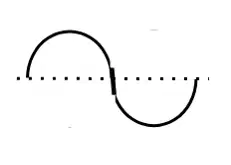
The frequency of the wave is the:
Distance from crest to trough
Distance from middle to the low part
Distance between wavelengths
The amount of cycles in a second
The iris is the part of the eye that allows the amount of light in, on the camera this part is called the:
Aperture
Film
Flash
Lens
A good example of a translucent object is….
The windshield of a car
Wax paper
Aluminum Foil
A glass window
A good example of a transparent object is…
Wax paper
Frosted glass
Plain white paper
Plastic wrap
Which of the following is evidence that light travels in straight lines?
Glass is transparent
Shadows form
Candles give off light
Car headlights point forward
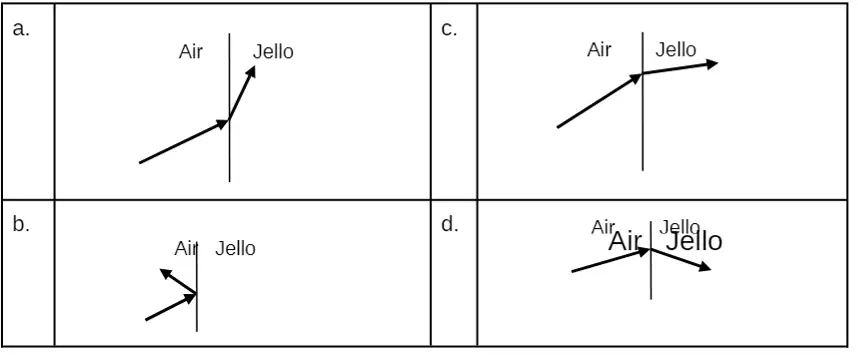
A ray of light passes from air into jello (jello is more dense than air). Select the diagram that demonstrates this.
A
B
C
D
Which of the following light sources is correctly paired with the example? Choose the 2 correct answers
i. Chemiluminescent - glow sticks
ii. Incandescent - candle
iii. Fluorescent - glow in the dark watch
iv. Bioluminescent - glow in the dark star
In a camera, film catches the image, in the human eye the internal screen is called the:
Cornea
Iris
Pupil
Retina
The point where the optic nerve enters the retina is known as:
Blind spot
Colour blindness
Cone cells
Iris reflect
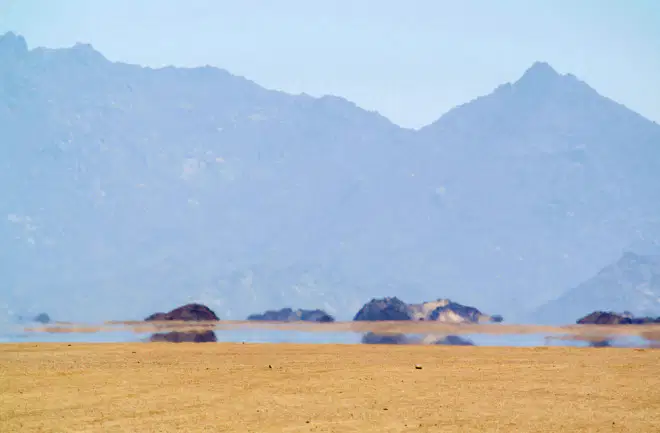
When in the desert, it is common to look into the distance and see a pool of water. This is just a mirage. Explain how a mirage is formed.
Hotter air is closer to the ground (because the ground is so hot), cooler air is above causing the light to bend before it gets absorbed by the ground
Colder air is closer to the ground, hotter air is above causing the light to bend before it gets absorbed by the ground
Light is reflecting off of the ground
None of the above
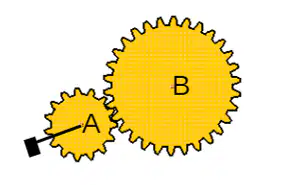
Which statement best explains the diagram on the right (There are 2 correct statements)
A is the Driver gear
B is the smaller gear
Gear train
Chain and Sprocket
A pair of scissors is an example of:
Class 1 lever
Class 2 lever
Class 3 lever
Class 4 lever
The biceps muscle is part of a Class 1 lever system. Where are the load, the effort force, and the fulcrum, respectively? Hint: Read the question carefully again and match the body part to the correct part of the lever!
hand, elbow, and biceps
biceps, elbow, and hand
elbow, biceps, and hand
hand, biceps, and elbow
You have found a ramp to help you get a heavy box up the steps to a porch. The ramp is 3 m long. You have to push with a force of 300 N to move the box up the ramp. How much work does it take to push the box up the full length of the ramp?
Formula: Work = Force x Distance
100 J
150 N
900 J
300 g
You exert a force of 726 N downward as you push on a pedal of your bike and the resulting load force causes the bike to move forward with a force of 81 N. What is the mechanical advantage? Use your calculators
Formula: MA = Input/Output
0.11
0.11 N
8.96
8.96 N
A book is sitting on the top of a shelf. This is an example of this type of energy:
Elastic
Kinetic
Potential
Thermal
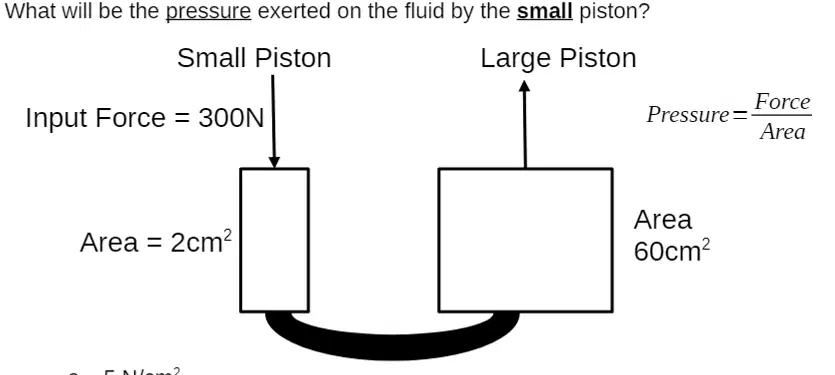
What will be the pressure exerted on the fluid by the small piston?
Pressure = Force/Area
5 N/cm²
150 N/cm²
1200 N/cm²
9000 N/cm²
100 N of force is applied to two objects. On Object A, the force is applied over an area of 0.5 cm². On Object B it is applied over an area of 5 cm². What object experiences more pressure?
Pressure = Force/Area
Object A
Object B
It is spring and you are engaged in your favorite activity of puddle jumping after a rainstorm. As the day progresses, you notice the puddles are disappearing quickly. What two processes could explain this?
Evaporation and condensation
Sublimation and condensation
Evaporation and absorption
Absorption and sublimation
Which of the following statements about glaciers is true?
Glaciers advance until they reach the ocean
Glaciers are found only at the North and South poles
Glaciers can retreat even when flowing downhill
Glaciers are composed of saltwater
Valleys that become eroded by glaciers are left in the shape of what letter?
I shape; the glacier only picks up what is directly in its path
V shape; the glacier narrows as it is moved forwards
U shape; the glacier pulls from the sides as well as the bottom
None of the above
What happens to water when it is absorbed into the ground?
It flows through impermeable rock until it reaches the centre of Earth, where it flows out into the oceans
It flows through porous rock until it reaches impermeable material, where it begins to back up, filling the pores in the rock above.
It flows through porous rock until it evaporates back into the atmosphere.
It flows through porous rock until it reaches impermeable material, where it begins filling the water table until it reaches the aquifer.
A field that is contaminating local groundwater through fertilizers is considered to be:
A non-point source, since the fertilizers come from a large area
A non-point source, since the origin of the contaminants is known and from a small area
A point source, since the materials in the landfill come from one place
Why do breakers (waves that break) form near shore?
Incoming waves collide with outgoing tide, causing turbulence and breakers
The bottom of the wave hits the ground before the top, causing it to slow down
Sand picked up near shore makes the waves larger, and they break when they get too large
Waves are affected much more by the wind as they near the shore
Which of the following adaptations can be found on a plant in a fast moving stream?
Gills
Roots
Swim bladder
Rigid structure
The wearing away of rocks or soil by wind or water is known as:
Deposition
Erosion
Striations
Run-off
As part of an investigation, you are asked to compare the temperature of two cities. One city is on the shore of a large lake and the other is far from any open water. What do you predict you will find out?
There will be no real difference in temperature between the two cities at any given moment
The city far from any open water will have a smaller average monthly temperature range.
The city on the shore of the lake will have a smaller average monthly temperature range.
Both cities will have the same average monthly temperature range.
Freshwater bodies are shallow enough for sunlight to reach the bottom everywhere, while some bodies are much deeper. What are these bodies of water?
Ocean - Pond
Ocean - Lake
Pond - Lake
Lake - Pond
What is it called when a toxin is magnified as you move higher in the food chain?
Bioindicator
Biomagnification
Bioaccumulation
None of the above
You are given a mixture salt water. The salt is the (a) (type solute or solvent)
You are given a mixture of salt water. This combination is an example of a _____________________
Pure substance
Heterogenous Mixture
Compound
Homogenous Mixture
Explain one way that you could make the salt dissolve faster.
Increase the temperature of the water
Decrease the temperature of the water
Add more salt
Use cold water
Honey seeps out of the bottle slowly. This is because honey is a liquid with a high (a) .
What type of lens will the doctor give you to correct farsighted vision?
Concave lens
Convex lens
Cylindrical lens
Bifocal lens
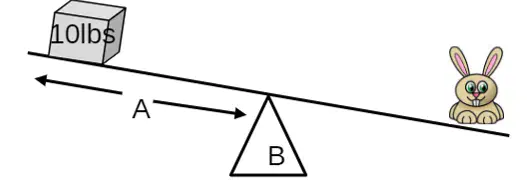
What does the rabbit represent in the lever diagram?
Load
Effort
Fulcrum
Resistance
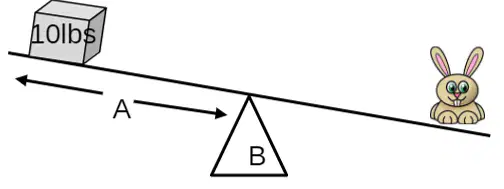
What does the A arm represent in the lever diagram?
Load arm
Effort arm
Fulcrum arm
Resistance arm
Is it possible to design a machine that is more than 100% efficient? Why or why not?
Yes, because energy can be created.
No, because of the law of conservation of energy.
Yes, because machines can be improved indefinitely.
No, because machines always lose some energy to friction, sound, etc.
You do 600 J of work while applying a force of 50 N. How far did the object move?
Formula: Work = Force x Distance
10 meters
12 meters
15 meters
20 meters
What is the formula for calculating density?
Density = Volume / Mass
Density = Mass / Volume
Density = Mass x Volume
Density = Volume x Mass
How is work calculated?
Work = Force / Distance
Work = Force + Distance
Work = Force x Distance
Work = Distance / Force
What is the formula for calculating pressure?
Pressure = Force x Area
Pressure = Force / Area
Pressure = Area / Force
Pressure = Force + Area
How is efficiency calculated?
Efficiency = work input / work output x 100%
Efficiency = work output / work input x 100%
Efficiency = work input x work output x 100%
Efficiency = work output + work input x 100%
What is the formula for calculating speed ratio?
Speed Ratio = # of Follower gear teeth / # of Driver gear teeth
Speed Ratio = # of Driver gear teeth / # of Follower gear teeth
Speed Ratio = # of Driver gear teeth x # of Follower gear teeth
Speed Ratio = # of Follower gear teeth x # of Driver gear teeth
How is mechanical advantage calculated?
Mechanical Advantage = Load Force / Effort Force
Mechanical Advantage = Effort Force / Load Force
Mechanical Advantage = Load Arm / Effort Arm
Mechanical Advantage = Effort Arm / Load Arm

