
 Worksheets
Unit Test Review - January 16
Total questions: 52
Worksheet time: 52mins

F-The battery does what in a circuit
Controls the flow of electricity
Becomes a temporary magnet
Has potential energy to run the circuit
Provides the pathway for the electricity

A-The switch does what in the circuit
Has potential energy to run the circuit
Becomes a temporary magnet
Controls the flow of electricity
Provides the pathway to carry the electricity

E-The rivet does what in the circuit?
Provides the pathway to carry the electricity
Has potential energy to run the circuit
Controls the flow of electricity
Becomes a temporary magnet

C-The wire does what in the circuit?
Has potential energy to run the circuit
Becomes a temporary magnet
Controls the flow of electricity
Provides the pathway to carry the electricity
Which one is evidence that electricity is flowing?
A component gets hot
The switch is closed
A component gets cold
Which one is evidence that electricity is flowing?
A motor in a circuit is not moving
A light bulb shines
The battery is connected

Which circuit will light the bulb?
A
B
C
D

What is the energy source in the circuits shown?
The bulb filament
The bulb casing
The wire
The D-cell (battery)

Why did the compass needle change position when the circuit was closed?
Electricity also runs through the compass.
A magnetic field surrounds a wire
The compass-needle change indicates the potential energy
The magnetic poles of the D-cell reversed
A circuit is....
a pathway for the flow of magnetism
a pathway for the flow of electricity

The microscopic regions in a strongly magnetic material that have all the atoms' magnetic fields line up are called ---.
electrolytes
nodes
orbitals
domains
poles

The picture is an example of an:
Electric generator
Electromagnet
Electric nail
Electric power cell
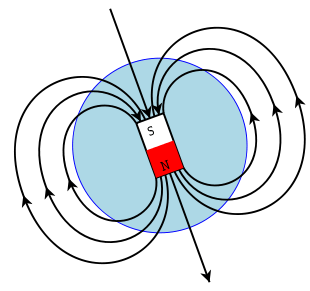
The area of magnetic force around a magnet is known as its _____________.
magnetic field
magnetic declination
magnetic fan lines
magnetic tan lines
What will happen to the poles of a magnet if a large magnet is cut into smaller pieces?
the pieces will only have a N or S pole
one of the pieces will have both a N and S pole, the other will only have N
one of the pieces will have both a N and S pole, the other will only have S
ALL pieces will have a N and S pole
Select ALL rules of magnetic attraction
opposite poles attract
like poles repel
opposite poles repel
like poles attract
Given the definition, select the correct vocabulary word: to push away from each other
permanent magnet
temporary magnet
attract
repel
Given the definition, select the correct vocabulary word: to pull towards each other
permanent magnet
temporary magnet
attract
repel
The greater the distance between magnets, the _________ the force between them.
greater
weaker
Choose the circuit that will work.


Which action would make an electromagnet stronger (able to pick up more paper clips)?
Use thinner wire
Add another D-cell into the circuit
Wind fewer wraps around the core
Wind the wraps loosely rather than tightly around the core
A generator turns...
kinetic energy into electrical energy
electrical energy into kinetic energy
A motor turns...
kinetic energy into electrical energy
electrical energy into kinetic energy
Two objects will experience an electric force of attraction when they have ____.
no charge
like charges
opposite charges
the same amount of charge
If the distance between two charged objects increases, the electric force between them _____.
stops
remains the same
increases
decreases
When you bring the south ends of two magnets close together, they repel each other.
True
False
A current-carrying wire produces a magnetic field
True
False
The more loops in a coil of wire around the core of an electromagnet, the stronger the magnetic force.
True
False
When the amount of positive charge on an object equals the amount of negative charge on an object, the object is electrically neutral.
True
False
Which of the following describes both an electromagnet and a permanent magnet?
The poles can be reversed
The strength of the magnetic force can be controlled.
) The magnetic force can be turned off and on.
It has a north pole and a south pole.


Why is electrical wiring usually made from copper?
Because copper is shiny
Because copper conducts electricity
Because copper is not magnetic
Because copper insulate electricity
Which of the following materials is an electrical conductor?
Plastic spoon
Silver-colored plastic spoon
copper spoon
wooden spoon
A material that does NOT let electricity pass through it is called ...
An electrical conductor
An electrical insulator
An electrical source
An electric appliance

When the switch is closed the buzzer will sound because -


Why is electrical wiring usually are covered with a layer of plastic?
To make it look pretty
To help electricity flow along the wire
To make it safe
To add more energy
Which of these has the most kinetic energy?
a 25 kg fish tank sitting on a table
a 100 g fish swimming in a fish tank
a 7,500 kg car parked on a steep hill
a 100 kg boulder suspended from a cliff
Which of these has kinetic energy?
a book sitting on a shelf
hat and gloves on a table
cars parked in a parking lot
a child throwing a football

At which point does the ball have the greatest amount of gravitational potential energy?
w
x
y
z

Where is the most kinetic energy?
B
C
D
E

Which point shows where kinetic energy starts transforming into potential energy again?
B
C
D
E
Increasing an object's mass will increase its kinetic energy.
true
false
What is energy?
something that picks up things, like a magnet.
Motion of an object
ability to do work
magic rays of sunshine that come down when you're feeling blue.
An example of Potential Energy is:
squishing a spring
Bike moving down a Hill
Roller Coaster moving
In order to INCREASE the potential energy of an object, you need to:
put the object lower to the ground
raise the object higher
Kinetic energy depends on the ________ and ________ of the object.
Height (position)
Mass
Velocity
Friction
Potential energy depends on the ________ and ________ of the object.
Height and mass
Friction and movement
Mass and Movement
Height and Friction

