
 Worksheets
Walker Physics Semester 1 Exam Review (Chs 1-5.1)
Total questions: 130
Worksheet time: 2hrs 8mins
When any object is thrown through the air, the shape object's path can be described mathematically as _________________.
Linear
Curved
Hyperbolic
Parabolic
In projectile motion, the y component of the velocity thrown at an angle Θ can be found by which of the following?
vocosΘ
vossinΘ
votanΘ
vocotΘ
In solving projectile motion problems, motion in the x and y directions can be solved independently.
True
False
The greater the angle, Θ, at which an object is launched with the same initial velocity,
... the higher the object will go.
... the further the object will go.
... has no effect of either the height or distance the object will travel.
A ball is rolled off a table with velocity "v" in the horizontal direction and travels a distance of d. How far will the ball travel if the velocity is doubled?
d (there is no effect on the distance)
sqrt (d)
2d
There is not enough information to determine the distance.
Mary is running at 1.5 m/s to catch a plane and finds a moving walkway moving at a speed of 0.5 m/s. Madi is sitting drinking a latte watching the crazy lady run. What speed does Madi perceive Mary to be running?
1.0 m/s
1.5 m/s
2.0 m/s
3.0 m/s
A boy standing on a balcony drops one ball and throws another with an initial horizontal velocity of 3 m/s. Which of the following statements is accurate?
The balls fall with a constant vertical velocity and a constant horizontal acceleration.
The balls fall with a constant vertical velocity as well as a constant horizontal velocity.
The balls fall with a constant vertical acceleration and a constant horizontal velocity.
The balls fall with a constant vertical acceleration and an increasing horizontal velocity.
Tip is practicing with a slingshot -- dangerous I know -- so he can accurately play King David in a re-creation of the story of David and Goliath. He releases a 500 g stone after getting it going very quickly. What can be said about the path of the stone?
The stone continues in the circle because of Newton's First Law.
The stone quickly falls to the ground
The stone flies out at the same velocity in a line tangent to the circle at the moment of release.
None of the other questions adequately describe the stone's motion.
Estimate (using g=10.0m/s) the time it will take for a marble to reach the ground if it dropped off of the 10.0 m-high building.
0.7 s
1.4 s
2.0 s
4.5 s
What is a displacement?
a change in position
a change in the origin
a coordinate system
two different origin points
What is a vector?
a type of variable with the same origin point
a type of variable that includes direction as well as size
a variable with only positive values and shows direction
a displacement with no direction and no magnitude
A scalar does not depend on _____.
position
distance
magnitude
direction
All of the following are scalar values EXCEPT ____.
distance
mass
displacement
temperature
What is the difference between distance and displacement?
both show movement, so they are the same
one is a vector and the other is a scalar
distance shows direction, displacement does not
distance shows the origin, displacement does not
With a vector, what kind of information is carried by the positive and negative signs?
the direction
the size
the math function
the coordinates
What is the "magnitude" of a vector?
the units of the vector show magnitude
the sign of the vector shows magnitude
the length of the vector shows magnitude
the direction of the vector shows magnitude
The north-south axis and east-west axis provide what?
a distance point
a reference line
a positive and negative sign
a vector line
What shape does a projectile make?
Parabola
Hyperbola
Linear Line
Projectiles do not follow a predictable path

When solving two dimensional problems, what variable is shared between the x and y directions?
Acceleration
Displacement
Time
Velocity
Vectors in two dimensions are ___________
Opposite
Equal
Dependent
Independent
Two objects are released at the same time. One object is dropped in the vertical direction and one is launched horizontally into projectile motion. Which object hits the ground first?
Both hit the ground at the same time
The object dropped hits the ground first
The object launched horizontally hits the ground first
Unable to determine without further information

A soccer ball is kicked and follows the path as shown. At which point is the vertical acceleration equal to - 9.80 s2m ?
X
Y
Both X and Y
Neither X nor Y

Two identical balls, X and Y, are projected horizontally from the edge of a cliff. The path of each ball is shown in the picture. Which of the following statements are true (mark all that apply)?
They have the same initial horizontal speed
They have the same vertical acceleration
They have the same initial vertical velocity
They take the same amount of time to reach the water

A rock is thrown in the air as shown in the picture. At which point does vy = 0 sm ?
A
B
C
D
E
A rock is thrown in the air as shown in the picture. If it takes 5 seconds to reach point D, how long will take the rock to reach the ground from point D?
2.5 s
5 s
10 s
1 s

Based on the picture, how would you find the vertical component of the soccer ball's velocity?
20 sm×sin(30°)
20 sm×cos(30°)
20 sm×tan(30°)
20 sm
Based on the picture, how would you find the horizontal component of the soccer ball's velocity?
20 sm×sin(30°)
20 sm×cos(30°)
20 sm×tan(30°)
20 sm

When vectors form a right angle, we can find the resultant vector by using:
The quadratic equation
Addition
The Pythagorean Theorem
Subtraction
While at the airport, you walk on a moving walkway which moves with a speed of 1.80 m/s with respect to the surrounding corridor. You walk with a speed of 2.20 m/s with respect to the walkway. What is your speed with respect to the surrounding corridor?
4.00 m/s
0.40 m/s
3.96 m/s
1.22 m/s
Your boat's top speed is 10 m/s. If you travel at that stop speed but are fighting against a 2 m/s current, what is your speed relative to the shore?
5 m/s
20 m/s
12 m/s
8 m/s

When an object is undergoing projectile motion, which of the following are constant? Check all that apply.
vy
vx
ax
ay

A care package is dropped from a plane. Which of the paths shown in the picture will the package take?
A
B
C
D
E

This position vs. time graph shows an object...
not moving
moving with constant velocity
moving with changing velocity

This position vs. time graph shows an object...
not moving
moving with constant velocity
moving with changing velocity

This position vs. time graph shows an object...
not moving
moving with constant velocity
moving with changing velocity

This velocity vs. time graph shows an object...
(Hint: For this graph, the velocity is 0 m/s!)
not moving
moving with constant velocity
moving with changing velocity

This velocity vs. time graph shows an object...
not moving
moving with constant velocity
moving with changing velocity

This velocity vs. time graph shows an object...
not moving
moving with constant velocity
moving with changing velocity

This position vs. time graph shows an object...
not moving
moving with constant velocity
moving with changing velocity

This position vs. time graph shows an object...
not moving
moving with constant velocity
moving with changing velocity

This velocity vs. time graph shows an object...
not moving
moving with constant velocity
moving with changing velocity
Which of these position vs. time graphs shows an object changing direction?


Which of these velocity vs. time graphs shows an object changing direction?


This motion map shows an object...
not moving
moving with constant velocity
moving with changing velocity

This motion map shows an object...
not moving
moving with constant velocity
moving with changing velocity

This position vs. time graph shows an object...
speeding up
slowing down

This position vs. time graph shows an object...
speeding up
slowing down

A golf ball accelerates off a tee at 15m/s2, changing its velocity from 0m/s to 50 m/s down the fairway. How long did it take the golf ball to accelerate?
750 seconds
35 seconds
0.3 seconds
3.3 seconds
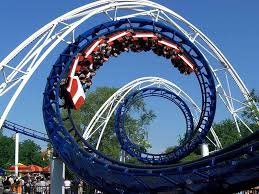
A roller coaster accelerates from an initial velocity of of 6.0 m/s to a final velocity of 70 m/s over 4 seconds. What's the acceleration?
24 m/s2
18 m/s2
16 m/s2
16 m/s
Why does a car accelerate as it rounds a corner at a constant speed?
Its direction changes
It doesn't
It slows down
Its speeds up
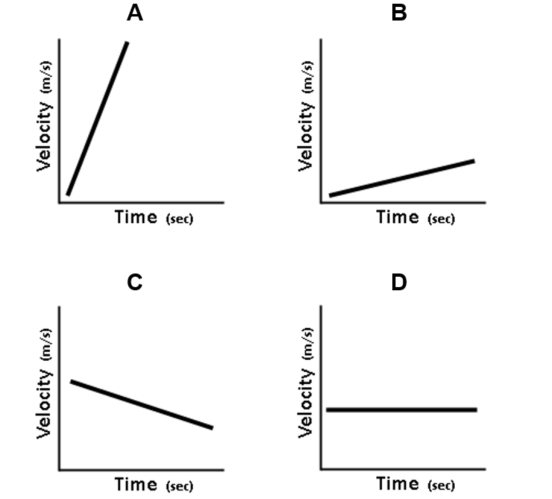
In each of the following cases, determine where the car has no acceleration.
A car speeds up after a stoplight turns green.
A car slows down as it approaches a red light
A car with the cruise control set at 80 km/h going down a straight highway
A car turning a curve at a constant speed
When are you undergoing an acceleration in a car? (Choose all that are correct)
speed up
slow down
make turns
constant speed

A fighter jet goes from +100 m/s to + 230 m/s in a time of 10 s. What was its acceleration?
-10 m/s2
+33 m/s2
-23 m/s2
+13 m/s2
A negative acceleration means that your object is
constant
speeding up
at rest
slowing down
A positive acceleration means that your object is
at rest
speeding up
moving
slowing down
As the ball falls towards the ground, its velocity
zero
decreases
at rest
increases
A bus starts from rest and accelerates to 14 m/s in 4 s. What is the average acceleration of the bus?
3.5 m/s2
5.9 m/s2
10.5 m/s2
24 m/s2
The formula for calculating avg acceleration is
t(vf−vi) True or False
True
False

What does the slope of this graph represent?
(a)
Dorothy was initially at rest. She sped up to 9 m/s in 24 seconds. What was her acceleration?
2.7 m/s2
-2.7 m/s2
-0.375 m/s2
0.375 m/s2
A rocket started at rest. After initiating the launch, it had an acceleration of 90 m/s2. How long did it take to reach a speed of 2430 m/s?
13.5 s
65610 s
27 s
32805 s
A cheetah can accelerate from rest to a speed of 30.0 m/s in 7.00 s. What is its acceleration?
4.29 m/s3
4.29 m/s2
4.29 m/s1
4.29 m/s
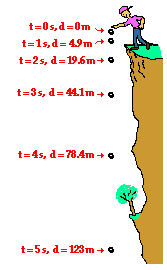
An object free falls for 3.5 seconds. How far does it fall?
120.05 m
17.15 m
60.03 m
34.3 m


A baseball is thrown up into the air. What happens to the acceleration as the ball rises in the air?
the acceleration increases
the acceleration decreases
the acceleration remains constant

A baseball is thrown up into the air. What happens to the velocity as the ball rises in the air?
the velocity increases
the velocity decreases
the velocity remains constant
The standard acceleration due to gravity (or standard acceleration of free fall),is the nominal gravitational acceleration of an object in a vacuum near the surface of the Earth. It is defined by standard as:
9.8 m/s.
9.8 m.
9.8 m/s2.
9.8 s.
If an object is in free fall for three seconds, how fast will it be falling?
9.8 m/s
19.6 m/s
29.4 m/s
39.2 m/s
Heavier objects free fall faster than lighter objects.
True
False
A free falling objects falls under the influence of the
force of air
force of gravity
force of resistance
net force
What is acceleration of an object flying upward during free fall?
+ 9.8 m/s2
- 9.8 m/s2
+ 9.8 m/s
-9.8 m/s
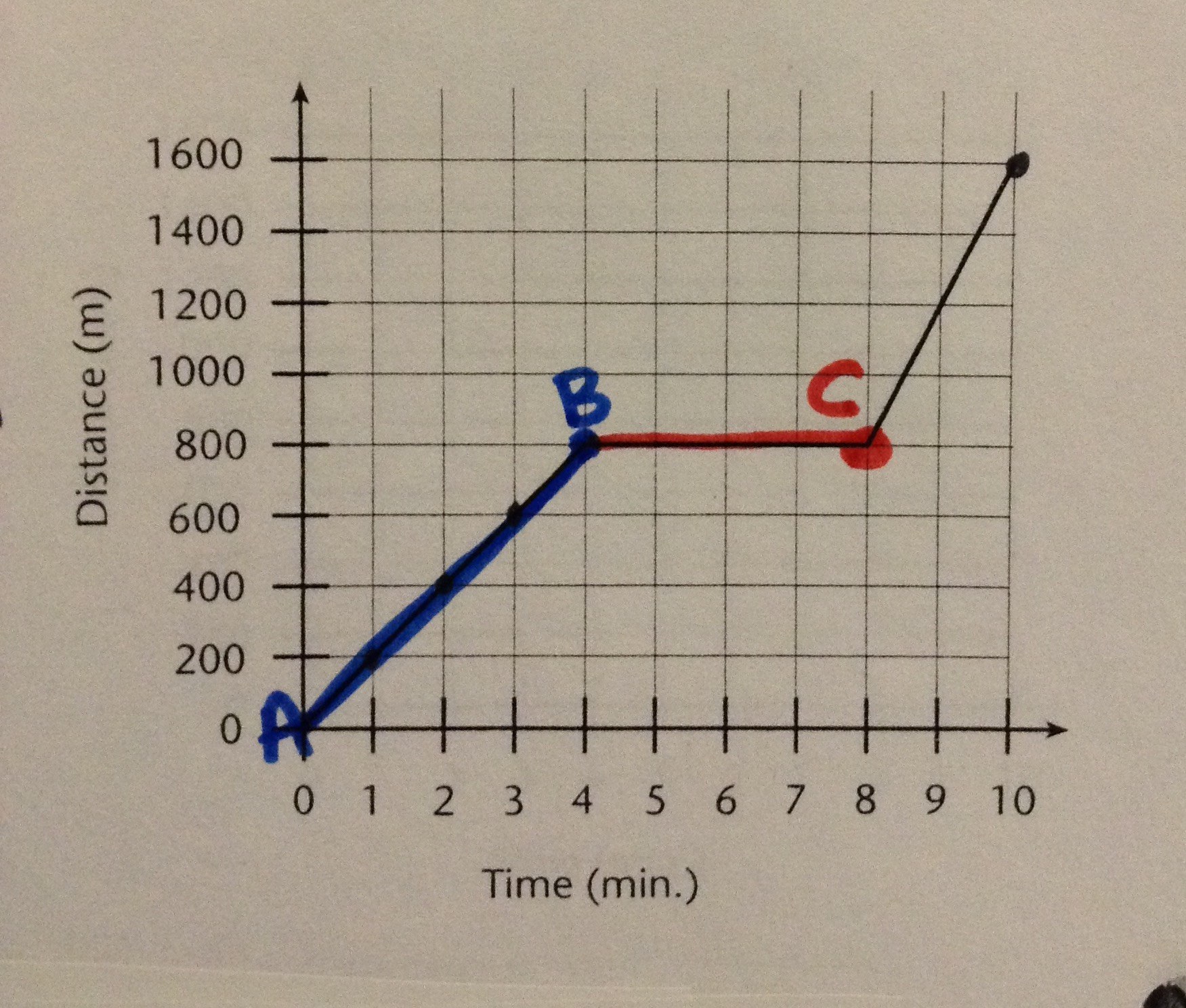
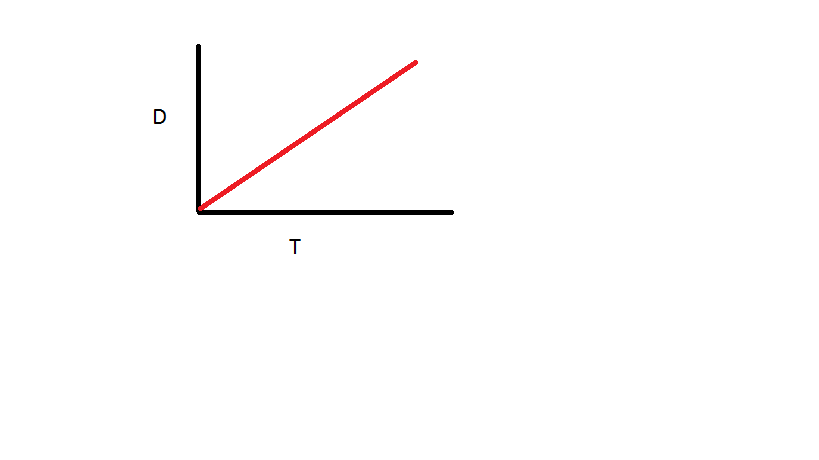
What is occurring from point A to point B?
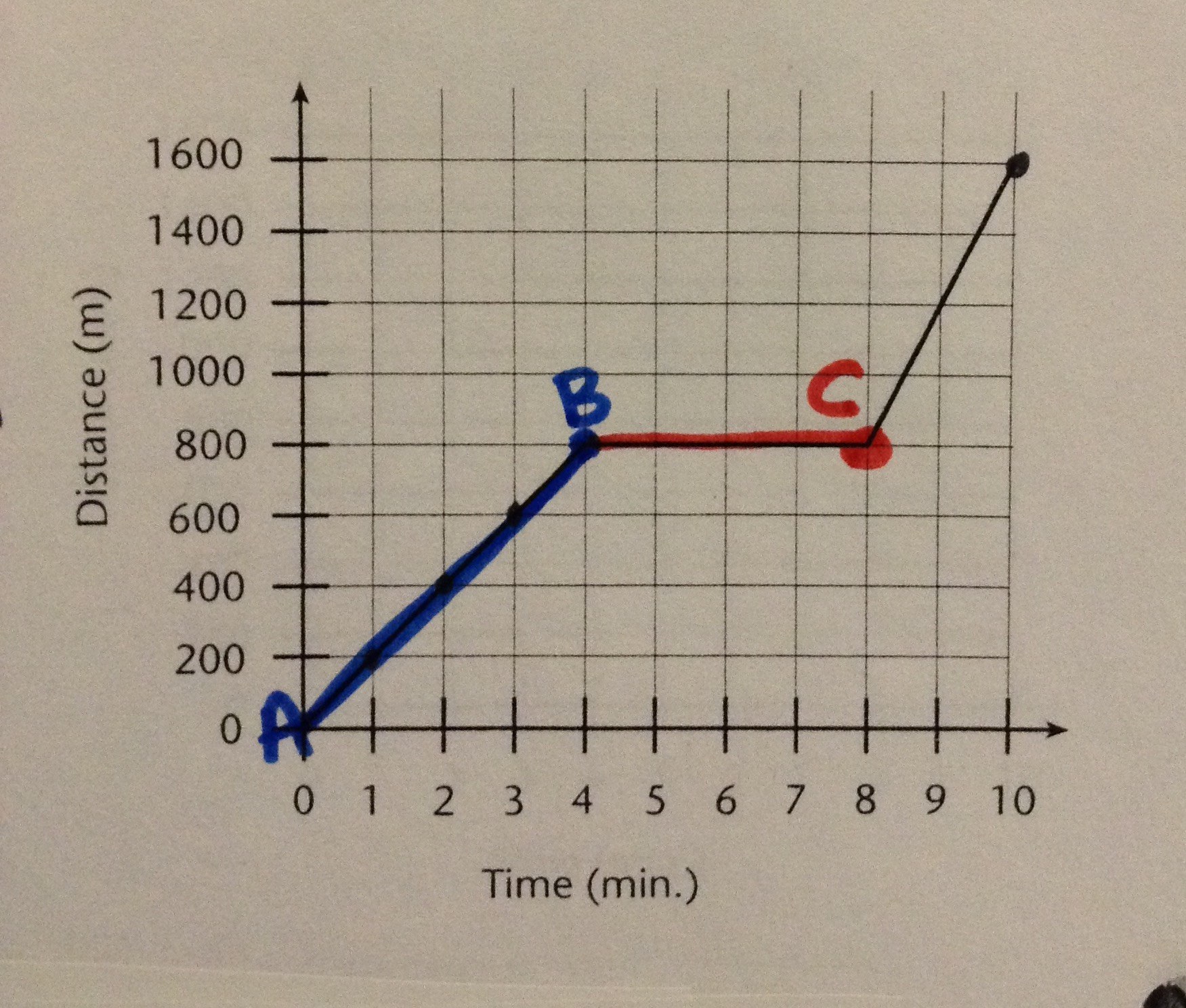
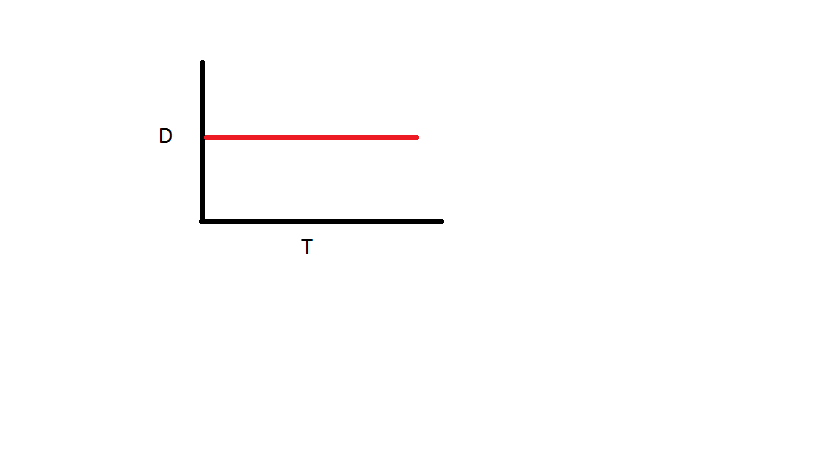
What was occurring from point B to point C?



An airplane accelerates down a runway at 3.20 m/s/s for 32.8 s until is finally lifts off the ground. Determine the distance traveled before takeoff.
1720m
104.96m
1270m
2704m
d
distance / displacement
direction
velocity
acceleration
vi
velocity
initial velocity
final velocity
acceleration
vf
velocity
initial velocity
final velocity
acceleration
a
velocity
distance
acceleration
accuracy
acceleration units
m/s
m/s2
m2/s2
m
distance or displacement units
m/s
m/s2
m2/s2
m
time units (that we use in physics)
s
min
hr
year
a tiger travels 96 m in 8s. what is his velocity over the interval
0.04m/s
25m/s
225m/s
12m/s
what is the formula to calculate speed.
S=d/t
S=t/d
S=t x d^2
S=d x t
A car travels 100km. The journey takes two hours. The highest speed of the car is 80km/ h, and the lowest speed is 40km/ h. What is the average speed for the journey?
40km/ h
50km/ h
60km/ h
120km/ h
An object is released from rest and falls to Earth. During its fall, the object is affected by air resistance. The air resistance eventually reaches a constant value. Which description about successive stages of the motion of the object is correct?
constant acceleration, then constant deceleration
constant deceleration, then zero acceleration
decreasing acceleration, then constant deceleration
decreasing acceleration, then zero acceleration

On Earth, a ball is dropped and falls 2.0 m in a vacuum. The acceleration of the ball at 1.0 m is 10 m/s2 .
What is the acceleration of the ball at 0.5 m?
5.0 m / s2
10 m / s2
15 m / s2
20 m / s2
An ice crystal falls vertically from a cloud. What happens to the acceleration of the ice crystal as it falls?
It decreases because of air resistance.
It decreases because of gravity.
It increases because of air resistance.
It increases because of gravity.
An athlete runs at a speed of 8 m / s for 10 s, and then at a speed of 6 m / s for 12s. Which calculation gives the average speed of the athlete in m / s?
28+6
22(8×10)+(6×12)
22(8÷×10)+(6÷×12)
22(10÷×8)+(12÷6)
A boy runs 400 m at an average speed of 4.0 m / s. He runs the first 200 m in 40 s. How long does he take to run the second 200 m?
60 s
66.7 s
80 s
140 s
An object is moving with uniform deceleration. Which statement describes its motion?
Its rate of change of speed is decreasing.
Its speed is constant.
Its speed is decreasing.
Its speed is increasing.
The velocity of an object increases from 30 m / s to 50 m / s in 5.0 seconds.
What is the average acceleration of the object?
0.10 m / s2
0.25 m / s2
4.0 m / s2
10 m / s2
A car travels at an average speed of 60 km / h for 15 minutes. How far does the car travel in 15 minutes?
4.0 km
15 km
240 km
900 km

A student investigates the motion of a ball rolling down a slope. The diagram shows the speed v of the ball at different times t.
Which statement describes the motion of the ball?
The acceleration is not constant.
The acceleration is negative.
The speed is decreasing.
The velocity is constant.
A car is travelling at a velocity of 2.0 m / s. It accelerates at a constant 0.20 m / s2 for 2.5 minutes. What is the final velocity of the car?
2.5 m / s
5.2 m / s
30 m / s
32 m / s

A ball falls from rest through the air towards the ground. The diagram shows two forces acting on the ball.
As the ball falls, the air resistance increases. Which statement is correct?
The acceleration of the ball decreases.
The acceleration of the ball increases.
The speed of the ball decreases.
The gravitational force on the ball decreases.
Which statement about acceleration is correct?
It is the force acting on an object when it is near to the Earth.
It is the distance an object travels in one second.
It is the force acting on an object divided by the distance it travels in one second.
It is related to the changing speed of an object.
A train begins a journey from a station and travels 60 km in a time of 20 minutes. What is the average speed of the train?
3.0 m / s
5.0 m / s
50 m / s
60 m / s
A light object is dropped from rest. It falls a large distance vertically through air. How can the motion of the object be described?
constant acceleration
increasing acceleration
decreasing acceleration and then moving at terminal velocity
increasing acceleration and then moving at terminal velocity


What is the net force in this diagram?
8N right
2 N right
8N left
2N left
Your car has a mass of 2500 kg and a force of 5000 N. How fast will it accelerate?
20 m/s2
2 m/s2
0.5 m/s2
120 N

What happens when unbalanced forces act on an object at rest?
the object remains at rest
the object begins moving in an unpredictable direction
the object begins moving in the direction of the net force
the object begins moving opposite to the direction of net force
A 20 kg bike accelerates at 10 m/s2. What was the force?
25 Newtons
20 Newtons
200 Newtons
10 Newtons

What is the net force?
40 N left
400 N right
0 N Balanced
40 N right
What Unit do we Measure Force in?
Newtons
Joules
Kilogram
Work
Jenny applies a 60 N force to a 20 Kg cart, what is the acceleration of the cart if friction can be neglected?
1200 m/s/s
0.33 m/s/s
20 m/s/s
3 m/s/s
What is force?
A push exerted on an object
A push or pull exerted on an object
A pull exerted on an object
Nothing
The mass of a wagon is 40 kg. The wagon accelerates at 8 m/s2 . What is the force?
38.25 Kg
320N
5N
3.825Kg
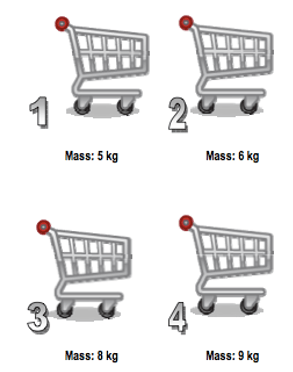
If the net force is equal to zero, the forces acting on the object are
balanced
unbalanced

When a small car pushes a big truck, the truck applies an equal and opposite force on the car.
False
True

When a cannon fires a cannonball we observe Newton's third law. Which is the reaction force?
The cannon moving forward
The cannon moving backwards
The cannonball moving backwards
The cannonball moving forward
Action reaction forces never cancel each other out because
They act on different objects.
They act on the same objects
They do not act on objects.

