wayground logo

Free Printable Worksheets

Font size

S
M
L
XL
Worksheets

t2 Final - Review Quizizz

Total questions: 135

Worksheet time: 2hrs 43mins
Name
Class
Date
1.
An ellipse is drawn around two points called
a)
aphelion
b)
perihelion
c)
foci
d)
axis
2.
Planets orbit the Sun in a shape called a(n)
a)
circle
b)
ellipse
c)
focus
d)
perihelion
3.
When a planet orbits the Sun, one of the foci of the elliptical orbit is 
a)
the axis
b)
the perihelion
c)
the center
d)
the Sun
4.
The place where a planet is closest to the Sun as it orbits the Sun is called the
a)
perihelion
b)
aphelion
5.
The place where a planet is farthest away from the Sun in its orbit around the Sun is called the
a)
aphelion
b)
perihelion
6.
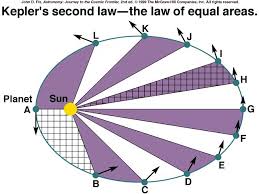
Where is the planet moving faster
a)
Position A to B
b)
Position B to C
c)
Position H to I
d)
Position I to J
7.
What is true about the area between points A, B and the Sun, and the area between points H, I and the Sun?
a)
The area between A, B and the Sun is the largest.
b)
The area between H, I and the Sun is the largest
c)
Both areas are equal in size
d)
There is not enough information to determine the areas
8.
What has an eccentricity of zero
a)
a straight line
b)
a large ellipse
c)
a circle
d)
a small ellipse
9.
The "Law of Harmonies" is which of Kepler's Laws?
a)
1st
b)
2nd
c)
3rd
d)
4th
10.
The farther away a planet is from the sun, the _______ it takes it to orbit the sun once. 
a)
longer
b)
shorter
11.
The path a planet travels around the sun is called its 
a)
orbit
b)
ellipse
c)
barycenter
d)
precession
12.
Two factors effecting the magnitude of the force of gravity between 2 objects are...
a)
mass and distance 
b)
mass and matter
c)
distance and weight 
d)
weight and mass
13.
Who created the Universal Law of Gravitation?
a)
Copernicus
b)
Newton
c)
Kepler
d)
Galileo
14.
Double the distance between two objects
a)
4 times greater gravity attraction
b)
4 times weaker gravity attraction
c)
2 times weaker gravity
d)
2 times greater gravity
15.
Complete the following statement: The farther away two planets are the _______ the gravitational force between them.
a)
greater
b)
same
c)
zero
d)
less
16.
In this equation...
a)
G is the gravitational field strength
b)
r is the distance between the centers of the 2 masses
c)
F is the repulsive gravitational force
d)
m is the momentum of the mass
17.

Gravitational forces are:

a)

always attractive

b)

always repulsive

c)

sometimes attractive and sometimes repulsive

d)

None of these

18.

Which of the following is the evidence to show that there must be a force acting on earth and directed towards the sun:

a)

deviation of the falling bodies towards east

b)

revolution of earth around the sun

c)

phenomena of day and night

d)

apparent motion of sun round the earth

19.

The picture shows three objects gravitationally interacting with each other. Which object exerts the greatest force on object B?

a)

Object A

b)

Object C

c)

A and C exert an equal force on B

d)

Cannot be determined

20.
Two like charges
a)
 neutralize each other.
b)
repel each other. 
c)
must be neutrons. 
d)
attract each other.
21.
The charge of an electron is 
a)
positive. 
b)
negative. 
c)
Electrons have no charge
22.
An atom loses an electron.  What type of charge does it have now?
a)
positive
b)
negative
23.
When a balloon is rubbed on clothes it acquires a charge by ___________
a)
Induction
b)
reduction
c)
friction 
d)
concuction
24.
Which of the following is not a good insulator?
a)
Copper
b)
Glass
c)
rubber
d)
wool
25.
During a physics lab, a plastic strip was rubbed with cotton and became positively charged. The correct explanation for why the plastic strip becomes positively charged is that ...
a)
the plastic strip acquired extra protons from the cotton.
b)
the plastic strip acquired extra protons from the charging process 
c)
protons were created as the result of the charging process
d)
the plastic strip lost electrons to the cotton during the charging process 
26.
Insulators are different than conductors in that insulators ____.
a)
do not contain electrons or protons 
b)
 do not contain any charge
c)
have a weaker affinity for electrons 
d)
do not allow charge to freely move 
27.

What types of charges attract?

a)

Positive and Positive

b)

Positive and Neutral

c)

Negative and Neutral

d)

Positive and Negative

28.
When distance increases, electrostatic force ____________; we call this relationship ____________ proportional
a)
decreases;directly
b)
decreases;inversely
c)
increases;inversely
d)
increases;directly
29.
What variable is a Coulomb the unit for?
a)
Charge
b)
Force
c)
Distance
d)
Mass
30.
What variable do "Newtons" represent?
a)
Electrostatic Charge
b)
Force
c)
Distance
d)
Mass
31.
If each of the charges doubles, what happens to the force?
a)
Quadruples
b)
Doubles
c)
Stays the same
d)
Reduced by half
32.
Energy can be created.
a)
True
b)
False
33.
Energy cannot be destroyed.
a)
True 
b)
False
34.
When something is dropped, what type of energy transfer takes place?
a)
Kinetic -> Potential
b)
Gravitational Potential -> Kinetic -> Sound
c)
Electrical -> Chemical
d)
Heat -> Nuclear
35.
Imagine dropping a basketball. When would it have the most gravitational potential energy?
a)
When it is closest to the ground
b)
When it is at the highest point
c)
When it is halfway down
d)
It has the same amount of gravitational PE at all points
36.
Energy is the ability _____________.
a)
to do work
b)
to power things
c)
to move objects
d)
to turn on a light
37.
Energy due to motion is ____________ energy. 
a)
Potential 
b)
Energy
c)
Kinetic
d)
Friction
38.
The faster an object moves, the ________ kinetic energy it has. 
a)
more
b)
less
c)
none of the above
d)
all of the above 
39.
As mass increases, KE ...
a)
increases
b)
decreases
c)
stays the same
40.
Which has a greater impact on KE?
a)
mass
b)
velocity
41.
The SI unit in which kinetic energy is measured is 
a)
Newton
b)
Kilogram
c)
Joules
d)
Metres per second
42.
Rearrange the equation for kinetic energy to make mass the subject of the equation.
a)
m = KE/2v2
b)
m = 2KE/v2
c)
m = v2/2KE
d)
m = 2v2/KE
43.
Rearrange the equation for kinetic energy to make velocity the subject of the equation.
a)
v = √(2KE/m)
b)
v2 = 2KE/m
c)
v = √(m/2KE)
d)
v = √(KE/2m)
44.
Calculate the kinetic energy of a moving 4 kg object travelling at a velocity of 3 m/s.
a)
18 J
b)
36 J
c)
12 J
d)
6 J
45.

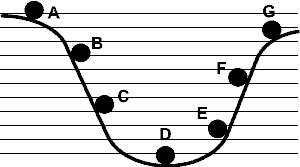
At which point does the ball has the greatest gravitational potential energy (GPE)?

a)

A

b)

G

c)

D

d)

C

e)

G

46.

Energy stored because of gravity is called:

a)

Gravitational Potential Energy

b)

Kinetic Energy

c)

Mechanical Advantage

d)

Chemical Energy

47.

Which would have the LEAST gravitational potential energy (GPE)?

a)

A ball sitting on the ground

b)

Moon viewed from the Earth

c)

An airplane flying 30,000 feet above the ground

d)

A rock sitting on top of Mt. Everest

48.

How could you increase the gravitational potential energy of an object without changing its mass and gravity?

a)

Make the object larger

b)

Lower the object towards the ground

c)

Raise the object farther off the ground

d)

Allow the object to roll on the ground

49.

How could you increase the object's gravitational potential energy (GPE) without changing its distance from the ground (height) and gravity?

a)

Decrease the object's mass

b)

Increase the object's height

c)

Increase the object's mass

d)

Decrease the object's height

50.

At which point on the roller coaster is the gravitational potential energy the greatest?

a)

W

b)

X

c)

Y

d)

Z

51.
A force exerted over a distance to move an object is ______________________.
a)
power
b)
work
c)
momentum
d)
Watt
52.
 Work done = Force x _________
a)
a. distance
b)
b. acceleration
c)
c. velocity
d)
d. speed
53.
A 5000N block is lifted 10 m. How much work was done?
a)
50000 J
b)
5000 J
c)
500 J
d)
50 J
54.
Which of the following is the best example of work being done. 
a)
doing homework
b)
lifting a box
c)
pushing a stationary box
d)
holding a box
55.
This is work divided by time.
a)
Work
b)
Distance
c)
Power
56.
What is the definition of power?
a)
the amount of work an object does
b)
the rate at which force is applied
c)
the amount of matter in an object
d)
the rate at which work is done
57.

What is a unit of power?

a)

Ohm

b)

Ampere (A)

c)

Volt (V)

d)

Watt (W)

58.

What are the three elements necessary for work to be done?

a)

Force, energy, and cause

b)

Force, displacement, and cause

c)

Energy, displacement, and cause

d)

Buoyancy, energy, and cause

59.

In physics, power is the rate at which _________ is used.

a)

Current

b)

Speed

c)

Energy

d)

Force

60.

Standard unit for Power

a)

Ampere

b)

Newton

c)

Joule

d)

Watt

61.

Will you use more power running up the stairs or walking up the stairs?

a)

Running up the stairs

b)

Walking up the stairs

c)

The same in both

62.

If a light bulb is switched on for 20 s and it consumes 2400 J of electrical energy then it's power is

a)

60 W

b)

80 W

c)

100 W

d)

120 W

63.
Which of the following best describes a star?  A star is a celestial body ---
a)
composed of rock and metal with a very high density
b)
that is too big to be an asteroid, but too small to be a planet.
c)
that rotates on an axis and revolves around the Sun
d)
composed of gases that emit light due to nuclear reactions
64.
Use the Hertzsprung-Russell Diagram to answer the following question.  Betelgeuse is a _____
a)
Hot and Bright Star
b)
Cool and Bright Star
c)
Hot and Dim Star
d)
Cool and Dim Star
65.
What are the three types of galaxies?
a)
Spiral, Elliptical, Ambiguous
b)
Whirlpool, Ellipse, Irregular
c)
Spiral, Elliptical, Irregular
d)
Swirly, Fuzzy, Uh...
66.
What is the name of the largest stars?
a)
Protostars
b)
Supergiants
c)
Red Giants
d)
Dwarf Stars
67.
Black holes are best described as:
a)
space fillers
b)
holes
c)
a place in space where gravity pulls so much even light can't get out
d)
gravity bombs
68.
Analyze this HR Diagram. Which group of stars is considered to have lower than average luminosity as well as a higher than average temperature?
a)
Giants
b)
Main Sequence
c)
White Dwarfs
d)
Super Giants
69.
Analyze this HR Diagram. Which group of stars is considered to have higher than average luminosity as well as a lower than average temperature?
a)
Giants
b)
Main Sequence
c)
White Dwarfs
d)
Super Giants
70.
Which star has the lowest temperature?
a)
A
b)
B
c)
C
d)
D
71.
Which of these observations of Proxima Centuri's Star is most likely accurate?
a)
Proxima Centuri's Star is less bright than the sun and has a surface temperature below 3,400 K
b)
Proxima Centuri's Star is less bright than the sun and has a surface temperature above 3,400 K
c)
Proxima Centuri's Star is brighter than the sun and has a surface temperature below 4,000 K
d)
Proxima Centuri's Star is brighter than the sun and has a surface temperature above 4,000 K
72.
Which star is considered a Main Sequence Star?
a)
A
b)
B
c)
C
d)
D
73.
In the diagram given, what happens as we move to the left?
a)
Stars Get Larger
b)
Stars get Colder
c)
Stars get hotter
74.
Stars are formed in a large cloud of gas and dust called a
a)
cumulonimbus cloud
b)
nebula
c)
neutron star
d)
black hole
75.

What term is used to describe the death of a massive star?

a)

Red Giant Storm

b)

Supernova

c)

Protostar

76.
Heat transfer by the buoyant motion of the Sun's heated gases is called _____ 
a)
conduction
b)
convection
c)
thermal radiation
d)
collusion
77.
What name is given to the stream of subatomic particles moving away from the Sun?
a)
solar wind
b)
aurora borealis
c)
cosmic dust
d)
stellar gust
78.
During hydrogen fusion in the Sun’s core, the energy is released mostly in the form of _____
a)
light
b)
heat
c)
chemical energy
d)
kinetic energy
79.
How long does it take for the energy from the Sun's core to work it's way out?
a)
close to 200 years
b)
close to 2,000 years
c)
close to 20,000 years
d)
close to 200,000 years
80.
What is the term for a dark region on the surface of the Sun?
a)
a solar vortex
b)
a field flux
c)
a sunspot
d)
a stellar speck
81.
What is the name for the localized explosion that blasts material off the surface of the Sun?
a)
a filament
b)
a prominence
c)
a solar flare
d)
a coronal mass ejection
82.
What protects us from the onslaught of subatomic particles from the Sun?
a)
a gravitational field
b)
an electric field
c)
a magnetic field
d)
a mine field
83.
What moon phase is this?
a)
full moon
b)
new moon
c)
1st quarter 
d)
3rd quarter
84.
Which moon phase is this?
a)
1st quarter
b)
new moon
c)
waxing crescent
d)
waxing gibbous
85.
Which moon phases is this?
a)
1st quarter
b)
3rd quarter
c)
waxing gibbous
d)
waning gibbous
86.
Which moon phases is this?
a)
waning crescent
b)
waning gibbous
c)
3rd quarter
d)
full moon
87.
Low tide occurs when the sun, Earth and moon form 90 degree angles.
a)
True
b)
False
88.
High tide occurs when the sun, Earth and moon and aligned.
a)
True
b)
False
89.

What is tidal range?

a)

High tide

b)

Spring and Neap tide

c)

the difference between the levels of high and low tide

d)

Low tide

90.

What is the name of this planet?

a)

EARTH

b)

MERCURY

c)

MARS

d)

VENUS

91.

This planet has rings.

a)

SATURN

b)

MERCURY

c)

MARS

d)

VENUS

92.

The biggest planet is...

a)

JUPITER

b)

EARTH

c)

MARS

d)

VENUS

93.

This planet is also called "The Red Planet"

a)

JUPITER

b)

EARTH

c)

MARS

d)

VENUS

94.
One of the main differences between the outer and inner planets is __________.
a)
The inner planets all have water
b)
the inner planets are much bigger than the outer planets
c)
the outer planets are gas planets
d)
the outer planets have rings, and the inner planets don't
95.

What is the name of this planet?

a)

EARTH

b)

MERCURY

c)

MARS

d)

VENUS

96.

This planet has rings.

a)

SATURN

b)

MERCURY

c)

MARS

d)

VENUS

97.

The biggest planet is...

a)

JUPITER

b)

EARTH

c)

MARS

d)

VENUS

98.

This planet is also called "The Red Planet"

a)

JUPITER

b)

EARTH

c)

MARS

d)

VENUS

99.

The hottest planet is...

a)

JUPITER

b)

EARTH

c)

MARS

d)

VENUS

100.
The moon is a natural  ______ of Earth.
a)
comet
b)
axis
c)
satellite
d)
space probe
101.
Earth's ________ on its axis causes day and night.
a)
rotation
b)
revolution
c)
phase
d)
comet
102.
One kind of  _______ is the crescent Moon.  
a)
axis
b)
asteroid
c)
phase
d)
space probe
103.
One full orbit of an object around another object is called a ________.
a)
axis
b)
rotation
c)
revolution
d)
satellite
104.
The __________ has planets, moons, comets, and asteroids.
a)
solar system
b)
earth
c)
rotation
d)
United States
105.
One of the main differences between the outer and inner planets is __________.
a)
The inner planets all have water
b)
the inner planets are much bigger than the outer planets
c)
the outer planets are gas planets
d)
the outer planets have rings, and the inner planets don't
106.
Where is the asteroid belt found?
a)
between earth and mars
b)
Between Uranus and Neptune
c)
Between Mercury and Venus
d)
Between Mars and Jupiter
107.
Why does Earth have different seasons? 
a)
because of the distance between Earth and the sun 
b)
because of the speed of Earth as it rotates on its axis 
c)
because of the amount of light blocked by the moon on its axis 
d)
because of the tilt of Earth on its axis as it moves around the sun 
108.

What is a meteoroid that has hit Earth's surface?

a)

Meteor

b)

Asteroid

c)

Comet

d)

Meteorite

109.
 How long does it take the earth to rotate once? 
a)
12 hours
b)
24 hours
c)
20 hours
d)
36 hours
110.
What model of the solar system states the sun is the center
a)
Geocentric Model
b)
Heliocentric model
c)
Biocentric modal
d)
Hydrocentric  model
111.
Put the planets in order from the sun.
a)
Mercury, Venus, Mars Earth, Jupiter, Saturn, Uranus, Neptune, Pluto
b)
Mercury, Venus, Earth, Mars, Jupiter, Sarturn, Neptune, Uranus, Pluto
c)
Mercury, Venus, Earth, Mars, Jupiter, Sarturn,  Uranus, Neptune,Pluto
d)
Mercury, Venus, Earth, Mars, Sarturn, Jupiter, Neptune, Uranus, Pluto
112.

Which planet is NOT one of the

"Gas Giants"?

a)

Uranus

b)

Venus

c)

Neptune

d)

Saturn

113.
When the southern hemisphere has winter, what season does the northern hemisphere have?
a)
winter
b)
spring
c)
summer
d)
fall
114.
It takes the earth one year to make one what?
a)
revolution
b)
rotation
c)
turn
d)
flip 
115.
What happens to frequency when the energy increases?
a)
it increases
b)
it decreases
c)
it stays the same
116.
What part of the wave is shown at letter A?
a)
crest
b)
trough
c)
wavelength
d)
frequency
117.
Which part of the wave is shown at letter B?
a)
crest
b)
trough
c)
wavelength resting point
118.
Which part of the wave is shown at letter C?
a)
crest
b)
wavelength
c)
resting point
d)
amplitude
119.
Which part of the wave is shown at letter E?
a)
trough
b)
crest
c)
resting point
d)
amplitude
120.
What does a wave carry?
a)
boats
b)
matter
c)
energy
d)
water
121.
If there is no wave, the particles would be at the _____________________.
a)
wavelength
b)
resting point
c)
trough
d)
beach
122.
Which wave has a longer wavelength?
a)
wave C
b)
wave D
123.
Longitudinal waves are ______.
a)
Parallel
b)
Perpendicular
c)
Crazy
124.
Transverse waves are ___.
a)
Parallel
b)
Perpendicular
c)
Weird
125.
What is the amplitude?
a)
length
b)
height
c)
# of waves
126.
The pitch of the sound depends on
a)
frequency
b)
amplitude
c)
wavelength
127.
The loudness of the sound depends on
a)
wavelength
b)
amplitude
c)
frequency
128.
Which electromagnetic wave is responsible for cell phones?
a)
gamma
b)
xray
c)
microwaves
d)
radio
129.
Which EM wave is used to treat cancer?
a)
gamma
b)
radio
c)
xray
d)
infrared
130.
Which EM wave has the lowest frequency?
a)
radio
b)
xray
c)
gamma
d)
infrared
131.
Is refracting light bending or bouncing?
a)
bending
b)
bouncing
132.
A blue tshirt looks blue because of ___.
a)
reflection
b)
refraction
c)
diffraction
133.
Rainbows are ______ light.
a)
Refracting
b)
Reflecting
c)
Diffracting
d)
Absorbing
134.
Which color has the lowest frequency?
a)
red
b)
green
c)
blue
d)
violet
135.
Which color has the highest frequency?
a)
blue
b)
yellow
c)
orange
d)
violet