
 Worksheets
IGCSE Mag, Elec, & Electromag
Total questions: 137
Worksheet time: 3hrs 30mins

A polythene rod is rubbed with a cloth. The rod and the cloth both become charged as electrons move between them. The rod becomes negatively charged. Which diagram shows how the rod becomes negatively charged, and the final charge on the cloth.
A
B
C
D

Two balloons, X and Y, are suspended by insulating threads. They are each held near a negatively charged balloon. The balloons hang as shown.
A
B
C
D

A wire has a certain electrical resistance. The diameter and length of the wire may be changed. Which pair of changes must cause the resistance of the wire to increase?
A
B
C
D
What is the unit of electromotive force?
ampere
newton
ohm
volt
What is the unit of electrical power?
ampere
joule
volt
watt

The circuit shown contains a battery, a 6 ohms resistor and two meters X and Y. One meter records current and one meter records potential difference.
A
B
C
D

The circuit shown contains three ammeters, X, Y and Z. Which ammeter has the largest reading?
A
B
C
D

A student connects a variable potential divider circuit.
A
B
C
D

What are the logic states at output X and at output Y?
A
B
C
D

Which component matches this symbol?
LDR
Fuse
Cell
Variable resistor

Which component matches this symbol?
fuse
LDR
thermistor
LED
Which of these 4 circuits can be used to measure how the current varies with a change in voltage across a bulb?


A
B
C
D

Which statement is correct?
When the earthing wire is disconnected first, the metal plate becomes positively charged
When the earthing wire is disconnected first, the metal plate becomes negatively charged
When the plastic rod is removed first, the metal plate becomes positively charged
When the plastic rod is removed first, the metal plate becomes negatively charged
A wire has a certain electrical resistance. The diameter and length of the wire may be changed. Which pair of changes must cause the resistance of the wire to increase?
A
B
C
D
The circuit shown contains a battery, a 6 ohms resistor and two meters X and Y. One meter records current and one meter records potential difference.
A
B
C
D

The diagram shows part of a circuit used to switch street lamps on and off automatically.
A
B
C
D

P and Q are the circuit symbols for two electrical components. Which components are represented by P and by Q?
A
B
C
D

The diagram shows a potential divider connected to two voltmeters P and Q. The resistance of the variable resistor is decreased. Which row shows what happens to the reading on each voltmeter.
A
B
C
D

The diagram shows a 10 ohms resistor and a 20 ohms resistor connected in a potential divider circuit. What is the reading on the voltmeter?
A
B
C
D

A circuit is connected for use as a potential divider. The resistance of resistor X is 10 ohms. When the resistance of the variable resistor Y is 20 ohms. What is the reading on the voltmeter?
4V
6V
8V
12V
Which of these is not a magnetic material?
aluminium
steel
nickel
iron

Which of the above diagrams shows the magnetic field lines around the north pole of a magnet?
A
B
C
D
Which one of these could not have a magnetic field around it?
Horseshoe magnet
electric cable
glass rod
compass

When magnets and metal bars are close together they experience forces.
Which row gives the correct description of the effect between these materials?
A
B
C
D
A magnetic compass points North. This shows that...
the Earth is tilted on its axis
the Earth is spinning
the Earth has a magnetic field
the Earth has gravity
A magnetic field line shows the direction of force acting on
a magnetic north pole
a magnetic south pole
a bar magnet
a current carrying wire

A uniform magnetic field can be produced between 2 permanent magnets. Which of the following arrangements of magnets will produce the field shown?
A
B
C
D
Some magnets are easily magnetised when placed in a magnetic field, and then quickly lose their magnetism once the field is removed. These materials are used in electromagnets, and are called...
soft magnetic materials
hard magnetic materials
temporary magnets
partial magnets

Fleming's Left Hand Rule can be used to predict the direction of the force on a wire carrying a current, when placed in a magnetic field. Which of the above correctly identifies the fingers/thumb?
A
B
C
D

The diagram shows a coil of wire with a current flowing through it in the direction shown by the arrows. The coil is between 2 magnets as shown.
Using Fleming's Left hand Rule, which way will the coil move?
upwards
downwards
rotate clockwise
rotate anticlockwise
Which of these appliances does not use the effect of force on a current in a magnetic field?
loudspeaker
motor
lightbulb
electric fan
The force on a wire can be made stronger in several ways. Which one of these will not work?
Increase the current
Use stronger magnets
Use a coil with many turns
Make the wire thicker
If you push a metal bar quickly between 2 magnets it produces a voltage in the bar. What is this effect called?
Induction
Reduction
Generation
Production

In an a.c. generator a coil is turning in between two magnets to produce a voltage to heat a resistor.
Which of the above describes the changes to the voltage produced by making the magnets stronger, and rotating the coil faster?
A
B
C
D
Which of these methods will not generate a voltage?
Rotate a coil in a magnetic field
Rotate a magnet inside a coil
Move a magnet past a wire
Move a wire past a coil
What does 'induction' mean?
The production of a force on a conductor due to a magnetic field
The production of a force on a conductor due to friction
The production of a voltage in a conductor due to a magnetic field
The production of a voltage in a conductor due to friction

The image shows an aluminium rod placed between 2 magnets.
How can a voltage be induced in this rod between the ends labelled A and B?
Replace the north pole with another south pole
Change the aluminium rod for a copper rod
Move the rod upwards or downwards
Heat the rod

A magnet is dropped through a coil connected to a millivoltmeter as shown. The voltmeter needle moves to the right showing a positive reading.
Which of these will make the voltmeter reading smaller but still positive?
Drop the south pole through first
Add more turns to the coil
Move the magnet slowly through the coil
Use a stronger magnet

A magnet is dropped through a coil connected to a millivoltmeter as shown. The voltmeter needle moves to the right showing a positive reading.
Which of these will make the voltmeter move to the left?
Drop the south pole through first
Add more turns to the coil
Move the magnet slowly through the coil
Use a stronger magnet
A device that uses sound waves to move a coil can induce a small voltage signal in an external circuit that represents the sound. It is converting the energy in sound waves into electrical energy.
What is the name given to this device?
A loudspeaker
A dynamo
A generator
A microphone
The national grid uses step-up transformers to produce very high voltages in long cables that link towns and cities. Why is this?
People are less likely to steal the electrical energy because it is dangerously high voltage.
The transformers step up the power delivered by the same ratio as the step up in voltage.
Houses and offices need this very high voltage to operate
Less current is needed, and therefore there is less power loss in the cables.
The electrical resistance of insulators is
High
Low
Zero
Infinitely high
An electric bulb is connected to a 220V generator. The current is 0.50 A. What is the power of the bulb?
440 W
110 W
55 W
0.0023 W


In the circuits shown, all resistors are identical
Which circuit has the least resistance?


A
B
C
D

What would be the reading on the voltmeter?
2 V
6 V
4 V
8 V

A
B
C
D
A teacher writes a set of notes about two non-identical bulbs which are connected in parallel
He makes one mistake. Which of the statements below is incorrect?
They have the same current flowing through them
They have the same potential difference across them
They can be switched on and off individually
If one bulb blows, the other will continue to work

What is component Z ?
(a)

What is component B
Thermistor
Resistor
Light Dependent Resistor
Relay
How are resistance and length interrelated ?
Directly Proportional
Inversely Proportional
How is resistance and cross-sectional area interrelated?
Directly Proportional
Inversely Proportional

What does the voltmeter read?
2 V
3 V
10 V
1 V

What is the reading of the ammeter
0.32 A
0.44 A
1 A
0.28 A
What happens to the resistance of the LDR when it is dark
Resistance decreasae
Resistance increases
Resistance is constant
Resistance is unchanged
What happens to a thermistor on a hot day
Resistance increases
Resistance decreases
Resistance is constant
Resistance is unchanged
Which component matches this symbol?
LDR
Fuse
Cell
Variable resistor

Which component matches this symbol?
LDR
LED
Diode
Bulb
Which component matches this symbol?
fuse
LDR
thermistor
LED
Which of these 4 circuits can be used to measure how the current varies with a change in voltage across a bulb?

Which component has the following characteristic graph - showing how the current varies as the voltage is changed?
bulb
fuse
resistor
diode

Which component has the following characteristic graph - showing how the current varies as the voltage is changed?
bulb
resistor
diode
LDR

Which component has the following characteristic graph - showing how the current varies as the voltage is changed?
bulb
resistor
diode
cell

Which of these answers gives the correct way of connecting each meter?
A
B
C
D
What is the correct name for the unit for measuring resistance?
amp
volt
coulomb
ohm
A computer circuit board contains a 4 kΩ resistor and has a p.d. of 8 V across it.
What does p.d. stand for?
potential difference
potential divider
power difference
power divider
A computer circuit board contains a 4 kΩ resistor and has a p.d. of 8 V across it.
What is the current through the resistor?
2 mA
2 A
16 mA
16 A
To get a large current to flow in a wire, you can either
increase the wire resistance or increase the supply voltage
increase the wire resistance or decrease the supply voltage
decrease the wire resistance or increase the supply voltage
decrease the wire resistance or decrease the supply voltage

Which of these answers gives the correct change in resistance for each component?
A
B
C
D
The safety device that limits the current flow in a plug is the
fuse
cable grip
earth wire
insulation
Which of these is the correct formula for electrical power?
P = IV
V = IR
V = PI
P = V/I
A 240 volt, 3 amp heater is left running for 5 minutes.
Which of these gives the total energy output?
3.6 kJ
216 kJ
72 kJ
0.9 kJ
Which of the following is the correct unit for charge?
coulomb
capacitance
current
charge
A 6 V light bulb is switched on for a short time. A 6 V battery transfers 2 C of charge to the bulb in this time. What energy has been transferred?
0.33 J
3 J
6 J
12 J
Which of the following is the definition of a 'volt'?
a joule per coulomb
a watt per coulomb
a joule per amp
a watt per ohm
A wire has a certain electrical resistance. The diameter and length of the wire may be changed. Which pair of changes must cause the resistance of the wire to increase?
A
B
C
D

The table described four different resistance wires. They are all made from the same metal. Which wire has the smallest resistance?
A
B
C
D
What is the unit of electromotive force?
ampere
newton
ohm
volt
What is the unit of electrical power?
ampere
joule
volt
watt

Four students are each given an identical resistor and asked to find its resistance. They each measure the potential difference across the resistor and the current in it. One student makes a mistake. Which row shows the results of the student that makes a mistake?
A
B
C
D
The circuit shown contains a battery, a 6 ohms resistor and two meters X and Y. One meter records current and one meter records potential difference.
A
B
C
D
Which quantities is a voltmeter used to measure?
current and e.m.f. only
current and p.d. only
e.m.f. and p.d. only
e.m.f., current and p.d

What is the ammeter reading with the switch closed?
A
B
C
D

What is the reading on the voltmeter?
A
B
C
D

The diagrams show four current-voltage graphs. Which two graphs show the characteristics of an ohmic resistor and of a filament lamp?
A
B
C
D

A resistor of resistance R is connected to a battery of e.m.f. V. There is a current I in the resistor. Power P is dissipated by the resistor, and in time t the energy transferred is E. Which expression is correct?
A
B
C
D

In the circuit shown, the ammeter reads 2.0A and the voltmeter reads 12V. How much energy is transferred by the resistor in 10 seconds?
A
B
C
D
The circuit shown contains three ammeters, X, Y and Z. Which ammeter has the largest reading?
A
B
C
D
P and Q are the circuit symbols for two electrical components. Which components are represented by P and by Q?
A
B
C
D

The diagram shows two resistors connected in a circuit. What could be the combined resistance of this arrangement of resistors?
A
B
C
D
What are lamps in a house lighting circuit connected in parallel rather than in series?
if one lamp stops working, the remaining lamps become brighter
Less current is taken from the power supply
The lamps can be turned off independently using switches
When move lamps are added, their brightness decreases

Four lamps are each labelled 240V. In which circuit do all four lamps have normal brightness?
A
B
C
D
The diagram shows a potential divider connected to two voltmeters P and Q. The resistance of the variable resistor is decreased. Which row shows what happens to the reading on each voltmeter.
A
B
C
D

What is the total resistance of this arrangement?
A
B
C
D
The diagram shows a 10 ohms resistor and a 20 ohms resistor connected in a potential divider circuit. What is the reading on the voltmeter?
A
B
C
D

Which component is represented by this circuit symbol?
bell
fuse
relay
transformer

A student carries out an experiment to investigate the resistance of a resistor R. She takes a series of readings of potential difference (p.d.) and current, and plots a graph of her results. Which circuit should she use?
A
B
C
D
A circuit is connected for use as a potential divider. The resistance of resistor X is 10 ohms. When the resistance of the variable resistor Y is 20 ohms. What is the reading on the voltmeter?
4V
6V
8V
12V

Which circuit shows the directions of the conventional current I and the flow of electrons?
A
B
C
D
The resistance of a wire depends on its length l and on its cross-sectional area A.
The resistance is...
directly proportional to l and directly proportional to A
directly proportional to l and inversely proportional to A
inversely proportional to l and directly proportional to A
inversely proportional to l and inversely proportional to A

What device is shown in the picture?
Generator
Motor
Transformer
Circuit
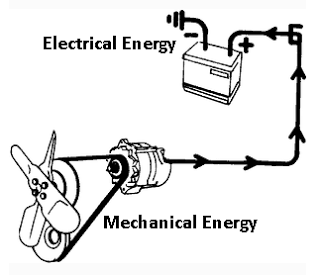
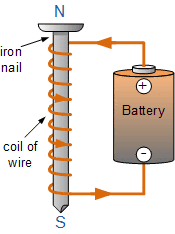
What do you need to turn an iron nail into an electromagnet?
Battery and string
Battery, pencil and wire
Battery and wire
Peanut butter, lampshade, hand sanitizer

Why did this simple electric motor work?
The current from the battery induces a magnetic field in the copper loop, turning it into an electromagnet that repels from/attracts to the permanent magnet
The electromagnet on top of the battery pulls on the magnetic copper wire
The magnet induces a current in the copper loop which makes it rotate.
The magnetic field from the battery induces an electric current in the copper loop, turning it into an electromagnet that repels from/attracts to the permanent magnet
Electromagnetic induction occurs in a coil when there is a change in
electric field in the coil
magnetic field in the coil
voltage in the coil

Electricity is produced by using steam to _____________.

How are electromagnets different from permanent magnets?
magnets can be turned on/off
you can turn an electromagnet on/off
magnets are more powerful
magnets have a North and South pole
What two forces are required for generators and electric motors to work?
magnetism and thermal
electricity and thermal
electricity and magnetism
magnetism and radiant
A device that transforms electrical energy to mechanical energy is a
generator
motor
transformer
magnet
A device that transforms mechanical energy to electrical energy is a
generator
motor
transformer
magnet
Unlike an electromagnet, a permanent magnet
does not need electricity to work.
cannot lift heavy objects and release them.
can easily increase or decrease its magnetic field.
can shut down its magnetic field with the flip of a switch.
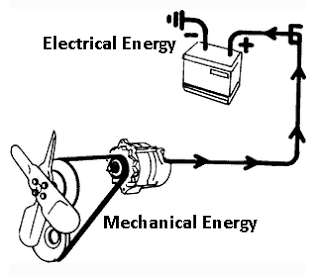
In an electric generator, the energy transformation begins as ----
electrical and becomes chemical
mechanical and becomes electrical
electrical and becomes mechanical
mechanical and becomes chemical
Increasing the amount of current flowing through the wire.
Inserting a wooden core inside the coil
Changing the direction of the current
Decreasing the number of coils of wire

What must the student do in the picture, in order to induce electricity and move the the galvonometer
nothing
move the magnet
add more loops of wire
unplug the galvnonmeter
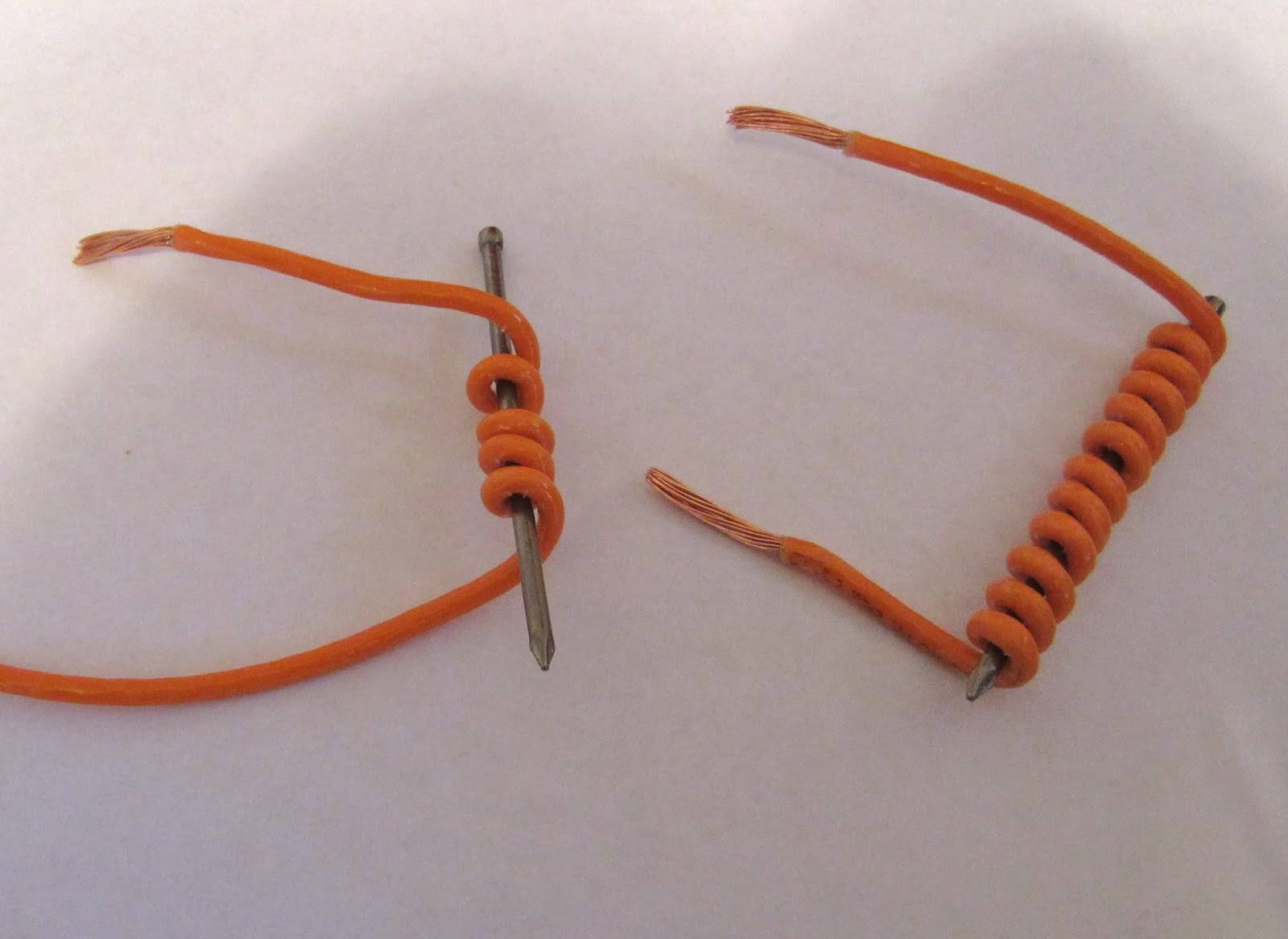
What can you do to make electromagnets stronger?
Increase number of coils of wire.
Increase number of batteries used.
Both A and B.
Neither A nor B.
In an electrical generator, the energy transformation begins as ___________ and becomes ____________.
mechanical; electrical
electrical; mechanical
electrical; chemical
mechanical; chemical
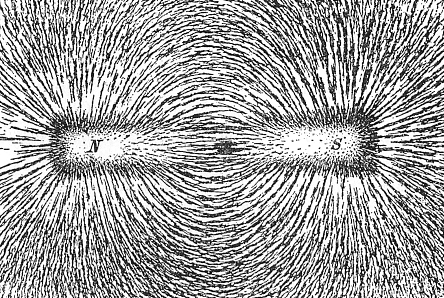
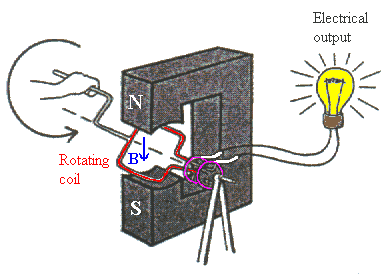
What would happen if you broke a bar magnet into 8 pieces?
You would have 8 half magnets
You would have 4 complete magnets
You would have 8 complete magnets
They wouldn't be magnets anymore
A transformer actually transforms
voltage
magnetic field lines
generators into motors
A device that transforms electric energy to mechanical or kinetic energy is a
generator
motor
transformer
magnet
A device that transforms electrical energy to mechanical energy is a
generator
motor
transformer
magnet
How are electromagnets different from permanent magnets?
magnets can be turned on/off
you can turn an electromagnet on/off
magnets are more powerful
magnets have a North and South pole

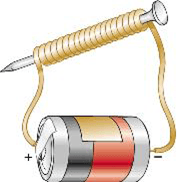
What device is shown in the picture?
Generator
Motor
Transformer
Circuit
Why did this simple electric motor work?
The current from the battery induces a magnetic field in the copper loop, turning it into an electromagnet that repels from/attracts to the permanent magnet
The electromagnet on top of the battery pulls on the magnetic copper wire
The magnet induces a current in the copper loop which makes it rotate.
The magnetic field from the battery induces an electric current in the copper loop, turning it into an electromagnet that repels from/attracts to the permanent magnet

What conclusion can you draw from this graph?
As current increases, magnetic strength decreases.
As current increases, magnetic strength increases.
As current decreases, magnetic strength increases.
There is no relationship between current and magnetic strength.

