
 Worksheets
C3 GRAVITY
Total questions: 135
Worksheet time: 2hrs 3mins
Calculate the gravitational force between two objects when they are 0.750m apart. Each object has a mass of 5.00kg.
2.96x10⁻⁷N
3.00x10⁻⁶N
2.22x10⁻⁹N
2.23x10⁻⁸N
What would the force between them be if the distance between them were doubled?

Two spherical objects have masses of 8000 kg and 1500 kg. Their centers are separated by a distance of 1.5 m. Find the gravitational attraction between them
5.4 X 10⁻⁴ N
1.2 X 10⁷ N
3.6 X 10⁻⁴ N
5.33 N
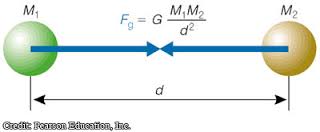
Which configuration will result in the greatest gravitational force?
small masses far apart
large masses far apart
small masses close together
large masses close together

The sun is the anchor point of our solar system because of
the gas Hydrogen
its small density
its huge mass
its location


What is the value of gravitation constant...
3×10⁸ ms−1
6.67 ×10⁻¹¹ Nm2kg−2
6.63×10⁻⁹ Nm2

Newton's Law of Universal Gravitation affects
All objects with mass in the known universe
All objects and empty space in the known universe
Thoughts and Ideas
Only things that are the color red
The gravitational pull is __________ proportional to the distance between two objects
conversely
directly
pyrotechnically
inversely
Which is the formula for Newton's Law of Universal Gravitation?
F = G * m1m2 / r
F = G * m1m2 / r2
F = G * m1m2 / 2r
F = m1m2 / 2r
The distance between the Earth and the Moon centres is 3.8 × 10⁸ m. The mass of the Earth is, me= 5.97 × 1024 kg
and the mass of the Moon is, mm = 7.36 × 10²² kg. What is the gravitational force between the Earth and the Moon?
(G = 6.67 × 10⁻¹¹ N m-2 kg-2)
2.03 x 10²¹ N
2.03 x 10²⁰ N
4.03 x 10²⁰ N
4.03 x 10²² N
The mass of the Sun is 2.0 × 1030 kg and the mass of the Earth is, me = 5.97 × 1024kg. The distance from the Earth is 1.50 × 10¹¹km. What is the gravitational force between the Sun and the Earth?
(G = 6.67 × 10⁻¹¹ N m-2 kg-2)
1.54 x 10²² N
2.54 x 10²² N
3.54 x 10²² N
4.54 x 10²² N
A rocket of 2.5 x 10⁴ kg moves from Earth to the moon. The mass of the Earth is me = 5.97 × 1024kg. Calculate the Earth’s gravitational force on the rocket when its distance from the Earth is 1.0 x 10⁹ m. (G = 6.67 × 10⁻¹¹ N m-2 kg-2)
9.95 N
8.95 N
10.95 N
9.81 N
Newton’s Universal Law of Gravitation states that the gravitational force between two objects is directly proportional to the product of masses of the two objects and inversely proportional to
distance between the two objects.
square of the product of the body’s radii.
square of the distance between the centres of the two objects.
cube of the distance between the centres of the two objects.
If the distance between two particles is doubled, what
happened to the gravitational force between them?
Is reduced to one-fourth of the original value
Is reduced to half of the original value
Becomes double
Becomes four times
Which of the following can be applied by the Universal Law of Gravitation?
The planets around the Sun
The Earth and the moon
The Earth and the apple
Any pair of bodies


If m1 = 2 kg, m2 = 9 kg, and r = 3 m , then what is the magnitude of the initial acceleration of m2?
2m2G
4m2G
m22G
m24G

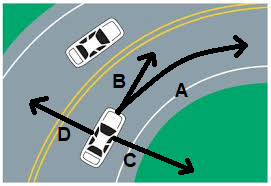
A car is rounding a bend as shown in the diagram. Which arrow correctly shows the direction of the cars velocity?
A
B
C
D
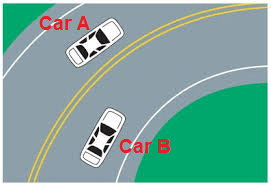
If car A and car B are both traveling at the same speed, which will require a higher centripetal force?
Car A
Car B
They have the same centripetal force
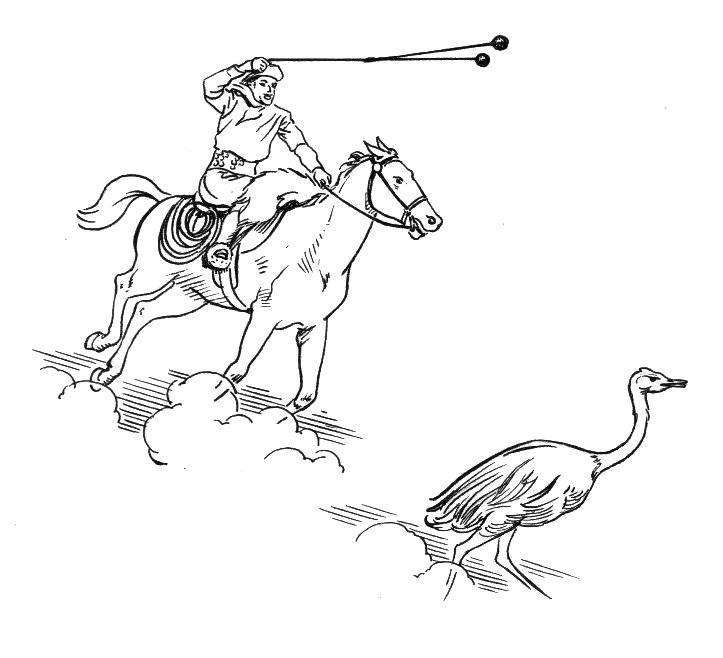
A bola is an old hunting instrument. If three rocks with a combined mass of 0.75 kg are spun at a speed of 20 m/s with a radius of 0.5 m, how much centripetal force is required to keep them spinning.
600 N
45 N
30 N
400 N

moving or tending to move toward a center...
centripetal force
centrifugal force
Tangent
Curvature

Why does velocity happen when going in a circle even if you are going the same speed?
The direction around the circle changes at every point.
Velocity does not change
Because direction is the same around the circle
Neither

If velocity increases force will....
increase because they have a direct relationship
increase because they have a inverse relationship
decrease
both
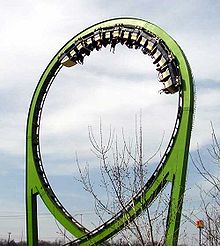
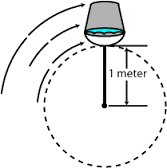

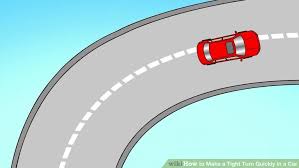
A 10kg car travels at a constant speed of 20.0 m/s around a horizontal circular track. Which diagram correctly represent the direction of the car's velocity (v) and the direction of the centripetal force (Fc) acting on the car at a particular moment?



F = Gm1m2/d2.
What will happen to the gravitational force of a satellite if the mass and the distance from Earth’s center is doubled?
F = Gm1m2/d2.
G=6.67x10⁻¹¹ NM2/KG2
Calculate the force between two objects that have masses of 70 kilograms and 100 kilograms separated by a distance of 1 meter. Use “G” for the Gravitational constant.

Kepler's 3rd law tell us that __ would be dependent on __.
orbital period ; distance
distance ; orbital period

The diagram below shows a moon revolving around a planet in an elliptical orbit. At which position is the moon traveling fastest?
location 1
location 2
location 3
location 4

The diagram below shows a moon revolving around a planet in an elliptical orbit. At which position is the moon traveling slowest?
location 1
location 2
location 3
location 4
A year on Jupiter is 4,344 days long. This tells you how long it takes
Jupiter to orbit the sun.
Jupiter to rotate one time on its axis.
the sun to orbit Jupiter.
Earth to orbit Jupiter.
What causes Earth’s year to be shorter than Jupiter’s year?
the gravitational pull of Jupiter’s moons
the shape of Earth’s orbit around the Sun
the distance between Earth and the Sun
the mass and density of Jupiter
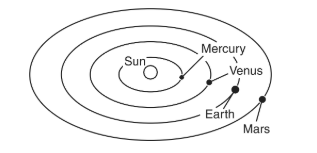
Which planet will take the least amount of time to revolve around the Sun?
Mercury
Venus
Earth
Mars

Which planet will take the most amount of time to revolve around the Sun?
Mercury
Venus
Earth
Mars
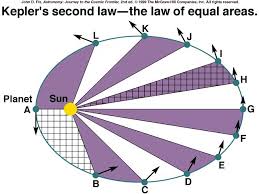
Which statement best describes Kepler’s 2nd Law of Planetary Motion?
Planets revolve around the sun over equal areas in equal time intervals.
Planetary orbits are in the shape of an ellipse.
A planet’s orbital period is proportionate to its distance from the sun.
What unit to we usually use to to measure a planet's orbital period?
light year
year
day
astronomical unit
What this means is that if a satellite moves away from what it is orbiting,

Which of the following shows correctly the relationship between the period of orbit, T and radius of orbit, r, of a planet?
A
B
C
D

Diagram shows the planet Saturn with its four satellites. R and T are orbital radius and orbital period of satellites respectively.
Which of the following statements is true?
the orbital periods of all the satellites are the same.
The force on the satellite is tangential to the orbit
the attractive force on each satellite is directly proportional to R21
R2T3 is constant for all satellites.
What is the reason for the motion of the moon on its orbit?
The gravitational force exerted on the Earth by the moon
The gravitational force exerted by the sun
The gravitational force exerted by the planets
The gravitational force exerted on the Moon by the earth
The period of geostationary artificial satellite is
24 hours
6 hours
48 hours
12 hours
If r represents the radius of the orbit of a satellite of mass m moving round a planet of mass M the velocity of the satellite is given by
V=(rGM) ,
v2 = rGMm
v=r2GMm
v2 = RgM
Kepler's third law is represented by the following equation:
Hukum Kepler ketiga ditunjukkan oleh persamaan:


The period of the Moon's orbit is 27.0 days. The radius of the Moon's orbit is 3.8 ×10⁸ m. The period of a geostationary satellite is 1 day. What is the radius of the geostationary satellite's orbit.
4.2 ×10⁷ m
5.4 ×10⁷ m
6.6 ×10⁷ m
8.5 ×10⁷ m
The accelerations due to gravity on the surfaces of two planets are equal in magnitudes if
mass
radiusmass
radius2mass
radius3mass
Planets orbit the sun in a shape called an ellipse.
Kepler's 1st Law
Kepler's 2nd Law
Kepler's 3rd Law
Planets travel faster when they are closer to the sun.
Kepler's 1st Law
Kepler's 2nd Law
Kepler's 3rd Law

The areas swept by an invisible line between the sun an the earth will be
larger if the earth moves for the same amount of time
equal if the earth moves for the same amount of time
smaller if the earth moves for the same amount of time
What causes the sun to appear to rise, move across the sky, and set each day
earth's orbit around the sun
revolution of the moon around the earth
rotation of the sun
rotation of the earth
Astronauts live in the ____________________ and conduct experiments.
International Space Room
International Space Station
International Space Rocket
International Space House
The velocity a rocket must achieve to establish an orbit around another object in space
Orbit Velocity
Velocity
Space shuttle
probe
The velocity a rocket must reach to escape from a planet or moons gravitational pull
Vacuum
Satellite
Escape velocity
Geosynchronous orbit
Calculate the escape velocity of a satellite in an orbit 300 km above Earth’s surface. Given G = 6.67 x 10^-11 N m^2 kg^-2, radius of earth is 6370 km and mass of the earth is 5.97 x 10^24 kg.
7.73 km s^-1
10.9 km s^-1
36.4 km s^-1
244 km s^-1
Which of the following is true about non-geostationary satellites?
Its orbital period around the earth is one day.
It is at a height of (35000-36000) km above the equator of surface of the earth.
Example of the satellites are GPS.
It can be in an orbit of which is very close to the surface of the earther or very further away from the surface of the earth.
Example of the satellites are communication satellites.

Two satellites orbit a moon. Satellite A and Satellite B. Satellite B is twice as far away from the moon. Its speed should be ____
half as much as the speed of A
less than the speed of A but not exactly half as much
twice as great as the speed of A
greater, but not twice as great as A

A satellite orbits a moon at radius r, if the moon were to gain a significant amount of mass from asteroid collisions, the speed of the satellite will ___
increase
decrease
remain unaffected
depends on the mass of the satellite

A space donut orbits a planet in an elliptical orbit... The donut is moving the SLOWEST at ____ (see image)
r1
r2
it is the same speed at every part of its orbit
none of the above
Man-made satellites are launched into space using __________.
airplane
jetplane
rockets
balloons
Man-made satellite is __________.
an object that is revolve around the Sun
an object that is placed in orbit around the Earth
an object that is launched to the Moon
an object that is revolve around the Earth
The velocity a rocket must reach to escape from a planet or moons gravitational pull
Vacuum
Satellite
Escape velocity
Geosynchronous orbit
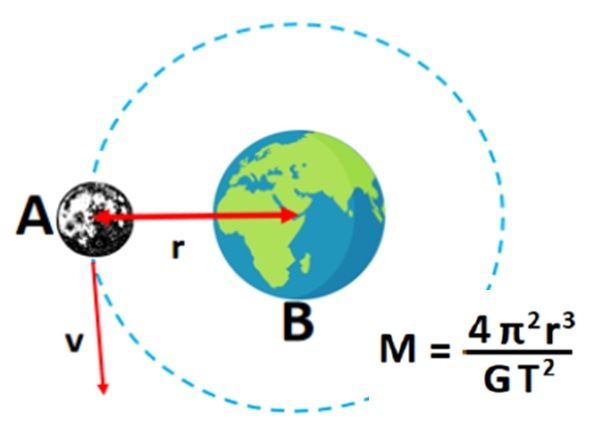
M represented in the formula is the mass of...
M di dalam formula adalah jisim untuk...
A
B
Which of the following shows the formula to calculate escape velocity of an object from the surface of the Earth?
Antara berikut yang manakah menunjukkan formula untuk mengira halaju lepas sesuatu objek dari permukaan Bumi Bumi?


Two satellites of equal mass are in circular orbit around a planet. Satellite b is twice as far out. Which feels a stronger gravitational force?
Satellite a
Satellite b
Both the same

Which arrow drops to the ground first?
A
B
Same time
The escape velocity of a 10g body from the earth is 11.2km/s.Ignoring air resistances, the escape velocity of 10kg of the iron ball from the earth will be
0.0112km/s
0.112km/s
11.2km/s
0.56km/s
Gravitational PE= (a) x mass
If g be the acceleration due to gravity at the earth surface, then what will be the increase in potential energy if object of mass m is raised by its radius R?
1/2mgR
2mgR
mgR
1/4mgR
Consider a body of mass m which needs to be moved from an orbit of radius 2R to 3R. What is the energy required
GMm/R
GMm/R2
GMm/6R2
GMm/6R
The escape velocity of a sphere of mass m from earth having mass M and radius R is given by
RGM
R2GM
2RGM
4GM/R
ve and vp denotes the escape velocity from the earth and another planet having twice the radius and the same mean density as the earth. Then
vp= ve
vp = 2ve
vp= 4 ve
2vp= ve
The escape velocity from the earth is about 11 km/second. The escape velocity from a planet having twice the radius and the same mean density as the earth, is
11km/s
5.6km/s
22km/s
55.6km/s


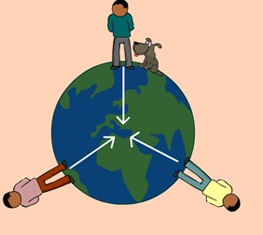

Which of the following is the most accurate description of "escape velocity"?
Escape velocity is the velocity needed to get away from the Earth's gravitational force.
Escape velocity is the velocity needed to get away from the Earth's gravitational force and is dependent upon the mass of the satellite.
Escape velocity is the velocity needed to get away from the Earth's gravitational force and not dependent upon the mass of the satellite.
Escape velocity is the velocity needed to get away from the Earth's gravitational force and not dependent upon the mass of the satellite but is dependent upon the geometric structure of the launch vehicle.

When in orbit around the Earth, what is true about the relationship between a satellite's distance from the Earth's surface and its velocity in order for the satellite to stay in its orbit?
A satellite's distance and velocity are inversely proportional; that is, the satellite must travel more quickly to stay in orbit.
A satellite's distance and velocity are directly proportional; that is, the satellite must travel less quickly to stay in orbit.
A satellite's velocity is not affect by its distance from the Earth's surface.
The distance from the Earth's surface is only dependent upon the mass of the satellite.

As an object moves further from the surface of the Earth, what happens to its mass?
The mass of the object will not vary as it moves further from the surface of the Earth
The mass of the object will decrease as it moves further from the surface of the Earth.
The mass of the object will increase as it moves further from the surface of the Earth.

According to Einstein's Theory of Relativity, which of the most accurately describes time?
Time is a human construct and is constant
Time is a human construct and varies depending upon where an object is in space
Time is relative and varies depending upon how fast an object are traveling
Time is relative and varies depending upon how fast an object is traveling; the faster an object is traveling the slower time passes

Finish the sentence: "The greater the thrust, the _________ the rocket's velocity."
smaller
greater

This image represents (select all that apply)
orbital velocity
escape velocity
an elliptical (oval) orbit
a perfectly circular orbit

