wayground logo

Free Printable Worksheets

Font size

S
M
L
XL
Worksheets

Quiz Bowl Review (Physics)

Total questions: 140

Worksheet time: 2hrs 12mins

Name
Class
Date
1.
If a ball of cheese is fired into frictionless space, the amount of force needed to keep it going equals
a)
twice the force with which it was fired
b)
the same amount of force with which it was fired
c)
1/2 the force with which it was fired
d)
zero, since no force is requires to keep it moving. 
2.
One object has twice as much mass as another object. The first object also has also twice as much...
a)
velocity
b)
gravitational acceleration
c)
inertia
d)
all of these
3.
One object has twice as much mass as another object. The first object also has also twice as much...
a)
velocity
b)
gravitational acceleration
c)
inertia
d)
all of these
4.
What is the speed of an object that travels 20 meters in 4 seconds?
a)
80 m/s
b)
0.2 m/s
c)
5 m/s
d)
24 m/s
5.
If a 10 kilogram object accelerates suddenly at 15 m/s2, how much force was applied to the object?
a)
150 Newtons
b)
15 Newtons
c)
150 kilograms
d)
100 kilograms
6.
Which best explains why we are able to accelerate forward when starting to run?
a)
As one leg moves backward, it provides an equal and opposite force for the other foot to move forward.
b)
No acceleration takes place. Runners are always at a fixed velocity.
c)
The striking foot pushes backward against the ground. The friction with the ground provides an equal and opposite force forward.
d)
The runner's upper body quickly leans forward, causing the entire body to begin accelerating forward
7.
What law of motion does this picture represent 
a)
Newtons law of gravity 
b)
Newtons 1st law 
c)
Newtons 4th law
d)
Newtons 3rd law 
8.
What Newtons law does this picture represent
a)
Newtons 2nd law 
b)
Law of gravity 
c)
Newtons 1st law
d)
Newtons 5th law
9.
What is speed?
a)
how far you go
b)
how much distance is covered over a period of time
c)
how fast you accelerate
d)
the change in the location of a object
10.
What is velocity?
a)
the quickness of an object
b)
the location of an object
c)
acceleration
d)
speed in a specific direction
11.
An object that changes speed or direction or both (velocity) is said to be -
a)
accelerating
b)
speeding
12.
An object that changes speed or direction or both (velocity) is said to be -
a)
accelerating
b)
speeding
13.
What is happening to line D?
a)
Stationary
b)
Accelerating
c)
Constant fast speed; moving away from the starting position
d)
Slower steady speed; moving away from the starting position
14.
What is happening at E?
a)
Stationary
b)
Accelerating
c)
Fast steady speed; moving away from the starting position
d)
Steady speed; returning to start position
15.
What does this graph represent?
a)
Constant Speed
b)
Acceleration
c)
Deacceleration
d)
Not moving
16.
If a ball of cheese is fired into frictionless space, the amount of force needed to keep it going equals
a)
twice the force with which it was fired
b)
the same amount of force with which it was fired
c)
1/2 the force with which it was fired
d)
zero, since no force is requires to keep it moving. 
17.
One object has twice as much mass as another object. The first object also has also twice as much...
a)
velocity
b)
gravitational acceleration
c)
inertia
d)
all of these
18.
What is the speed of an object that travels 20 meters in 4 seconds?
a)
80 m/s
b)
0.2 m/s
c)
5 m/s
d)
24 m/s
19.
Which best explains why we are able to accelerate forward when starting to run?
a)
As one leg moves backward, it provides an equal and opposite force for the other foot to move forward.
b)
No acceleration takes place. Runners are always at a fixed velocity.
c)
The striking foot pushes backward against the ground. The friction with the ground provides an equal and opposite force forward.
d)
The runner's upper body quickly leans forward, causing the entire body to begin accelerating forward
20.
What law of motion does this picture represent 
a)
Newtons law of gravity 
b)
Newtons 1st law 
c)
Newtons 4th law
d)
Newtons 3rd law 
21.
What Newtons law does this picture represent
a)
Newtons 2nd law 
b)
Law of gravity 
c)
Newtons 1st law
d)
Newtons 5th law
22.
The roller coaster has the most kinetic energy at position-
a)
W
b)
X
c)
Y
d)
Z
23.
If a 10 kilogram object accelerates suddenly at 15 m/s2, how much force was applied to the object?
a)
150 Newtons
b)
15 Newtons
c)
150 kilograms
d)
100 kilograms
24.
What is speed?
a)
how far you go
b)
how much distance is covered over a period of time
c)
how fast you accelerate
d)
the change in the location of a object
25.
What is velocity?
a)
the quickness of an object
b)
the location of an object
c)
acceleration
d)
speed in a specific direction
26.
An object that changes speed or direction or both (velocity) is said to be -
a)
accelerating
b)
speeding
27.
What is the average speed of this object's trip?
Think about: the distance the object traveled away from its point of origin.
a)
0.42 m/s
b)
60 m/s
c)
12 m/s
d)
5 m/s
28.
What is happening at A?
a)
Stopped
b)
Accelerating
c)
Slower steady speed; moving away from the starting position
d)
Steady speed; returning to start position
29.
How much time did it take for an animal to run 20 miles if it ran at 10 miles/hour?
a)
2 hours
b)
200 hours
c)
0.5 hours
d)
30 hours
30.
Shona cycles at an average speed of 8km/h. How far has she traveled if she cycles for 4 hours?
a)
55km
b)
32km
c)
43km
d)
32miles
31.
The graph represents
a)
no motion
b)
Constant velocity
c)
Acceleration
d)
negative acceleration
32.
Find the velocity of a plane that traveled 3000 miles west in 5 hours.
a)
65 mph west
b)
6 mph west
c)
600 mph west
d)
6000 mph west 
33.
It took 3.5 hours for a train to travel the distance between two cities at a velocity of 120 miles/hr.  How many miles lie between the two cities? 
a)
34 miles 
b)
420 miles
c)
120 miles 
d)
360 miles 
34.

After a game, she often makes a sketch of the moves that were successful. The dotted line on the sketch shows the direction the ball was moving when she kicked it. The direction if her kick is the solid arrow. How did the motion of the ball change when Mary kicked it?

a)

The ball changed direction and its speed increased.

b)

The ball came to a complete stop.

c)

The ball continued moving in the same direction and its speed increased.

d)

The ball continued moving in the same direction and its speed decreased.

35.

What objects motion would most likely be represented by the graph?

a)

The movement of a football being thrown down the field.

b)

An airplane touching down on a runway.

c)

The movement of a car at the start of a race.

d)

A baseball pitched and then hit for a homerun.

36.

How are speed and velocity different?

a)

Speed included direction.

b)

Speed indicates momentum.

c)

Velocity includes momentum.

d)

Velocity includes direction.

37.

Betty Sue pulls on a box with a force of 18 N to the right. Robert pulls the same box from the opposite side with a force of 20 N to the left. What will be the result?

a)

The box will move up because of the combined force of 38 N.

b)

The box will move to the left because of a net force of 2 N.

c)

The box will move to the right because of a net force of 2 N.

d)

The box will remain at rest.

38.

Sometimes tectonic plates do not move easily passed one another, and the plates become stuck. Forces build up, and when the plates finally move, tension is released, as shown. The sudden movement of the plates is caused by:

a)

The mass of the plates

b)

Unbalanced forces

c)

Gravitational forces

d)

Centripetal forces

39.

A 850 kg truck travels quickly through a red light with an acceleration of 9.4 m/s squared. What is the average net force in newtons that the truck experiences?

a)

7990 N

b)

90.43 N

c)

7990 kg

d)

90.43 kg

40.

Which of the following best describes the velocity of an object?

a)

70 m/s2

b)

70 m west

c)

70 m/s west

d)

70 m/s

41.

A child jumps off of a sled toward the west while the sled is stopped at the bottom of a hill. Based on the law of action-reaction, in what direction will the sled most likely move as the student jumps off?

a)

West

b)

South

c)

North

d)

East

42.

In order to ride a bicycle up a hill with increasing speed---

a)

it is impossible to ride up a hill with increasing speed.

b)

The rider's pedal force must be equal to the friction and the force of gravity.

c)

The rider's pedal force must be greater than friction and the force of gravity.

d)

The rider's pedal force must be less than friction and the force of gravity.

43.

According to Newton't first law (law of intertia) ---

a)

When you drop a tennis ball it will bounce back

b)

when you pull a table cloth out from under dishes the dishes will stay on the table.

c)

When you kick a soccer ball the ball pushes back on your foot.

d)

when you jump off a sled it will move in the opposite direction you jump.

44.

A small car and a large semi-truck with different masses travel at the same speed down a hill toward a stop sign. What will happen when both cars apply brakes at the same time?

a)

The semi-truck with the larger mass will maintain its velocity while traveling down the hill.

b)

The semi-truck with the larger mass will less inertia than the small car with the smaller mass.

c)

The car with the smaller mass will take longer to stop than the semi-truck with the larger mass.

d)

The car with the smaller mass will require less frictional force (brakes) than the semi-truck with the larger mass in order to stop.

45.

A man hits a pie pan with an egg sitting on top of a toilet paper roll and the egg fell straigt into the cup of water beneath it. Which one of these best explains why the egg fell straight down into the cup instead of staying on the toilet paper roll and pie pan?

a)

Moving the pie pan and toilet paper roll applied an action force to the egg. Since the pie pan was gon, gravity applied a reaction to the egg.

b)

The egg was at rest until the pie pan and toilet paper roll were removed, so it remained at rest in the same location. Once the pie pan was gone, the unbalanced force of gravity caused the egg to fall.

c)

The pie pan and toilet paper roll had less mass than the egg, so a smaller force of gravity acted on the pie pan and toilet paper roll. The larger force of gravity on the egg made it fall.

d)

The acceleration of the egg falling into the cup was equal and opposite to the acceleration of the pie pan and toilet paper roll.

46.

Susan plays a computer game where he designs rollerA coasters for a virtual amusement park. Each diagram below illustrates a path for the roller coaster car to travel. Which two tracks should Susan choose if she wants the roller coaster car to have only kinetic energy left.

a)

A & C

b)

B

c)

C

d)

D

e)

B & D

47.

What type of motion would NOT be described by the graph?

a)

Riding a bike to school and back.

b)

Driving to the store and then back.

c)

skateboarding to the park and back

d)

Shooting a bullet at a target on the shooting range.

48.

The Earth orbits the Sun. During the course of this revolution, the Earth's speed remains constant at 107,000 km/h. Which graph BEST illustrates the moon's speed over time?

a)

A

b)

B

c)

C

d)

D

49.

Roller coasters use potential and kinetic energy to move carts along the track. Which selection below organizes the points of energy from LEAST TO GREATEST?

a)

N, K, H, D, C

b)

L, J, H, D, B

c)

N, K H, D, A

d)

M, I, G, E, A

50.

name one type of collision::

a)

inertia

b)

elastic

c)

plastic

51.

what is inelastic collision?

a)

conserved energy

b)

energy is not conserved

52.

what is an example of elastic collision?

a)

nail in wood

b)

basketball hitting ground

53.

example of inelastic collision:

a)

baseball hitting a ball

b)

jumping in water

c)

a bullet hitting wood

54.

what is the formula for momentum?

a)

p=vm

b)

p=mv

c)

i=mv

55.

momentum can be transferred from one object to another

a)

true

b)

false

56.

when objects collide some momentum is lost:

a)

false

b)

true

57.

a tiny bullet can have more momentum than a huge truck:

a)

false

b)

true

58.

solve for momentum! .004kg and 600m/s

a)

2.0

b)

2.4

59.

solve for momentum! .14kg and 30m/s

a)

4.2

b)

4.8

60.

solve for momentum! 3,000kg and 8,000m/s

a)

23,000,000

b)

24,000,000

61.

what is the formula for impulse?

a)

F=IT

b)

I=FT

62.

A FOOTBALL PLAYER KICKS THE BALL WITH A FORCE OF 50N. FIND THE IMPULSE ON THE BALL IF HIS FOOT STAYS IN CONTACT WITH THE FOOTBALL FOR 0.01S

a)

0.4N

b)

0.5N

63.

A FOOTBALL PLAYER KICKS THE BALL WITH A FORCE OF 40N. FIND THE IMPULSE ON THE BALL IF HIS FOOT STAYS IN CONTACT WITH THE FOOTBALL FOR 0.02S

a)

0.8S

b)

0.9

64.

A FOOTBALL PLAYER KICKS THE BALL WITH A FORCE OF 150N. FIND THE IMPULSE ON THE BALL IF HIS FOOT STAYS IN CONTACT WITH THE FOOTBALL FOR 0.023S

a)

4S

b)

3S

65.

A FOOTBALL PLAYER KICKS THE BALL WITH A FORCE OF 190N. FIND THE IMPULSE ON THE BALL IF HIS FOOT STAYS IN CONTACT WITH THE FOOTBALL FOR 0.28S

a)

52S

b)

53S

66.

FOR EVERY REACTION THERE IS AN OPPOSITE OR EQUAL REACTION:::

a)

1ST LAW

b)

3RD LAW

67.

SI unit of mass is_______________

a)

kilogram

b)

newton

c)

metre

d)

none

68.

doctor uses ____________thermometer

a)

clinical

b)

laboratory

c)

chemical

d)

none

69.

____________is the fundamental quantity

a)

length

b)

area

c)

volume

d)

none

70.

Physical quantity are_______________

a)

quantity that are being measured

b)

comparing unknown quantity with quantity

c)

dependent on each other

d)

none

71.

SI unit of time is_____________

a)

second

b)

metre

c)

kg

d)

none

72.

________________is the device used to measure perimeter of play ground

a)

beam balance

b)

measuring tape

c)

ruler

d)

none

73.

mass of an apple is _____________

a)

beam balance

b)

measuring tape

c)

ruler

d)

none

74.

Measurement=nxu, n represents________

a)

unit

b)

magnitude

c)

physical quantity

d)

none

75.

characteristics of units are________

a)

convinient in size

b)

universally accepted

c)

comparing quantity

d)

both 1 and 2

76.

____________is a million times smaller than the thickest human hair

a)

Atom

b)

Cell

c)

Sand

d)

Compound

77.

Particles possess ___________energy due to constant random motion

a)

Potential

b)

Chemical

c)

Kinetic

d)

Electric

78.

An example of plasma state

a)
b)
c)
d)
79.

Which of the following is highly compressible

a)

Wool

b)

Milk

c)

Sanitizer

d)

Oxygen

80.

Mercury does not wet glass because its adhesive force is greater than its cohesive force.

a)

True

b)

False

81.

Unit of Latent heat is

a)

Jkg

b)

kg/J

c)

J/kg

d)

J

82.

Examples for latent heat of fusion ( there could be more than 1 correct answers)

a)
b)
c)
d)
83.

The specific latent heat of fusion of ice is 336000 J/kg

a)

True

b)

False

84.

During a change in state of matter, the amount of heat energy absorbed causes a change in temperature

a)

True

b)

False

85.

Soft drinks are cooled faster by placing them in ice rather than in water at 0oC.

a)

True

b)

False

86.

A burn caused by boiling water is more serious than a burn caused by steam.

a)

True

b)

False

87.

Icebergs do not melt due to

a)

High latent heat of vaporisation of ice

b)

Low latent heat of Fusion of ice

c)

High latent heat of Fusion of ice

d)

Low latent heat of vaporisation of ice

88.

The picture is an example of

a)

Evaporation

b)

Deposition

c)

Sublimation

d)

Condensation

89.

Jack keeps a bowl of water outside in the morning, in the afternoon he realises that the level of water in the bowl has reduced. This is due to

a)

Boiling

b)

Freezing

c)

Evaporation

d)

Sublimation

90.

Boiling ( More than 1 answer could be correct)

a)

is a fast process

b)

Causes cooling

c)

Takes place only on the surface of the liquid

d)

Is accompanied by formation of bubbles

91.

This process is called

a)

Melting

b)

Freezing

c)

Sublimation

d)

Deposition

92.

If the melting point of a substance is 30oC, then it continues to remain at that same temperature until the entire process of melting is complete

a)

False

b)

True

93.

Evaporation happens at a range of temperatures higher than the boiling point

a)

False

b)

True

94.

Observe the change of state diagram. If the object is solid at P, Then its boiling point is

a)

T20C

b)

T10C

c)

00C

d)

None of the them

95.

Observe the diagram again, Freezing is taking place at

a)

Q to R

b)

S to T

c)

T to S

d)

R to Q

96.
Which of the following would you hear as a low pitched sound? 
a)
sound wave with a frequency of 50 Hz
b)
sound wave with frequency of 10,000 Hz
c)
sound wave with an intensity of 10 dB
d)
sound wave with an intensity of 100 dB
97.
What does pitch depend on?
a)
amplitude 
b)
frequency
c)
intensity 
d)
volume of sound
98.
When you make sounds by plucking a rubber band, you make the rubber band move back and forth very quickly.  This movement is called.
a)
loudness
b)
amplitude
c)
pitch
d)
vibration
99.
A student holds two vibrating objects.  Object A is vibrating faster than object B.  Which statement is true?
a)
A is louder than B
b)
B is louder than A
c)
A will have a higher pitch than B
d)
B will have a higher pitch than A
100.
If you roll a large sheet of paper into a funnel, you can hear the sound better.  This process of increasing the loudness of a sound is called
a)
measuring a wave
b)
absorption
c)
reflection
d)
amplification
101.
Which of the following would produce the highest pitch?
a)
phone
b)
whistle
c)
truck horn
d)
dog's growl
102.
Which of the following would produce the loudest sound?
a)
jet plane
b)
pin falling
c)
doorbell
d)
whisper
103.
How is sound produced by these instruments?
a)
Striking the surface
b)
vibrating columns of air
c)
plucking the strings
104.

Sound travels FASTEST through which of these materials?

a)

A type of gas, like helium

b)

Empty space

c)

A metal such as iron

d)

Water

105.
Sound Waves Move faster in what temperature 
a)
Heat 
b)
Cold
c)
Doesn't Matter
d)
Both
106.
Which of the following does sound depend on?
a)
type of medium
b)
distance to the medium
c)
height of the medium
d)
vibration of the medium
107.
A disturbance that travels through a medium as a longitudinal wave
a)
sound
b)
wavelength
c)
pitch
d)
frequency
108.

The ear does which of the following jobs:

a)

Collects sound

b)

Processes sound

c)

Sends sound signals to the brain

d)

All of the above

109.

Ears help you keep your balance:

a)

True

b)

False

110.

Which of the following is a good way to take care of your ears?

a)

Wear earplugs at loud music concerts

b)

Don’t poke your ears with cotton swabs

c)

Keep the volume down on your music player

d)

All of the above

111.
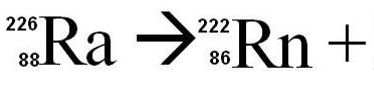
Complete the nuclear equation and determine the type of decay that is occurring in this reaction. 
a)
alpha
b)
beta
c)
gamma
d)
none
112.
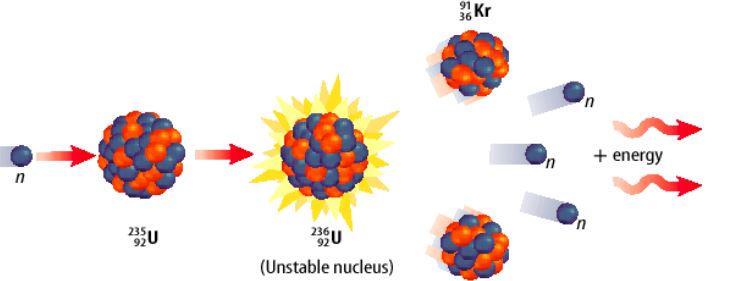
This is an example of...
a)
Fission  reaction
b)
Fusion reaction
c)
Decomposition reaction
d)
Decay
113.
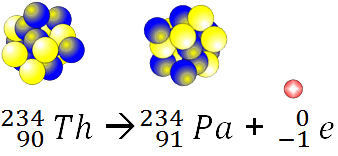
Which type of nuclear radiation is being emitted here?
a)
Alpha
b)
beta
c)
gamma 
d)
none
114.
Isotopes of the same element have different ____________. 
a)
 numbers of protons  
b)
numbers of electrons
c)
 symbols 
d)
numbers of neutrons
115.
How many protons does gold atom have?
a)
197
b)
79
c)
118
d)
276
116.
What is the mass of an alpha particle?
a)
1
b)
2
c)
3
d)
4
117.
What is the definition of an isotope?
a)
An atom with different electron number to proton number
b)
An atom with different proton number from neutron number
c)
An atom with different number of protons from the periodic table
d)
An atom with a different number of neutrons from the periodic table
118.
What is emitted during Beta Radiation?
a)
A high-energy Electron.
b)
Protons.
c)
Neutrons.
d)
Nuclei
119.
TRUE or FALSE: gamma changes the atomic number.
a)
True
b)
False
120.
What is emitted during Alpha Radiation?
a)
A helium nuclei.
b)
A helium atom
c)
Gamma Rays.
d)
Positrons
121.
What is radioactive decay?
a)
The spontaneous breakdown of an atomic nucleus resulting in only energy release
b)
The spontaneous breakdown of an atomic nucleus resulting in only matter release
c)
The spontaneous breakdown of an atomic nucleus resulting in a release of energy and matter
d)
The decay of the use of radios and the increased use of televisions.
122.
When does radioactive decay occur?
a)
When the nucleus of an isotope is unstable
b)
When the nucleus of an isotope is stable
c)
When the electrons of an isotope are spinning
d)
When the electrons of an isotope are shared with another isotope
123.

What kind of force holds the nucleus together?

a)

Strong Nuclear Force

b)

Weak Nuclear Force

c)

Gravitational Force

d)

Electromagnetic Force

124.

Neutrons ......

a)

has positive electric charge with equal magnitude to that of an electron.

b)

has no net electric charge.

c)

has negative electric charge.

d)

orbiting the nucleus.

125.

What is the number of neutrons in Cesium?

a)

55 neutrons

b)

76 neutrons

c)

84 neutrons

d)

106 neutrons

e)

139 neutrons

126.

The atomic number of a given element is

equivalent to which of the following?

a)

Proton number in the nucleus

b)

Neutron number in the nucleus

c)

Sum of the protons and neutrons in the

nucleus

d)

Sum of the protons, neutrons and electrons

127.

If there are 146 neutrons in 238U, how many neutrons

are found in the nucleus of 235U?

a)

141

b)

143

c)

145

d)

147

128.

What is a beta particle made of?

a)

One proton

b)

A helium particle

c)

One electron

d)

One proton and one neutron

129.

Which of these processes describes a nuclear fusion reaction?

a)

A nucleus absorbs energy to produce lighter nuclei.

b)

A nucleus splits to produce energy and lighter nuclei

c)

Two nuclei bind together to produce energy and heavier nuclei.

d)

Two nuclei bind together to produce energy and a lighter nuclei.

130.

Of the main types of radiation emitted from naturally radioactive isotopes, which is the hardest to block?

a)

Alpha deca

b)

Gamma Decay

c)

Beta decay

d)

They are all blocked using the same method

131.
What is the speed of a cheetah that travels 112.0 m in 4.0 s?
a)
0.0357 m/s
b)
28 m/s
c)
0.036 m/s
d)
28.0 m/s
132.
You walk 10 meters to math class in 20 seconds. Your average speed is
a)
2 m/s
b)
0.5 m/s
c)
200 m/s
d)
5 m/s
133.
Alan travels 100 km in 5hrs. Find his average speed in km/h
a)
5km/hr
b)
10km/hr
c)
50km/hr
d)
20km/hr
134.

If a puppy runs across a park at a speed of 15 m/s. The puppy has a time of 5 seconds. How far did the puppy run?

a)

75 m

b)

30 m

c)

45 m

d)

105 m

135.
What equation do I use to calculate time?
a)
S = D/T
b)
T = D/S
c)
D=TS
136.
What equation do I use to calculate distance?
a)
S = D/T
b)
T = D/S
c)
D=TS
137.
What equation do I use to calculate speed?
a)
S = D/T
b)
T = D/S
c)
D=TS
138.
What is need to determine the speed of an object?
a)
distance and time
b)
distance and mass
c)
time and friction
d)
time and gravity
139.
Speed is equal to 
a)
Distance/Time
b)
Time/Distance
c)
Time x Distance
d)
Acceleration
140.
If a man runs at a speed of 70 m/s, and has a time of 30 s. What is the distance he ran?
a)
2100 m
b)
0.233 m
c)
2.33 m
d)
300m