
 Worksheets
Practice Cumulative
Total questions: 136
Worksheet time: 5hrs 19mins

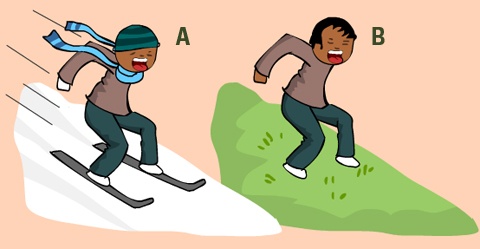
What does this picture represent
Force,magnetism,acceleration
Force, money, Apples
Force, Mass, Acceleration
Funny, monkeys, Arrive



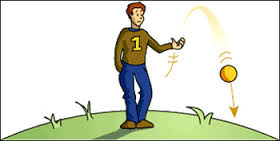
When a student runs and kicks a ball, they have applied an ___________ force to move the ball.
Balanced
Magnetic
Spring
Unbalanced
When the teacher rearranges the desks in the classroom, she must apply ____________ to push and pull the desks around.
acceleration
force
weight
magnets
Walking down the hall and speeding up when you turn and go down the stairs is an example of ____________.
acceleration
weight
gravity
friction
What Unit do we Measure Force in?
Newtons
Joules
Force
Kilograms
A 20 kg bike accelerates at 10 m/s2. what was the force
F = m x a
25 Newtons
20 Newtons
200 Newtons
10 Newtons
8 N to the left , and 4 N to the right. Find the net force. Is this balanced
12 N Right No
4 N Left No
12 N Right Yes
4 N Left Yes

What is this graph representing?
Constant Speed
Acceleration (speeding up)
Deceleration (slowing down)
No motion

? = mass x acceleration
or
? = m x a
is used to find
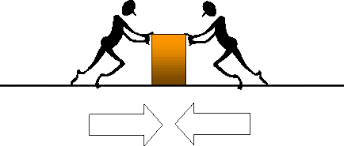

A squirrel sits on the ground and eats a donut. We know the forces on him must be balanced because...
Forces are always balanced
the squirrel is not accelerating
squirrels are projectiles
he's eating a donut

sum of forces acting on a particle or body.
Net force
Balnced
Acceleration
the action of one surface or object rubbing against another
Force
F=ma
Friction
What is inertia?
A property of matter which continues its existing state of rest or movement.
F = M x A
Getting faster, slower, or changing direction at a constant speed
Which is an example of the law of inertia?
When you let go of a balloon it flies away.
A soccer ball accelerates faster than a bowling ball when kicked.
Blood rushes from your head to your feet when quickly stopping on an descending elevator.
Your car has a mass of 2500 kg and a force of 5000 N. How fast will it accelerate?
1 m/s2
2 m/s2
3 m/s2
4 m/s2
What is the force of a baseball that has a mass of 142 kg and has an acceleration of 30 m/s2?
1 N
2 N
4260 N
3 N
A wagon in being pulled down the street. The wagon has a mass of 45 kg and is accelerating at a rate of 15m/s2. How much force must be exerted to move the wagon?
45 N
15 N
3 N
675 N
A water skier with a mass of 72 kg was being pulled by a boat that caused him to accelerate at 3 m/s2. Calculate the force of the boat pulling on the water skier.
4 N
216 N
24 N
218 N
A tow truck is pulling a car that has a mass of 564 kg. The tow truck is accelerating at a rate of 2 m/s2. What is the force required to pull the car?
282 N
564 N
1128 N
2 N
Box A has a mass of 796 kg. Box B has a mass of 522 kg. Which box will require more force to accelerate at 10 m/s2.
Box A
Box B
A person has a mass of 27 kg. They are being pulled in a wagon with a net force of 6 N. What is the acceleration of the person?
15 m/s2
8 m/s2
.22 m/s2
12 m/s2
What amount of force needs to be applied to a 20-kg bowling ball to give it an acceleration of 5 m/s2?
4 N
25 N
100 N
250 N

The masses of four objects are given in this table. If all of the objects have an acceleration of 2m/s2 , which will require the greatest force to move?
Object 1
Object 2
Object 3
Object 4
A shopping cart has a mass of 100 kg and is pushed with a force of 300 N. How much did the cart accelerate?
30, 000 m/s2
3 m/s2
600 m/s2
300 m/s2

An evil ewok threw a rock with a force of 24.6N and an acceleration of 6m/s2 at an innocent stormtrooper. What is the mass of the rock?
4Kg
41kg
4.1kg
46kg
If an object was accelerating at 10 m/s2, and a force of 10 newtons was required to accelerate it, what was the object's mass?
1kg
10kg
5kg
2kg
Which graph show a fast object


This graph has velocity on the vertical axis. The flat line means
The velocity is changing
The velocity is not changing
The object is not moving

Look at the bar graph. Can you tell what the bar graph measures?
Kilowatts used by appliances per day
Average Hours appliances were used per day
Number of hours each appliance was used per day
Hours appliance used monthly
Look at the bar graph. Can you tell what the bar graph measures?
Kilowatts used by appliances per day
Average Hours appliances were used per day
Number of hours each appliance was used per day
Hours appliance used monthly


The bar graph shows data about the pets owned by math students in four classes. One bar is missing from the graph. If the students have a total of 32 dogs, which bar shows the number of dogs Ms. Davalos's class has?


Which month had the greatest number of books read?
November
December
January
February
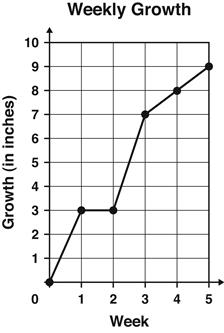
The graph shows the number of inches a plant grew each week.
Between which 2 weeks did the plant grow the MOST?
Week 1 and Week 2
Week 2 and Week 3
Week 3 and Week 4
Week 4 and Week 5

According to the graph, how many mice will be born in week 5 if the trend continues?
100
90
160
180

What amount of sales make the company $2000 in profit?
3000
6000
9000
12000

What percentage of students picked either Frozen or Wall-E as their favorite Disney movie?
42%
14%
47%
You can't answer this question from the graph.

This graph shows the number of vacation days earned for each month worked.
How many days will Cole earn after working for 6 months?
7
9
10
12

How many students have more than 1 sibling?
8
6
4
10

How many students completed the survey?
12
11
25
22

How much would 1 pound of fudge cost at the store?
$2
$4
$6
$3
How much would 0.25 of a pound of fudge cost at the store?
$2
$0.50
$0.25
$1

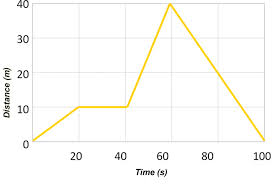
The graph shows the movement of an object.
How long did it take this object to travel 10 m?
0 s
10 s
15 s
20 s
Hypothesis: If I start jogging after school each day, then I will be able to jump higher.
Rewritten as a question: What is the effect of jogging on my high jump?
What is the IV (independent variable)?


Hypothesis: If I start jogging after school each day, then I will be able to jump higher.
Rewritten as a question: What is the effect of jogging on my high jump?
What is the DV (dependent variable)?


Hypothesis: If I start jogging after school each day, then I will be able to jump higher.
Rewritten as a question: What is the effect of jogging on my high jump?
What is a control/constant from the above?
"the effect"
"my high jump"
"after school each day"
Hypothesis: If I start jogging after school each day, then I will be able to jump higher.
Rewritten as a question: What is the effect of jogging on my high jump?
Bonus: what is another possible control in this experiment?
Hypothesis: If my cousin studies after school each day, then she will show more confidence during class.
Rewritten as a question: What is the effect of studying on her confidence (from what people can tell)?
What is the IV (independent variable)?


Hypothesis: If my cousin studies after school each day, then she will show more confidence during class.
Rewritten as a question: What is the effect of studying on her confidence (from what people can tell)?
What is the DV (dependent variable)?
studying
confidence
school
Hypothesis: If my cousin studies after school each day, then she will show more confidence during class.
Rewritten as a question: What is the effect of studying on her confidence (from what people can tell)?
What is a constant/control from the above?
studying
"her confidence"
"after school each day"
Which is one is the variable that you change in an experiment?
Independent
Dependent
Constant
Control
Which variable is what changes because of what you manipulated in the experiment?
Independent
Dependent
Constant
Control
What is the INDEPENDENT variable? You are testing which type of paper airplane goes furthest?
the paper used
the type of paper airplane
the distance of each plane's flight
how hard the plane is thrown
Does the flavor of ice cream effect how fast the ice cream melts? The flavor of ice cream is the....
independent variable
dependent variable
What effect does decreasing the temperature of a room have on a lifespan of a battery? The temperature of the room is the...
independent variable
dependent variable
A force of 250 N is applied to an object that accelerates at a rate of 5 N/kg. What is the mass of the object?
50 kg
12
2
0.5 kg
A 50 kg skater pushed by a friend accelerates 5 N/kg. How much force did the friend apply?
250 N
55 N
0.1 N
10 N
What is the acceleration of a 50 kg object pushed with a force of 500 N?
25000 N/kg
550 N/kg
450 N/kg
10 N/kg
How much force is needed to accelerate a 66 kg skier at 2 m/s2?
132 N
33 N
64 N
68 N
An object with a mass of 10 kg is accelerated upward at 2 m/s2. What force is required? (a) Newtons
How much force is required to accelerate a 1,800 kg truck at 3 m/s2? (a) Newtons
A force of 52 N acts upon a 4 kg block sitting on the ground. Calculate the acceleration of the object. (a) m/s2
A 5 kg block is pulled across a table by a force of 61 N. Calculate the acceleration of the object. (a) m/s2
A roller coaster pushes a 25 kg person upward with a force of 300 N. What is the acceleration? (a) m/s2

The image shows a block that is being pulled along the floor. According to the image, what is the acceleration of the block? (a) m/s2
What net force is required to accelerate a car at a rate of 2 m/s2 if the car has a mass of 3,000 kg? (a) Newtons
To find the net force when the forces are working in the same direction you will
add the forces together
subtract the forces from each other
divide the forces
multiply the forces
To find the net force when the forces are working in opposite directions you will
add the forces together
subtract the forces from each other
divide the forces
multiply the forces

What is the net force in this scenario?
5 Newtons Right
10 Newtons Right
15 Newtons Left
20 Newtons Left

What is the net force in this scenerio?
5 Newtons Right
10 Newtons
0 Newtons
15 Newtons Left

What is the net force in this scenario?
10 Newtons right
10 Newtons Left
15 Newtons Left
25 Newtons Right
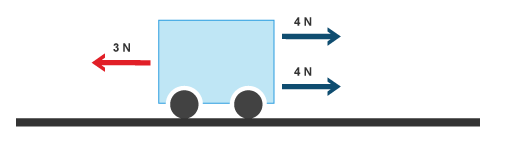
What is the net force on the object pictured?
3 N
5 N
4 N
8 N


Which of the following accurately describes the Voltage of resistors in series?
The voltage stays the same throughout the circuit
The voltage across each resistor adds up to the total voltage of the circuit
The voltage is 0 throughout the circuit
Multiplying the voltage across each resistor is equal to the total voltage throughout the circuit

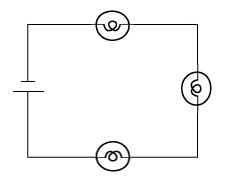
What component does the picture above represent?
Battery
Light bulb
Ammeter
Resistor
As you continue to add lightbulbs in series, what happens?
The bulbs get brighter
The bulbs get dimmer
The bulbs remain the same brightness
The bulbs explode and shards of glass get everywhere
If one bulb goes out in a series circuit, the remaining bulbs...
also go out
get brighter
get dimmer
explode, leaving shards of glass everywhere
Current is measured in
Volts
Watts
Seconds
Amps

If the switch was opened, what would happen?
the ammeter would measure a current flowing
current would no longer flow, so everything would be off
the bulbs would stay on because they're connected to the cell
the bulbs would burn out and catch fire
Voltage is measured in __.
volts.
watts.
ohms.

A Charging system producing 14.5 Volts with a current flow of 43.5 Amps, what is the circuit resistance
58 Amps
0.33 Amps
13 Amps
1 Amp

If the current through a circuit is 2 A and the resistance of a light bulb in the circuit is 10 Ohms, what is the voltage difference across the light bulb?
5 V
12 V
0.2 V
20 V

What would the circuit resistance be if a 7.5 Amp draw was present with the engine running and the charging system producing 15 Volts
15 Ohms
4 Ohms
0.3333 Ohms
2 Ohms

What is the current in an electric circuit?
The energy of the circuit
The flow of electrons in the circuit
The power of the circuit

Electromotive Force is the same as...
Voltage
Current
Resistance
Wattage
What do electrons hate more than anything?
Being around other electrons
Protons
Neutrons
Questions that imply that electrons have feelings

What is static electricity?
When a shock jumps from one person or object to another.
A discharge
The buildup of + or - charges.
A lightning bolt

When you are charging yourself up with static,
what gets surprisingly high?
Voltage
Amps
Ohms
Watts

Volts = Amps x Ohms
Your tongue has 70,000 Ohms of resistance.
What current will flow through your tongue if you lick a 9 volt battery?
0.001 Watts
The whole 9 volts
13/10,000 Amps
.00013 Amps

