
 Worksheets
Thermal Physics 2
Total questions: 137
Worksheet time: 2hrs 39mins
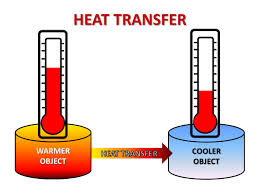
If two objects have different temperatures, heat will flow from the hotter object to the colder one UNTIL ____________
average kinetic energy of the particles in a substance
How much heat is absorbed when 355g of water goes from 25-45 degrees Celsius? The specific heat capacity of water is 4180 J/kgK.
K = Degrees Celsius + __________
The symbol for specific latent heat is...
c
l
Q
m
The heat absorbed by melting a solid is known as
latent heat of fusion
latent heat of solid
latent heat of liquid
latent heat of vaporisation
What is the formula to calculate specific latent heat of vaporisation?
l=mQ
c = Q/(mΔƟ)
Q = mcΔƟ
Q=ml
if 334000 J of heat is required to change state of 1 kg of ice into water then heat of fusion is
668000 J/kg
334000 kg
334000 J/kg
668000 J
The amount of heat required to change 1 kg of liquid into gas at constant temperature is called
heat of fusion
heat of vaporization
heat of change of state
heat of solid
What is internal energy?
the average kinetic energy of the particles
heat energy (thermal energy)
the sum of the kinetic and potential energies of the particles
the average potential energy
Which value is larger for a substance?
Latent heat of fusion
Latent heat of vaporisation

A
B
C
D

A
B
C
D

A
B
C
D

A
B
C
D

A
B
C
D

A
B
C
D

A
B
C
D

A
B
C
D

A
B
C
D

A
B
C
D

A
B
C
D

A
B
C
D

A
B
C
D

A
B
C
D
A scientist is feeling sick and knows that if her temperature is a degree or more above 37.5°C she should go home from work. But all she has is a thermometer graduated in kelvin. What temperature does the thermometer need to be?
194.5 K
310.5 K
311.5 K
325.5 K
The specific heat of a liquid is 1000 J kg-1 K-1. What amount of heat is needed to raise the temperature of 4.0 kg of liquid from 30°C to 40°C?
4.0 × 10³ J
2.0 × 10⁴ K
4.0 × 10⁴ J
4.0 × 10⁴ K
A 2.0 kg solid has a specific latent heat of of fusion of 220 kJ kg-1. An electric heater of power 1500 W is used to heat the solid. Assuming no heat loss, how long does it take to completely melt the solid at constant temperature?
290 seconds
290 minutes
150 seconds
150 minutes
A mass m of ice at a temperature of –5 °C is changed into water at a temperature of 50 °C.
Specific heat capacity of ice = ci
Specific heat capacity of water = cw
Specific latent heat of fusion of ice = L
Which expression gives the energy needed for this change to occur?
55 m cw + m L
55 m ci + 5 m L
5 m ci + 50 m cw + m L
5 m ci + 50 m cw + 5 m L

Energy is supplied at a constant rate to a fixed mass of a material. The material begins as a solid. The graph shows the variation of the temperature of the material with time.
The specific heat capacities of the solid, liquid and gaseous forms of the material are cs cl and cg respectively. What can be deduced about the values of cs cl and cg?
cs > cg > cl
cl > cs > cg
cl > cg > cs
cg > cs > cl
Which of the following is numerically equal to the specific heat capacity of the substance of a solid body?
The thermal energy required to melt the body
The thermal energy required to increase the temperature of unit mass of the body by 1K
The thermal energy required to increase the temperature of the body by 1K
The total kinetic and potential energy of all the molecules in the body
A fixed mass of an ideal gas in a closed container with a movable piston initially occupies a volume V. The position of the piston is changed, so that the mean kinetic energy of the particles in the gas is doubled and the pressure remains constant.
What is the new volume of the gas?
4V
2V
2V
4V

An ideal gas is contained in a thermally insulated cylinder by a freely moving piston.
The gas is compressed by the piston and as a result the temperature of the gas increases. What is the explanation for the temperature rise?
The rate of collision between the molecules increases.
Energy is transferred to the molecules by the moving piston.
The molecules of the gas are pushed closer together.
The rate of collision between the molecules and the walls of the cylinder increases.

What happens to the pressure and to the volume of the gas inside the balloon?
volume decreases
volume increases
volume decreases
volume increases
Boiling water is heated in a 2 kW electric kettle. The initial mass of water is 0.4 kg. Assume the specific latent heat of vaporization of water is 2 MJ kg–1.
What is the time taken for all the water to vaporize?
250 s
400 s
2500 s
4000 s
A 700 W electric heater is used to heat 1 kg of water without energy losses. The specific heat capacity of water is 4.2 kJ kg–1 K–1. What is the time taken to heat the water from 25 °C to 95 °C?
7 s
30 s
7 minutes
420 minutes
If a substance is cooled or heated , the change in mass of the substance is
a) positive
b) negative
c) Zero
d) none of the above
The value of Universal gas constant
a) 3.81 J/mol/K
b) 8.03 J/mol/K
c) 1.38 J / mol /K
d) 8.31 J/ mol/K
------------------ is the total number of atoms per mole of the substance
a)Avogadro's number
b)mole
c)none
d)both a and b
Boltzmann constant
1.38 x 10 -23 JK
1.38 x 10 -23 J/K
138 x 10 -23 JK
138 x 10 -23 J /K
The SI unit of heat energy absorbed or evolved is
Kelvin
Joule
JS
JS-1
If two bodies are in thermal equilibrium then , they will be at the -------- temperature
same
different
either a or b
none
-------------- kelvin is the absolute scale of temperature of the body
one
zero
none
273
The temperature is higher for a ---------body than for a -------body
hotter , chiller
hotter , colder
chiller , hotter
chiller , hotter
The temperature and heat are ---------- quantities
(a)
The law of volume is also known as------------
(a)
Joules and calories are units of measurement for __________________.
heat
insulators
conductors
thermometers

The graph shows how the temperature of the substance changes with time.
gas condensing
gas cooling
liquid cooling
liquid solidifying

The graph shows how the temperature of a liquid varies with time when energy is supplied to the liquid at a constant rate P. The gradient of the graph is K and the liquid has a specific heat capacity c.
What is the mass of the liquid?
cKP
cPK
KPc
PcK
The fraction of the internal energy that is due to molecular vibration varies in the different states of matter. What gives the order from highest fraction to lowest fraction of internal energy due to molecular vibration?
liquid > gas > solid
solid > liquid > gas
solid > gas > liquid
gas > liquid > solid
A mass m of ice at a temperature of –5 °C is changed into water at a temperature of 50 °C.
Specific heat capacity of ice = ci
Specific heat capacity of water = cw
Specific latent heat of fusion of ice = L
Which expression gives the energy needed for this change to occur?
55 m cw + m L
55 m ci + 5 m L
5 m ci + 50 m cw + m L
5 m ci + 50 m cw + 5 m L
A liquid is initially at its freezing point. Energy is removed at a uniform rate from the liquid until it freezes completely.
Which graph shows how the temperature T of the liquid varies with the energy Q removed from the liquid?


Which of the following is equivalent to a temperature of –100°C?
–373 K
–173 K
173 K
373 K
A fixed mass of water is heated by an electric heater of unknown power P. The following quantities are measured
I. mass of water
II. increase in water temperature
III. time for which water is heated.
In order to calculate P, the specific heat capacity of the water is required. Which are also required?
I and II only
I and III only
II and III only
I, II and III
A sealed container contains water at 5 °C and ice at 0 °C. This system is thermally isolated from its surroundings. What happens to the total internal energy of the system?
It remains the same.
It decreases.
It increases until the ice melts and then remains the same.
It increases.
A pure solid is heated at its melting point. While it is melting the
mean kinetic energy of the molecules of the solid increases.
mean potential energy of the molecules of the solid increases.
temperature of the solid increases.
temperature of the solid decreases.

A sealed cylinder of length l and cross-sectional area A contains N molecules of an ideal gas at kelvin temperature T.
What is the force acting on the area of the cylinder marked A due to the gas?
lNRT
lANRT
lANkBT
lNkBT
A fixed mass of an ideal gas is trapped in a cylinder of constant volume and its temperature is varied. Which graph shows the variation of the pressure of the gas with temperature in degrees Celsius?


What is the definition of the mole?
The amount of substance that has the same mass as 6.02 × 10²³ atoms of carbon-12.
The amount of substance that contains as many nuclei as the number of nuclei in 12 g of carbon-12.
The amount of substance that has the same mass as one atom of carbon-12.
The amount of substance that contains as many elementary entities as the number of atoms in 12 g of carbon-12.
Which of the following is not an assumption of the kinetic model of ideal gases?
All particles in the gas have the same mass.
All particles in the gas have the same speed.
The duration of collisions between particles is very short.
Collisions with the walls of the container are elastic.
The energy of the molecules of an ideal gas is
thermal only.
thermal and potential.
potential and kinetic.
kinetic only.
The volume of an ideal gas in a container is increased at constant temperature. Which of the following statements is/are correct about the molecules of the gas?
I. Their average speed remains constant.
II. The frequency of collisions of molecules with unit area of the container wall decreases.
III. The force between them decreases.
I only
I and II only
I and III only
II and III only
Energy is supplied at a constant rate to a fixed mass of a material. The material begins as a solid. The graph shows the variation of the temperature of the material with time.
The specific heat capacities of the solid, liquid and gaseous forms of the material are cs cl and cg respectively. What can be deduced about the values of cs cl and cg?
cs > cg > cl
cl > cs > cg
cl > cg > cs
cg > cs > cl
Which of the following is numerically equal to the specific heat capacity of the substance of a solid body?
The thermal energy required to melt the body
The thermal energy required to increase the temperature of unit mass of the body by 1K
The thermal energy required to increase the temperature of the body by 1K
The total kinetic and potential energy of all the molecules in the body
What happens to the pressure and to the volume of the gas inside the balloon?
volume decreases
volume increases
volume decreases
volume increases
Boiling water is heated in a 2 kW electric kettle. The initial mass of water is 0.4 kg. Assume the specific latent heat of vaporization of water is 2 MJ kg–1.
What is the time taken for all the water to vaporize?
250 s
400 s
2500 s
4000 s
A 700 W electric heater is used to heat 1 kg of water without energy losses. The specific heat capacity of water is 4.2 kJ kg–1 K–1. What is the time taken to heat the water from 25 °C to 95 °C?
7 s
30 s
7 minutes
420 minutes

The SI unit of heat energy absorbed or evolved is
Kelvin
Joule
JS
JS-1
The value of universal gas constant is …………………………..
1.38 x 10⁻²³ JK-1
8.31 J mol-1 K-1
6.023 x 10²³
The SI unit of heat energy is …………………..
Joule
Kelvin
K-1
According to Boyle’s law, at constant temperature, the volume of a gas is directly proportional to the temperature of the gas.
(a)
The value of universal gas constant
3.81 Jmol–1 K–1
8.03 Jmol–1 K–1
1.38 Jmol–1 K–1
8.31 Jmol–1 K–1

In the Given diagram, the possible direction
of heat energy transformation is
A ⟵ B, AC, B C
A ⟶ B, A C, B C
A ⟵ B, A C, B C
A ⟵ B, A ⟶ C, B ⟵ C
The value of Avogadro number ________
6.023 X 10²³ mol-1
6.023 X 1024 mol-1
60.23 X 10²³ mol-1
602.3 X 10²³ mol-1
The temperature and heat are (a)
quantities
Thermal energy always flows from a system
at higher temperature to a system at lower
temperature.
True
False
According to Charles’s law, at constant
pressure, the temperature is inversely
proportional to volume.
True
False
Heat transformation
change in volume
hot body to cold
body
1.381 X 10⁻²³ JK-1
change in length
change in area
Boltzmann constant
change in volume
hot body to cold
body
1.381 X 10⁻²³ JK-1
change in length
change in area
According to Charles’s law, at constant
pressure, the temperature is (a)
proportional to volume.
Which of the following statements about the kinetic theory of gases is NOT true:
All molecules move with the same speed.
Their average kinetic energy is directly proportional to the absolute temperature.
All molecules make elastic collisions with each other and the walls of the container.
The molecules travel in straight lines until they collide.
When one end of a cold metal spoon is placed upright in a cup of hot coffee, the other end gets hotter. Which one of the following best describes what is happening?
Warmer molecules will rise to the top.
The hot molecules produce thermal radiation that is then absorbed by the colder molecules.
Higher-energy molecules hit lower-energy molecules, increasing their speed and therefore their temperature.
Lower-energy molecules hit higher-energy molecules and the friction increases their temperature.
A sealed container of air is kept at a constant temperature. What will happen to the speed of the molecules of air in the container as time passes?
The molecules will all reach the same speed.
Some molecules will speed up and others will slow down, but the average speed will be constant.
The molecules will slow down.
There will be no change.
If two objects labelled B and C are both at thermal equilibrium with object A, which of the following must be true?
Objects B and C are in thermal equilibrium with each other.
Object B has a higher temperature than object C.
Object C has a higher temperature than object B.
Objects B and C are not in thermal equilibrium with each other.
A cube of ice is placed in a foam cup and it begins to melt. The air temperature is 23°C. Which one of the following best describes the temperature of the water that is formed?
less than 0°C
0°C
room temperature
greater than 0°C but less than room temperature
During an energy transfer process, 1000 J of heat are removed from a gas while 100 J of work is done by the gas. What is the change in internal energy of the gas?
+1100 J
+900 J
–900 J
–1100 J

K = Degrees Celsius + __________
Water of depth 10 m exerts a pressure equal to atmospheric pressure.
An air bubble rises to the surface of a lake which is 20 m deep. When the bubble reaches the surface, its volume is 6.0 cm3.
What is the volume of the air bubble at the bottom of the lake?
2.0 cm3
3.0 cm3
12 cm3
18 cm3
A gas in a container of fixed volume is heated.
What happens to the molecules of the gas?
They collide less frequently.
They expand.
They move faster.
They move further apart.

A fixed mass of gas undergoes a change of volume at constant temperature.
Which diagram shows the relationship between the volume and the pressure of the gas?
A
B
C
D
A substance consists of particles that are close together and moving past each other at random. The average speed of the particles is gradually increasing.
What best describes the substance?
a gas being heated
a liquid being heated
a liquid undergoing solidification
a solid being heated

The table shows the melting points and the boiling points of some elements.
Which element is a liquid over the largest range of temperature?
A
B
C
D

Some ice cubes are taken from a freezer and heated in a container. The readings of temperature and time are recorded on the graph.
Which temperature is 0 °C?
A
B
C
D

The mercury-in-glass thermometer shown has a linear scale.
At a temperature of 100 °C, h has a value of 28 cm. At 80°C, h has a value of 24 cm.
What is the value of h when the temperature is 0 °C?
0.0 cm
2.8 cm
4.0 cm
8.0 cm

A fixed mass of gas is enclosed in a cylinder with a movable piston.
The gas is initially at pressure p1 and has a volume V1.
The temperature is kept constant. The piston is moved so that the pressure becomes p2 and the volume becomes V2.
Which equation is correct?
p1/V1 = p2/V2
p1/p2 = V1/V2
p1V1 = p2V2
p1V2 = p2V1
A tray for making ice cubes holds 30 g of water. The specific latent heat of fusion of ice is 3.3 × 10⁵ J/kg.
How much thermal energy is removed from the water at 0 °C to change it into ice at 0 °C?
9.9 × 10³ J
1.1 × 10⁴ J
9.9 × 10⁶ J
1.1 × 10⁷ J
A sealed container of gas is heated and the pressure inside increases.
What happens to the molecules of the gas to cause this increase in pressure?
Their kinetic energy decreases.
They become heavier.
They expand.
They hit the container more frequently.
An ideal gas has a density of 2.0 kgm-3 at a pressure of 2.2 x 10⁵ Pa and a temperature of 295 K. Calculate the mean square speed of the gas atoms.
330 kms-1
110 000 ms-1
373 ms-1
19 ms-1

For an ideal gas several assumptions are made about the particles including
they collide elastically with each other and the container wall
they experience significant intermolecular forces
the volume they occupy as individual particles is insignificant compared to the volume of the container
there are a very large number of particles inside the container

In the equation of state for an ideal gas pV = nRT
n = number of particles in the gas
p = pressure of the gas
R = the molar gas constant 8.31 JK-1mol-1
T = temperature in degrees celcius
Rewriting the equation of state gives : pV = NkT
where:
N = the number of moles x 6.022 x 10²³
V = volume occupied by the gas
T = temperature in degrees celsius
k = 1.38 x 10⁻² JK-1
Given the equation Ek = 3/2 kT, calculate the temperature of Helium atoms that are able to leave the atmosphere with a speed of 1.1 x 10⁴ms-1. The mass of an individual Helium atom is 6.6 x 10⁻²⁷kg. (k = 1.38x10⁻²³)
1.9 x 10⁴ K
1.9 x 10³ o C
1.5 x 10² K
200 K
The mean square speed of atoms of Neon gas at 273 K with density 0.900 kgm-3 is 3.4 x 10⁵ ms-1. Calculate the r.m.s. of the same gas at 546 K.
820 ms-1
680 000 ms-1
240 ms-1
340 000 ms-1
For an ideal gas at constant temperature and density ρ what effect would doubling the density have on the mean square speed?
none
mean square speed would double
mean square speed would halve
mean square speed would quadruple
For an ideal gas at constant temperature and pressure p at volume V, what affect would halving the pressure have on the volume?
volume would double
volume would halve
volume would triple
none
For an ideal gas trapped inside a container of fixed volume, which of these statements is true?
all particles are moving rapidly and randomly
particles exchange momentum with the wall over very short time frames
all particles are moving idly and haphazardly
the particle volume accounts for most of the space in the container
Select all true statements
nR = Nk
NA = 6.022 x 10²³
k = R/NA
3/2RT = NAEk
An ideal gas has a density of 2.0 kgm-3 at a pressure of 2.2 x 10⁵ Pa and a temperature of 295 K. Calculate the root-mean-square speed of the gas atoms.
570 ms-1
110 000 ms-1
373 ms-1
19 ms-1
Which of the following is the ideal gas equation?
pV = nRT
pT = nRV
pR = nRV
pn = VRT
How many atoms are there in a mole of helium gas?
6.02 × 10¹³
6.02 × 10²³
1.20 × 10¹⁴
1.20 × 1024
Which assumptions are made in the kinetic theory of gases?
No forces between molecules.
Volume of molecules is negligible.
Molecules move in sync all the time.
Molecules collide inelastically with each other.
A bar of gold has a mass of 1.00 kg. Calculate the number of moles of gold in the bar. (Relative atomic mass of gold = 197.)
1.97 × 10⁻³ mol
0.197 mol
5.08 mol
5.08 × 10⁻³ mol
The following gases are at the same temperature. Which molecule will have the slowest r.m.s. speed?
hydrogen
carbon dioxide
oxygen
helium
All of the following are temperature units except ______
atm
Kelvin
Celsius
Farenheit
What law combines all 3 factors (pressure, temperature, and volume)
Combined Gas Law
Charle's Law
Boyle's Law
Avogadros Ideal Gas Law
none are correct

What volume of methane gas at 273 K and 101.33 kPa do you have when the volume is decreased to 0.50 L, with a temperature of 300 K and a pressure of 151.99 kPa.
0.68 L
0.82 L
0.50 L
0.37 L
Calculate the volume that a 0.323 mol sample of a gas will occupy at 265 K and a pressure of 0.900 atm.
7.18 L
7.81 L
4.63 L
4.36 L
A 500 mL metal cylinder holding 0.100 moles of helium gas is known to rupture at a pressure of 10 atmospheres. At what temperature, in °C, will the container fail?
336 °C
608 740 °C
- 272.4°C
609 °C
What does R stand for
Ideal gas constant
Real gas constant
Temperature constant
Ideal gas law


