
 Worksheets
Restless Earth Review Sections 1-8
Total questions: 35
Worksheet time: 23mins
Where do earthquakes occur?
Completely randomly
Generally along plate boundaries
Where the elephants stomp
ONLY where the mountains are
When scientists map the location of earthquakes, what can they see?
all of time and space
the core of the earth
location of mountains
plate boundaries
What gets released when plates move that causes the ground to shake?
energy
light
soil
What is directly above the focus of an earthquake?
A sleeping 6th grader.
The oceanic crust is pushed/pulled away on both sides of
A Continent's edge
A Deep-ocean trench
A ridge
Fold Mountains
New crust forms at a...
ridge
earthquake
Fold mountain
Older crust is found _______ a ridge.
Closer to
Further from
Below
inside
only at mid-ocean ridges
at plate boundaries
at any fault
This Quizizz will help prepare you for the Claim, Evidence, and Reasoning Questions.
False
True
fold mountains
What is likely to form when two oceanic plates pull apart?
A deep valley, like a big long crack in the rock
Mountains with slanted layers and layers of sedimentary rock.
A long underwater mountain range made of young lava rock.
A flat place with a lot of cracks from so many earthquakes taking place.
closest to mid ocean ridges
at mountains
Fold mountains form from ...
What did Wegener name the large supercontinent where all the continents were joined together?
Wegenerland
Superland
Eurasian
Pangaea
Most geologists rejected Wegener's idea of Continental Drift because _________.
He didn't have enough evidence to support his idea.
He wanted to know what the Earth looked like millions of years ago, which was impossible.
He didn't have a good explanation of what would cause continents to move around.
They were afraid of the new idea.
Wegener used the fit of the continents as evidence to support his hypothesis of Continental Drift.
true
false
Wegener used fossils of the land dwelling organisms on different continents as evidence to support his hypothesis of Continental Drift.
true
false
Wegener used evidence of glaciers in places now too warm as evidence to support his hypothesis of Continental Drift.
true
false
Wegener used matching rock types and ages across different continents as evidence to support his hypothesis of Continental Drift.
true
false
The east coast of South America seems to fit into the west coast of Africa, this evidence for Continental Drift is called...
Fit/shape of continental coastlines
Fossil evidence
Geologic evidence
Paleoclimate evidence
Which things did Wegener study to support his ideas? Mark all that apply.
fossils across oceans
matching land features/rocks
matching forces
Paleoclimate data
Shape of continental coastlines
Another piece in the theory of Continental Drift is evidence of coal on Antarctica because...
it is found in tropical areas today so it used to be near the equator where plants that formed coal thrive
it is found in swampy areas today so the area used to be near the poles where the plants to formed coal thrive
it is found in cold areas today but formed from a plant in warm climes, so it used to be closer to the equator
coal is not an example of continental drift
In order to get better at Claim, Evidence, and Reasoning questions, students should ...
Go back and look at all the Claim, Evidence, and Reasoning practice we've already done.
Practice more Claim, Evidence, and Reasoning Questions.
Talk to their teacher.
Just do quizizz.
What was Wegener's theory of Continental Drift?
the earth is flat
the continents were once joined together
Plants live near the equator
Glaciers are cold

This scientist first proposed continental drift theory
Harry Hess
Alfred Wegener
Archimedes
Thomas Warner

These are remains of dead plants or animals preserved in rock.
Glaciers
Dinosaurs
Bones
Fossils

Wegener observed scratches from glaciers in Africa and India where it is currently too hot for glaciers to form. This is considered...
Fossil Evidence
Rock Formation Evidence
Paleoclimate Evidence
Objective Evidence

Wegener noticed that the Appalachian Mountains and Caledonian Mountains line up and are made of the same rock types. This was a type of ....
Fossil Evidence
Rock and Mountain correlation Evidence
Climate Evidence
Objective Evidence

How was Wegener's theory received by other scientists at the time?
They thought it was great
They did not accept it
They laughed at his jokes
They gave him a prize
What did Wegener notice about the continents?
their coastlines fit together like puzzle pieces
most of them start with the letter A
They are large
They are were humans live
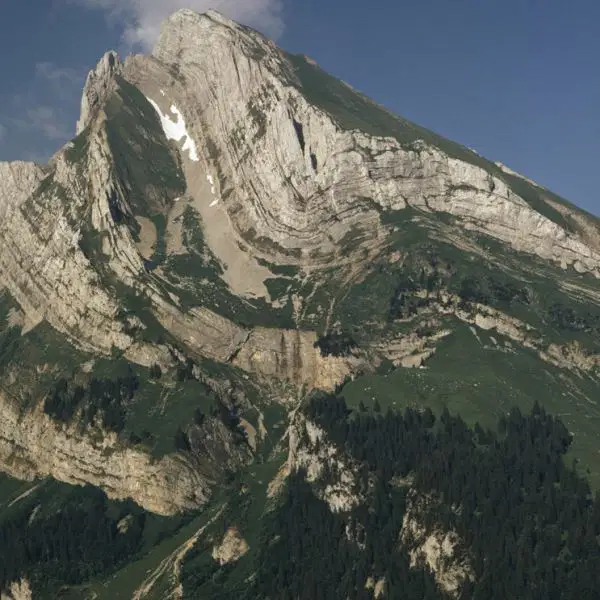
These are ___________________
A mid-ocean ridge
Fold mountains
Created by plates crashing into each other.
Created by plates moving away from each other.
Created by plates sliding against each other
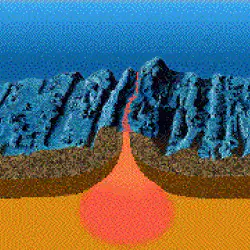
This is a ___________________
A mid-ocean ridge
Fold mountain
Created by plates crashing into each other.
Created by plates moving away from each other.
Created by plates sliding against each other
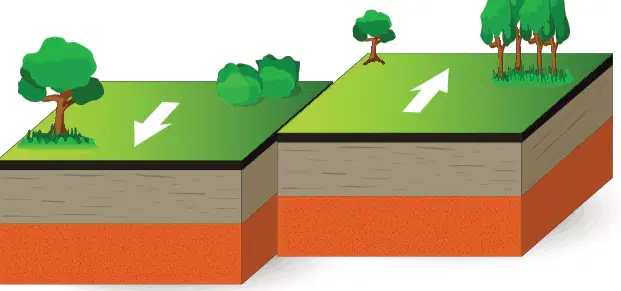
This is a ___________________
Place that will likely form a ridge
place that will likely form a folded mountain
Place that will have frequent earthquakes
divergent boundary
transform boundary

