
 Worksheets
chc-rise of hitler-
Total questions: 207
Worksheet time: 2hrs 14mins
Why Versailles with the Allies was a harsh and humiliating to Germany ?
Because it was not a treaty signed in Germany
The Allied Powers demilitarised Germany to weaken its power.
. Germany lost its overseas colonies, a tenth of its population, 13 per cent of its territories, 75 per cent of its iron and 26 per cent of its coal to France, Poland etc
Germany was forced to pay compensation amounting to £6 billion.

In which year was the Wall Street Crash?
1919
1929
1933
1928
What was the name of the Republic that was formed in Germany after the end of WWI?
The Reich
The Berlin Republic
The Weimar Republic
The Reichstag
What type of government did Germany have right after World War I, in the Weimar years?
a democracy
a monarchy
a dictatorship
What was the big German economic problem in the 1920s?
bankruptcy
inflation
the deficit
Which of these policies did Hitler follow?
communism
militarism
isolation
What action did Hitler take that violated a treaty?
being a dictator
using secret police
rearming
With which country did Hitler make an alliance?
France
Italy
Great Britain
Which of the following groups did the German Nazi party oppose?
communists, Jews, and liberals
socialists and workers
middle-class people
German nationalists and the military
What was one reason Germany had a right to expand, according to Hitler?
Germany had never been an empire before, so it had a right to become one now.
Germans needed more living space, which was available for the taking in non-German areas.
Germany needed to become more diverse, with new ethnic groups and cultures mixing with native Germans.
The League of Nations approved of Germany’s plans to expand.

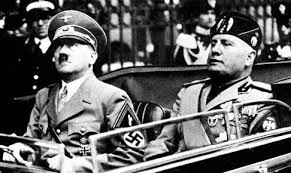
Hitler and Mussolini met in Munich.
True
False
Hitler and Mussolini were Communist leaders.
True
False

The Nazis tried to seize power through force in 1923. What was this event known as?
The Munich Putsch
The Berlin Uprising
The Spartacist Revolt
The Freikorps Revolt
Hitler was imprisoned after the failed attempt to seize power. What book did he write while in prison?
Mein Volk
The 25 Constitutions
Mein Kampf
Der Fuhrer
ALLIED POWERS IN WORLD WAR 1 ARE:-
GERMANY,ITALY,JAPAN
GERMANY,ITALY,TURKEY
UK,FRANCE,ITALY
UK,FRANCE,USSR,USA

By 1932, how many Germans were unemployed as a result of the Wall Street Crash?
3 million
1 million
10 million
6 million
When the first world war was fought ?
1914
1915
1916
1917

What was the nickname of Hitler's private army, the SA?
The Black Shirts
The Brown Shirts
The Red Peril
The Storm Troopers
What does the Reichstag mean?
German Coin
German State
German Parliament
German currency

Hitler promised that he would create more jobs. How did he say that this would be achieved?
Providing more farm machinery and improving farming.
Building more factories.
Borrowing money to create more shops.
Large public building works, like autobahns and housing.

Hitler also promised to tear up what Treaty?
The Treaty of Versailles.
The Treaty of Brest Litovsk
The Rhineland Treaty
The Armistice Treaty

What was the name of the German President who eventually made Hitler Chancellor of Germany?
President Schleicher
President Schliefen
President Ebert
President Hindenburg
What new title did Hitler begin to use in 1934?
General
Field Marshall
The Fuhrer
The Reich
What year was Hitler appointed Chancellor?
1933
2010
1985
1945
What country did Hitler become a dictator in?
Germany
Italy
Austria

Which of the following was NOT part of the Treaty of Versailles?
Germany lost it's colonies
Germany had to be governed by the Allies
Germany had to pay back a huge sum of war debts
Germany had to lose most of it's military
Who did Hitler blame for the Reichstag fire?
Nazi's
Jews
Communists
America

RIGHT after WW1 Germany became a....
Republic
Dictatorship
Totalitarian nation
Monarchy
What party was Hitler a part of?
Communist Party
Nazi Party
Which of the following is an example of the word "scapegoat?"


What kind of leader did Hitler become?
Republican
Totalitarian
Monarch
Communistic

In the 1920s Hitler formed the Nazi Party. "Nazi" stands for this:
National Supremacist
National Solidarity
National Swastika
National Socialist
True or false: The German people were upset over the Treaty of Versailles.
True
False
Hitler wrote his influential book, "Mein Kampf" RIGHT AFTER this event put him in prison:
World War 1
The Great Depression
Kristallnacht
The Beer Hall Putsch
What did the Enabling Act allow Hitler to do?
Gain more power
Ban other political parties
Suspend activities of the Reichstag
Leave office

"Mein Kampf" ("My Struggle") ended up being an influential piece because:
It was the first major piece of Nazi propaganda
It revealed how Hitler was wrongly imprisoned by the Weimar Republic
It revealed that France had actually started World War 1
It sold more copies than the Bible

Who is this person and which political party he was associated ?
Napoleon, Republic party
Mussolini, Fascist party
Hitler, Nazi party
Lenin, socialist party

This man was the minister of propaganda for the Nazi's under Hitler, and helped move Germany towards acceptance of Hitler's ideals:
Herman Goering
Heinrich Himmler
Adolf Eichmann
Joseph Goebbels
Which of the following was NOT a way that Propaganda was used by the Nazis?
Posters
Television
Radio
Speeches/Parades
Film
True or false: Hitler used propaganda to help him gain power and support.
True
False
Anti-Semitism means to be against:
Jews
Communists
Non-Whites
All of the above
Which is the best color in the whole world?
Blue
Blue
Blue
Blue
Which of the following was NOT mentioned in Mein Kampf?
Racial Purity
"Undesirables"
Anti-Semitism
World Domination
True or false: Hitler burned books to help him maintain power.
True
False
Germany ditched their democracy and became more open to extreme political parties RIGHT AFTER this event:
World War 1
The Beer Hall Putsch
The Great Depression
None of the above

In the 1930s countries such as Germany, Italy, Spain, the Soviet Union, and Japan adopted this form of government:
Communism
Monarcy
Totalitarianism
Anarchy
True or false: The youth were brainwashed to support Hitler.
True
False
Hitler initially became part of the national German government after...
Getting elected
Killing his political opponents
Bribing the president
None of the above
What are characteristics of a totalitarian leader?
Uses military to control society
Uses fear as a primary motivator
Controls flow of information
Remakes society around a specific ideology
Overall which of the following was NOT a contributing factor towards the Nazi rise to power?
A weak democratic government
Economic problems
World War 1
The decline of religious belief
Which of the following is a synonym for the word "indoctrination?"
Brainwashing
Imprisoning
Bystanding
Persecuting
Which of the following is NOT an example of Nazi attempts at indoctrination?
Propaganda
Hitler Youth
Mein Kampf
The Treaty of Versailles

Which of the following was a staged riot that ended with thousands of Jewish businesses destroyed along with many murders and imprisonments of Jews?
Kristallnacht
Nuremberg Laws
Night of Long Knives
Treaty of Versailles

This is an example of:
Kristallnacht
Communism
Totalitarianism
Indoctrination

Under Hitler, Germany formed this new alliance in preparation for the start of World War 2:
The Allied Powers
The Central Powers
The German Alliance
The Axis Powers

The Axis Powers included:
Germany, Italy, Japan
Germany, Japan, Russia
Germany, Italy, Russia, Japan
Germany, Italy, Spain, Russia
What were some reasons for the rise of the Nazi Party?
Unemployment
Nationalism
Anti-Semitism
Treaty of Versailles
True or False?
Political instability marked by the rise of Fascism was one of the causes of World War II.
True
False
What are the two camps?
Who promised to rescue Italy by reviving its economy and rebuilding its armed forces?
Alcide De Gasperi
Benito Mussolini
Silvio Berlusconi
Camillo Benso
What was Mussolini's nickname?
Il Duce
Il Re
Il Sovrano
Il Monarca
What is the shortened version of the National Socialist German Workers' Party?
Kampfer
NSGWP
Nazi
lebensraum
Hitler's elite unit was called the SS. What does SS stand for?
Secret Service
Schutzstaffel
Subversive Squad
Schadenfreude

Adolf Hitler's autobiography
isolationism
Axis Powers
fascism
Mein Kampf
Manchuria
Who was the leader of the 1936 rebellion in Spain that quickly became a civil war?
Benito Mussolini
Vladimir Lenin
Francisco Franco
Gerald M. Nye
a government that subordinates the individual to the state and strictly controls all aspects of life by coercive measures.
Communism
Nazi
Fascism
Totalitarian State
hatred of Jewish people
Concentration Camp
Collectivization
Anti-Semitism
Fascism
Fascism was against....
Communism
Capitalism
Democracy
All of the answers are correct
In economic issues, fascism defended
Free economy
Total control of the Economy by the State
Free trade with other countries
A mix between Capitalism and Communism
Autarky means
A nation is able of producing everything it needs without importing
Free economy and production
Communism
No unemployment
Fascism is a nationalistic ideology because...
It defends the interests of the nation over the individual
It defends the interest of the nation over other countries
I defends the right of controlling other inferior nations
All the options are correct
A government where the state has complete control over every part of public and private life
Totalitarianism
Gulag
Communism
Reparations
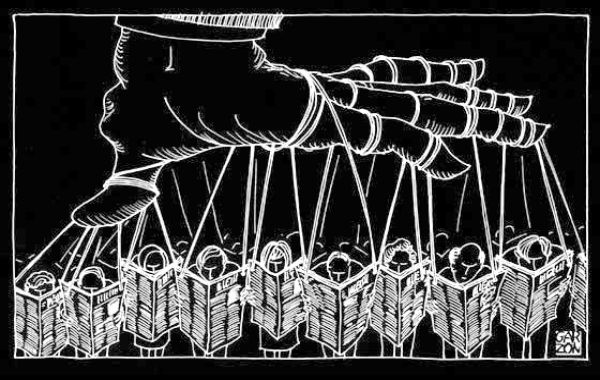
What is it called when the government controls the flow of information through things such as news, art, and movies?
liberty
censorship
freedom of press
communism
What word means to twist facts into lies?
Propaganda
Censorship
Which two groups did Hitler oppose to gain support from middle class and wealthy Germans?
Industrialists
Communists
Jews
Fascists

After World War I, the rise of Benito Mussolini in Italy and the rise of Adolf Hitler in Germany are most closely associated with
the development of fascism
the desire for containment
an emphasis on democratic traditions
a return to conservative religious practices

Which ideology best completes this graphic organizer?
socialism
democracy
capitalism
fascism

Based on the information in this chart, which situation gave rise to Nazi power in Germany?
global prosperity and trade
success of the Weimar Republic
political and economic instability
expansion of Germany’s colonial empire
• Introduced fascism to nation
• Attempted to restore the nation to its past glory
• Invaded Ethiopia
What dictator took these actions before World War II?
Vladimir Lenin
Francisco Franco
Benito Mussolini
Adolf Hitler
2. Treaty of Versailles causes ______ and ______ in Europe.
Sadness & Hopeless
Anger & Resentment
Madness & Panic
Solitude & Doubt
Adolf Hitler's autobiography
isolationism
Axis Powers
fascism
Mein Kampf
Manchuria
Who was a fervent anti-Communist and a great admirer of Benito Musolini?
Adolf Hitler
Joseph Stalin
Francisco Franco
Vladimir Lenin
One of the new political parties to rise during the political and economic chaos in Germany after World War I was the National Socialist German Workers' Party, also known as the ____________ .
Socialist Party
Nazi Party
Fascist Party
Bolshevik Party

Under the Weimar Republic, what caused the German mark (German money) to become almost worthless?
Germany was printing too much money (hyperinflation)
Germany was not allowed to have a large army
Germany had too much gold in its reserves that it had stolen from the Church
Germany didn't allow Jews to work so they made less money.

What did Hitler do that was a violation of the Treaty of Versailles?
He established the Nazi Party
He rearmed Germany
He stripped Jewish Germans of their citizenship
He had his political rivals killed or imprisoned

Which of the following is an example of an anti-Semitic policy?
Jews were were barred from working in the press or media, farming, or holding government jobs.
Women were discouraged from working and encouraged to stay home and bear many children
All political parties other than the Nazi Party were banned and violators were sent to concentration camps.
People were encouraged to participate in "mass leisure" where they were exposed to nationalistic propaganda.

Based on propaganda posters, what techniques did Hitler use to appeal to his audience?
Short mustache, a strict looking Hitler with clenched fists, using various colors and Nazi flag
Simple colors, short mustache, a smiling Hitler with arms open, long catchy phrases
Short slogans, people laughing behind Hitler, using symbols and traditional flag
Short slogans, a determined-looking Hitler standing in front of many Germans, using symbols and Nazi flag
What areas saw the rise of a Dictator after WWI because of the Great Depression?
USSR, Germany and Italy
Russia, Germany and Japan
Japan , Germany and Austria
US, Germany and USSR

Who is this person?
Hitler
Stalin
Mussolini
Tojo

Which title best summarizes this list?
Dictators of the Interwar Period
Ambassadors from the Interwar Period
Monarch of the Interwar Period
Presidents from the Interwar Period
What group did Hitler blame for Germany's economic problems?
gypsies
Poles
Russians
Jews
In the 1920s and 1930s the rise of Totalitarian governments in Germany, Italy and Spain was largely the result of what?
Success of Communists in establishing a command economy in the Soviet Union
Severe economic and social problems that arose in Europe after WWI
The active support of the United States
Movements demanding the return of the old monarchies
The Treaty of Versailles blamed who for causing World War I?
Austria
Hungary
Germany
Ottoman Empire
What are reparations?
money paid for war damage
money paid when you default on a loan
money paid to forgive ones sins
money paid for transportation to different locations
What event marked the beginning of the Great depression in the US?
End of WWI
Passage of the Dawes Plan
Stock Market Crash
Election of Roosevelt
Which of the following responses to the Great Depression led to threats on democracy in Europe?
unemployment and homelessness led many people to stop voting
Citizens responded to deficit spending by voting out the current governments
People were willing to give dictatorial powers to anyone promised a simple solution to the economic crisis
"In this form of government, a one-party dictatorship attempts to regulate every aspect of the lives of its citizens."

Which event occurred on Black Tuesday?
many factories closed
many banks closed
many people lost their homes
the stock market crashed
How many men were allowed in the German army accordinf to the military terms of the Treaty of Versailles.
1 million
150,000
1,500
100,000


Which of the following is NOT a characteristic of the interwar years?
Countries experiencing a global depression
Countries bitter about the Treaty of Versailles
Countries struggling to rebuild
Countries experiencing economic success
A depression impacts which aspect of society?
Political Aspect
Economic Aspect
Social Aspect
Religious Aspect
a nation where the government controls the economic, political, social, intellectual, and cultural lives of citizens; requiring passive obedience achieved through mass propoganda
fascism
sabotage
totalitarianism
absolutism

What term isnt apart of the Treaty of Versailles?
Reparations
Loss of military
Loss of land
Democratic government
How did hyperinflation effect German society?
Everyone was able to find a job
Money was worthless
Germanys invested their money in their countries economy
Additional taxes were paid by all Germans
Which option below is NOT a part of Fascism?
S/N #1
Extreme Nationalism
Militarism and Brute Force
Government controls all aspects of society
Citizens have Freedoms such as the Freedom of Speech
What effect did the Stock market crash in America have on Germany?
Not much, because Germany's economy had recovered
Crushed the German economy, leaving workers unemployed and businesses closed
Provided an opportunity for Germany to become an economic super power
Gave birth to the rise of communism as the solution to the instability of capitalism.
Glorifies nation or race above individual rights
Fascism
Socialism
Democracy
Communism
Spread of ideas for the purpose of helping or damaging a cause
Propaganda
Isolationism
Appeasement
Super bowl commercials
Government controls all aspects of society (economic, political, social)
Totalitarianism
Fascism
Democracy
Militarism
Which was a major cause of the rise dictators in Europe after WW1?
economic prosperity
Treaty of Versailles
redrawing of European borders
German win of WWI
What is true concerning the Weimar Republic?
It was not a republic or a democratic institution
Many people blamed it for the humiliating Treaty of Versailles
It was a totalitarian system in which only one party ruled
Western nations hailed it as a successful modern liberal democracy
What was a major reason why Germany struggled to recover from World War I and experienced hyper-inflation in the 1920s?
Germany was forced to nationalize its major industries.
Germany lost its access to ports on the Mediterranean Sea.
Germany was forced to pay reparations to other European nations.
Germany entered into a lend-lease agreement with the United States.
Fascism embraces the idea of __________________
a socialist government concerned with patriotism, the military, and anticommunism.
a representative government concerned with nationalizing all major industries.
a communist government concerned with implementing social welfare programs.
a totalitarian government concerned with patriotism, the military, and anticommunism.
". . . The key-stone of the Fascist doctrine is its conception of the State, of its essence, its functions, and its aims. For Fascism the State is absolute, individuals and groups relative. Individuals and groups are admissible in so far as they come within the State. Instead of directing the game and guiding the material and moral progress of the community, the liberal State restricts its activities to recording results. The Fascist State is wide awake and has a will of its own. For this reason it can be described as ethical'. . . ."
— Benito Mussolini, Fascism: Doctrine and Institutions, Howard Fertig, 1932
Which statement expresses the main idea of the passage?
The people have a right to overthrow ineffective governments.
The state is more important than the individuals within it.
The state gets its authority from the power of individuals.
The establishment of an empire will cause division and chaos.
Which of the following articulates how the Great Depression was a cause of the rise of totalitarianism?
Capitalism and democratism were destabilized, as well as an increase in economic desperation
They increased national confidence due to the pride people had in their nationhood and their ethnicity
Every Western nation began to blame the Jewish population, leading to a rise in anti-semitism across Europe
The Great Depression did not affect nations like Italy, Spain, and Germany, allowing them to create totalitarian states
What groups did Hitler blame for Germany's defeat and poor economy? (pick all that apply)
Jews
Communists
Italians
A totalitarian type of government.
communism
fascism
both
Belief that inequality is OK and natural.
communism
fascism
both
Only one political party is allowed.
communism
fascism
both
Rule by a dictator.
communism
fascism
both
Denies individual rights to the people.
communism
fascism
both
No private property is allowed.
communism
fascism
both
Extreme nationalism - believes their people should rule over other, inferior people.
communism
fascism
both
Demand that people obey the state (government).
communism
fascism
both
Will end up causing the death of millions of people.
communism
fascism
both
What is the effect of hyperinflation?
Increase in loans given to people
Increase in interests rates
Increase in prices and wages
Decrease in wages
Which of these was a cause of inflation in Germany?
Germany's economy was damaged because of WWI.
Reparations payments made Germany economically weak.
Loss of industrial land meant there were fewer resources.
All of the above
government system led by a dictatorship having complete power. Leader forcibly supresses oposition regulates all industry ad emphasizes aggressive nationalism
dictatorship
fascim
anarchy
communism

Who is the leader for Fascist Italy?
Benito Mussolini
Guiseppe Garibaldi
Camillo di Cavour
Giorgio Napolitan
In the 1920s and 1930s the rise of Totalitarian governments in Germany, Italy and Spain was largely the result of what?
Success of Communists in establishing a command economy in the Soviet Union
Severe economic and social problems that arose in Europe after WWI
The active support of the United States
Movements demanding the return of the old monarchies
Which of the following is not a characteristic of fascism?
No opposition
Extreme nationalism
Individual rights
Glorification of war

Wilson's plan for peace was called the ...
Treaty of Versaille
14 Points
Treaty of Paris
League of Nations

Which country signed the war guilt clause?
USA
Germany
France
Great Britain

Which leader wanted revenge?
Woodrow Wilson
Georges Clemenceau
Kaiser Wilhelm II
David Lloyd George

How many men were allowed in the German army according to the military terms of the Treaty of Versailles.
1 million
150,000
1,500
100,000
What new organization was created to promote international peace?
The United Nations
The League of Nations
The European Union
The USSR

What are reparations?
When a country sends workers to repair damage from the war.
When a defeated country pays for war damage.
The amount of money it will take to repair a country after war.
When you "repair" something physical.

a political philosophy in which total power is given to a dictator
dictator
democracy
fascism
leader who holds total power over a country
prime minister
dictator
politician
What did Hitler want?
to become an ally of Great Britain and France
Germany to become a democracy
an all-powerful German empire
Who did Hitler blame for the world's problems?
Jewish people
Aryan supremacy
Japanese
What are the characteristics of fascism? (Select all that apply)
Denial of individual rights
One party rule/dictator
No censorship of publications and radio stations
extreme form of nationalism
Hitler said that Germans needed more......?
money
food
jobs
lebensraum (living space)
Hitler's private militia were known as....? (Select all that apply)
Brown Shirts
Black Shirts
storm troopers
Nazi soldiers
Who did the Nazi's make scapegoats?
Russians
Women
Communists
Jews

What ideas were at the core of Hitler's ideology?
Radical liberalism and anti-segregation
Marxist communism and neo-imperialism
Anti-Semitism and extreme German nationalism
Constitutional democracy and self-determination

What did Fascism promote?
Equality for everyone
Extreme Nationalism
Strong International ties
Stalin's 5 year plan

