Wayground logo

Free Printable Worksheets

Font size

S
M
L
XL
Worksheets

HW: Ecology Review

Total questions: 38

Worksheet time: 40mins

Name
Class
Date
1.
What would most likely happen if the rabbit population was removed from the food chain grass —› rabbit —› fox?
a)
their would be more grass
b)
there would be less rabbits
c)
there would be more fox
2.
Which of the following terms describes an area where an organism lives?
a)
community
b)
habitat
c)
area
3.
Which is represented by all of the bullfrogs living around a pond?
a)
community
b)
habitat
c)
population
4.
Barnacles grow on whales.  Whales give the barnacles a place to live but the barnacles do not help or harm the whale.  Which type of relationship is this?
a)
commensalism
b)
mutualism
c)
parasitiesm
5.
Which is an example of a parasitic relationship?
a)
a bee pollinates a flower
b)
a tapeworm takes nutrients from a dog
c)
an orchid lives in a tree but does not harm the tree
6.
What does a food web represent?
a)
All connections of energy flow throughout all organisms in a habitat.
b)
The specific ways that mutualism is carried out.
c)
A single pathway or energy flow between organisms. 
d)
How carnivores get their food. 
7.
The nonliving aspects of an ecosystem.
a)
Abiotic factors
b)
Biotic factors
8.
A collection of organisms that make up a community as well as all of the nonliving aspects of the environment.
a)
Population
b)
Community
c)
Habitat
d)
Ecosystem
9.

What is a niche?

a)

The habitat that an organism lives in

b)

An organism’s “role” in an ecosystem

c)

A type of consumer

d)

The relationship between a producer and consumer

10.
Rabbits and deer eat lettuce leaves from a garden.
What ecological interaction describes the relationship between rabbits and deer?
a)
Mutualism
b)
Competition
c)
Commensalism
d)
Predation
11.
What is formed during primary succession that doesn't need to be formed during secondary succession?
a)
pioneer species
b)
soil
c)
climax community
d)
lichens
12.
What type of succession is shown going from figure A to figure B?
a)
primary succession
b)
eutrophication
c)
secondary succession
d)
intermediate
13.
After a forest fire, an ecosystem would start regrowth through -
a)
primary succession
b)
secondary succession
c)
climax community
d)
limiting factors
14.
Which catastrophic event will most likely have the effect of returning an ecosystem to primary succession?
a)
A tornado
b)
A volcanic eruption
c)
A flood
d)
A drought
15.

Breaking News! A new island has formed off of Hawaii! What must occur for it to become an ecosystem?

a)

Secondary Succession

b)

Aquatic succession

c)

Primary Succession

d)

Ferns must grow

16.
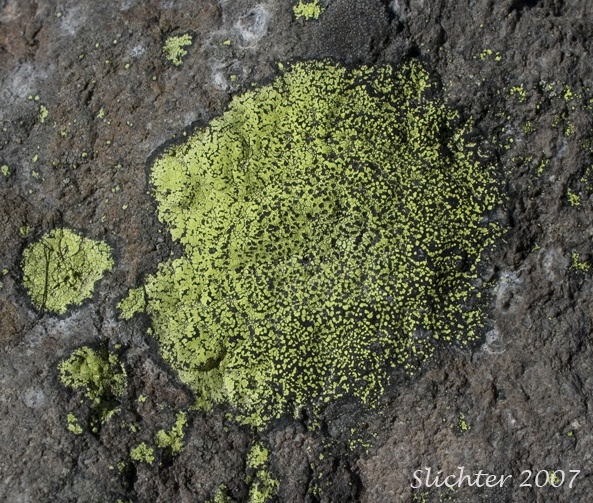
How do lichens contribute to primary succession?
a)
Lichens decompose organic matter from animals and plants
b)
Lichens begin to break down rock to form soil
c)
Lichens are nitrogen fixing bacteria
d)
Lichens convert carbohydrates into fossil fuels.
17.
What is the name given to lichen or algae after a primary succession?
a)
pioneer species
b)
volunteer species
c)
founder species
d)
conqueror species
18.

After a volcanic eruption, lava covers the land. What is the order that plants grow to repopulate the area?

a)

Lichens → Shrubs → Grasses → Trees

b)

Lichens → tree → shrubs→Grasses

c)

Grasses → Lichens → Shrubs → Trees

d)

Lichens → Grasses → Shrubs → Trees

19.

An ocean bay food web is pictured.


Imagine a sea otter moves to the area. The sea otter eats crabs. What would happen to the ecosystem?

a)

The ecosystem would stay the same

b)

The sea duck population will decrease (go down)

c)

The crab population will increase (go up)

d)

The sea duck population would increase (go up)

20.

What is the arrow pointing at?

a)

carrying capacity

b)

biotic potential

c)

density-independent

d)

density dependent

21.

parasites, disease, predators, are examples of what type of limiting factors?

a)

density dependent

b)

density independent

c)

survivorship

d)

type 1 curve

22.

What is the carrying capacity mean?

a)

The number of individuals an area can carry

b)

the number of births

c)

The number of deaths an area has

d)

not sure

23.

The exponential graph is a graph that shows us population size increasing quickly, which one below shows us that

a)
b)
c)
d)
24.

Regardless of population size or density, these factors affect all populations similarly...

a)

density-dependent limiting factors

b)

density-independent limiting factors

c)

carrying capacity

d)

exponential growth

25.
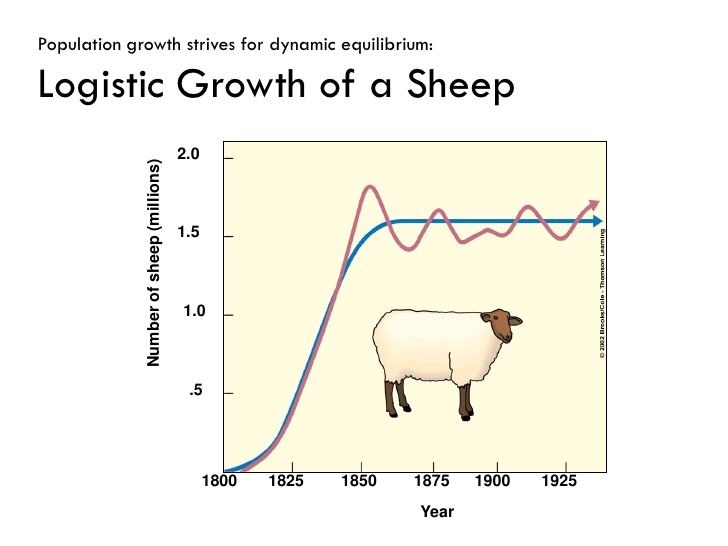
What is the carrying capacity for this sheep population?
a)
1.8 million
b)
1.25 million
c)
1.6 million
d)
1.o million
26.
which statement sounds accurate based on the graph data. 
a)
The zebra and lions do not affect each other
b)
when lions population increases, so does the zebra population
c)
When the zebra population increases, it causes the lion population to also increase
d)
when zebra populations go down, the zebra population goes up. 
27.
Which kind of growth does the human population follow? It is described as a J-shaped curve.
a)
Exponential Growth
b)
Logistic Growth
c)
Outstanding Growth
d)
Minimal Growth
28.

Which of the following are density dependent factors?

a)

competition for resources

b)

predation

c)

disease

d)

natural disasters

29.

If the plant population decreased, the amount of carbon dioxide in the atmosphere would _________.

a)

Stay the same

b)

Increase

c)

Decrease

30.

In the carbon cycle, animals can release carbon back into the cycle through __________ or through __________.

a)

burning . . . photosynthesis

b)

fixation . . . decomposition

c)

decomposition . . . photosynthesis

d)

respiration . . . decomposition

e)

respiration . . . photosynthesis

31.

What kind of organism takes out the most carbon from the atmosphere?

a)

Plants

b)

Bacteria

c)

Animals

d)

Humans

32.

Check all the ways that carbon dioxide is ADDED to the atmosphere.

a)

Respiration

b)

Combustion

c)

Photosynthesis

d)

Decomposition

33.

Check all the ways that carbon dioxide is REMOVED from the atmosphere.

a)

Respiration

b)

Combustion

c)

Photosynthesis

d)

Decomposition

e)

Oceans

34.

What is Global Warming?

a)

Increasing temperature in Earth's atmosphere

b)

Decreasing temperature in a city

c)

Increasing rain rates in Earth

d)

Decreasing temperature rates

35.

Which 2 greenhouse gases contribute the MOST to global warming of Earth?

a)

N2O and H2O

b)

O3 and H2O

c)

CO2 and CH4

36.
Why does cutting down trees increase global warming?
a)
trees soak up carbon dioxide
b)
trees provide shade which counteracts global warming
c)
trees absorbs the sun's energy without radiating back into the atmosphere
d)
trees drain greenhouse gases like methane from soil
37.

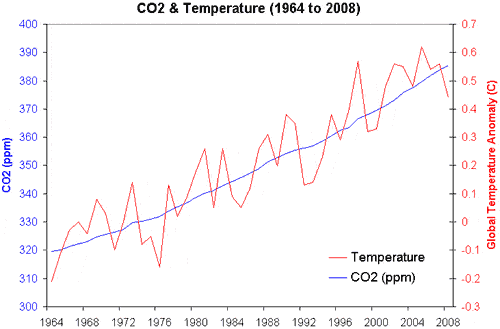
The graph below shows CO2 emissions and temperatures from 1909 to 1949. What conclusion is best supported by the graph?

a)

There is no relationship between carbon dioxide concentrations and temperatures

b)

As carbon dioxide concentrations increase, temperatures increase

c)

As carbon dioxide concentrations increase, temperatures decrease

d)

As carbon dioxide concentrations decrease, temperatures increase

38.

What is the greenhouse effect?

a)

A natural process where gases trap heat in the atmosphere.

b)

A man-made process where gases trap heat in the atmosphere.

c)

A natural process where the ocean traps heat in the atmosphere.

d)

A man-made process where the ocean traps heat in the atmosphere.