wayground logo

Free Printable Worksheets

Font size

S
M
L
XL
Worksheets

Physical Science Kinematics Midterm Review

Total questions: 217

Worksheet time: 6hrs 44mins

Name
Class
Date
1.
What is the basic unit for velocity?
a)
m/s2
b)
m
c)
N
d)
m/s
2.
Which of the following does NOT explain acceleration?
a)
Speeding up
b)
Changing directions
c)
Slowing down
d)
Constant speed
3.
An object which is moving at constant speed in a circle has an acceleration.
a)
True
b)
False
4.
An object moving to the right AND speeding up has a rightward acceleration.
a)
True
b)
False
5.
Which of the following is NOT a unit for acceleration?
a)
m/s2
b)
cm/s2
c)
km/hr
d)
km/hr2
6.
What is the basic unit for force?
a)
m/s2
b)
m
c)
N
d)
m/s
7.
An object moving to the right AND slowing down has a rightward acceleration.
a)
True - it has rightward acceleration
b)
False - it has leftward acceleration
8.
A falling skydiver which has reached terminal velocity is considered to be in a state of free fall.
a)
True
b)
False
9.
The acceleration due to gravity on Earth is...
a)
6.67 m/s2
b)
9.8 m/s2
c)
6.67 m/s
d)
9.8 m/s
10.
What is the basic unit for distance?
a)
m/s2
b)
m
c)
N
d)
m/s
11.
The rate at which velocity changes is called acceleration.
a)
True
b)
False
12.

A train travels 6 meters in the first second of travel, 6 meters again during the second second of travel, 6 meters again during the third second. It's acceleration is __ m/s2?

a)

0

b)

6

c)

12

d)

18

13.
In the absence of air resistance, objects fall at constant 
a)
speed
b)
velocity
c)
acceleration
d)
all of the above
14.
An object  accelerates at 2  m/s^2. Assuming the object starts from rest, how much time does it need to accelerate to a speed of 16  m/s?
a)
4 s
b)
8 s
c)
16 s
d)
1/16 s
15.
A car is traveling at 21.0 m/s. It slows to a stop at a constant rate over 5.00 s. How far does the car travel during those 5.00 seconds before it stops? 
a)
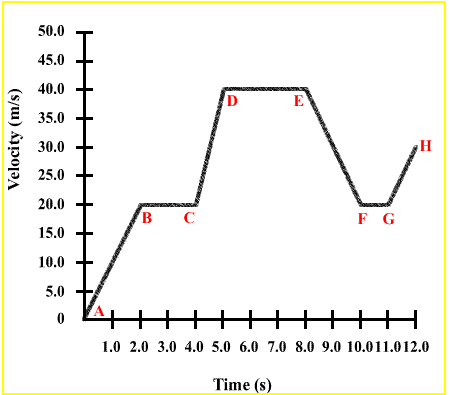
4.20 m
b)
52.5 m
c)
105 m
d)
158 m
16.
In each of the following cases, determine which car has the greatest acceleration.
a)
starts from 0 m/s to 20 m/s in 4 seconds.
b)
speed up from 20m/s to 40m/s in 3 seconds
c)
slow down from 50m/s to stop in 2 seconds
d)
starts from 0 m/s to 20m/s in 5 seconds
17.
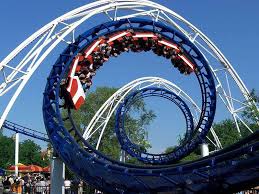
A roller coasters accelerates from an initial velocity of 6.0 m/s to a final velocity of 70 m/s over 4 seconds.  What's the acceleration?
a)
24 m/s2
b)
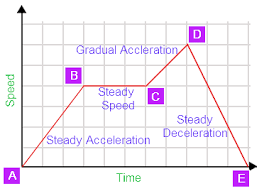
18 m/s2
c)
16 m/s2
d)
16 m/s
18.
A golf ball starts with a speed of 2 m/s and slows at a constant rate of 0.5 m/s2, what is its velocity after 2 s?
a)
0 m/s
b)
0.5 m/s
c)
1 m/s
d)
1.5 m/s
19.
A dog runs with an initial speed of 7.5 m/s to a stop in 15 seconds.  What is the dog's acceleration?
a)
-7.5 m/s
b)
-7.5 m/s2
c)
-0.5 m/s2
d)
7.5 mi//hr
20.

Position

a)

a specific point in space

b)

the amount of space between one point and another

c)

the change in position of an object

d)

the point or place where something begins

21.

Distance

a)

the amount of space between one point and another

b)

a specific point in space

c)

the change in position of an object

d)

the point or place where something begins

22.

speed

a)

distance traveled per unit of time

b)

a change in the position of an object compared to another object (related term: move, movement)

c)

measured period during which something occurs

d)

a change in the velocity (speed, direction, or both) of a body (related word: accelerate)

23.

motion

a)

a change in the position of an object compared to another object (related term: move, movement)

b)

a pull or push that is applied to an object

c)

the change in position of an object

d)

the amount of space between one point and another

24.

time

a)

measured period during which something occurs

b)

a change in the position of an object compared to another object (related term: move, movement)

c)

a pull or push that is applied to an object

25.

displacement

a)

the change in position of an object

b)

the amount of space between one point and another

c)

the speed and direction of moving objects

d)

the point or place where something begins

26.

velocity

a)

the speed and direction of moving objects

b)

distance traveled per unit of time

c)

a specific point in space

d)

a pull or push that is applied to an object

27.

acceleration

a)

a change in the velocity (speed, direction, or both) of a body (related word: accelerate)

b)

distance traveled per unit of time

c)

a change in the position of an object compared to another object (related term: move, movement)

d)

the change in position of an object

28.

acceleration

a)

a change in the velocity (speed, direction, or both) of a body (related word: accelerate)

b)

distance traveled per unit of time

c)

a change in the position of an object compared to another object (related term: move, movement)

d)

the change in position of an object

29.

How can you tell if an object is in motion?

a)

the object will look different

b)

I'll be able to see the forces

c)

It will remain in the same position

d)

Its position will change in relation to other objects

30.

What is velocity?

a)

The distance an object travels per unit of time.

b)

The change in position of an object.

c)

Speed in a given direction.

d)

The state in which one objects distance from another is changing.

31.

Speed that remains the same or does not change

a)

Distance

b)

Constant Speed

c)

Mass

d)

Acceleration

32.

Billy runs 400 meters to Andy's house, turns around, and runs 400 meters back home. What is Billy's distance?

a)

0 meters

b)

400 meters

c)

800 meters

d)

1600 meters

33.

Billy runs 400 meters to Andy's house, turns around, and runs 400 meters back home. What is Billy's displacement?

a)

0 meters

b)

400 meters

c)

800 meters

d)

1600 meters

34.

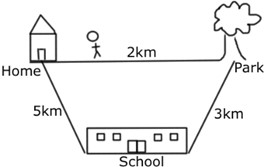
Jerry walked from home to school, then from the school to the park. What is his total displacement?

a)

2 km

b)

5 km

c)

8 km

d)

10 km

35.

Jerry walked from home to school, then from the school to the park. What is his total distance?

a)

2 km

b)

5 km

c)

8 km

d)

10 km

36.

From the figure, what is the displacement?

a)

20 meters

b)

25 meters

c)

15 meters

d)

25 meters NE

37.
David walks 3 km north, and then turns east and walks 4 km. What is the distance?
a)
7 km
b)
3 km
c)
4 km
d)
1 km
38.
Because displacement has a magnitude and direction it is called a ______. 
a)
distance
b)
vector
c)
arrow
d)
length
39.
A person walks 50 meters directly north, stops, and then travels 32 meters directly south.  What is their displacement?
a)
82 meters
b)
18 meters
c)
28 meters
40.

What is a difference between distance and displacement

a)

Distance is measured in seconds and displacement is measured in meters

b)

Distance is always shorter than displacement

c)

Displacement can be equal to zero if the object ends in the place it began in

d)

Distance can be equal to infinite when only a small distance has been travelled

41.

To tell that motion takes place, you must have a(n):

a)

reference point

b)

direction

c)

position

d)

speed

e)

velocity

42.

If you walk 5 meters south, 5 meters west, 5 meters north, and then 5 meters east, what is your displacement?

a)

0 m

b)

20 m

c)

15 m

d)

10 m

e)

5 m

43.

Which of the following is an example of distance?

a)

10 m

b)

10 m to the East

c)

10 m/s

d)

10 kg

44.

Which of the following is an example of displacement?

a)

10 m

b)

10 m to the East

c)

10 m/s

d)

10 kg

45.

A shopper walks eastward 3 meters and then westward 7 meters. For this motion, what is the DISTANCE moved in meters? Put in ONLY a number with no decimal. *

4 lines
46.

A shopper walks eastward 3 meters and then westward 7 meters. For this motion, what is the magnitude of the DISPLACEMENT moved in meters? Put in ONLY a number with no decimal.

4 lines
47.

A shopper walks eastward 3.2 meters and then westward 7.3 meters. For this motion, what is the direction of the displacement?

a)

eastward

b)

westward

48.

A kayaker moves 26 meters southward, then 18 meters northward, and finally 12 meters southward. For this motion, what is the DISTANCE moved in meters? Put in ONLY a number with no decimal.

4 lines
49.

A kayaker moves 26 meters southward, then 18 meters northward, and finally 12 meters southward. For this motion, what is the magnitude of the DISPLACEMENT moved in meters? Put in ONLY a number with no decimal

4 lines
50.

A kayaker moves 26 meters southward, then 18 meters northward, and finally 12 meters southward. For this motion, what is the direction of the displacement?

a)

northward

b)

southward

51.

A football coach walks 18 meters westward, then 12 meters eastward, then 28 meters westward, and finally 14 meters westward. For this motion, what is the DISTANCE moved in meters? Put in ONLY a number with no decimal.

4 lines
52.

A football coach walks 18 meters westward, then 12 meters eastward, then 28 meters westward, and finally 14 meters westward. For this motion, what is the magnitude of the DISPLACEMENT moved in meters? Put in ONLY a number with no decimal.

4 lines
53.

A football coach walks 18 meters westward, then 12 meters eastward, then 28 meters westward, and finally 14 meters westward. For this motion, what is the direction of the displacement?

a)

eastward

b)

westward

54.
What is the total displacement of the object represented in this motion graph?
a)
5 meters
b)
4 meters
c)
2 meters
d)
0 meters
55.
What is the total distance of the object represented in this motion graph?
a)
5 meters
b)
4 meters
c)
2 meters
d)
0 meters
56.
What is the total displacement of the object represented in this motion graph?
a)
5 meters
b)
4 meters
c)
2 meters
d)
0 meters
57.
What is the total distance of the object represented in this motion graph?
a)
5 meters
b)
4 meters
c)
2 meters
d)
0 meters
58.
What is the total distance of the object represented in this motion graph?
a)
0 meters
b)
10 meters
c)
11 meters
d)
20 meters
59.
What is the total displacement of the object represented in this motion graph?
a)
0 meters
b)
10 meters
c)
11 meters
d)
20 meters
60.
What is the total displacement of the object represented in this motion graph?
a)
0 meters
b)
5 meters
c)
6 meters
d)
12 meters
61.
What is the total distance of the object represented in this motion graph?
a)
0 meters
b)
5 meters
c)
6 meters
d)
12 meters
62.
What is the total displacement of the object represented in this motion graph?
a)
0 meters
b)
20 meters
c)
30 meters
d)
60 meters
63.
What is the total distance of the object represented in this motion graph?
a)
0 meters
b)
20 meters
c)
30 meters
d)
60 meters
64.
What is the total distance of the object represented in this motion graph? 
a)
50 meters
b)
- 50 meters
c)
150 meters
d)
100 meters
65.
What is the total displacement of the object represented in this motion graph? 
a)
0 meters
b)
- 50 meters
c)
50 meters
d)
100 meters
66.
What is the total distance of the object represented in this motion graph?
a)
0 meters
b)
300 meters
c)
450 meters
d)
600 meters
67.
What is the total displacement of the object represented in this motion graph?
a)
0 meters
b)
300 meters
c)
450 meters
d)
600 meters
68.
What is the total distance of the object represented in this motion graph?
a)
0 meters
b)
140 meters
c)
150 meters
d)
300 meters
69.
What is the total distance of the object represented in this motion graph?
a)
0 meters
b)
100 meters
c)
140 meters
d)
200 meters
70.
What is the total displacement of the object represented in this motion graph?
a)
0 meters
b)
100 meters
c)
140 meters
d)
200 meters
71.
What is the total displacement of the object represented in this motion graph?
a)
0 meters
b)
2 meters
c)
6 meters
d)
39 meters
72.
What is the total distance of the object represented in this motion graph?
a)
0 meters
b)
2 meters
c)
6 meters
d)
39 meters
73.
Jerry walked from home to school, then from the school to the park.  What is his total distance?
a)
2 km
b)
5 km
c)
8 km
d)
10 km
74.
Jerry walked from home to school, then from the school to the park.  What is his total displacement?
a)
2 km
b)
5 km
c)
8 km
d)
10 km
75.
Which of the following describes distance and displacement correctly?
a)
The blue arrow shows distance and the orange arrows show displacement
b)
The blue arrow shows displacement and the orange arrows show distance
c)
Both arrows show distance only
d)
Both arrows show distance and displacement
76.
Scott travels north 5 miles and then goes west 3 miles before coming straight back south 2 miles. What is his distance?
a)
10
b)
7
c)
8
d)
6
77.
Scott travels north 5 miles and then goes west 3 miles before coming straight back south 2 miles. What is his distance?
a)
10
b)
7
c)
8
d)
6
78.
Distance and direction of an object's change in position from a starting point
a)
displacement
b)
distance
c)
motion
d)
reference point
79.
 Jermaine runs exactly 2 laps around a 400 meter track. What is the displacement?
a)
800
b)
400
c)
0
d)
200
80.
David walks 3 km north, and then turns east and walks 4 km. What is the distance?
a)
7 km
b)
3 km
c)
4 km
d)
1 km
81.
Bill runs 400 meters to Andy's house, turns around, and runs 400 meters back home.  What is Bill's distance?
a)
0 meters
b)
400 meters
c)
800 meters
d)
1600 meters
82.

Jerry walked from home to school, then from the school to the park. What is his total distance?

a)

2 km

b)

5 km

c)

8 km

d)

10 km

83.

Jerry walked from home to school, then from the school to the park. What is his total displacement?

a)

2 km

b)

5 km

c)

8 km

d)

10 km

84.
A person walks 50 meters directly north, stops, and then travels 32 meters directly south.  What is their displacement?
a)
82 meters
b)
18 meters
c)
28 meters
85.
A car drives 84 meters forward.  It's displacement and distance would be the same.
a)
True
b)
False
86.

A place or object (like a stop sign or mailbox) used for comparison to determine if another object is in motion is called a

a)

comparison point

b)

frame of reference

c)

point of view

d)

motion detector

87.
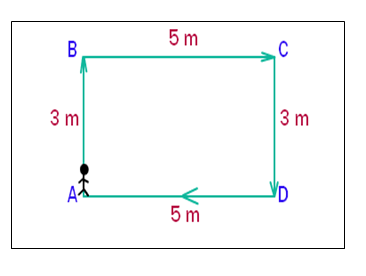
Sara walks from Point A to Point B. Which is true?
a)
Distance and displacement are EQUAL
b)
Distance is less than displacement
88.
Find the distance Sara walks from A to B,  B to C then C to D?
a)
11m
b)
3m
c)
5m
89.

After completing one trip on a roller coaster, the roller coaster's ________ is zero.

a)

displacement

b)

reference point

c)

length

d)

distance

90.
Wind pushes a toy sailboat across a pond. The boat moves in a straight path. What is changing?
a)
the boat’s direction
b)
the boat’s path
c)
the wind’s direction
d)
the boat’s position
91.
The position of a runner in a race changes as time passes. What could a reference point to describe the change in position? 
a)
the starting line
b)
the runner’s speed
c)
the runner’s right foot
d)
another runner
92.
An object is _____ if its position changes relative to another object.
a)
in motion
b)
at reset
c)
a frame of refence
d)
magical
93.
All motion is described as relative because
a)
how do you ever really know if something is in motion
b)
motion means different things to different people
c)
everything in the universe is constantly in motion, so it depends on your frame of reference
94.

The study of energy, matter, and their interactions is called....

a)

vectorogy

b)

chemistry

c)

physics

d)

physiology

95.

The change in position of an object between two points is called...

a)

distance

b)

displacement

c)

mapping

d)

path

96.

Which is an example of a vector measurement?

a)

40 miles

b)

5 seconds

c)

700 pounds

d)

30 meters to the north

97.

A bus carrying students to a band concert traveled 90 km in 2 hours. What was the speed of the bus?

a)

45 km/h

b)

45 h/km

c)

180 km/h

d)

180 h/km

98.

What is the speed of the International Space Station if it travels 300 miles in 60 seconds?

a)

5 miles/second

b)

0.2 miles/second

c)

5 seconds/mile

d)

18,000 miles/second

99.

The speed and direction of a moving object is its -

a)

velocity

b)

acceleration

c)

force

d)

distance

100.

Your family takes 5 hours to travel to Oklahoma City which is 340 miles away. What is your family's velocity?

a)

68 miles/hour northward

b)

68 miles/hour

c)

1700 miles/hour northward

d)

1700 miles/hour

101.
What two measurements are necessary for calculating speed?
a)
Mass and time
b)
Temperature and mass
c)
Mass and distance
d)
Distance and time
102.
What is the speed of an object that travels 60 meters in 4 seconds?
a)
240 m/s
b)
15 m/s
c)
0.067 m/s
d)
15 mph
103.
A measurement of how fast an object is moving
a)
Velocity
b)
Speed
c)
Vector
d)
Acceleration
104.
What is the speed of an object that travels 20 meters in 4 seconds?
a)
80 m/s
b)
0.2 m/s
c)
5 m/s
d)
24 m/s
105.
What is velocity?
a)
the quickness of an object
b)
the location of an object
c)
acceleration
d)
speed in a specific direction
106.

Jose wandered 4 km at 2 km/hr. How long did Jose wander?

a)

2 hours

b)

8 hours

c)

0.5 hours

d)

2 km

107.

A vehicle travels 2345 m in 315 s toward the evening sun. What is its speed?

a)

7.44 m/s

b)

0.13 m/s

c)

738,675 m/s

d)

7.44m

108.

What distance will a car traveling 65 km/hr travel in 180 min?

a)

11,700 m

b)

195 m

c)

21.7 m

d)

2.77 m

109.

Which of the following is an acceptable velocity measurement?

a)

25 m/s North

b)

25 m/s

c)

25 m

d)

25 m North

110.

An object travels 100 m North then 50 m South. What total distance did it travel?

a)

150 m

b)

50 m North

c)

50 m South

d)

150 m North

111.

An object travels 100 m North then 50 m South. What is its total displacement?

a)

150 m

b)

50 m North

c)

50 m South

d)

150 m North

112.

A runner runs 2 laps around a track with a circumference of 400 m. What is their total distance?

a)

800 m

b)

0

c)

400 m

d)

400 m North

113.

A runner runs 2 laps around a track with a circumference of 400 m. What is their total displacement?

a)

800 m

b)

0

c)

400 m

d)

400 m North

114.
A girl is pedaling her bicycle at a speed of 0.10 km/min.  How far will she travel in two hours? (pay attention to units) 
a)
20 km 
b)
.2 km
c)
3 km 
d)
12 km 
115.

How far does a lorry move if it is travelling at 12m/s for 180s?

a)

2160 m

b)

0.06 m

c)

15 m

d)

21.6 m

116.

How long does it take a car to travel 40m at 12m/s?

a)

4.8 s

b)

480 s

c)

3.33 s

d)

33.3 s

117.

A team of rowers are training on the River Lagan. The captain gets there early and warms up. It takes him 30 s to row 100m in the direction of the water flow. What is his speed?

a)

3000 m/s

b)

0.3 m/s

c)

3.33 m/s

d)

0 m/s

118.

How far does a truck move if it's travelling at 15m/s for 20 min?

a)

18000 m

b)

300 m

c)

0.75 m

d)

180 km

119.
What is speed?
a)
how far you go
b)
how much distance is covered over a period of time
c)
how fast you accelerate
d)
the change in the location of a object
120.
What two measurements are necessary for calculating speed?
a)
Mass and time
b)
Temperature and mass
c)
Mass and distance
d)
Distance and time
121.
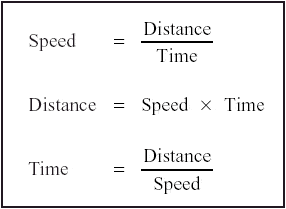
What is the equation to calculate speed?
a)
speed = distance/time
b)
speed = time/distance
c)
speed = time x distance 
d)
speed = speed/time 
122.
Which of the following is a unit of speed ?
a)
sec
b)
mi
c)
m/s
d)
min
123.
Velocity is both ____ and _____. 
a)
speed , direction 
b)
direction, mass
c)
volume, density 
d)
direction, magnitude 
124.
Which of the following represents a velocity?
a)
40 m
b)
40 m north
c)
40 m/s
d)
40 m/s north
125.

A car travelling 300 kilometres in 5 hours is an example of _____.

a)

Speed

b)

Velocity

c)

Acceleration

d)

Direction

126.

What is the speed of an object that travels 60 metres in 4 seconds?

a)

240 m/s

b)

15 m/s

c)

0.067 m/s

d)

15 mph

127.

Calculate the speed of a train that travelled 400 kilometres in 5 hours.

a)

20 km/h

b)

20 m/s

c)

80 km/h

d)

80 m/s

128.
What is the speed of a cheetah that travels 112.0 m in 4.0 s?
a)
0.0357 m/s
b)
28 m/s
c)
0.036 m/s
d)
28.0 m/s
129.
A car moves a distance of 1000 m with an average speed of 28 m/s.   Calculate the time.
a)
36 seconds
b)
28,000 seconds
c)
28 seconds
d)
972 seconds
130.

How long will it take to go 150,000 m travelling at 50 km/hr?

a)

3000 hours

b)

3000 sec

c)

3 hours

d)

3 sec

131.
A cheetah runs with an average speed of 32 m/s for 30 seconds.  How far did the cheetah run?
a)
960 m
b)
1.07 m
c)
0.94 m
d)
62 m
132.

What distance will a car travelling 65 km/hr travel in 180 min?

a)

11,700 m

b)

195 m

c)

21.7 m

d)

2.77 m

133.
On a distance vs. time graph, the steeper the slope _____
a)
the slower the speed
b)
the faster the speed
c)
less acceleration
d)
greater acceleration
134.

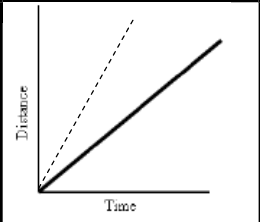
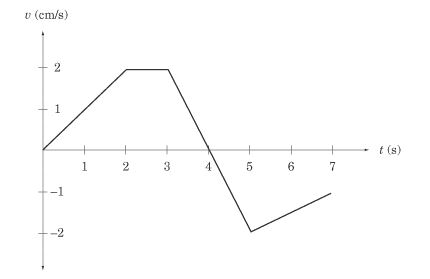
Describe the speed of the object from

2-5 seconds using the speed vs. time graph.

a)

Increasing speed

b)

Stationary

c)

Decreasing speed

d)

Constant speed

135.

Describe the speed of the object from 4-6 seconds using the distance vs. time graph.

a)

Increasing speed

b)

Decreasing speed

c)

Stationary

d)

Constant speed

136.
Which time section is the object moving the fastest?
a)
0-10 seconds
b)
10-20 seconds
c)
20-30 seconds
d)
30-40 seconds
137.
Which section of the graph shows decreasing velocity?
a)
CD
b)
DE
c)
EF
d)
GH
138.
In which time interval was the object speeding up?   
a)
between 0 s and 2 s
b)
between 2 s and 4 s
c)
between 6 s and 8 s
d)
between 8 s and 10 s
139.
What is the formula to calculate speed?
a)
Speed = time/distance
b)
Speed = distance/time
c)
Speed = distance x time
d)
Speed = time x distance
140.
Which of the following is a unit for acceleration?
a)
km/s
b)
m/s2
c)
mi/hr
d)
ft
141.
Can be measured in meters per second (m/s)
a)
Distance
b)
Time
c)
Speed
d)
Acceleration
142.
What is velocity?
a)
the quickness of an object
b)
the location of an object
c)
acceleration
d)
speed in a specific direction
143.
When a car goes around a corner at 20 mph, why do we say it  accelerates?
a)
The car is accelerating because of the velocity is constant
b)
The car accelerates because it's going 20 mph
c)
Cars always accelerate when they are in motion
d)
The car is accelerating because it's changing direction
144.
Calculate the average speed (in meter/sec) if a cheetah runs 180 meters in 10 seconds.
a)
198 m/sec
b)
170 m/sec
c)
12 m/sec
d)
18 m/sec
145.
A value that only has magnitude (a number)
a)
Scalar
b)
Vector
c)
Speed
d)
Velocity
146.
Of the following, which is a vector?
a)
Mass
b)
Time
c)
Speed
d)
Velocity
147.
Acceleration is defined as the CHANGE in 
a)
time it takes for one place to move to another place. 
b)
velocity of an object.
c)
distance divided by the time interval 
d)
velocity divided by the time interval 
148.
Acceleration only takes place when things speed up. 
a)
True
b)
False
149.
In each of the following cases, determine where the car has no acceleration ?
a)
A car shortly after a stoplight turns green.
b)
A car approaching a red light
c)
A car with the cruise control set at 80 km/h
d)
A car turning a curve at a constant speed
150.
A roller coasters accelerates from an initial velocity of 6.0 m/s to a final velocity of 70 m/s over 4 seconds.  What's the acceleration?
a)
24 m/s2
b)
18 m/s2
c)
16 m/s2
d)
16 m/s
151.
A dog runs with an initial speed of 7.5 m/s on a waxed floor.  It slides to a stop in 15 seconds.  What is the acceleration?
a)
-7.5 m/s
b)
-7.5 m/s2
c)
-0.5 m/s2
d)
7.5 mi//hr
152.
A drag racer accelerated from 0 m/s to 200 m/s in 5 s.  What was the acceleration?
a)
0 m/s
b)
40 m/s2
c)
-40 m/s2
d)
40 m/s
153.
Acceleration can be classified as _______________
a)
Speeding up
b)
Slowing Down
c)
Changing directions
d)
All of the above
154.
A golf ball accelerates off a tee at 15m/s2, changing its velocity from 0m/s to 50 m/s down the fairway. How long did it take the golf ball to accelerate?
a)
750 seconds
b)
35 seconds
c)
0.3 seconds
d)
3.3 seconds
155.

In which of the following situations would a car be speeding up while traveling forward?

a)

positive velocity and positive acceleration

b)

positive velocity and negative acceleration

c)

negative velocity and positive acceleration

d)

negative velocity and negative acceleration

156.

In which of the following situations would a car be slowing down while traveling backwards?

a)

positive velocity and positive acceleration

b)

positive velocity and negative acceleration

c)

negative velocity and positive acceleration

d)

negative velocity and negative acceleration

157.

What are the units for acceleration?

a)

m/s2

b)

m

c)

sec

d)

s/m

158.

What is the acceleration in the first ten seconds?

(15m/s - 0m/s) / 10s =

a)

4 m/s2

b)

1.5 m/s2

c)

10 m/s2

d)

0 m/s2

159.

In which part of the graph is the object slowing down?

a)

A

b)

B

c)

C

d)

D

160.

Match the following graphs to the right description.

a)
1.

Speeding up

b)
2.

No acceleration (constant speed)

c)
3.

Slowing down

161.

What is the acceleration in the first ten seconds?

(15m/s - 0m/s) / 10s =

a)

4 m/s2

b)

1.5 m/s2

c)

10 m/s2

d)

0 m/s2

162.

In which part of the graph is the object slowing down?

a)

A

b)

B

c)

C

d)

D

163.

Karina is slowing down on her skateboard. She starts at a speed of 5.5m/s and slows to 1.0 m/s over a time of 3.0 seconds. What is Karina's acceleration?

a)

-1.5 ms2\frac{m}{s^2}

b)

8.5 m/s

c)

-2.5 m/s

d)

4.5 km/s

164.

A roller coaster's velocity at the top of a hill is 10m/s. 2 seconds later, it reaches the bottom of the hill with a velocity of 26 m/s. What was the acceleration of the coaster?

a)

20 m/s

b)

10 m/s2

c)

8 ms2\frac{m}{s^2}

d)

16 m/s3

165.

Karina is slowing down on her skateboard. She starts at a speed of 5.5m/s and slows to 1.0 m/s over a time of 3.0 seconds. What is Karina's acceleration?

a)

-1.5 ms2\frac{m}{s^2}

b)

8.5 m/s

c)

-2.5 m/s

d)

4.5 km/s

166.

A negative acceleration means that your object is  

a)

constant

b)

speeding up

c)

at rest

d)

slowing down

167.

A positive acceleration means that your object is

a)

at rest

b)

speeding up

c)

moving

d)

slowing down

168.

Acceleration: is the rate of change in

a)

velocity

b)

speed

c)

displacement

d)

direction

169.

A bus starts from rest and accelerates to 14 m/s in 4 s. What is the average acceleration of the bus?

a)

3.5 m/s2

b)

5.9 m/s2

c)

10.5 m/s2

d)

24 m/s2

170.

Which of the following objects is accelerating?

a)

A car driving in a northwest at a constant speed of 35 mph.

b)

A car driving southwest at a constant speed of 35 mph.

c)

A car driving in a circle at a constant speed of 35 mph.

Back

d)

A car driving south at a constant speed of 45 mph.

171.
A car accelerates from a standstill to 70 m/s in 10 seconds.  What is the acceleration?
a)
0.7m/s2
b)
7m/s2
c)
14m/s2
d)
none of the above
172.
What is happening in this graph from point A to B?
a)
The object is accelerating.
b)
The object is not moving.
c)
The object is decelerating.
d)
The object is moving at a constant speed.
173.
Which graph shows the object standing still?
a)
A
b)
B
c)
C
d)
D
174.
A box sliding down an inclined plane attains a velocity of 27 m/s in 3 seconds from rest.  Find the acceleration.
a)
30 m/s
b)
24 m/s2
c)
9 m/s2
d)
81 km/hr
175.
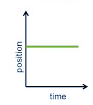
The picture of the position vs. time graph shows an object that is...
a)
accelerating/speeding up
b)
moving at a constant speed 
c)
not moving 
d)
accelerating/slowing down. 
176.
A dog runs with an initial speed of 7.5 m/s on a waxed floor.  It slides to a stop in 15 seconds.  What is the acceleration?
a)
-7.5 m/s
b)
-7.5 m/s2
c)
-0.5 m/s2
d)
7.5 mi//hr
177.
What kind of acceleration is shown here?
a)
positive
b)
negative
c)
none
d)
varies
178.
What kind of acceleration is shown here?
a)
positive
b)
negative
c)
none
d)
varies
179.
Which section of the graph shows constant velocity?
a)
AB
b)
BC
c)
EF
d)
GH
180.

Select the description of motion from A - B.

a)

Slowing down away from the origin

b)

Speeding up away from the origin

c)

Constant velocity away from the origin

d)

Constant velocity towards the origin

181.

At what point is the speed the greatest?

a)

C-D

b)

B-C

c)

A-B

d)

D-E

182.
Acceleration occurs when an object changes its speed or ______.
a)
direction
b)
force
c)
inertia
d)
mass
183.
Acceleration occurs when an object changes its speed or ______.
a)
direction
b)
force
c)
inertia
d)
mass
184.
Which runner stopped for a rest?
a)
Albert
b)
Bob
c)
Charlie
185.
Which runner won the race?
a)
Albert
b)
Bob
c)
Charlie
186.
Velocity is
a)
speed and acceleration
b)
constant speed
c)
a frame of reference
d)
speed in a given direction
187.
A car driving at 50 miles per hour drives for 2 hours. What distance did it cover?
a)
50 miles
b)
25 miles
c)
100 miles
d)
75 miles
188.
What does this graph represent?
a)
Constant Speed
b)
Acceleration
c)
Not moving
189.
What does this graph represent?
a)
Constant speed
b)
Acceleration
c)
Not moving
190.

What is happening between 2 and 3 seconds?

a)

The object is not moving.

b)

The object is not accelerating.

c)

The object is slowing down.

d)

The object is speeding up.

191.

What is happening between 2 and 3 seconds?

a)

The object is not moving.

b)

The object is not accelerating.

c)

The object is slowing down.

d)

The object is speeding up.

192.
What is happening at E?
a)
Stationary
b)
Accelerating
c)
Fast steady speed; moving away from the starting position
d)
Steady speed; returning to start position
193.
Which line represents an object moving at a faster speed?
a)
A
b)
B
194.
This graph demonstrates an object that is -
a)
At a constant speed
b)
Increasing speed
c)
Decreasing speed
d)
Stationary
195.
This graph demonstrates an object that is -
a)
At a constant speed
b)
Increasing speed
c)
Decreasing speed
d)
Stationary
196.
This graph demonstrates an object that is -
a)
At a constant speed
b)
Increasing speed
c)
Decreasing speed
d)
Stationary
197.
This graph demonstrates an object that is -
a)
At a constant speed
b)
Increasing speed
c)
Decreasing speed
d)
Stationary
198.
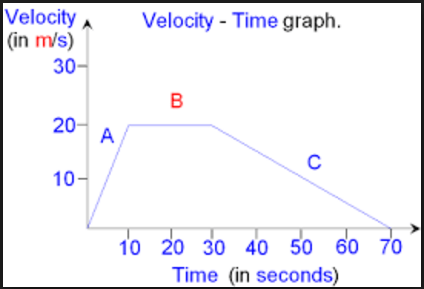
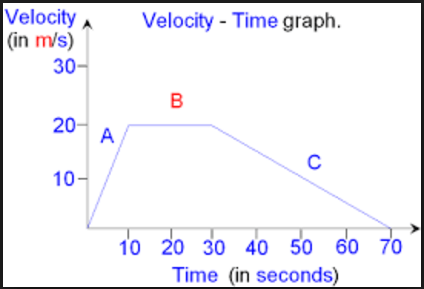
This is a velocity-time graph.  What is the object doing in segment B?
a)
Positive acceleration
b)
Negative acceleration
c)
Constant Velocity
d)
Not moving
199.

What is the formula for speed?

a)

speed = distance x time

b)

speed=distance / time

c)

speed = time / distance

d)

speed = distance + time

200.
Which graph is showing acceleration (getting faster)
a)
D
b)
E
c)
both D and E
d)
neither D or E
201.
How long did it take this object to travel 10 m?
a)
0 s
b)
10 s
c)
15 s
d)
20 s
202.
At 60 seconds, how far had this object traveled? 
a)
0 m
b)
10 m
c)
20 m
d)
40 m
203.

This is a velocity-time graph. What is the object doing in segment A?

a)

Speeding up

b)

Slowing down

c)

Constant Velocity

d)

Not moving

204.

This is a velocity-time graph. What is the object doing in segment B?

a)

Positive acceleration

b)

Negative acceleration

c)

Constant Velocity

d)

Not moving

205.

This is a velocity-time graph. What is the object doing in segment C?

a)

Speeding up

b)

Slowing down

c)

Constant Velocity

d)

Not moving

206.

Describe the motion of the object in the graph

a)

Moving with constant speed

b)

Speeding up

c)

Not moving

207.
What is this graph showing?
a)
Constant Speed
b)
Acceleration (speeding up)
c)
Deceleration (slowing down)
d)
No motion
208.
Which graph shows the object standing still?
a)
A
b)
B
c)
C
d)
D
209.
Which graph represents zero acceleration (constant velocity)?
a)
A
b)
B
c)
C
d)
D
210.
Which graph represents the greatest acceleration?
a)
A
b)
B
c)
C
d)
D
211.

What is occurring on this graph?

a)

speeding up in the positive direction

b)

moving at a constant speed in the positive direction

c)

not moving

d)

moving at a constant speed in the negative direction

212.

What is occurring on this graph?

a)

Negative acceleration

b)

moving at a constant speed in the positive direction

c)

positive acceleration

d)

negative net force

213.
What is happening at E?
a)
Stationary
b)
Accelerating
c)
Fast steady speed; moving away from the starting position
d)
Steady speed; returning to start position
214.

What is occurring on this graph?

a)

slowing down in the positive direction

b)

moving at a constant speed in the positive direction

c)

positive change in momentum

d)

positive net force

215.

This graph represents slowing down in the positive direction then speeding up in the positive direction.

a)
b)
c)
d)
216.

The race ends at 15 meters. Based on current position and velocities which runner would win the race?

a)

A

b)

B

c)

C

217.
Which runner had a head start?
a)
A
b)
B
c)
C