wayground logo

Free Printable Worksheets

Font size

S
M
L
XL
Worksheets

Biology unit 1 Quizzez

Total questions: 71

Worksheet time: 1hrs 2mins
Name
Class
Date
1.
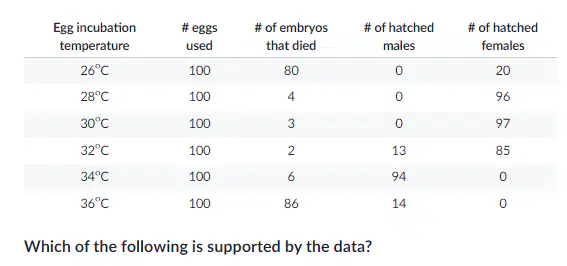
Bonus: Fertilized eggs from the same species of sea turtle were incubated at different temperatures. The hatchling data is shown in the table below.
a)
The largest number of male sea turtles will develop at 28 Degrees
b)
Most of the sea turtle eggs hatched if incubated at 26 Degrees
c)
Female sea turtles develop at higher temperatures.
d)
The sex of sea turtle offspring depends on the incubation temperature.
2.
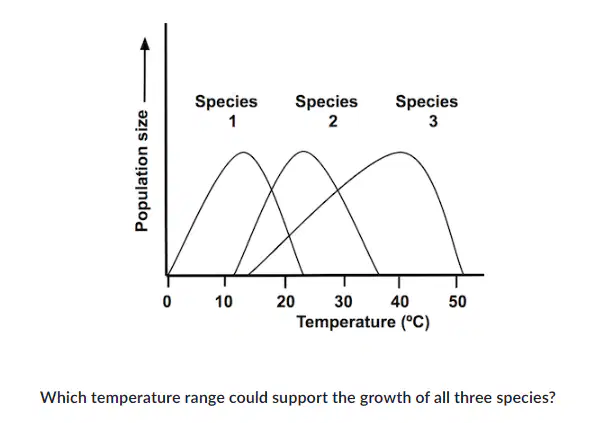
Bonus: The graph below shows the effect of temperature on population size of three different species of fish.
a)
40 - 45 Degree Celsius
b)
0 -5 Degree Celsius
c)
15 - 20 Degrees Celsius
d)
30 - 35 Degrees Celsius
3.
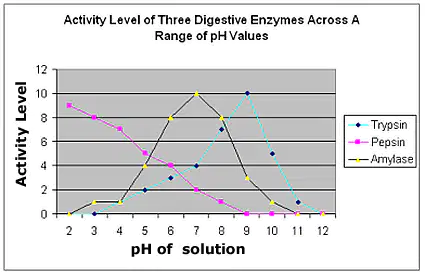
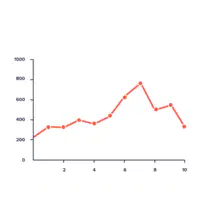
The graph illustrates the relative activity levels of three common digestive enzymes, where 0 represents no activity and 12 represents the highest level of activity. Which enzyme is most active at a neutral pH of 7?
a)
Amylase and pepsin
b)
Amylase
c)
Pepsin
d)
Trypsin
4.
Information gathered from observing a plant grow 3 cm over a two-week period is called
a)
qualitative data.
b)
variables.
c)
hypotheses.
d)
quantitative data.
5.
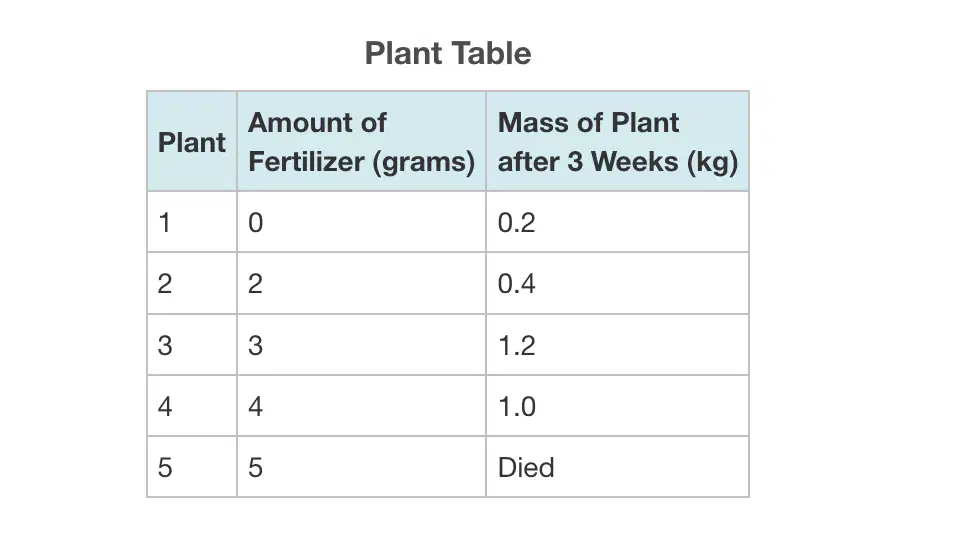
8. What is the dependent variable in the experiment shown?
a)
number of plants
b)
amount of fertilizer
c)
death rate
d)
mass of plant
6.
If you do not understand a direction or part of a lab procedure, you should
a)
A. figure it out as you do the lab.
b)
B. try several methods until something works.
c)
C. ask the instructor before proceeding.
d)
D. skip it and go on to the next part.
7.
1. Farmer Brown tests the hypothesis that the more alfalfa sprouts cattle eat, the more milk they produce. He divides his pasture into four fields and puts twenty cattle in each field. Field 1 cows get no alfalfa sprouts, field 2 cows get ten pounds of sprouts per day, field 3 cows get twenty pounds of sprouts, and field 4 cows get thirty pounds. He feeds all groups fifty pounds of regular hay per day, uses the same breed of cattle, and gives them the same amount of water. He measures gallons of milk produced per cow every day. What is the independent (tested) variable in Farmer Brown's experiment?
a)
The number of cattle in each field.
b)
The amount of alfalfa sprouts the cattle are fed.
c)
The amount of milk the cows produce.
d)
The ratio of hay to milk produced.
8.
4. Which piece of lab equipment has specific markings for highly accurate measurements of liquid volumes?
a)
graduated cylinder
b)
test tube
c)
beaker
d)
watch glass
9.
5. Why is collaboration so important in the building of scientific knowledge?
a)
Collaboration prevents plagiarism.
b)
Collaboration allows for the sharing of knowledge to better develop plans and experiments.
c)
Collaboration allows more people to take the blame if something goes wrong.
d)
Collaboration allows private companies to make more profit from their employees' works.
10.
19. A unit that measures length is the
a)
meter.
b)
gram.
c)
liter.
d)
newton.
11.
States whether or not the hypothesis was supported
a)
Constant ______
b)
Conclusion ______
c)
Hypothesis ______
d)
Independent Variable ______
e)
Dependent Variable ______
12.
Which of the following is NOT a goal of science?
a)
to investigate and understand the natural world
b)
to explain events in the natural world
c)
to establish a collection of unchanging truths
d)
to use derived explanations to make useful predictions
13.
The work of scientists usually begins with...
a)
testing a hypothesis.
b)
careful observations.
c)
creating experiments.
d)
drawing conclusions.
14.
Information gathered from observing a plant grow 3 cm over a two-week period is called...
a)
inferences.
b)
variables.
c)
hypotheses.
d)
data.
15.
Based on your observations, you suggest that the presence of water could accelerate the growth of bread mold. This is...
a)
a conclusion.
b)
a hypothesis.
c)
an experiment.
d)
an analysis.
16.
A scientific hypothesis...
a)
can be based on personal beliefs or opinions.
b)
can be tested by experiments or observations.
c)
does not have to be tested to be accepted as correct.
d)
is a proven fact with much evidence to support it.
17.
During a controlled experiment, a scientist isolates and tests...
a)
a conclusion.
b)
a mass of information.
c)
a control group.
d)
a single variable.
18.
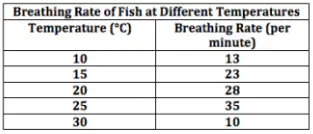
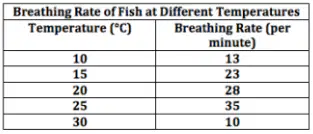
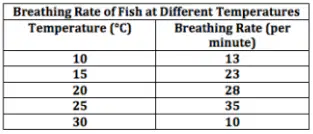
A group of scientists wanted to test whether or not the breathing rate of fish was affected by the temperature of the water. The data they collected is shown in the table below. What is the dependent variable in the data table?
a)
temperature
b)
breathing rate
c)
fish type
d)
amount of water
19.
A group of scientists wanted to test whether or not the breathing rate of fish was affected by the temperature of the water. The data they collected is shown in the table below. What is the independent variable in the data table?
a)
temperature
b)
breathing rate
c)
fish type
d)
amount of water
20.
A group of scientists wanted to test whether or not the breathing rate of fish was affected by the temperature of the water. The data they collected is shown in the table below. What conclusion can be drawn based on the data provided?
a)
As the temperature of the water increases, the breathing rate of fish also increases until 30℃ is reached and the breathing rate of fish decreases.
b)
As the temperature of the water increases, the breathing rate of fish doesn’t change.
c)
As the temperature of the water increases, the breathing rate of fish decreases.
d)
As the temperature of the water increases, the breathing rate of fish increases indefinitely.
21.
A well-tested explanation that explains many repeated observations and is supported by ample amount of evidence is called...
a)
a hypothesis.
b)
an inference.
c)
a theory.
d)
a controlled experiment.
22.
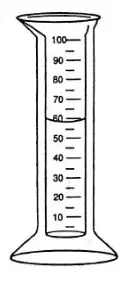
Approximately how many mL of water are in the graduated cylinder below?
a)
58 mL
b)
60 mL
c)
50 mL
d)
30 mL
23.
A graph that uses rectangular shapes to represent data.
a)
Theory
b)
Bar Graph
c)
Precision
d)
Accuracy
24.
A statement that describes a natural phenomenon or relationship that has been repeatedly observed and confirmed.
a)
Theory
b)
Law
c)
Precision
d)
Accuracy
25.
The degree to which repeated measurements or results are close to each other.
a)
Theory
b)
Law
c)
Precision
d)
Accuracy
26.
The degree to which a measurement or result is close to the true or accepted value.
a)
Theory
b)
Law
c)
Precision
d)
Accuracy
27.
The number of times an experiment is repeated to obtain consistent results.
a)
Law
b)
Precision
c)
Accuracy
d)
Trials
28.
The variable that is measured or observed in an experiment.
a)
Control Group
b)
Experimental Group
c)
Dependent Variable
d)
Line Graph
29.
The group in an experiment that receives the treatment or variable being tested.
a)
Control Group
b)
Experimental Group
c)
Dependent Variable
d)
Line Graph
30.
The group in an experiment that does not receive the treatment or variable being tested.
a)
Control Group
b)
Experimental Group
c)
Dependent Variable
d)
Line Graph
31.
A graph that uses points connected by lines to represent data.
a)
Control Group
b)
Experimental Group
c)
Dependent Variable
d)
Line Graph
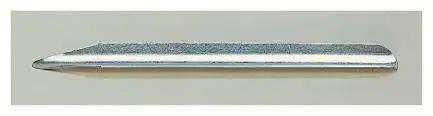
32.
Identify the following image:
a)
Test Tube Holder
b)
Scoopula
c)
Mortar and Pestle
d)
Hot Plate
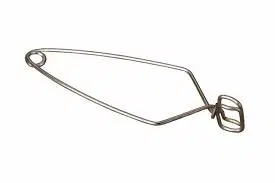
33.
Identify the following image:
a)
Test Tube Holder
b)
Scoopula
c)
Mortar and Pestle
d)
Hot Plate
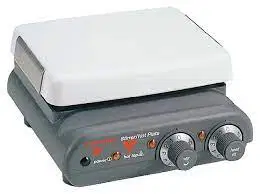
34.
Identify the following image:
a)
Test Tube Holder
b)
Scoopula
c)
Mortar and Pestle
d)
Hot Plate
35.
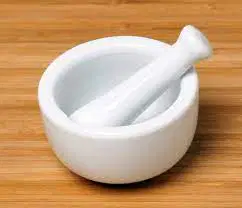
Identify the following image:
a)
Test Tube Holder
b)
Scoopula
c)
Mortar and Pestle
d)
Hot Plate
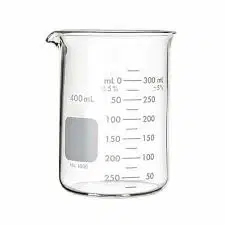
36.
Identify the following image:
a)
Beaker
b)
Rack
c)
Flask
d)
Hot Plate
37.
Identify the following image:
a)
Beaker
b)
Drying Rack
c)
Flask
d)
Hot Plate
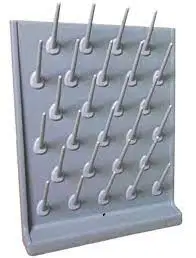
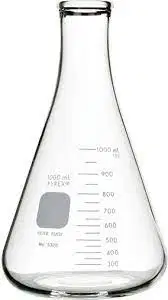
38.
Identify the following image:
a)
Beaker
b)
Drying Rack
c)
Flask
d)
Hot Plate
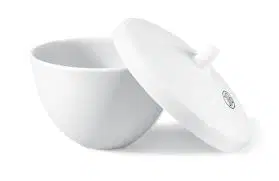
39.
Identify the following photo:
a)
Sponge
b)
crucible tongs
c)
Hot mitt
d)
Crucible
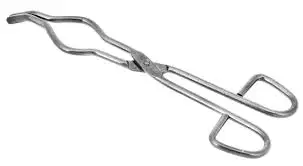
40.
Identify the following photo:
a)
Sponge
b)
crucible tongs
c)
Hot mitt
d)
Crucible
41.
When creating a graph following the principles of DRY MIX, the independent, or manipulated variable goes on which axis of the graph?
a)
X-Axis
b)
Y-Axis
42.
When creating a graph following the principles of, the dependent variable goes on which axis of the graph?
a)
X-Axis
b)
Y-Axis
43.
What's missing from this graph? Choose 3.
a)
title
b)
x axis label
c)
y axis label
d)
data
e)
nothing is missing
44.
Flammable materials, like alcohol, should never be dispensed or used near
a)
an open door
b)
an open flame
c)
another student
d)
a sink
45.
If you wear contact lenses in the school laboratory,
a)
take them out before starting the lab.
b)
you do not have to wear protective goggles.
c)
advise your science instructor that you wear contact lenses.
d)
keep the information to yourself.
46.
You are not sure if a beaker contains water or ether. You want to test its odor so you should ________.
a)
put your nose directly over the beaker and take a big sniff.
b)
waft the fumes towards you.
c)
put your nose over the beaker and take little sniffs.
47.
When cleaning up after finishing a lab, always take your waste chemicals and ______.
a)
throw them in the trash.
b)
dump them in the sink.
c)
put them where your teacher instructs you to.
48.
You want to place a piece of glass tubing into a rubber stopper after the tubing has been fire polished and cooled. This is best done by
a)
A. lubricating the tubing with water or glycerin.
b)
B. using a towel or cotton gloves for protection.
c)
C. twisting the tubing and stopper carefully.
d)
D. all of the above.
49.
A well constructed conclusion should always contain a restated:
a)
Project
b)
Person
c)
Hypothesis
d)
Material
50.
Felix did an experiment to determine how temperature affects plant growth. He used the same pea plants for all his plants. He grew one plant at 40 Degrees Celsius, one at 1100 Degrees Celsius, and one plant at room temperature, 25 degrees Celsius. All plants were given the same amount of sunlight, and water, and grown in the same soil. What is the Dependent Variable?
a)
Plant Growth
b)
Water
c)
Sunlight Amount
d)
Soil Type
51.

Which letter B is pointing to the...

a)

eye piece

b)

objective lens

c)

stage

d)

fine course adjustment knob

52.

Which letter D is pointing to the...

a)

eye piece

b)

objective lens

c)

stage

d)

fine course adjustment knob

53.

Which of the following should you use to measure 41mL of water?

a)

A

b)

B

c)

C

d)

D

e)

F

54.

What unit of measurement would be used to measure the length of a table?

a)

meters

b)

grams

c)

liters

d)

Celsius

e)

Fahrenheit

55.

Which of the following is an example of qualitative data?

a)

The fish swam in a zigzag motion.

b)

The temperature decreased from 20 C to 15 C.

c)

The plant’s height is 25 cm.

d)

The six pairs of robins hatched an average of three chicks.

56.

A controlled experiment is one that

a)

Proceeds slowly enough that a scientist can make careful records of results.

b)

Tests experimental and control groups in parallel.

c)

Is repeated many times to make sure that results are accurate.

d)

Keeps all variables constant.

57.

Which characteristic is shown in the image?

a)

Organisms grow and develop

b)

Organisms react to stimuli

c)

Organisms can adapt

d)

Organisms use and obtain energy

e)

Organisms are made up of cells

58.

Which characteristic is shown in the image?

a)

Organisms reproduce

b)

Organisms react to stimuli

c)

Organisms can adapt

d)

Organisms use and obtain energy

e)

Organisms are made up of cells

59.

Which characteristic is shown in the image?

a)

Organisms reproduce

b)

Organisms react to stimuli

c)

Organisms can adapt

d)

Organisms use and obtain energy

e)

Organisms are made up of cells

60.

Which characteristic is shown in the image?

a)

Organisms reproduce

b)

Organisms react to stimuli

c)

Organisms can adapt

d)

Organisms use and obtain energy

e)

Organisms are made up of cells

61.

Choose the statement(s) TRUE for ALL organisms

a)

have cells

b)

can move

c)

grow or develop

d)

use sunlight to make food

e)

have features that help them adapt

62.

The basic unit of living things are known as ____________.

a)

cells

b)

matter

c)

atom

d)

organism

63.

Regulating the body in order to keep a constant internal state

a)

stimuli

b)

irritability

c)

homeostasis

d)

survive

64.

Biology is the study of...

a)

living things

b)

gravity

c)

chemical reactions

d)

social relationships

65.

What is the correct order of organization?

a)

cells->tissue->organs->organ systems-> organism

b)

tissue->cells->organs->organ systems-> organism

c)

organs->organ systems-> organism->cells->tissue

66.
240 cm = ___________ m
a)
2400
b)
24
c)
2.4
d)
0.24
67.
3 km = ___________ mm
a)
30
b)
300
c)
3,000
d)
3,000,000
68.
 68 cm = ___________ mm
a)
0.68
b)
6.8
c)
68
d)
680
69.

Select the largest unit.

a)

kilogram

b)

centigram

c)

decigram

d)

decagram

70.

Select the smallest unit.

a)

milliliter

b)

centiliter

c)

hectoliter

d)

liter

71.
490,000 g =____ kg
a)
490
b)
49
c)
4,900
d)
0.49