wayground logo

Free Printable Worksheets

Font size

S
M
L
XL
Worksheets

Chem Q3 end

Total questions: 74

Worksheet time: 2hrs 2mins

Name
Class
Date
1.
What electrical charge does a proton have?
a)
+1
b)
0
c)
-1
d)
+2
2.
Complete the missing label on the diagram.
a)
Neutron
b)
Centre
c)
Nucleus
d)
Sub atomic particle
3.

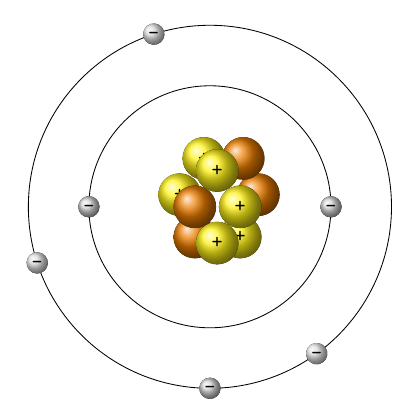
How many VALENCE electrons does this atom have?

a)

2

b)

4

c)

6

d)

10

4.

What is the basic unit of length in the metric system?

a)

gram

b)

meter

c)

Liter

d)

cm3

5.

Which is the best estimate for the height of a ferris wheel?

a)

30 centimeters

b)

5 meters

c)

23 meters

6.

Which is the best estimate for a very tall office building?

a)

1 meter

b)

3 kilometers

c)

335 centimerts

d)

30 meters

7.
Which one of these is a chemical property?
a)
melting point
b)
boiling point
c)
color
d)
flammability
8.
Jack has a rock. The rock has a mass of 14g and a volume of 2cm3. What is the density of the rock?
a)
7 mL
b)
7 g/cm3
c)
28 g/cm3
d)
1/7 g/cm3
9.
Frank has a paper clip. It has a mass of 9g and a volume of 3cm3. What is its density?
a)
3 g/cm3
b)
1/3 g/cm3
c)
27 g/cm3
d)
39 g/cm3
10.
Chemical change or physical change?
a)
Chemical Change
b)
Physical Change
11.
Chemical change or physical change?
a)
Chemical Change
b)
Physical Change
12.
Chemical change or physical change?
a)
Chemical Change
b)
Physical Change
13.
Takes two small nuclei and combines them into a larger nucleus
a)
fission
b)
fusion
14.
The type of radioactive particle that can be stopped by a sheet of paper is the ____.
a)
alpha particle
b)
beta particle
c)
gamma ray
d)
uranium
15.

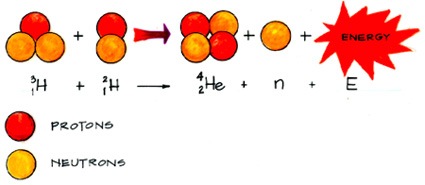
What type of change is this?

a)

physical

b)

chemical

c)

nuclear

16.

What type of change is this?

a)

physical

b)

chemical

c)

nuclear

17.

What type of change is this?

CO2(s) → CO2(g)

a)

physical

b)

chemical

c)

nuclear

18.
Nuclear power plants use __ as fuel.
a)
Uranium
b)
Krypton
c)
Barium
d)
Hydrogen
19.
How many protons are in this atom?
a)
3
b)
4
c)
6
d)
10
20.
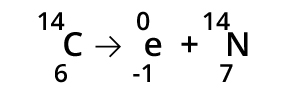
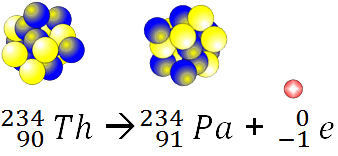
What type of nuclear radiation is emitted?
a)
fusion
b)
fission
c)
alpha
d)
beta
21.
Hydrogen needs _____ electrons in its valence shell to be stable.
a)
4
b)
6
c)
8
d)
2
22.
If electrons are shared equally then the bond is....
a)
Non-polar covalent
b)
Ionic
c)
Non-polar ionic
d)
Polar covalent
23.
Metals and nonmetals form which kind of bond?
a)
Polar covalent
b)
Ionic
c)
Non-polar covalent
d)
Metallic
24.

How many shared electrons are in the lewis structure of CH2O?

a)

8

b)

4

c)

3

d)

2

e)

12

25.

How many TOTAL valence electrons are in the lewis structure of CH2O?

a)

8

b)

4

c)

3

d)

2

e)

12

26.
Nitrogen will form which of the following ions?
a)
N
b)
N-3
c)
N-5
d)
N+5
27.
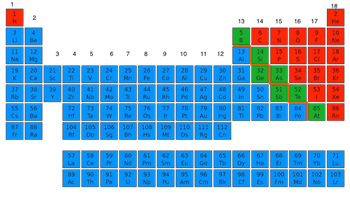
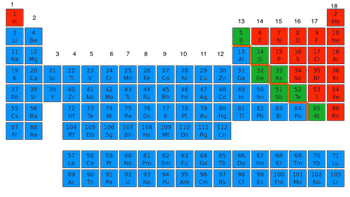
Where are the nonmetals located on the periodic table? 
a)
Blue
b)
Red
c)
Green
28.
Where are metals located on the periodic table?
a)
Blue
b)
Green
c)
Red
29.

What is the ionic charge of S? Select both the number and the charge (+ or -).

a)

1

b)

2

c)

3

d)

+

e)

-

30.

What is the ionic charge of Al (aluminum)? Select both the number and the charge (+ or -).

a)

1

b)

2

c)

3

d)

+

e)

-

31.

What is the ionic charge of O? Select both the number and the charge (+ or -).

a)

1

b)

2

c)

3

d)

+

e)

-

32.

What is the ionic charge of Br? Select both the number and the charge (+ or -).

a)

1

b)

2

c)

3

d)

+

e)

-

33.

What is the ionic charge of Li? Select both the number and the charge (+ or -).

a)

1

b)

2

c)

3

d)

-

e)

+

34.
Predict the bond that will form between Be and F.
a)
Ionic
b)
Covalent
35.
Is hydrogen considered a metal or a non-metal?
a)
A metal
b)
Nonmetal
c)
Metalloid
36.
Which of the following is nitrate?
a)
NO-
b)
NO2-
c)
NO3-
d)
NO4-
37.

The sulfate ion is written as

a)

SO-2

b)

SO4-2

c)

SO3-2

d)

SO4+2

38.

The phosphate ion is written as

a)

PO-3

b)

PO3-4

c)

PO4-3

d)

PO4+3

39.
Imagine you have 50,000 atoms of uranium-238. If U-238 has a half-life of 4.5 billion years, how many U-238 atoms will be left after 4.5 billion years? 
a)
25,000
b)
50,000
c)
12,500
d)
0
40.
You have 100 grams of radioactive C-14. The half life of C-14 is 5730 years. 
How many grams are left after 1 half life? 
a)
100 grams
b)
25 grams
c)
2 grams
d)
50 grams
41.

This type of radiation can travel across galaxies.

a)

alpha

b)

beta

c)

gamma

d)

all of the above

e)

none of the above

42.

This particle has 2 protons and 2 neutrons like a helium nucleus.

a)

alpha particle

b)

beta particle

c)

gamma photon

d)

alpha and gamma particles

e)

none of the above

43.
Which type of nuclear radiation is being emitted here?
a)
Alpha
b)
beta
c)
gamma 
d)
none
44.
Solve this equation for alpha decay.
85209At = ___ + 24He
a)
83205Bi
b)
86209Rn
c)
81207Tl
d)
85208At
45.
Which process involves the joining of small nuclei?
a)
Beta decay
b)
Alpha decay
c)
Nuclear fission
d)
Nuclear fusion
46.

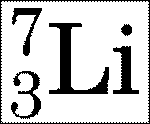
A lithium nucleus contains 3 protons and 4 neutrons.

What is its nuclide notation?

a)
b)
c)
d)
47.

A nucleus X has 17 protons and 18 neutrons.

Which notation is correct for this nucleus?

a)
b)
c)
d)
48.
Choose the particle that has no charge.
a)
nucleus
b)
neutron
c)
proton
d)
electron
49.

What is the relative charge of a proton?

a)

+1

b)

-1

c)

0

50.

What is the relative charge of a neutron?

a)

+1

b)

-1

c)

0

51.

Second group of the periodic table is called:

a)

Alkali metals

b)

Alkaline earth metals

c)

Transition metals

d)

Metalloids

52.

Group 18 on the periodic table is called:

a)

Metals

b)

Metalloids

c)

Halogens

d)

Noble gases

53.

The colored part of the periodic table is called:

a)

Metalloids

b)

Nonmetals

c)

Post transition metals

d)

Lanthanoids

54.

Groups 3-12 on the periodic table are called:

a)

Nonmetals

b)

Transition metals

c)

Metalloids

d)

Post transition

55.

Most elements are_________________

a)

Nonmetals

b)

Metals

c)

Metalloids

d)

Noble gases

56.

How many protons are in an atom of Nitrogen?

a)

14

b)

7

c)

10

d)

2

57.

What type of bond would form between O and O?

a)

Polar Covalent

b)

Non-Polar Covalent

c)

Ionic

58.

What type of bond contains cations and anions?

a)

Polar Covalent

b)

Non-Polar Covalent

c)

Ionic

59.

What type of bond contains atoms with "partial" charges?

a)

Polar Covalent

b)

Non-Polar Covalent

c)

Ionic

60.

In a polar covalent bond, electrons are shared _________________.

a)

between two metals

b)

equally

c)

unequally

d)

between a metal and a non metal

61.

In covalent bonds, electrons are ___________________

a)

shared

b)

gained

c)

transferred

d)

lost

62.
Is hydrogen considered a metal or a non-metal?
a)
A metal
b)
Nonmetal
c)
Metalloid
63.
Ionic or covalent?
H2O
a)
Ionic
b)
Covalent
64.

Identify the reaction type for the following equation:

K + F2 --> KF

a)

Double replacement

b)

Single Replacement

c)

Synthesis

d)

Decomposition

65.

Identify the type of reaction:

ZnCl2 + Mg --> Zn + MgCl2

a)

Precipitate

b)

Single Replacement

c)

Double Replacement

d)

Decomposition

66.

Identify the reaction type:

NaCl + KOH --> KCl + NaOH

a)

Double replacement

b)

Combustion

c)

Synthesis

d)

Decomposition

67.

Identify the reaction type:

H2O2 --> H2O + O2

a)

Decomposition

b)

Synthesis

c)

Combustion

d)

Acid Base

68.

How many Aluminum atoms are in Al2O3?

a)

3

b)

5

c)

2

d)

1

69.

Is MgO an ionic or covalent compound?

a)

Ionic

b)

Covalent

70.

Is O3 an ionic or covalent compound?

a)

Ionic

b)

Covalent

71.

Is AlBr3 an ionic or covalent compound?

a)

Ionic

b)

Covalent

72.

Is CCl4 an ionic or covalent compound?

a)

Ionic

b)

Covalent

73.

Is Na3N an ionic or covalent compound?

a)

Ionic

b)

Covalent

74.

Is Li2S an ionic or covalent compound?

a)

Ionic

b)

Covalent