wayground logo

Free Printable Worksheets

Font size

S
M
L
XL
Worksheets

Radiation & The Electromagnetic Spectrum

Total questions: 69

Worksheet time: 2hrs 23mins
Name
Class
Date
1.
In order of most to least penetrating radiation we have
a)
Alpha , Beta,  Gamma
b)
Beta , Gamma , Alpha
c)
Gamma, Beta, Alpha
d)
Gamma, Alpha, Beta
2.

Which type of radiation is the most ionizing?

a)

alpha

b)

gamma

3.
What type of radiation can be stopped by a piece of paper?
a)
Alpha radiation
b)
Beta radiation
c)
Gamma radiation
4.
_______________ is the process by which unstable atoms emit radiation until they become stable.
a)
Radiation
b)
Chemical Reaction
c)
Radioactive Decay
d)
Isotopes
5.
When does radioactive decay occur?
a)
When the nucleus of an isotope is unstable
b)
When the nucleus of an isotope is stable
c)
When the electrons of an isotope are spinning
d)
When the electrons of an isotope are shared with another isotope
6.
Negatively charged particles emitted from a nucleus at a high speed are ____.  
a)
alpha particle
b)
gamma rays
c)
beta particles
d)
X rays
7.
Positively charged particles that consist of two protons and two neutrons are called
a)
alpha particles
b)
beta particles
c)
gamma rays
d)
neutron emissions
8.
True or false: as you move along the spectrum, radio to gamma waves, the wavelengths decrease in size (get smaller)
a)
true
b)
false
9.
A wave with a large wavelength will have a ______ frequency and _____ energy
a)
high, low
b)
high, high
c)
low, high
d)
low, low
10.
Select the correct order of waves on the EMS from the longest wavelength to the shortest wavelength
a)
Radio, Micro, Infra, Visible, Ultra, X-ray, Gamma
b)
Gamma, X-ray, Ultra, Vis, Infra, Micro, Radio
c)
Vis, Micro, Infra, Ultra, X-ray, Gamma, Radio
d)
Micro, Radio, Vis, Infra, Ultra, X-ray, Gamma
11.
Which has the LONGEST wavelength and, therefore, the lowest frequency/energy
a)
Gamma Rays
b)
Radio Waves
c)
Visible Light
d)
Infrared rays
12.
Which has the SHORTEST wavelength and, therefore, the highest frequency/most energy
a)
Radio waves
b)
Ultraviolet Rays
c)
Gamma Rays
d)
X-rays
13.
Which section of the spectrum is the ONLY one we can see?
a)
X-rays
b)
Visible Light
c)
Gamma Rays
d)
Ultraviolet Rays
14.
How are electromagnetic waves different from other waves? 
a)
They have very short wavelengths 
b)
They transmit energy instead of matter 
c)
They can travel through empty space
d)
They can change direction by reflection 
15.
Which of the following electromagnetic waves has the lowest energy?
a)
gamma ray
b)
infrared wave
c)
visible light wave
d)
microwave
16.
As the frequency of an electromagnetic wave increases, the amount of energy in that wave...
a)
increases.
b)
decreases.
c)
stays the same.
17.
High frequency waves have _________ wavelengths.
a)
varying
b)
long
c)
the same
d)
short
18.
The distance between two crests or two troughs of a wave is called:
a)
frequency
b)
amplitud
c)
wavelength
d)
hertz
19.
How much of the electromagnetic spectrum is visible?
a)
All of it
b)
None of it
c)
Most of it
d)
Only a small part
20.
The height of the wave from the rest position is known as the _____________.
a)
amplitude
b)
crest
c)
trough
d)
wavelength
21.
What are electromagnetic waves?
a)
sound waves
b)
electric & magnetic fields (energy) that travel through empty space very quickly
c)
Someone's name
d)
things like longitudinal waves
22.

Which of the following has the shortest wavelength?

a)

microwaves

b)

UV rays

c)

Infrared

d)

the color blue

23.

Which of the following has the most energy?

a)

Red

b)

Blue

c)

Green

d)

Violet

24.

Which of the following has the most energy?

a)

X-rays

b)

The color green

c)

Microwaves

d)

ultraviolet

25.

Which of the following has the longest wavelength?

a)

Infrared

b)

The color Indigo

c)

gamma rays

d)

TV

26.

Which of the following has the least amount of energy?

a)

UV rays

b)

The color yellow

c)

infrared

d)

Gamma rays

27.
In nuclear fusion, smaller atoms are forced together to create larger atoms. Does this process release, absorb or maintain energy?
a)
Absorb energy
b)
Maintain energy
c)
Release energy
28.
the smallest particles of matter that still retain the characteristics of that element are called
a)
atoms
b)
nuclei
c)
dust 
d)
molecule
29.
Do all stars make energy through fusion?
a)
Yes
b)
No
c)
Just our sun
d)
Only large stars
30.

Define nuclear fusion.

a)

Nuclear fusion – combining lighter atoms to make heavier ones – is what makes it possible.

b)

Nuclear fusion – splitting lighter atoms to make heavier ones – is what makes it possible.

c)

Nuclear fusion – combining heavier atoms to make lighter ones – is what makes it possible.

d)

Nuclear fusion – splitting heavier atoms to make lighter ones – is what makes it possible.

31.

This process, called nuclear fusion, is the energy source of all __________.

There may be more than one answer for this questions.

a)

planets

b)

suns

c)

stars

d)

plants

32.

When hydrogen is "fused" together on the Sun, what new element is created?

a)

Helium

b)

Carbon Dioxide

c)

Oxygen

d)

Light

33.
small, negatively charged subatomic particles that flay around the nucleus are called 
a)
protons
b)
neutrons
c)
electrons
d)
dust
34.
particles that are located in the nucleus of an atom and no charge
a)
proton
b)
neutron
c)
electron
d)
dust
35.
a dense positively charged sub atomic particle is called a 
a)
proton
b)
neutron
c)
electron
d)
plasma
36.
Nuclear power uses ____ for fuel.
a)
steel
b)
coal
c)
uranium
d)
hydrogen
37.
_________ happens naturally due to an unstable nucleus.
a)
fission
b)
fusion
c)
radioactive decay
d)
K-capture
38.
The splitting of a nucleus into smaller nuclei is
a)
fusion
b)
fission
c)
decay
d)
gamma radiation
39.
What is a chain reaction?
a)
When electrons are emitted causing electricity
b)
When a nuclear fission reaction occurs, the protons emitted can strike other nuclei in the sample, and cause them to split
c)
When a nuclear fission reaction occurs, the neutrons emitted can strike other nuclei in the sample, and cause them to split
d)
When a nuclear fission reaction occurs, the electrons emitted can strike other nuclei in the sample, and cause them to split
40.
An example of an uncontrolled fission reaction is _______________
a)
Nuclear power plants
b)
Radio active decay
c)
Atomic Bomb
d)
On the surface of the sun
41.
Where does fusion occur naturally?
a)
Underwater
b)
All around us
c)
In the radioactive waste
d)
On the sun
42.
What do  control rods do in a nuclear reactor?
a)
Regulate the rate of reaction  by absorbing and slowing neutrons
b)
Produce electricity
c)
Produce neutrons to increase the rate of reaction
d)
Reduce heat produced by the uranium rods
43.
Nuclear energy uses _____ to turn turbines to power a generator.
a)
wind
b)
water
c)
steam
d)
solar
44.
One disadvantage of nuclear energy is ___.
a)
it is a fossil fuel
b)
it leaves behind radioactive waste
c)
it emits large amounts of pollution into the atmosphere
d)
there are no disadvantages
45.
When does radioactive decay occur?
a)
When the nucleus of an isotope is unstable
b)
When the nucleus of an isotope is stable
c)
When the electrons of an isotope are spinning
d)
When the electrons of an isotope are shared with another isotope
46.
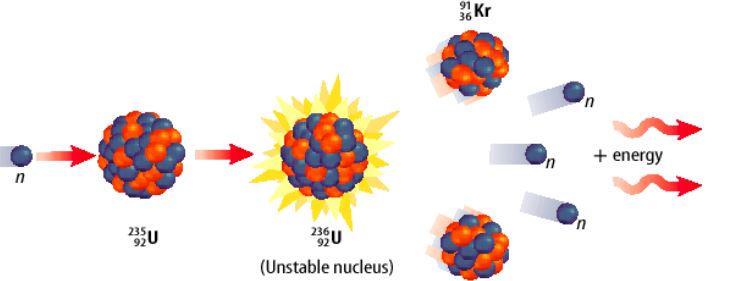
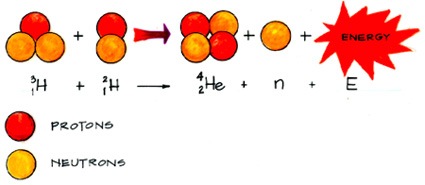
This is an example of...
a)
Fission  reaction
b)
Fusion reaction
c)
Decomposition reaction
d)
Decay
47.

What can limit your exposure from an external radiation hazard?

a)

Time, distance and shielding

b)

Wearing respiratory protective equipment

c)

Wearing a personal dosimeter

48.

The risk of internal radiation exposure comes from:

a)

A source of ionising radiation inside the body

b)

An exposure to neutrons

c)

An exposure to ionising radiation outside of the body

49.

How much coal is required to generate energy equivalent to the energy generated by 1 kg of uranium?

a)

30000 tonnes of high grade coal

b)

300 tonnes of high grade coal

c)

10000 tonnes of high grade coal

d)

3000 tonnes of high grade coal

50.

How is the alpha particle written in a nuclear equation?

a)

42He

b)

24He

c)

0-1e

d)

00γ

51.
A helium nucleus with two protons and two neutrons is called a(n) ____.  
a)
alpha particle
b)
electroscope
c)
beta particle
d)
gamma ray
52.
Which type of nuclear radiation is being emitted here?
a)
Alpha
b)
beta
c)
gamma 
d)
none
53.
Solve this equation for alpha decay.
85209At = ___ + 24He
a)
83205Bi
b)
86209Rn
c)
81207Tl
d)
85208At
54.

Gamma rays have

a)

no mass

b)

a huge mass

c)

a small mass

d)

an average mass

55.
Solve this equation for beta decay.
614C = ___ + -10e
a)
410Be
b)
714N
c)
210He
d)
613C
56.

The nucleus is held together by the ___________________________force.

a)

The Strong Nuclear Force

b)

The Weak Nuclear Force

c)

Electromagnetism

d)

Gravity

57.

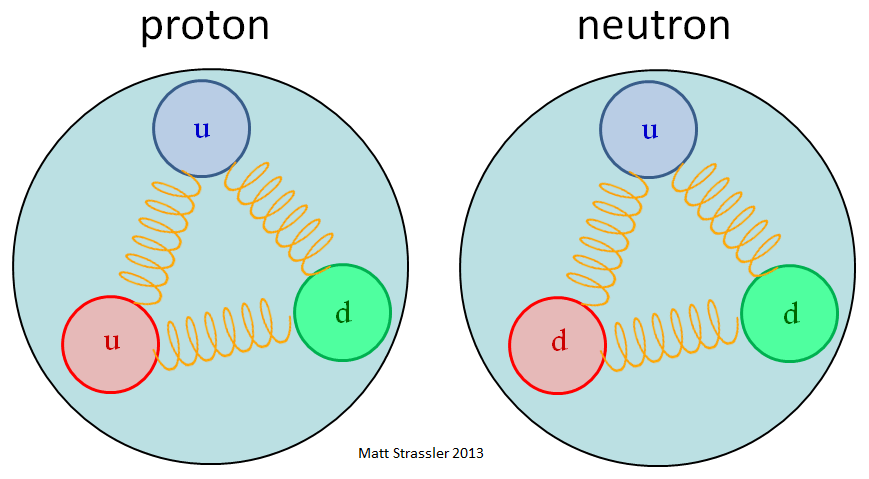
During beta-particle emission, a neutron splits into a____________________.

a)

proton and electron

b)

neutron and electron

c)

neutron and proton

58.
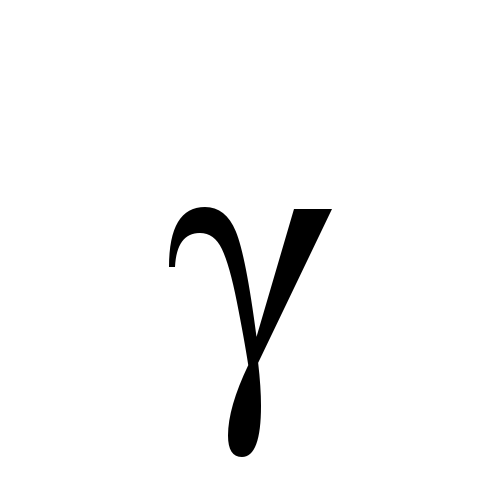
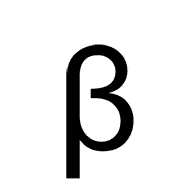
Has the symbol
a)
Alpha
b)
Beta 
c)
Gamma
59.
Has the symbol
a)
Alpha
b)
Beta
c)
Gamma
60.
Has the symbol
a)
Alpha
b)
Beta
c)
Gamma
61.
Has the highest penetrating power.  Can penetrate our body.  Even several cm thick of lead or several meters thick of concrete cannot stop all of it.
a)
Alpha
b)
Beta
c)
Gamma
62.
Has the lowest penetrating power.  Can only penetrate 0.05 mm into the body and can be stopped by a piece of paper or clothing.
a)
Alpha
b)
Beta
c)
Gamma
63.
Uranium-238  decays into  Thorium-234  by emitting .........
a)
an alpha particle
b)
a beta particle
c)
gamma rays
d)
visible light
64.
The process of nuclear change in an atom of radioactive material is called... 
a)
nuclear decay
b)
nuclear mass
c)
isotopes
d)
radon
65.
Radioactive materials have unstable...
a)
electrons
b)
protons
c)
nuclei
d)
neutrons
66.
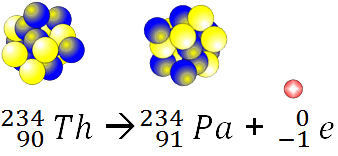
This is an example of...
a)
Fission  reaction
b)
Fusion reaction
c)
Decomposition reaction
d)
Decay
67.
Which process involves the joining of small nuclei?
a)
Beta decay
b)
Alpha decay
c)
Nuclear fission
d)
Nuclear fusion
68.
In a correctly written symbol what would be located in the "A" position?
a)
number of neutrons
b)
atomic number
c)
number of electrons 
d)
mass number
69.

In a correctly written symbol what would be located in the "Z" position?

a)

number of neutrons

b)

atomic number

c)

number of electrons

d)

mass number