wayground logo

Free Printable Worksheets

Font size

S
M
L
XL
Worksheets

S1 exam

Total questions: 64

Worksheet time: 2hrs 39mins
Name
Class
Date
1.
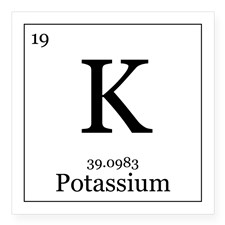
How many neutron are in the atom "K"?
a)

7

b)

2

c)

39

d)

none of the choices

2.
What is the number of protons that the element in this image contain?
a)

14

b)

7

c)

15

d)

none of the choices

3.
How many electrons does potassium K contain? (click to see image)
a)

19

b)

39

c)

20

d)

none of the choices

4.
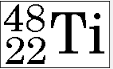
How many protons does this isotope of titanium have?
a)

48

b)

22

c)

none of the choices

d)

26

5.
The top number in this isotope notation is
a)

the mass number

b)

the atomic number

c)

none of the choices

d)

the neutron number

6.

In this atom of Uranium, what is the atomic number?

a)

233

b)

92

c)

141

d)

325

7.

How many electrons does this atom of Uranium have?

a)

233

b)

92

c)

141

d)

325

8.
How is a gas defined?
a)
Indefinite shape, indefinite volume
b)
Definite shape, definite volume
c)
Found in stars
d)
Definite volume, indefinite shape
9.
Which form of matter does not take the shape of its container?
a)
liquid
b)
gas
c)
solid
d)
air
10.
Define a liquid.
a)

Indefinite shape, indefinite volume

b)

Definite shape, definite volume

c)

none of the choices

d)

Definite volume, indefinite shape

11.
Which state of matter is represented by this image? 
a)
Solid
b)
Liquid
c)
Gas
d)
Plasma
12.
Which state of matter is represented by this image? 
a)
Solid
b)
Liquid
c)
Gas
d)
Plasma
13.

Which of the following statements is true about liquids?

a)

Particles do not move around much, but vibrate

b)

Particles have a lot of free space and spread out

c)

Liquids have fixed shape & volume

d)

Particles are less closely packed than solids

14.
What characteristic defines all chemical changes?
a)

There is a change of state.

b)

Electricity is produced.

c)

A new material is formed.

d)

none of the choices

15.
Which of the following is a chemical property of water?
a)

none of the choices

b)

Boils at 100 oC.

c)

Dissolves sugar easily. 

d)

Has a density of 1 gm/mL

16.
Which of the following is a sign that a chemical reaction has occurred?
a)

none of the choices

b)

melting

c)

formation of a gas

d)

dissolving

17.
Kim puts an ice cube in a beaker and it melts. This is a good example of:
a)

none of the choices

b)

a chemical change.

c)

an experiment.

d)

an analysis.

18.
When you break a cracker into pieces it is a 
a)
Chemical change
b)
Physical change
19.

How many minutes are in a school year, 187 days? (24 hrs. in a day)

a)

269,280 min.

b)

16, 200 min.

c)

16, 156 min.

d)

269,000 min.

20.

How many kilograms of calcium are there in 173 pounds of calcium? (1 lb = 454 g; 1 kg = 1000 g)

a)

1.10 kg

b)

78.5 kg

c)

110 kg

d)

78500 kg

21.
You know that 12 inches = 1 foot.  Convert 60 inches to feet.
a)
720 feet
b)
5 feet
c)
5 inches
d)
72 feet
22.
How many gallons are in a pool that holds 758,000 Liters?
(1 gallon = 3.79 Liters)
a)
200
b)
20,000
c)
200,000
d)
2,000,000
23.
The length of a desk is 3.5 feet. How many centimeters is the length? 
(there are 2.54 cm in an inch)
a)

60

b)

120.23

c)

none of the choices

d)

117.12

24.
There are ___ meters in 25 kilometers (km)
a)
250 m
b)
2500 m
c)
25,000 m
d)
.025 m
25.
There are ___ millimeters(mm) in 2.7 centimeters (cm)
a)
270 mm
b)
.27 mm
c)
27 mm
d)
.027 mm
26.
convert 9 km to mm
a)

none of the choices

b)

9,000,000

c)

9,000

d)

90,000

27.
7,000 milligrams = _____ grams
a)
7
b)
70
c)
700
d)
70,000
28.

Which type of reaction involves 2 pairs of ionic compounds trading their elements?

a)

Single Replacement

b)

Double Replacement

c)

Synthesis

d)

Decomposition

29.

What is the generic formula for a synthesis reaction

a)

AB --> A + B

b)

A + BC --> B + AC

c)

A + B --> AB

d)

AB + CD --> CB + AD

30.

What is the generic formula for a single replacement reaction

a)

AB --> A + B

b)

A + BC --> B + AC

c)

A + B --> AB

d)

AB + CD --> CB + AD

31.
The following is what type of reaction:
PbCl2 + AgNO3 → Pb(NO3)2 + AgCl
a)
Synthesis
b)
Decomposition
c)
Single Replacement
d)
Double Replacement
32.
The following is what type of reaction:
NH3 + HCl  → NH4Cl
a)
Synthesis
b)
Decomposition
c)
Single Replacement Replacement
d)
Double Replacement Replacement
33.
What kind of reaction is this:
2H2O2 →2 H2+ O2
a)
Synthesis
b)
Decomposition
c)
Single Replacement 
d)
Combustion
34.
What kind of reaction is this:
2C3H7OH +9O2 -> 6CO2 + 8H2O
a)
Double Replacement
b)
Combustion
c)
Single Replacement
d)
Decomposition
35.
What kind of reaction is this:
 CaCO3 + Ag2SO4 → CaSO4 + Ag2CO3 
a)
Decomposition
b)
Single Replacement
c)
Double Replacement
d)
Combustion
36.
Which of these is a property of metals?
a)
It's malleable
b)
It can't conduct electricity
c)
They are used in food
d)
It's very brittle
37.
Silicon is a semiconductor and has properties of both metals and nonmetals. What type of element is Silicon? 
a)
Metal
b)
Nonmetal
c)
Metalloid
d)
Pretty
38.

I can be found to the RIGHT of the stair-step line on the periodic table of elements.

a)

metals

b)

nonmetals

c)

metalloids

39.

I am an insulator and have a dull luster.

a)

Metal

b)

Metalloid

c)

Non Metal

40.
Which of these grouping of elements could have the characteristic of luster (shiny)?
a)
Metal
b)
Nonmetal
c)
metalloids
d)
Both metals and metalloids
41.

Cs (Cesium) is a(n)

a)

Noble gas

b)

Halogen

c)

Alkaline earth

d)

none of the choices

42.

Which of the following is the correct way to balance the equation below?

 _Fe2O3+_C —> _Fe+ _CO2

a)

2;4;3;3

b)

none of the choices

c)

2;3;4;3

d)

2;_;3;3

43.

__H3 PO4 + __ Ca(OH)2 ---> __Ca3 (PO4 )2 +__ H2 O

a)

4,6,2,12

b)

2,3,1,6

c)

it's balanced

d)

3,2,2,1

44.

Balance the following equation:

SiCl4+H2O  H4SiO4+HClSiCl_4+H_2O\ \rightarrow\ H_4SiO_4+HCl  

a)

none of the choices

b)

1, 3, 1, 3

c)

1, 4, 1, 4

d)

2, 8, 1, 8

45.
Based on the activity series, will this reaction occur?
Br2 (l) + KI (aq) →
a)
Yes
b)
No
46.

What will be the result of the following:

LiBr + Na --->

a)

Li will replace Na

b)

Na will replace Br

c)

Na will replace Li

d)

no reaction will occur

47.

Which reaction occurs

a)

Ag + KNO3 ------> K + AgNO3

b)

K + AgNO3 ------> Ag + KNO3

48.
Which element has the greater ionization energy?
a)
Magnesium
b)
Phosphorus
49.

Put the following in order of increasing ionization energy: Cobalt(Co), Tungsten (W), Ruthenium (Ru)

a)

Tungsten, Ruthenium, Cobalt

b)

Cobalt, Tungsten, Ruthenium

c)

Ruthenium, Cobalt, Tungsten

d)

Cobalt, Ruthenium, Tungsten

50.
The atom with the largest atomic radius in Group 18 is - 
a)
Ar
b)
He
c)
Kr
d)
Rn
51.
The atom with the largest atomic radius in Period 4 (row 4) is - 
a)
K
b)
Kr
c)
Fe
d)
Fe
52.
The element with the smallest ionization energy in Period 6 is - 
a)
Rn
b)
Cs
c)
Os
d)
Tm
53.

Of the halogens, which has the smallest radius?

a)

F

b)

Br

c)

He

d)

At

54.

Which of the following will have a higher electronegativity than arsenic (As)?

a)

Carbon (C)

b)

Neon (Ne)

c)

Antimony (Sb)

d)

Germanium (Ge)

55.

What is the number 455000 in scientific notation?

a)

45.5 x 10⁵

b)

4.55 x 10⁵

c)

4.55 x 10⁻⁵

d)

455 x 105

56.

The number 3.6 x 10⁻⁴ in standard notation is what?

a)

0.000036

b)

0.0000036

c)

0.00036

d)

0.0036

57.

Express .0001870 in scientific notation

a)

none of the choices

b)

1.870 x 10⁻⁴

c)

1.870 x 10⁴

d)

18.7 x 10⁻⁴

58.
Which of the following is correct scientific notation?
a)
20.35 x 10⁴
b)
.2035 x 104
c)
2035 4
d)
2.035 x10⁴
59.
Express the following in standard notation:
8.025 x 10⁻⁸
a)

.00000008025

b)

none of the choices

c)

802,500,000,000

d)

80,250,000,000

60.
Convert to scientific notation:
520,000,000  
a)

52 x 107

b)

none of the choices

c)

5.2 x 10⁸

d)

0.52 x 10⁹

61.

In scientific notation should the power be a positive or negative number for this: 590760?

a)

positive

b)

negative

62.

In scientific notation should the exponent be positive or negative for this number: 0.0769033

a)

positive

b)

negative

63.
Balance this equation.
_CF+ _Br-- _CBr+ _F2
a)
2,1,2,1
b)
1,2,2,1
c)
1,2,1,2
d)
2,2,2,2
64.

Fill in the blanks with coefficient:

PCl5+_ H2O→_ HCl+H3PO4

a)

none of the choices

b)

1, 6

c)

3, 8

d)

2,2