
 Worksheets
Algebra 2 Semester 1 Final Study
Total questions: 150
Worksheet time: 11hrs 8mins

3x - 2
5x4 - 7x

5x²-3x+6
4x² - 2
monomial
binomial
trinomial
polynomial
x3y2 - 7x2y + 3
1
3
5
7
3xy - 2y + 8x - 7z -16
1
2
4
5
x³ + 5
2x² + 3
3x² + 5x - 6
5x³
What is the average rate of change of f(x) on the interval [-3, -2].

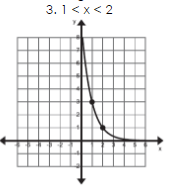

What is the rate of change?
2
1/2
1
1.5
Find the rate of change between the points (-2 , 10) & (4 , 14)
2/3
3/2
-2/3
2/1
Find the average rate of change of f(x)=2x2+3x-1 from 1 to 2.
18
-9
9
3

What is the average rate of change of f(x) = 5x - 7 on the interval -3 ≤ x ≤ 7 ?
21
5
10
2
(5x + 2) + (4x + 5)
(4x2+ x) - (x2+ 2x)
3x2 - x
4x2 + 2x
3x2 + 3x
3x2 + 2x
(4n4 - 8n + 4) - (8n2 + 4n4 + 1)
(3y2 + y3 - 5) + (4y2 -4y + 2y3 + 8)
(2x2 + 5x - 7) + ( 3 - 4x2 + 6x)
(3x3 + 3x2 – 4x + 5) + (x3 – 2x2 + x – 4)
(4n4 - 8n + 4) - (8n2 + 4n4 + 1)
(2a2b4z)(6a3b2z5)
10x(2x2+3x+4)
20x3+30x2+40x
20x2+30x+40
12x3+13x2+14x
12x2+13x+14
-2v(v-5)
-2v2-10v
-2v2+10v
-2v-10
-2v+10
When multiplying a monomial and a polynomial, the key is ....
multiply the coefficients & add the exponents
add the coefficients & multiply the exponents
a nice, sharp pencil
6x3y7−15x2y4
5x2y12−2x2y3
6x2y7−15x2y3
(x + 2)(x + 3)
Find the product.
(x - 2)2
x2 + 2x + 2x + 4
x2 + 2x + 2
7x2 + x + 7
x2 - 4x + 4
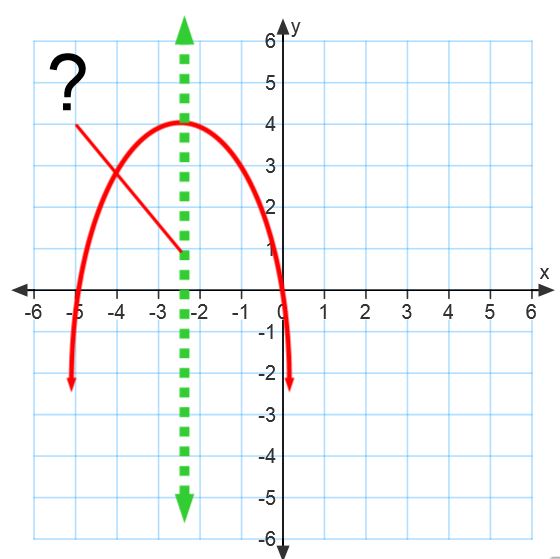


Determine the vertex
(2, 4)
(2, 6)
(4, 2)
(-2, 4)
y=4x2-8x+9
f(x) = 2x2-2x + 1
y = 3(x + 5)2 - 4,
what is the vertex of the parabola?
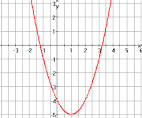

f(x) = x2 - 8x + 1
written in vertex form?
Convert the equation y= x2 + 4x + 11 into vertex form.
y = (x + 2)2 - 4
y = (x + 2)2 + 7
y = (x + 2)2
y = (x - 2)2 - 7
y=−3(x+5)2−4
Convert the equation from vertex form to standard form.
y = 9x2 - 15x + 21
y = -3x2 - 75x - 4
y = 9x2 + 90x + 221
y = -3x2 - 30x - 79
y=−5(x+2)2−10
Convert the equation from vertex form to standard form.
y = -5x2 - 20x - 30
y = -5x2 - 4x - 10
y = 25x2 + 100x + 90
y = 25x2 - 10x - 30
y=4(x+2)2−8
Convert the equation from vertex form to standard form.
y=4x2+16x+8
y=4x2+16x+16
y=16x2+64x−8
y=16x2+256x+8
y=−32(x−9)2−2
Convert the equation from vertex form to standard form
y=−32x2−12x−52
y=−32x2+12x−56
y=−32x2+18x−56
y=−32x2−18x+52
Factor:
x2 + 11x + 24
(x + 6)(x + 4)
(x + 12)(x + 2)
(x - 8)(x - 3)
(x + 8)(x + 3)
x2 - 10x + 24
x2 - 10x - 24
x2 - 14x + 24
18b2-9b3
3a2 + 4a + 1
2c2 + 2c - 84
4x2-16x-9
Solve by factoring: x2 - 9x + 20 = 0
x = -4 and x = -5
x = 20 and x = -9
x = 4 and x = 5
x = -4 and x = 5
Solve by factoring: x2 + 3x - 18 = 0
x = -3 and x = 6
x = 3 and x = -6
x = -9 and x = 2
x = 9 and x = -2
Solve by factoring: 2x2 - 5x - 12 = 0
x = -4 and x = -6
x = 4 and x = -3/2
x = 4 and x = 6
x = -4 and x = 3/2
x2 -4 = 77
9
-9
No Real Solutions
±9
5b2 - 4 = 41

y = x2 +5x +7, match each leading coefficient with its correct letter
x2 + 6x - 13 = 3
2x2 + 7x - 15 = 0
y = 3x3 + 8x - 1
9x2 = 4 + 7x
y = -x2 - 5x + 12

Express −300 in terms of i
103
i300
10i3
−300
Express −225 in terms of i
15i
−15i
i15
−i15

−20
2i5
−2i5
20i
−20i
5(−49)
35
35i
-35
−35i
Which of the is a complex number?
2
4i
3 + 5i
All of them
none of them
A complex number can be expressed as a + bi. What does a represent?
the real part of the complex number
the imaginary part of the complex number
depends on the sign of the number
the square root of the complex number


What complex number is shown on the graph?
(-2,-3)
-2-3i
2-3i
3i-2

Match the expression to the graph shown in the complex plane.
-2i-3i
(0,-5)
-6i
-2(3i)

Match the expression to the graph shown in the complex plane.
(4,0)
4 + 4i
-4(i2)
4i
What is the "real part" of this complex number:
8 + 2i8
2i
What is the "imaginary part" of this complex number:
8 + 2i8
2i
What is the "imaginary part" of this complex number:
–14–5i-14
-5i
14
5i
What is the "real part" of this complex number:
–14 – 5i-14
-5i
14
5i

Where is point B located?
2 + i
-3
2i
-1 - i
Where is point C located?
2 + i
-3
2i
-1 - i
Where is point A located?
2 + i
-3
2i
-1 - i
2i + 3 + 7 - 12 i
(7 + 2i) - (-12 - 4i)
(10+ 15i) - (48 - 30i)
What is (3−5i)+(−4+7i) ?
−1+2i
7−12i
1+2i
−2+3i
What is (−5+3i)−(4+7i)?
−1−4i
−9−4i
−1+4i
−9+4i
(7 + 2i)(9 - 6i)
(2i)(3i)
(3i)(-2+4i)
(4 – 3i)(7 + 2i)
-3i(4 + 2i)
(4 – 3i)(-7 – 2i)
Multiply:
(1 − 2i)(6 + 5i)
16 − 7i
-16 + 7i
-16 − 7i
16 + 7i
(4 – 3i)(-7 – 2i)
Multiply:
(2 - 5i)(2 + 5i)
29
4 - 25i
25 - 10i
-21
(−1+5i)2 =
(a)
Are the roots of the function
f(x)=3x2−3x+3real or imaginary?
Real Roots
Imaginary Roots
Impossible to tell
Both
Solve:
x2−8x−20=0
x={10,−2}
x={−10, 2}
x={28±12}
x={6,1}
Find the roots: x2−4x+5
x = {-4, -1}
x = {-1, -4}
x = {2 + i, 2 - i}
x = {-2 + i, -2 - i}
Find the roots:
x2 +6x+13
x = {-3 + 2i, -3 - 2i}
x = {7, 6}
x = 2 ± i√3
No solution
Solve for x:
x2−5x+8=0
x={2−5±i7}
x={25±i7}
x={28±i7}
x={25±57}
Solve for x:
x2−3x+10=0
x={−3±i31}
x={23±49}
x={5, −2}
x={23±i31}
Solve for x: 3x2 - 6x + 6 = 0
x = 1 ± i
x = 3, -6
x = 4.8, 2.7
Undefined
Solve:
x2+6x+27=0
3±18
3±i18
−3±i18
−3±18
Solve the equation 3x2+96=0
±42
±4i2
2i4
±24
Solve the equation x2+8x+20=0
−4±2i
2i±4
−2±4i
3±2i

