
Font size
 Worksheets
Materials Science
Total questions: 100
Worksheet time: 1hrs 1mins
Which material would you choose to make an absorbent towel?
paper
vinyk
metal
glass
Which material would you choose to make a tool that has to be strong and withstand very high temperatures?
rubber
wood
metal
plastic
The mass of a sample of a material divided by its volume gives the (a) of the material.
A natural material is a kind of technology.
True
False
Any physical matter that is obtained or made from plants, animals, or the ground is a natural material.
True
False
Which of the following is a natural material?
Cement
cotton
polyster
nylon
Which of the following is a synthetic material?
silk
wool
rubber
steel
Which is a property of a ceramic
flexible
insulating
reflective
soft
Polyester, nylon, acrylic, and acetate are all examples of ____________.
polymers
composites
rayons
natural materials
The practical use of scientific knowledge, as in the development of new synthetic materials, is an example of (a) in action.
In the formation of synthetic materials, natural materials undergo chemical reactions wherein their (a) rearrange and form new molecules.
What is a synthetic material?
Any material that is man made
Any material that is only made from natural resources
Any material that is made of recycled materials
Any material that is found in nature.
What does it mean for an object to be malleable?
Able to stretched without losing toughness
Hard and breaks easily
Able to be hammered out of shape without breaking
The compactness of a material
What does it mean for an object to be ductile?
Able to stretched without losing toughness
Hard and breaks easily
Able to be hammered out of shape without breaking
The compactness of a material
What does it mean for an object to be brittle?
Able to stretched without losing toughness
Hard and breaks easily
Able to be hammered out of shape without breaking
The compactness of a material
Which material is the most brittle?
Aluminum
Steel
Copper
Glass
Glue is what type of material?
Metal
Ceramic
Polymer
Composite
Titanium is what type of material?
Metal
Ceramic
Polymer
Composite
You need to build a prototype of a design and need to choose a material that is easy to machine. Which type of material should you choose?
Plastic
Wood
Metal
Which type of material allows you to create unique 3D shapes?
Plastic
Wood
Metal
A chain of repeating units (called monomers)
monomer
dimer
replicate
polymer
Once formed, it can be heated and reformed over and over again
thermoset
thermoplastic
elastomer
kevlar
Which of the following is a type of natural polymer?
Latex
poly vinyl acetate
polystyrene
polytetrafluoroethylene
____ deformation occurs when the stress applied to a force is released and the material returns to its orginal shape.
plastic
elastic
permanent
catastrophic
These types of products will break down into carbon dioxide, water, and biomass...
recyclable
compostable
biodegradeable
oxy-compostable

Observe the picture, is the substance crystalline or amorphous?
crystalline
amorphous
Formed by joining together lots of small molecules
(a)
Polymers are made up of
onemers
monomers
polymer
molecules
What type of material is rubber?
Metal
Ceramic
Polymer
Composite
What are the main properties of ferrous metals?
Composed of steel, non-magnetic, low strength, easily corroded
Composed of iron, magnetic properties, strength, durability
Composed of aluminum, non-magnetic, weak, not durable
Composed of copper, non-magnetic, flexibility, low melting point
What are the common examples of ferrous metals?
Aluminum
Steel, Carbon Steel, Alloy Steel, Cast Iron
Copper
Brass
What are the common examples of non-ferrous metals?
Iron, nickel, cobalt
Cast Iron
Steel
Aluminum, copper, lead, zinc, brass

Which metal is commonly used in the manufacture of drinks cans?
Aluminium
Copper
Brass
Mild Steel
Stainless Steel

Which metal is commonly used in the manufacture of car brake disks?
Cast Iron
Copper
Brass
Mild Steel
Stainless Steel

Which metal is commonly used in the manufacture of kitchen sinks?
Aluminium
Copper
Brass
Mild Steel
Stainless Steel

Which metal is commonly used in the manufacture of electrical wire?
Aluminium
Copper
Brass
Mild Steel
Stainless Steel
What charge do electrons have?
+1
0
-1

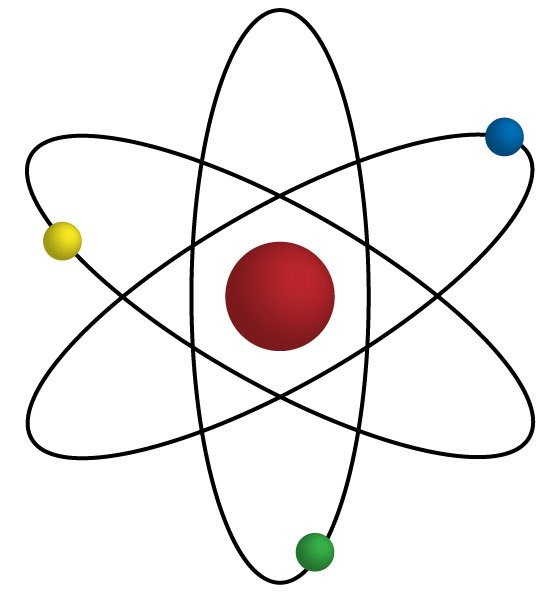
How many valence electrons in this diagram:
1
3
5
7
Neutrons are:
Positive
Neutral
Negative
Protons are:
Positive
Neutral
Negative
Which particle is outside the nucleus?
Protons
Neutrons
Electrons
Nucleus
What particles are in the nucleus?
Protons
Neutrons
Electrons
Nucleus
What particles are atoms made of? (Check ALL that apply:)
Protons
Neutrons
Electrons
Nucleus
An area around an the center of the atom where electrons are located
is deep space.
is a quark.
is a nucleus.
is an electron cloud.
The center of an atom is
a neutron.
a nucleus.
a quark.
a bohr.
All matter is made of what?
energy
atoms
electrons
An atom with atomic number 6 would have how many protons?
6
12
3

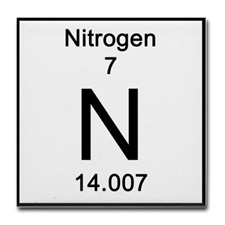
Modern non-stick cookware and the flat end of an electric iron has a coating of a polymer. Identify the name of the polymer.
PVC
Rayon
Teflon
Polyester

Choose the correct option:
Glass isn't transparent and rigid.
Glass is bendy and soft.
Paper is transparent.
Glass is transparent and rigid.

The hardest substance available on earth is ?
Gold
Iron
Diamond
Platinum

Look at the picture and choose the correct word.
What are they?
metals
equipment
a sieve
a magnet

A mixture of beads was placed in a container, as show below. The beads are of various sizes, and each one is made of plastic, glass, or steel. The mixture would be easy to separate because all the beads -
are less dense than water
are solids
have the same mass
are attracted to a magnet
What do metals conduct well?
acid
electricity
circulation
music

Some metals can look shiny when you
polish them.
melt them.
scratch them.
bury them.

All metal elements melt at the same boiling point.
True
False
Which of the following conductors are used because they are readily available so they are cheap to use?
gold
silver
platinum
aluminum
Malleable is when a metal
hammered out of shape without breaking.
can be drawn out into strands of wire.
Metal is ductile when it
can be rolled or pounded into flat sheets.
can be easily stretch.

What type of a change is corrosion?
physical
uniform
pitting
stress cracking
What can alloying two or more metals together do?
Make the metal softer or harder.
Nothing.
Make the metal edible as a food source.
Create the energy Mana.
Bronze is made by adding copper with what other metal?
Tin
Zinc
Lead
Cobalt
The most widespread metal on earth is...
Steel
Gold
Aluminum
Copper
A zinc powder is sprayed onto steel parts. This process helps protects against corrosion.
Anodizing
Galvanizing
Electroplating
Cathode
All Ferrous metals contain
Iron
Aluminum
Nickel
Cobalt
Melting and mixing zinc with copper will give you ?
Bronze
Copper Oxide
Brass
Zinc oxide
Ferrous
Bronze is an alloy of copper and _____.
Steel
Iron
Tin
Carbon
Which of these metals would rust easily?
Cast Iron
Non metal
Zinc
Copper
Chemical reaction to the oxygen in the air
Oxidation
Trees
Bronze
Blue
Steel is a ferrous metal composed of which two elements?
Iron
Hydrogen
Zinc
Carbon
What is added to iron in stainless steel to prevent corrosion?
Chromium
Zinc
Aluminium
Copper
Which metal is heavier?
Steel
Aluminium
Where are non-metals located on the periodic table?
Right side of periodic table
Left side of periodic table
zig-zag line of periodic table
none of the above
Where are metals located on the periodic table?
Right side of periodic table
Left side of periodic table
zig-zag line of periodic table
none of the above
Steel is made up of...
iron and carbon
copper and iron
tin and carbon
aluminium and nickel
Aluminium ore
Bauxite
Boxer
Frenchie
Car Suspensions
Coin metals are normally made of this alloy
pewter
duralumin
cupro-nickel
brass
Steel can become stainless when alloyed with _____.
chromium and nickel
copper and zinc
tin and lead
iron aand carbon
Ferrous metal alloy that does not rust
Stainless Steel
Iron
Chemical Reaction
Precious Metal
A permanent way to join metals or plastics
Word Bond
Welding
Drill Hole
Aluminium Ore
Used for car brake drum
Cast Iron
Wrought Iron
Silver
Copper
Tin food cans are lined with this to stop contamination
BPA
PLA
SCC
Copper Liner
True or False. Objects can have more than one property.
False
True
Can plastic melt?
Yes
No
Most plastic objects are made by using a...
knife.
hammer.
mold.
Bronze is made by adding copper with what other metal?
Tin
Zinc
Lead
Cobalt
The most widespread metal on earth is...
Steel
Iron
Aluminum
Copper
All Ferrous metals contain
Iron
Aluminum
Nickel
Cobalt
Melting and mixing zinc with copper will give you ?
Bronze
Copper Oxide
Brass
Zinc oxide
This metal can be harmful to human health if ingested or after long term exposure
Steel
Cobalt
Nickel
Lead
What is the sea of electrons model related to?
Covalent bonding
Hydrogen bonding
Ionic bonding
Metallic bonding
What is an alloy?
A compound with only one type of metal
Composed of two or more elements, at least one of which is a metal
A mixture of non-metallic elements
A pure metal

The ability of a material to deform, usually by stretching along its length. This property allows us to make wires.
malleable
ductile
conductive
crystal lattice structure

Alloys are created to improve the working properties and appearance of metals, they are made by combining two or more elements.
True
False

