
 Worksheets
Chem in the Earth System Fall Final Exam Review (2023)
Total questions: 211
Worksheet time: 8hrs 2mins
What are the two REACTANTS in a combustion reactions?
Methane and Carbon Dioxide
Fuel and Oxygen
Carbon Dioxide and Water
Fuel and Carbon Dioxide
What are the two PRODUCTS in a complete combustion reaction?
Carbon Dioxide and Water
Carbon Monoxide and Methane
Carbon and Water
Fuel and Oxygen
Hydrocarbon fuel + oxygen ----> ___+____
(Select 2)
CO2
O2
H2O
CxHy


Which is non combustible substance?
Wood
Paper
Straw
Iron nails
When burning a fire, if I remove Oxygen, then the fire will...
no longer burn
keep burning
EXPLODE
Combustion is needed for __________________ inside your body.
photosynthesis
cellular respiration
mitosis
Exothermic reactions release heat into the surroundings, so you observe a...
temperature increase
temperature decrease
no temperature change

What are the products of cellular respiration?
Sugar and Oxygen
Carbon Dioxide, Water, and Energy
Which states of matter count as a fluid? [Select all that apply.]
Solids
Liquids
Gasses
Solids are a state of matter with (a) shape and (b) volume
Liquids are a state of matter with (a) shape and (b) volume
Which state of matter has the most energy?
Solids
Liquids
Gasses
Freezing is the phase change that goes from the (a) state to the (b) state.
Which state of matter expands to fill its container?
Solids
Liquids
Gasses
Charles's Law states that a gas's (a) and volume are (b) proportional.
If you increase the pressure on a gas, its volume will...
increase
stay the same
decrease
If you decrease the pressure on a gas, its volume will...
increase
stay the same
decrease
If you decrease the temperature of a gas, its volume will...
increase
stay the same
decrease
If you increase the temperature of a gas, its volume will...
increase
stay the same
decrease
What is a conductor?
a material that heat moves through easily
a material that heat does not move through easily
a material that turns cold when heated
a tool for measuring temperature
Which of these is a better conductor?


Stir frying vegetables is an example of
Convection
Conduction
Radiation

Hot water rises and cold water sinks. Is this:
Convection
Conduction
Radiation
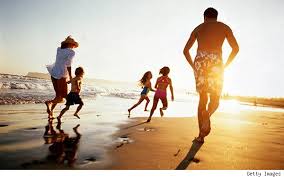

Cold Pack on Person
Heat is transferred from the cold pack to the person.
Heat is transferred from the person to the cold pack
The cold pack is getting colder. The person is getting warmer.
Convection currents occur in...
fluids
solids
When air is heated it becomes...
More dense
Less dense
Heavier
Moist
Air sinking down toward the Earth's surface causes a...
High Pressure area
Low Pressure area
Air rising up above the Earth's surface causes a...
High pressure area
Low pressure area

In this image, the VOLUME of A is _____ the volume of B
equal to
greater than
less than

Calculate the density of the rectangular prism
2 g/cm3
4 g/cm3
6 g/cm3
8 g/cm3

What happens to the density of the balloon if volume is doubled?
The density is cut in half.
The density stays the same.
The density doubles.
Not enough information to tell.
As a substance is COOLED its VOLUME...
increase
decreases
remains equal

As a substance is COOLED it's DENSITY...
increase
decreases
remains equal

As a substance is HEATED it's DENSITY...
increase
decreases
remains equal

Three liquids and two solids are placed in a graduated cylinder. The substances arrange themselves in the cylinder according to their densities. Use the information to identify the liquids and solids in the graduated cylinder. start with the top solid as substance 1, and the top liquid as substance 2, and so on
Gold
Mercury
water
Gasoline
Cork

Which box has a higher density?
A
B
They are the same
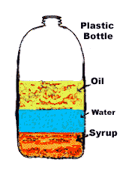
oil
water
syrup
Moving a book to a lower shelf ________ its potential energy.
increaes
decreases
A kite stuck in a tree has ______ energy due to its position.
potential
kinetic
chemical
thermal

potential energy is the hightest
A
kinetic energy is the highest
B
losing kinetic energy; gaining potential energy
C
losing potential energy; gaining kinetic energy
D

Potential Energy is minimum
A
50% KE, 50% PE
B
Maximum Potential Energy
C
Kinetic Energy is maximum
E
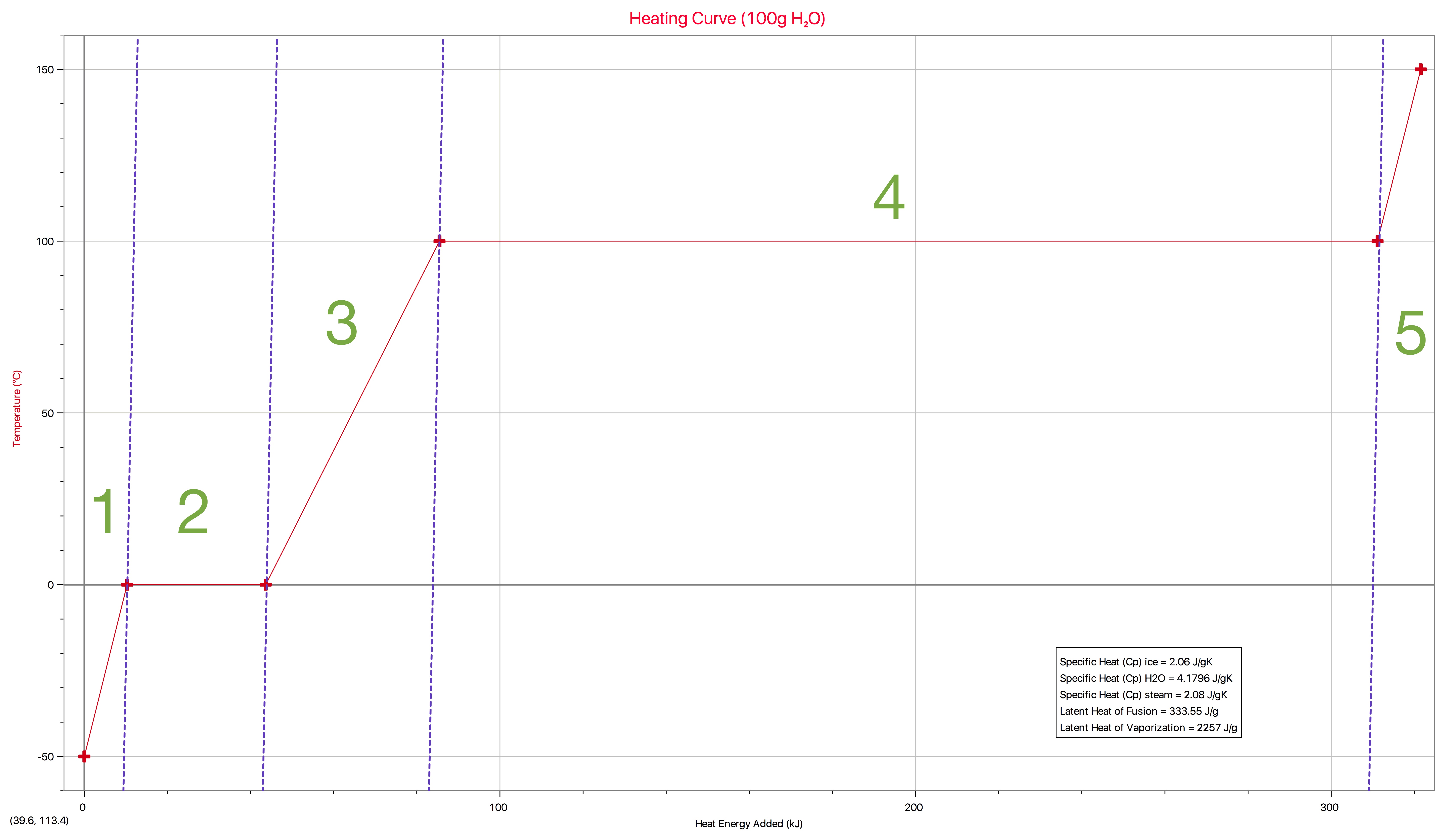
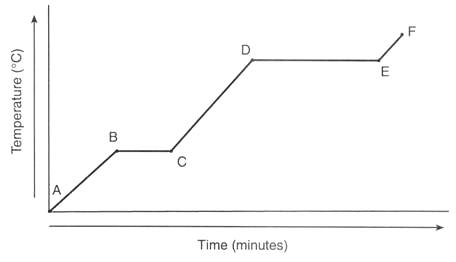

Given the heating curve of a solid being heated at a constant rate, what is the boiling point of this substance?
20°C
50°C
110°C
170°C

Given the heating curve of water, what is happening to potential and kinetic energy during segment CD?
the potential energy and kinetic energy both increase
the potential energy increases while the kinetic energy decreases
the potential energy is constant while the kinetic energy increases
the potential energy increases while the kinetic energy is constant

NaCl(s) was heated up starting at an initial temperature of 0°C. The heating curve is shown in the picture. What is the melting point of this substance?
0°C
801°C
1000°C
1465°C

Given the heating curve of a solid being heated at a constant rate, how much total time was required to boil this substance after it reached its melting point?
3 minutes
4 minutes
10 minutes
14 minutes

This curve indicates what about the heat energy?
Heat energy is being added or absorbed
Heat energy is being released
Earthquakes most often occur
in the middle of plates
near plate boundaries
where thunderstorms are
along the coast

Around what time did the first P wave get detected?
100 sec
120 sec
150 sec
160 sec

Which location is farther from the epicenter?
Seismogram B (top)
Seismogram C (bottom)
Which portion of the Earth can S waves NOT travel through?
Crust
Mantle
Core

Which station was closest to the earthquake's epicenter?
Station A
Station B
Station C

Scientists are able to create an image like this by studying
electromagnetic waves
P and S waves
P and Surface waves
S and Surface waves

This model represents a
P wave shadow zone
S wave shadow zone
Surface wave shadow zone
Convection currents
A seismic station recorded the P-waves, but no S-waves, from an earthquake because S-waves were
absorbed by Earth's outer core
transmitted only through liquids
weak and detected only at nearby locations
not produced by this earthquake

Which statement best explains why only one type of seismic wave was recorded at location B?
S-waves cannot travel through the liquid inner core
P-waves cannot travel through the solid outer core
P-waves cannot travel through the solid inner core.
S-waves cannot travel through the liquid outer core

What layer of the Earth is labeled A?
inner core
outer core
mantle
crust
Which layer is liquid?
crust
mantle
outer core
inner core
Which layer is the HOTTEST?
Crust
Mantle
Outer Core
Inner Core
What state of matter is the inner core?
Solid
Solid but flexible
Liquid
What layer has convection currents?
Crust
Mantle
Inner Core
Outer Core
What layer is liquid and makes a magnetic field?
Outer Core
Mantle
Inner Core
Crust

In what layer of the Earth do people live?
Outer Core
Mantle
Inner Core
Crust
How many major earth layers are there?
3
4
5
3.5
What layer of the Earth is labeled B?
inner core
outer core
mantle
crust
What layer of the Earth is labeled C?
inner core
outer core
mantle
crust
Match the layer with its temperature.
Crust
0-70 C
Mantle
1800-6700 C
Outer Core
8000-9000 C
Inner Core
9300 C
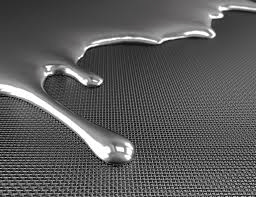
Which layer is made (mostly) of LIQUID iron and nickel?
crust
mantle
outer core
inner core

Which layer is made (mostly) of SOLID iron and nickel?
crust
mantle
outer core
inner core
Which of the following correctly lists the layers from innermost to outermost?
inner core, outer core, lower mantle, upper mantle, crust
lower mantle, upper mantle, crust, inner core, outer core
lower mantle, inner core, upper mantle, outer core, crust
crust, inner core, lower mantle, upper mantle, outer core

As you travel from the crust to the core, how would temperature, pressure and density of the material change?
They would all increase
They would all decrease.
Nothing, the layers are made of the same material throughout
Temperature would decrease, but pressure and density would increase
Earth’s crust can only be____________ or _______________.
Volcanic & Seismic
Oceanic & Continental
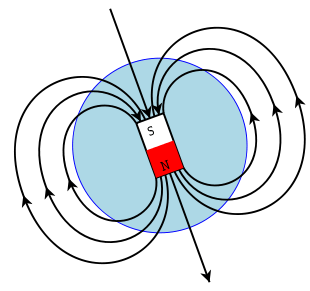
The area of magnetic force around a magnet is known as its _____________.
magnetic field
magnetic declination
magnetic fan lines
magnetic tan lines

Oceanic crust is made of ______
Granite
Basalt
Cookies
Water
Continental crust is made of _______
Flowers and grass
Basalt
Granite
Crust
What is the rising of hot liquid and the sinking of cooled liquid called?
Confection current
Convention current
Convection current
Lava lamp
Movement of the liquid metal of the outer core causes
Volcanic eruptions
Earthquakes
Convection Currents
Earth's magnetic field
What would happen to convection currents if the inner Earth Cooled down
They would continue at the same speed
They would move faster
They would move slower
They would stop
Heat transfer by convection is caused by differences in what two things:
Thickness and material
Weight and electricity
Temperature and density

Convection currents happen inside the Earth. Magma is heated by ______ and rises towards the crust.
the sun
the core
plate tectonics

Convection currents happen inside the Earth. Hot magma from the mantle cools as it touches the ______ and transfers heat. Then it sinks back down again.
crust
core
mantle

A trench is formed when a tectonic plate carrying land meets a tectonic plate carrying ocean. How does density cause the trench to form?
The water the is heavy and forces the plate below the land.
The ocean plate is more dense and sinks under the less dense land plate.
The land plate lifts up and slides upover the ocean plate.
What type of plate boundary creates new sea floor?
Divergent
Convergent
Transform
Subduction

What type of plate boundary is represented in the picture?
Athensphere
Divergent
Transform
Convergent

Which crust subducts because it is denser than other crust?
pizza crust
oceanic crust
continental crust
new crust
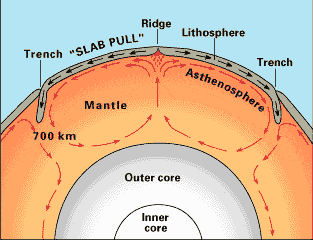
What is the source of energy that drives plate movement?
the subducton of the sea floor
the different densities of the oceanic and crustal plates
convection currents in the asthenosphere
the friction force between the plates that move past each other
What term describes the sinking of the oceanic plate?
subduction
high density
asthenosphere
viscosity
Why does the oceanic plate sink?
high viscosity magma forces it to happen
convection currents in the mantle
oceanic plates are lighter and are pushed under by the continental
oceanic plates are more dense and are forced to sink
What happens in the upper mantle when the oceanic plate has subducted?
The oceanic plate melts due to heat and friction creating high viscosity magma
The oceanic plate melts due to heat and friction creating low viscosity magma
The plate is cycled round to a constructive plate margin.
What happens to the magma when it has been created?
erupts from the volcano
get's stuck in the main vent
Rises through cracks in the continental crust
remains in the mantle, as the mantle is made of magma

What geologic feature/event would you most likely to find at a divergent boundary between two pieces of oceanic crust?
Rift Valley
Mid-Ocean Ridge
Island Arc
Flat land
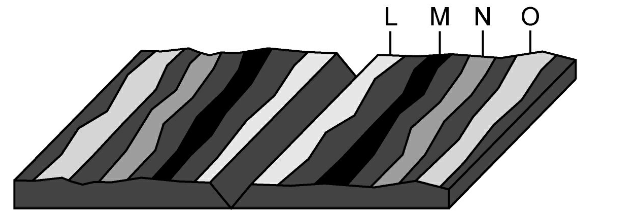
Towards the edges
Youngest seafloor is in the middle of the ocean
Where do most earthquakes and volcanoes take place?
in the oceans
at plate boundaries
on land only
Which statement best explains plate tectonics
The movement of crustal plates over the mantle prevents continental drift
Crustal plates move away from each other at tectonic boundaries
The movement of crustal plates over the mantle often results in earthquakes and volcanic eruptions
Where does the energy from an earthquake originate?
from rocks under stress shifting deep below Earth's surface
weight from rocks pushing down on bedrock
from convection currents
A plate boundary where two plates move away from each other.
Convergent
Divergent
Transform
Normal fault
Oceanic crust sinks beneath a deep-ocean trench and back into the mantle at a convergent plate boundary.
Folding
Subduction
Sea-floor spreading
Mountain formation
Cl or Al?
N or C?
H or F?
Put in order from biggest to smallest (decreasing size)
Calcium
Iron
Zinc
Bromine
Krypton
Barium
Nitrogen
Select the element with the highest ionization energy
Sodium
Aluminum
Phosphorous
Chlorine
Which of the following elements has the highest electronegativity?
Sodium
Potassium
Chlorine
Argon

Looking at period 3, which element has the smallest atomic radius?
Mg
Cl
Al
How do scientists measure the size of atoms?
by counting energy levels
measuring the distance between 2 nuclei
measuring the nucleus
using the atomic number
Subatomic particles with a negative charge
Electrons
Neutrons
Protons
Quarks

The smallest particle of an element.
Element
Molecule
Atom
These are found in the nucleus and have a neutral charge.
proton
electron
neutron

The number 16 for the atomic element sulfur is the
ionic number
isotope
atomic mass
atomic number

How many protons does sulfur have?
32
16
48
12

How many electrons does sulfur have
16
32
48
12
In an atom, the number of protons is equal to the number of ____________.
energy levels
neutrons
neurons
electrons


How many neutrons does a Hydrogen atom have?
1
2
3
0

How many electrons does an Iodine atom have?
53
126
73
179

How many neutrons does an Oxygen atom have?
8
16
24
7.999

How many electrons does a Copper atom have?
63
29
92
34


1s22s22p63s2
Neon (Ne)
Magnesium (Mg)
Aluminum (Al)
Potassium (K)
Write the configuration for Phosphorus (P)
2s2 2p6 3s2 3p3
1s2 2s3 2p6 3p3
1s2 2s2 2p6 3s2 3p3
1s2 2s2 2p5 3s2 3p3
Choose the correct configuration for Neon (Ne).
1s2 2s2 2p6 3s2 3p6
1s2 2s2 2p6 3s2
1s2 2s2 2p6
1s2 2s1 2p6
How many electrons go in the first shell (ring) ?
6
8
4
2

This is a Bohr Diagram of Aluminum. How many valence electrons does Aluminum have?
3
4
5
How many valence electrons does Lithium (Li) have?
8
1
5
2
How many valence electrons does Bromine (Br) have?
5
6
7
8

Which element is this?
Nickel
Neon
Sodium
Nitrogen

Name this element.
Argon
Chlorine
Aluminum
Boron

Name this element.
Neon
Magnesium
Sodium
Manganese

How many valence electrons?
2
3
4
5
What is the reactivity series of metals based on?
The number of outer shell electrons
The number of positive ions formed
The number of bubbles produced
The temperature change of the reactions
Which group of metals is the most reactive?
Group 1 metals
Group 2 metals
Transition metals
Carbon and hydrogen
Using the reactivity trend, which element is most reactive?
Be
Mg
Sr
Ca
Using the reactivity trend, which element is the least reactive?
K
Li
Rb
Na
Using the reactivity trend, which element is least reactive?
Cs
Mg
Ba
Rb
Using the reactivity trend, which element is most reactive?
Ca
Ba
Mg
Be
Using the reactivity trend, which element is most reactive?
F
I
Cl
Br
Using the reactivity trend, which element is least reactive?
O
N
F
C
Using the reactivity trend, which element is least reactive?
As
N
P
Bi
Using the reactivity trend, which element is most reactive?
Si
S
Cl
P
Using the reactivity trend, which element is the least reactive?
S
Ar
P
Cl
Using the reactivity trend, which element is the most reactive?
Cl
At
I
Br
6.15: Which of these is not a property of noble gases?
Colourless
Odourless
Flammable
Gas at room temperature


Which of the following has the highest density?
Argon
Krypton
Xenon
Helium
Neon
Which of the following has the lowest density?
Argon
Krypton
Xenon
Helium
Neon

