
 Worksheets
Quarter 3 – Module 4: Factors That Affect Climate
Total questions: 68
Worksheet time: 30mins
Facing the wind
Windward (WI)
Leeward (LE)
Low temperature
Windward (WI)
Leeward (LE)
Forming clouds.
Windward (WI)
Leeward (LE)
Air moves down.
Windward (WI)
Leeward (LE)
Air moves up.
Windward (WI)
Leeward (LE)
Precipitation occurs
Windward (WI)
Leeward (LE)
Cold air mass starts to absorb heat.
Windward (WI)
Leeward (LE)
Dry air and less precipitation.
Windward (WI)
Leeward (LE)
Dessert plants and grasslands.
Windward (WI)
Leeward (LE)
Rain shadow.
Windward (WI)
Leeward (LE)


Which diagram BEST illustrates how air rising over a mountain produces precipitation?
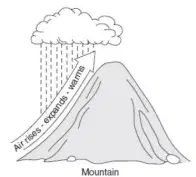
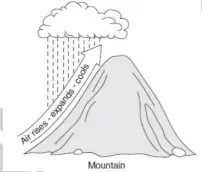
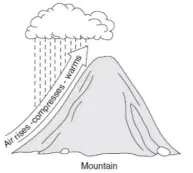
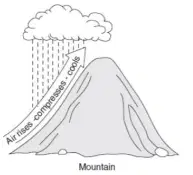
The air temperature decreases as the altitude (a) .
When the area is farther from the equator, the temperature is (a) .
The decrease in (a) is due to the decrease in air pressure.
The soil absorbs and releases heat (a) than water.
Formation of the clouds on the (a) side of the mountain is caused by the condensation of water vapor.
The (a) a region is to a body of water; the temperature range is smaller.
When warm ocean currents that bring along warm water go to a land mass, the temperature of that place (a) as warmer air above the water flows inland, resulting in a warm climate.
The areas closer to the poles receive (a) amount of heat because the angle of sunlight becomes smaller.
The equator receives much of the radiant energy released by the sun, so places near the equator have (a) climate.
During daytime, the air above the sea is (a) than the air above the land. This temperature difference creates a phenomenon known as the sea breeze, where air moves from the sea to the land.

