
 Worksheets
P43-Database-ENG
Total questions: 25
Worksheet time: 1hrs 3mins
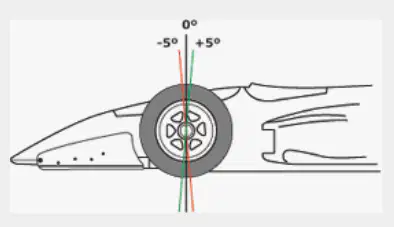
Which statement about caster is correct in relation to axle geometry?
A. Caster has no effect on the stability of straight-ahead tracking.
B. The caster is the tilt of the steering axis when viewed from the front of the vehicle.
C. The caster influences positive scrub radius so that the braking force produces better grip at both wheels, on a road surface with different frictional coefficients.
D. Caster is the forward or rearward tilt of the steering axis when viewed from the side of the vehicle.
Which statement about camber is correct in relation to axle geometry?
A. Camber describes the inward or outward tilt of the wheel when viewed from above.
B. Camber is the distance from the center of tire contact patch to the point where the steering axis reaches the road surface.
C. Camber is the inward or outward tilt of the wheel when viewed from front.
D. Camber is the forward or rearward tilt of the steering axis when viewed from the side.
Which statement regarding scrub radius is correct in the context of axle geometry?
A. The scrub radius is the angle of the wheel center line that runs from the tire contact of a wheel to a line at a 90° angle to the geometric driving axis.
B. The scrub radius is the distance between the point where the centerline of the wheel, viewed from the front, contacts the road, and where SAI contacts the road.
C. The scrub radius is the angle in which the rear axle has a tendency of steering the vehicle when moving straight ahead.
D. The scrub radius is the angle between the direction the tire is pointed in a turn, and the actual direction of travel.
Technician A says no matter which suspension and steering design is used, one of the most important things is that it maintains proper tire contact patch as the vehicle maneuvers. Technician B says excessive camber will cause excessive tire wear around the inside or outside edge of the tire tread, depending on the exact angle. Who is correct?
A. A only
B. B only
C. Both A and B
D. Neither A nor B
Which statement regarding toe is correct in the context of axle geometry?
A. Toe is the inward or outward angle of the wheel when viewed from above.
B. Toe is the inward or outward tilt of the wheel when viewed from the front.
C. Toe is the forward or rearward tilt of the steering axis when viewed from the side.
D. Toe is the angle between the direction the tire is pointed in a turn and the actual direction of travel.
Which of the following statements is NOT true in relation to the vehicle geometric centerline
A. Geometric centerline marks the center of the vehicle from front to back when viewed from above.
B. Geometric centerline is another term for the center of gravity.
C. Ideally, the thrustline should match the geometric centerline.
D. It is a fixed reference point used by the alignment machine for calculating some angles and adjustments.
Which statement describes understeer?
A. The vehicle pushes forward with a loss of traction at the front wheels in a turn.
B. The rear of the vehicle pushes outward laterally with a loss of traction in a turn.
C. The front of the vehicle pushes inward laterally with a loss of traction in a turn.
D. The rear of the vehicle pushes inward with a loss of traction while accelerating.
Which statement describes oversteer?
A. The vehicle pushes forward with a loss of traction at the front wheels in a turn.
B. The rear of the vehicle pushes outward laterally with a loss of traction in a turn.
C. The front of the vehicle pushes inward laterally with a loss of traction in a turn.
D. The rear of the vehicle pushes inward with a loss of traction while accelerating.
What is the meaning of the term kinematics when discussing chassis systems performance?
A. The spatial movement of the wheels in relation to the vehicle body during suspension and steering movements.
B. The arrangement of the subframe for the purposes of absorbing vibrations.
C. The spatial tuning of the steel springs in relation to the elasticity forces of the chassis in the event of lateral and longitudinal movements.
D. The static positioning of suspension system components that is checked during wheel the wheel alignment process.
Technician A says that poly-urethane bushings can be used to effectively upgrade a Porsche suspension system and improve handling. Technician B says too much positive caster will cause excessive tire wear on the inside edge of the tire. Who is correct?
A. A only
B. B only
C. Both A and B
D. Neither A nor B
Which of the following is NOT a direct symptom of an incorrect toe setting?
A. Crooked steering wheel when driving straight
B. Total toe is the sum of the toe measurement on both sides of an axle.
C. A pull to the left or right when driving straight
D. Irregular, feathered tire tread wear
Which part of the steering system fundamentally determines Ackermann geometry?
A. The shape of the outer tie rod ends
B. The variable gear ratio of the rack and pinion assembly
C. The combination of caster and camber angle
D. The angle of the steering arms on the wheel carriers
The order of adjustments when performing a wheel alignment is being discussed. Technician A says the front camber is the last thing to be adjusted when performing a wheel alignment because it will not affect any prior adjustment. Technician B says adjusting the rear camber is the first adjustment made because all other adjustments will be calculated based on where the rear camber is currently set. Who is correct?
A. A only
B. B only
C. Both A and B
D. Neither A nor B
Which if the following statements is true concerning negative scrub radius?
A. The kinematic toe change that occurs provides steering stabilization, especially when braking.
B. The closer the scrub radius is to 0, the more stable the steering will be in a straight line.
C. All rear-wheel-drive cars use either a negative scrub radius or a 0 scrub radius.
D. Negative scrub radius is only used on vehicles that are oriented for track performance.
When preparing a vehicle for alignment, which of the statements below describes some of the things the technician should do.
A. Make sure the fuel tank is approximately half full, and a 50 lb. weight placed in the luggage compartment.
B. The fuel tank should be full, and the vehicle ride height should be correct.
C. Tire pressures set to the correct specification, and all adjustment points loosened to let the bushings relax before adjustments are made.
D. All suspension system components should be inspected for wear, and the fuel level checked to make sure it is no more than 1/4 full.
Which of the statements below best describes the air springs used on both 971 Panamera and 9YA Cayenne models.
A. Three chamber design with three integrated switching valves to control the volume of air in the chambers, in order to vary spring response and overall firmness.
B. Two chamber design with two integrated switching valves to control the volume of air in the chambers, in order to vary firmness and ride height.
C. Three chamber design with two remote-mounted switching valves to control the volume of air in the chambers, in order to vary firmness and provide front axle lift for clearance of low driveway approaches and speed bumps.
D. Three chamber design with two integrated switching valves to control the volume of air in the chambers in order to vary firmness.
On Porsche models equipped with the driver assistance systems, which of the statements lists calibrations that may be required after a wheel alignment, depending on specific equipment?
A. Adaptive cruise control, front camera, and park assist
B. Adaptive cruise control, front camera, and surround view
C. Adaptive cruise control, front camera, and night vision
D. Adaptive cruise control, front camera, and backup camera
Air suspension systems on Porsche vehicles is being discussed. Technician A says the vehicle should never be lowered all the way to the ground with the system empty. Technician B says air suspension systems are not available on any models with MacPherson struts. Who is correct?
A. A only
B. B only
C. Both A and B
D. Neither A nor B
Which of the following tire wear conditions is not caused by some kind of alignment problem?
A. Excessive wear down the center of the tread, but not around the edges of the tread.
B. Excessive wear around one side of the tread.
C. A feathered edge on the tread across the tread surface.
D. Tire cupping
Which of the following pertains to camber?
A. If the regular specification is negative, it will go positive as needed when a lateral load is placed on the wheel.
B. When positive, the hub or spindle for the wheel will push up one side of the vehicle slightly when the wheels are turned.
C. Incorrect camber does not cause a pull.
D. When this angle is not set correctly, it will not directly cause any excess tire wear.
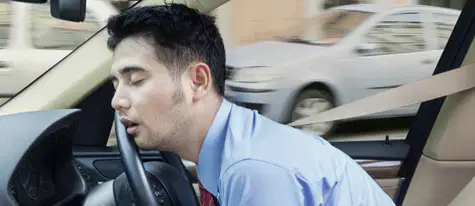
Which control unit triggers a possible eCall (emergency call)?
PSM
Connect control unit (High)
EBB
DME

The information from the front camera is required for :
Lane Keep Assist (LA)
Automatic driving light control
Traffic sign recognition (VZE)
All of the above.
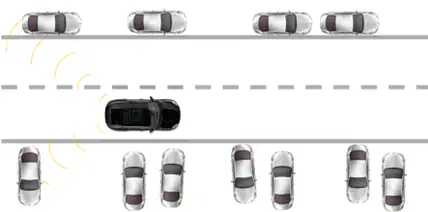
Is it possible to calibrate the Mid-Range Radar (MRR)?
Dynamically only.
Statically only.
Both dynamically and statically.
None of the above.
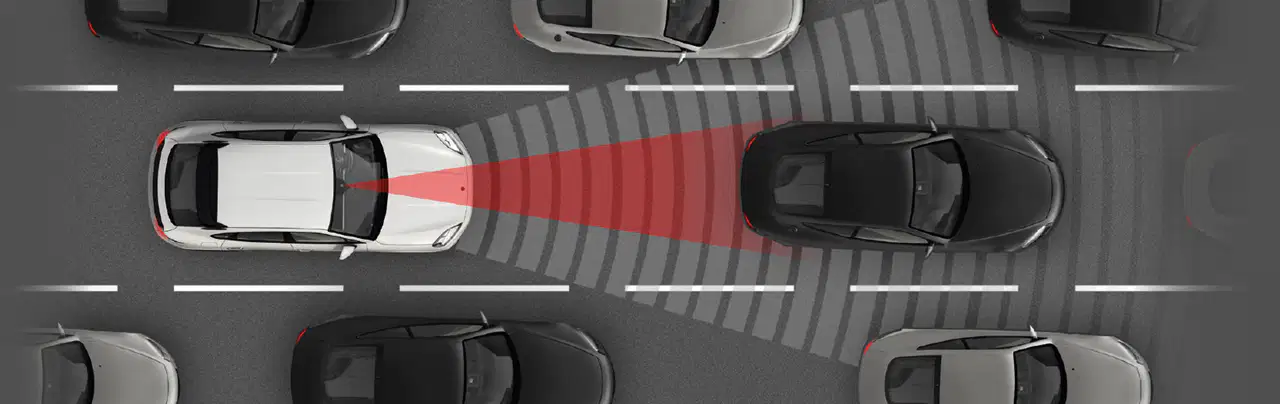
What is the definition of Lane Keep Assist?
Supporting the driver by displaying speed limits and overtaking restrictions in the instrument cluster.
Warning the driver about road users crossing or approaching an intersection.
Automatically bringing the vehicle back into the lane if the driver unintentionally strays from it through a corrective steering intervention.
Providing support to the driver when parking or in situations with poor visibility.
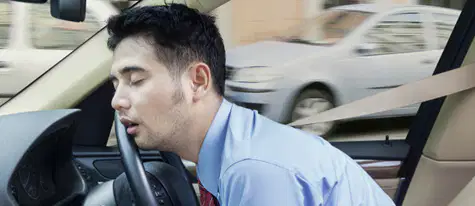
If the driver does not respond there is a multi stage escalation, What is the 1st stage
Making an automatic emergency call when the vehicle is stopped (eCall).
Reactivation of the driver (visual, acoustic, belt jerk, braking jolt).
Decelerates the vehicle until it comes to a stop and activation of the hazard warning lights.
No one of the above.

