
 Worksheets
WED+Rock Cycle
Total questions: 37
Worksheet time: 22mins
What happens to a rock when it is weathered?
It is broken into smaller pieces.
It is moved by wind, air, or water.
It comes to rest at the end of a river.
It is changed into another type of rock.

The flow chart below shows how a metamorphic rock can change into a sedimentary rock.
cooling
melting
deposition
weathering
Granite forms when liquid magma slowly cools within Earth’s crust. If the granite is exposed to intense heat and pressure, it can change to gneiss. Which type of change takes place when granite turns into gneiss?
Sedimentary rock changes to igneous rock.
Igneous rock changes to metamorphic rock
Metamorphic rock changes to igneous rock
Sedimentary rock changes to metamorphic rock
Which of the following actions causes the deposition of sand at a delta?
river water slowing as it enters the ocean
salt water and fresh water mixing together
ocean waves transporting sand toward land
ocean water slowing as it reaches the coast
After heavy rainfall, a stream causes more erosion than usual. Which statement is the most likely reason for this?
The stream contains less water and moves faster.
The stream contains less water and moves slower.
The stream contains more water and moves faster
The stream contains more water and moves slower.
Erosion is the weathering, or breaking down, or larger rocks into sediment.
True
False
Gravity pulls objects from higher places to lower ones.
True
False
Erosion is caused by wind, water, gravity, and glaciers.
True
False
The process that sediments become glued together is called cementation.
True
False
Which of the following best describes the difference between chemical and physical weathering?
Chemical weathering does not disrupt the bonds holding the rocks together
Physical weathering changes the size or structure but not the chemical composition of the rock
Chemical rain breaks down rock into smaller pieces
Which phrase best describes erosion?
Breaking down of rock into sediment
Accumulation of sediment into rock
Movement of sediment
Deposit or dropping of sediment
What is the Rock Cycle?
How rocks are created from dirt.
Process of how rocks are formed from dead plants and animals.
Process that forms and recycles different rocks.
The circular path the rock travels.
The process in which sediments, soil, and rocks are added to a landform.
Chemical Weathering
Physical Weathering
Deposition
Erosion
What causes metamorphic rock to form?
melting
Cooling and hardening
Heat and pressure
Cementation and compaction
Mariah, a new eighth grade scientist at Elm Grove Middle, brought in a rock with a wavy ribbon like pattern and small crystals. Which of these best represents the type of rock Mariah has?
Igneous because these rocks have crystals when they cool slowly.
Igneous because these rocks have crystals when they cool quickly.
Metamorphic because these rocks may contain crystals as it cools down.
Sedimentary because wavy patterns are characteristics of sediment compaction.
When magma cools and hardens, what type of rock is formed?
Sedimentary
Lava
Igneous
Metamorphic

The diagram shows the role of water in the weathering of rocks.
What type of weathering is shown?
biological
chemical
ecological
mechanical

The image shows a model of a landscape.
How will agents of weathering such as wind and water most likely affect this landscape?
Wind and water will cause the continuous contraction and expansion of rocks, leading to erosion.
Wind and water will erode the exposed surfaces, breaking down rocks into sediments gradually.
Wind and water will erode the crust down to the mantle, exposing molten magma that will alter the landscape.
Wind and water will change the chemical composition of the landscape, making it prone to erosion.

What types of rock are indicated by the letters W, X, and Y?
W: igneous; X: metamorphic; Y: sedimentary
W: metamorphic; X: sedimentary; Y: igneous
W: sedimentary; X: igneous; Y: metamorphic
W: sedimentary; X: metamorphic; Y: igneous
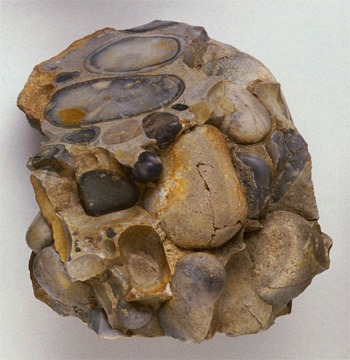
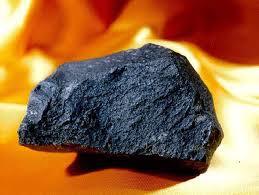

What is a mineral?
A type of rock formed by high heat and pressure
inorganic substances that have neatly arranged atoms and a definite composition
A type of rock formed by volcanoes
A type of rock formed from sediment
Rocks are made out of __________________.
particles
minerals
molecules
cells
The way the pieces of materials in a rock fit together.
Structure
Texture
Luster
Hardness
Streak

Erosion by?
wind
gravity
glacier
waves
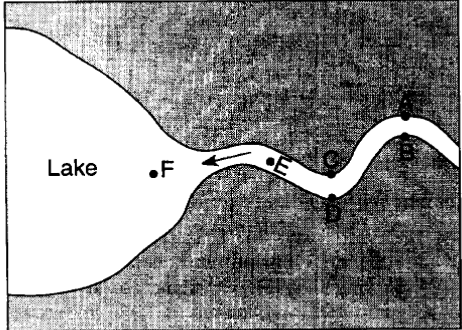
At which locations is the amount of deposition greater than the amount of erosion?

What type of weathering occurs in rivers?
Wind
Frost Action
Abrasion
Oxidation

