Wayground logo

Free Printable Worksheets

Font size

S
M
L
XL
Worksheets

Biology Cell

Total questions: 155

Worksheet time: 1hrs 18mins
Name
Class
Date
1.
Which of the following scientists concluded that all animals are made of cells?
a)
Rudolf Virchow
b)
Matthais Schleiden
c)
Robert Hooke
d)
Theodor Schwann
2.
Which of the following scientists was the first to observe bacteria?
a)
Anton van Leuwenhoek
b)
Matthais Schleiden
c)
Robert Hooke
d)
Theodor Schwann
3.
What is one way in which all living things on Earth are alike?
a)
All living things have hair.
b)
All living things are made of cells and come from other cells.
c)
The cells of all living things have chloroplast.
d)
All living things can move. 
4.
Who looked at cork and named the cell?
a)
Robert Hooke
b)
Van Leeuwenhoek
c)
Robert Brown
d)
Francesco Redi
5.
Robert Hooke, Anton van Leeuwenhoek, Theodor Schwann, Rudolf Virchow, and Matthias Schliden were all responsible for what theory?
a)
The Theory of Gravity
b)
The Theory of Relativity
c)
The Cell Theory
d)
The Theory of Continental Drift
6.
What tool do you use to view the cells?
a)
metric ruler
b)
centrifuge
c)
microscope
d)
pipette
7.
Rocks are not living because
a)
they never move
b)
they aren't needed for humans
c)
they are not made of cells
d)
they don't break down
8.
The smallest unit that can perform the basic activities of life is
a)
a cell 
b)
a tissue
c)
an organ
d)
an organism
9.
Which of the following scientists contributed to the cell theory?
a)
Rudolf Virchow, Robert Hooke, Anton van Leuwenhoek
b)
Matthais Schleiden, Theodor Schwann, Rudolf Virchow
c)
Robert Hooke, Theodor Schwann, Anton von Leuwenhoek
d)
Theodor Schwann, Matthais Schleiden, Robert HookeOption 4 (optional)
10.
Which of the following statements is not part of the cell theory?
a)
Cells are the basic unit of structure and function in all living things.
b)
All cells are produced from other cells.
c)
Only animal cells are composed of cells.
d)
All living things are composed of cells.
11.
Which scientist did NOT contribute to the cell theory?
a)
Anton Van Leeuwenhoek
b)

Robert Hooke
c)
Albert Einstein 
d)

Matthias Schleiden
12.
A plant and an animal are both living things. According to the Cell Theory, what can you conclude about these two very different organisms?
a)
Plants have cells but animals do not.
b)
They are both made of one or more cells. 
c)
They both come from the same kind of cell.
d)
They both come from a non-living organism.
13.
This scientist concluded that animals and, in fact, all living things are made of cells:
a)
Hooke
b)
Leeunwenhoek
c)
Schleiden
d)
Schwann
14.
This scientist was the first to identify cells and name them:
a)
Hooke
b)
Leeunwenhoek
c)
Schleiden
d)
Virchow
15.
This scientist proposed that all cells come from other cells:
a)
Leeunwenhoek
b)
Schleiden
c)
Schwann
d)
Virchow
16.
This scientist concluded that plants are made of cells:
a)
Virchow
b)
Schwann
c)
Schleiden
d)
Leeunwenhoek
17.
This scientist observed live cells and observed greater detail:
a)
Hooke
b)
Leeunwenhoek
c)
Virchow
d)
Schwann
18.
This scientist observed live cells and observed greater detail:
a)
Hooke
b)
Leeunwenhoek
c)
Virchow
d)
Schwann
19.
All organisms are made of:
a)
organelles
b)
cytoplasm
c)
DNA
d)
cells
20.
All existing cells are produced by other
a)
living cells
b)
dead cells
c)
atom cells
d)
animal cells
21.
This is the most basic unit of life
a)
atom
b)
cell
c)
nucleus
d)
DNA
22.
Cells come only from what?
a)
existing cells
b)
nucleus
c)
fission
d)
budding
23.
Who looked at cork and named the cell?
a)
Robert Hooke
b)
Van Leeuwenhoek
c)
Robert Brown
d)
Francesco Redi
24.
The Cell Theory states...
a)
atoms create all matter
b)
living things evolve
c)
the cell is the backbone of all matter
d)
cells are the basic unit of structure and organization of organisms
25.
"All animals are made of cells". This fact was discovered by...
a)
Matthias Schleiden
b)
Theodor Schwann
c)
Robert Hooke
d)
Rudolf Virchow
26.
All cells have DNA.
a)
True
b)
False
27.
Eukaryotic cells are complex.
a)
true
b)
false
28.
All living things are made of...
a)
fungi
b)
cells 
c)
bacteria 
d)
plants 
29.
Plants and animal cells are examples of ____________ cells 
a)
prokaryotic cells 
b)
eukaryotic cells 
30.
These cells have DNA surrounded by a nucleus.
a)
Eukaryotic
b)
Prokaryotic
c)
Neither
d)
Both prokaryotic and eukaryotic
31.
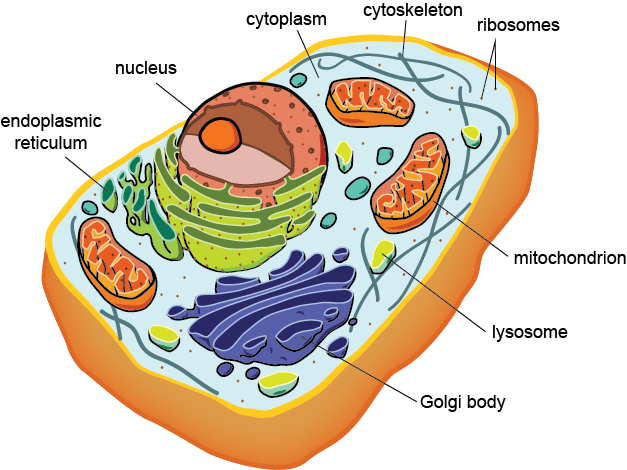
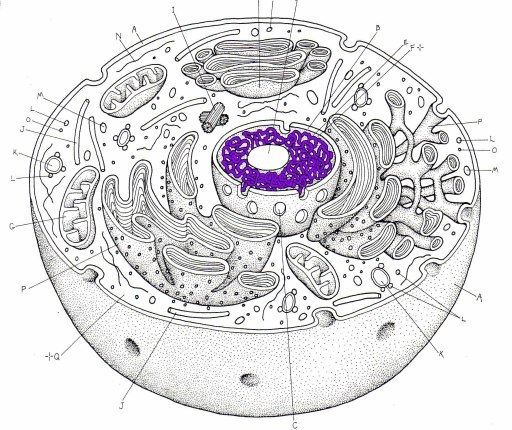
What kind of cell is this?
a)
Eukaryotic
b)
Prokaryotic
32.
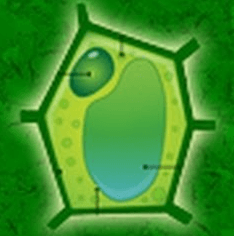
What type of cell is pictured?
a)
Prokaryotic
b)
Eukaryotic
c)
Plant
d)
Animal
33.

All cells have cell membranes. What is the function (job) of the cell membrane?

a)

Allow certain things to enter and exit the cell.

b)

Allows all things to enter the cell.

c)

Does not allow anything to enter and exit.

d)

It is made out of wood.

34.
What does it mean when you see a nucleus in a cell?
a)
The cell is empty
b)
The cell is prokaryotic
c)
The cell is eukaryotic
d)
This would not be a cell
35.
What is cytoplasm? 
a)
The outside of the cell
b)
Another name for cells
c)
Another name for a nucleus
d)
The gel like liquid inside all cells
36.
Which cell is larger, more complex and has a nucleus?
a)
Eukaryotic
b)
Prokaryotic 
37.
Which cell is smaller, more simple and does not have a nucleus?
a)
Eukaryotic 
b)
Prokaryotic 
38.
Humans and plants are made of ______________ cells because they both have a nucleus. 
a)
Eukaryotic 
b)
Prokaryotic 
c)
Fungi
d)
What?
39.
Ribosomes are found in both prokaryotic and eukaryotic cells. What is the main function of ribosomes.
a)
to make proteins 
b)
to make sugar
c)
to make oil
d)
to make cells 
40.
Ribosomes synthesize protein. What does the word synthesize mean?
a)
To move
b)
To heat up
c)
To make (produce)
d)
To burn
41.
1. All living things are made of one or more cells.
2. Cells are the building blocks of life.
3. All cells come from preexisting cells.
What is this theory called?
a)
The Eukaryotic Theory
b)
The Prokaryotic Theory 
c)
The Cell Theory
d)
The Nucleus Theory 
42.
All cells have DNA.
a)
True
b)
False
43.
Chromosomes are ____ shape structures that contain DNA inside the nucleus. 
a)
"S"
b)
"I"
c)
"0"
d)
"X"
44.
Chromosomes (DNA) are found in the __________________ in eukaryotic cells.
a)
Nucleus 
b)
Ribosome
c)
Cell Membrane 
d)
Cytoplasm 
45.
Bacteria are all made of ...
a)
Eukaryotic cells
b)
Plant cells
c)
Prokaryotic cells
d)
fungi cells
46.
This organelle takes food and turns it into ENERGY for plant and animal cells.
a)
Chloroplast
b)
Mitochondria
c)
Lysosome
d)
Ribosome
47.
Which part of the cell is often called "the brain of the cell"?
a)
nuclear membrane
b)
endoplasmic reticulum
c)
nucleus
d)
mitochondria
48.
I am the outer most layer of an animal cell. What am I?
a)
cell wall
b)
nucleus
c)
cell membrane 
d)
cell skin
49.
A rigid layer that lies outside the cell's  membrane is...
a)
Cytoskeleton
b)
Cilia
c)
Cell Wall
d)
Flagella
50.
What organelle is called the "powerhouse" of a cell?

a)
Endoplasmic Reticulum
b)
Nucleus
c)
Mitochondria
d)
Nucleolus
51.
I am only found in a plant cell. What am I?
a)
cell wall
b)
mitochondria
c)
cytoplasm
d)
chloroplast
52.
Consists of a jellylike substance that contains many organelles.
a)
ribosomes
b)
cytoplasm
c)
chloroplasts
d)
cell wall
53.
Which organelle uses energy from sunlight to make sugar?
a)
mitochondria
b)
nucleus
c)
chloroplasts
d)
vacuoles
54.
Controls what enters/leaves a cell
a)
cell membrane
b)
Nuclear membrane
c)
cell wall
d)
cytoplasm
55.
hold/store water, mainly found in plant cells
a)
nuclolus
b)
ribosomes
c)
golgi bodies
d)
vacuoles
56.
jello-like material, fills the space between cell organelles, is where many chemical reactions occur
a)
cytoplasm
b)
chromatin
c)
chloroplast
d)
cell membrane
57.
Converts food into usable energy for the cell
a)
Mitochondria
b)
Chloroplast
c)
Nucleus
d)
Vacuole
58.
Provides structure and support for plant cells.
a)
Cell membrane
b)
Chloroplast
c)
Ribosomes
d)
Cell Wall
59.
Stores food and water for the cell.
a)
Cytoplasm
b)
Cell Wall
c)
Vacuole
d)
Nucleus
60.
Controls the cell and contains DNA
a)
Nucleus
b)
Mitochondria
c)
Chloroplast
d)
Cell Wall
61.
Controls what enters and leaves the cell
a)
Mitochondria
b)
Cell Membrane
c)
Cell Wall
d)
Nucleus
62.
The Golgi apparatus _____.
a)
packages cell products for export
b)
eliminates waste
c)
stores DNA
d)
makes energy
63.
Which organelle is only found in a plant cell? 
a)
nucleus
b)
chloroplast
c)
mitochondria
d)
cell membrane
64.
This organelle creates energy.
a)
Nucleus
b)
Ribosome
c)
Mitochondria
d)
ER
65.
Where is DNA stored in a cell? 
a)
Lysosomes
b)
Golgi Complex
c)
Ribosomes
d)
Nucleus
66.
What is the fluid inside a cell called? 
a)
Endoplasimic Reticulum
b)
Orange Juice
c)
Water
d)
Cytoplasm
67.
Which of these is NOT a part of the Cell Theory?
a)
All cells are independent.
b)
Cells are the basic unit of living things. 
c)
All living things are one or more cells.
d)
Cells come from cells.
68.
This organelle helps plants keep their rigid structure. 
a)
Cell wall
b)
Cell membrane
c)
Chloroplast
d)
Nucleus
69.
This organelle turns the light energy into a simple sugar. 
a)
Mitochondria
b)
ER
c)
Chloroplast
d)
Nucleus
70.
This organelle makes proteins. 
a)
Cell membrane
b)
Nucleus
c)
Ribosome
d)
ER
71.
Plant and animal cells are identical. 
a)
True
b)
False
72.

Which of the following statements about freezing as a method of food preservation is INCORRECT?

a)

It helps to slow down the growth of food spoiling bacteria.

b)

It kills the bacteria present in the food.

c)

It helps to slow down the enzyme activity of food spoiling bacteria

d)

The water inside the food freezes into ice crystals

73.

What food preservation technique has been used here?

a)

Freezing.

b)

Drying.

c)

Salting.

74.

It is the removal of the moisture content of the food.

a)

Drying

b)

Freezing

c)

Salting

75.

Assertion: Pasteurisation is the method to preserve milk.

Reason: In pasteurisation, the milk is heated to high temperature and cool down slowly.

a)

Both A and R are true and R is the correct explanation of A.

b)

Both A and R are true but R is not the correct explanation of A.

c)

A is true but R is false. A is false but R is true.

d)

Both A and R are false.

76.

Assertion: Adding salt preserves the meat and fish for ages.

Reason: Salt draws water out of food and dehydrates the food.

a)

Both A and R are true and R is the correct explanation of A.

b)

Both A and R are true but R is not the correct explanation of A.

c)

A is true but R is false. A is false but R is true.

d)

Both A and R are false.

77.

Which of the following is considered a physical property of an element?

a)

density

b)

color

c)

conductivity

d)

flammable

78.

Malleability is a physical property. It means . . .

a)

a solid element can be crushed into a powder.

b)

a solid piece of metal can be hammered into a shape.

c)

a solid piece of metal can be pulled into a wire.

d)

a solid can be melted to a liquid.

79.
Which of the following is a property of a non-metal?
a)
Conducts electricity and heats well
b)
Can be hammered into thin sheets
c)
Is brittle and breaks easily
d)
Has a shiny, metallic luster
80.

Assertion: Mercury is widely used in clinical thermometer.

Reason: Mercury is solid at room temperature.

a)

Both A and R are true and R is the correct explanation of A.

b)

Both A and R are true but R is not the correct explanation of A.

c)

A is true but R is false. A is false but R is true.

d)

Both A and R are false.

81.

Assertion: Copper used widely to conduct electricity.

Reason: Silver has the highest electrical conductivity of all metals.

a)

Both A and R are true and R is the correct explanation of A.

b)

Both A and R are true but R is not the correct explanation of A.

c)

A is true but R is false. A is false but R is true.

d)

Both A and R are false.

82.

Name the groups in which microorganisms are broadly classified.

a)

yeast

b)

fungi

c)

protozoa

d)

algae

83.

What helps in the rise of bread or dosa dough?

a)

Heat

b)

Grinding

c)

Growth of yeast cells

d)

Low pressure

84.

The disease caused by protozoa is

a)

tuberculosis

b)

polio

c)

typhoid

d)

malaria

85.

The process of putting a vaccine inside the body of a person in order to produce immunity against some disease is called (a)  

(if you put the answer right but came wrong then the word could contain capital letters)

86.

(a)   is the ability of a body to develop resistance against diseases.

87.

Whenever any harmful disease-causing microorganism enters the human body, the body produces substances to fight with the entered microbe. It is called

a)

Antibodies

b)

Tuberculosis

c)

Algae

d)

Fungi

88.

Which of the following is not used as food preservatives?

a)

Salt

b)

Sugar

c)

Vinegar

d)

Methane

89.

Fungi consist of two main groups of organisms ………….. and moulds.

a)

Yeast

b)

Algae

c)

Bread

d)

None of these options

90.

Microorganisms can be found only in air and water.

a)

True

b)

False

91.

Protozoa cause diseases like dysentery and malaria.

a)

True

b)

False

92.

Jams, jellies and squashes are preserved by adding salt.

a)

True

b)

False

93.

Name the groups in which microorganisms are broadly classified.

a)

yeast

b)

fungi

c)

protozoa

d)

algae

94.

Microorganisms are classified into (a)   major groups

95.

Another name for a microorganism is (a)  

96.

Bacteria and yeast are alsohelpful for (a)   of rice idlisand dosa batter

97.

Beneficial or Harmful?


Plankton are a food source for small fish

a)

beneficial

b)

harmful

98.

What are bacteria that cause disease?

a)

viruses

b)

pathogens

c)

endospores

d)

antibiotics

99.

Assertion: Adding salt preserves the meat and fish for ages.

Reason: Salt draws water out of food and dehydrates the food.

a)

Both A and R are true and R is the correct explanation of A.

b)

Both A and R are true but R is not the correct explanation of A.

c)

A is true but R is false. A is false but R is true.

d)

Both A and R are false.

100.

Penicillin is a

a)

Algae

b)

Fungus

c)

Vaccine

d)

Bacteria

101.

Viruses have all cell organelles present in them.

a)

True

b)

False

102.

Beneficial or Harmful?


yeast used to cause bread to rise

a)

beneficial

b)

harmful

103.

Beneficial or Harmful?


fungus & bacteria decomposes tree limbs in forest

a)

beneficial

b)

harmful

104.

Is it possible for Bacteria to grown immune to Antibiotics?

a)

Yes

b)

No

c)

Maybe

105.

Can Fungi spoil only cooked foods?

a)

Yes

b)

No

c)

Maybe

106.

Assertion: Copper used widely to conduct electricity.

Reason: Silver has the highest electrical conductivity of all metals.

a)

Both A and R are true and R is the correct explanation of A.

b)

Both A and R are true but R is not the correct explanation of A.

c)

A is true but R is false. A is false but R is true.

d)

Both A and R are false.

107.

Vaccine for small pox was discovered by ____________

a)

Louise Pasteur

b)

Alexander Fleming

c)

Edward Jenner

d)

John Mendal

108.

Beneficial or Harmful?


bacteria used in cheese and yogurt

a)

beneficial

b)

harmful

109.
Which of the following is a property of a non-metal?
a)
Conducts electricity and heats well
b)
Can be hammered into thin sheets
c)
Is brittle and breaks easily
d)
Has a shiny, metallic luster
110.

Beneficial or Harmful?


algae causes Red Tide

a)

beneficial

b)

harmful

111.

Which of the following is not responsible for spoilage of food?

a)

Algae

b)

Fungi

c)

Bacteria

d)

Chemical

112.

What describes the relationship of microorganisms to humans?

a)

harmful

b)

useful

c)

both harmful and useful

d)

nethier harmful nor useful

113.

Vaccine for small pox was discovered by ____________

a)

Louise Pasteur

b)

Alexander Fleming

c)

Edward Jenner

d)

John Mendal

114.
Turberculosis is a disease that was widespread during the turn of the century.  This disease is an example of.....
a)
A helpful bacteria
b)
A helpful fungi
c)
A harmful bacteria
d)
A harmful probiotic
115.
Are microorganisms helpful or harmful?
a)
Helpful
b)
Harmful
c)
Both
d)
Neither
116.

What do you think microbe means ?

a)

A microorganism, or microbe, is a microscopic organism, which may exist in its single-celled form or in a colony of cells.

b)

It is a thing that enters the human body or an animal .

c)

It is an insect

d)

It is something that we found it in the ocean

117.

What science tool is used to view organisms too small to see with a magnifying lens?

a)

telescope

b)

binoculars

c)

microscope

d)

netherscope

118.

Beneficial or Harmful?


Algae in the ocean makes oxygen

a)

beneficial

b)

harmful

119.

Beneficial or Harmful?


bacteria in uncooked chicken

a)

beneficial

b)

harmful

120.

Beneficial or Harmful?


algae causes Red Tide

a)

beneficial

b)

harmful

121.

Beneficial or Harmful?


bacteria used in cheese and yogurt

a)

beneficial

b)

harmful

122.

Beneficial or Harmful?


yeast used to cause bread to rise

a)

beneficial

b)

harmful

123.

Beneficial or Harmful?


bacteria weakens teeth enamel

a)

beneficial

b)

harmful

124.

Beneficial or Harmful?


fungus & bacteria decomposes tree limbs in forest

a)

beneficial

b)

harmful

125.

Beneficial or Harmful?


Plankton are a food source for small fish

a)

beneficial

b)

harmful

126.
This microorganism has whip-like flagella, that help them move.
a)
Virus
b)
Bacteria
c)
Algae
d)
Fungi
127.
All bacteria are
a)
unicellular
b)
multicellular
c)
eukaryotic
128.
Some bacteria is known as ________________ and cause disease.
a)
pathogens
b)
flagella
c)
influenza
d)
ebola
129.
Bacteria is known as ______________ in an ecosystem when feeding on dead organisms.
a)
decomposers
b)
herbivores
c)
pathogens
d)
infections
130.
The smallest microorganism on earth is known as  _____________
a)
a virus
b)
bacteria
c)
algae
d)
fungi
131.
Viruses can also be called ______________
a)
flagella
b)
parasites
c)
decomposers
d)
pathogens
132.
This microorganism uses host cells to make copies of itself
a)
Protozoa
b)
Fungi
c)
Virus
d)
Bacteria
133.
Fungi is benefical to us because of the following reason:
a)
They are a source of oxygen
b)
They can clean up pollution
c)
They are a source of antibiotics
d)
They help to clean run off from waste
134.
What is true about bacteria?
a)
Bacteria use photosynthesis to make their own food
b)
Bacteria can only be found in dirt
c)
Bacteria is always beneficial
d)
Bacteria can be used to make certain foods
135.
Probiotics are an example of ....
a)
A microorganisms that can make people sic
b)
A microorganism that lives in the ocean
c)
An example of bacteria and all bacteria is harmful
d)
an example of live bacteria and yeast that is helpful to humans by aiding in the digestion of food
136.
Which is not an example of a harmful microorganism?
a)
Mold growing on a kitchen sponge
b)
Bacteria found in yogurt
c)
Bacteria that causes turberculosis
d)
Salmonella on uncooked chicken
137.

What type of fungi is used to help bread rise?

a)

mushrooms

b)

yeast

c)

mold

d)

truffles

138.

Scientists must use a ____________________________ to see bacteria and protists.

a)

telescope

b)

magnifying glass

c)

microscope

d)

microorganism

139.

What is an antibiotic?

a)

a rapid spread of a disease around the world

b)

a type of bacteria living in human cells

c)

a medicine that attacks harmful microbes

d)

a disease for which there is no known cure

140.
Which of the following is the basic building block of living organisms?
a)
cell 
b)
organelle
c)
nucleus
d)
organ system
141.
Amoebas have no definite shape
a)
True
b)
False
142.
The different colors in algae are caused by _____________.
a)
pigments
b)
protozoans
c)
cilia
d)
phytoplankton
143.

Microbes are effective due to their

a)

Various shapes

b)

Ability to reproduce

c)

Tolerance

d)

Both b and c

144.

Microorganisms are

a)

Autotrophs & heterotrophs

b)

Autotrophs only

c)

Saprophytes only

d)

Hetrotrophs only

145.

Bacteriophage is a

a)

Bacteria

b)

Virus

c)

Protozoan

d)

Funguss

146.

Yogurt and cheese can be produced from ___________.

a)

Bacteria

b)

Virus

c)

Protozoa

d)

Algae

147.

_________________ bacteria are in your _________________ to help digest food.

a)

Helpful; throat

b)

Helpful; stomach

c)

Harmful; esophagus

d)

Harmful; lungs

148.

A bacteria responsible for curdling of milk is:

(a)  

149.

What type of fungi is used to help bread rise?

a)

mushrooms

b)

yeast

c)

mold

d)

truffles

150.

A preparation of weakened or killed pathogens.

a)

Bacteria

b)

Antibiotic Resistance

c)

Vaccine

d)

Capsid

151.

Are microorganisms helpful or harmful?

(a)  

152.

Yeast makes bread, rolls and cakes rise.

a)

True

b)

False

153.

Scientists must use a ____________________________ to see bacteria and protists.

a)

telescope

b)

magnifying glass

c)

microscope

d)

microorganism

154.

Which is not an example of a harmful microorganism?

a)

Mold growing on a kitchen sponge

b)

Bacteria found in yogurt

c)

Bacteria that causes turberculosis

d)

Salmonella on uncooked chicken

155.

What is an antibiotic?

a)

a rapid spread of a disease around the world

b)

a type of bacteria living in human cells

c)

a medicine that attacks harmful microbes

d)

a disease for which there is no known cure