wayground logo

Free Printable Worksheets

Font size

S
M
L
XL
Worksheets

revolution

Total questions: 74

Worksheet time: 44mins

Name
Class
Date
1.

The main goal of the Congress of Vienna was to:

a)

Execute Napoleon

b)

Establish collective security and stability for the continent of Europe

c)

Create a law code for the continent of Europe

d)

Put Napoleon on trial for treason

2.

____________________= having extreme love for ones country

a)

Nationalism

b)

Liberalism

c)

Conservatism

d)

Utilitarian

3.

Who rules France and wants to conquer all of Europe?

a)

Napoleon Bonaparte

b)

Otto von Bismarck

c)

Maximilian Robespierre

d)

Camillo di Cavour

4.
After his initial defeat, Napoleon was exiled to the island of ______; his second exile was to the island of _________.
a)
St. Helena; Elba
b)
Elba; Corsica
c)
Elba; St. Helena
d)
Corsica; St. Helena
5.

In March 1815, Napoleon returned from exile, raised a new army, and confronted a British army at the Battle of Waterloo. Who was the commander of that British army?

a)

Admiral Nelson

b)

Ulysses S. Grant

c)

Duke of Wellington

d)

Gebhard Leberecht von Blücher

6.

The goal of the Congress of Vienna was to

a)

Reignite the spirit of the French Revolution

b)

Restore European monarchs to power like Louis XVIII

c)

Allow France to reclaim territories lost in the war

d)

Select a nation to lead all of Europe

7.
Which of the following fueled French desires to revolt against the monarchy?
a)
The Reign of Terror and the Ideas of the Enlightenment
b)
The Napoleonic Code and ideas of the Enlightenment
c)
Ideas of the Enlightenment and the American revolution
d)
The Scientific Revolution and the Reign of Terror
8.
Who was the king of France during the French Revolution?
a)
Louis XVI
b)
Peter the Great
c)
Robespierre
d)
Marquis de Lafayette
9.
Which of the following was a cause of the French revolution?
a)
government debt due to overspending and involvement in wars
b)
France had a surplus of food due to bountiful harvests
c)
men between the ages of 18-25 were required to join the army
d)
France had no king to lead the country
10.
How did Napoleon address the economic issues of the French Revolution?
a)
He gave all French citizens enough money to live
b)
He created a more fair tax system
c)
He allowed Nobles to officially enslave their peasants
11.
How did Napoleon end the chaos of the French Revolution?
a)
He continued to use the guillotine against his enemies
b)
He worked with the Directory to bring peace
c)
He stabilized the country with his new policies
d)
He decreased the size of the military
12.
How did the Reign of Terror change the French Revolution?
a)
The original problems in France were all solved
b)
The French were taken over by neighboring Austria
c)
Robespierre used unlimited power to help the peasants
d)
Revolution took a radical turn as thousands were executed
13.

A machine for beheading people used as a means of execution during the French Revolution.

a)

Beheader

b)

National Razor

c)

Guillotine

d)

Head chopper-offer 3000

14.

The period from mid-1793 to mid-1794, when Maximilien Robespierre ruled France nearly as a dictator and thousands of political figures and ordinary citizens were executed.

a)

Great Fear

b)

French Revolution

c)

Reign of Terror

d)

Tennis Court Oath

15.

Which country had the best Navy in the world at the start of the Revolution?

a)

France

b)

Spain

c)

England

d)

America

16.

The army of the Thirteen Colonies in the Revolutionary-era United States

a)

Red Coats

b)

Continental Army

c)

minutemen

d)

British Army

17.

A colonist of the American revolutionary period who supported the King and the British (England's) cause.

a)

Loyalist

b)

Patriot

c)

Englishman

d)

Traitor

18.

A colonist who favored independence from Great Britain and war against Britain

a)

Patriot

b)

Loyalist

c)

Ally

d)

War Hawk

19.
Who won the American Revolution?
a)
The British
b)
The American Colonists
20.
What is the following quote referring to? "We hold these truths to be self evident, that all men are created equal...with certain unalienable rights that among them are life, liberty, and the pursuit of happiness" 
a)
The right to revolt
b)
Locke's Natural Rights
c)
Popular sovereignty
d)
The social contract
21.
This man wrote the Declaration of Independence to to show that the colonists were free from Britian
a)
Thomas Jefferson
b)
Thomas Paine
c)
John Locke
d)
George Washington
22.

Peter the Great from Russia...

a)

made old fashioned nobles cut their beards.

b)

was known as "the sun king.

23.

[p2] What title/myth did Louis XIV foster for himself as he sought to be the sole ruler of France?

a)

The Sun King

b)

The God-Man

c)

The Leviathan

24.
Galileo was tried for heresy because he argued  
a)
That heaven did not exist
b)
That Earth revolved around the sun
c)
Against the law of gravity
d)
That the sun revolved around the Earth
25.
According to Copernicus, the sun  
a)
Revolved around the earth
b)
Was the center of the Universe
c)
Was the biggest star
d)
 Had many moons
26.
During the Scientific Revolution the heliocentric view of the universe was first proposed by __.
a)
Ptolemy
b)
Francis Bacon
c)
Isaac Newton
d)
Nicolaus Copernicus
27.
The idea that the earth is the center of the universe is the ___________ theory.
a)
geocentric
b)
heliocentric
c)
earthcentric
d)
world's worst
28.
What made it possible to feed large groups of people?
a)
specialization
b)
rice paddies
c)
New farming methods and tools
d)
Crop rotation
29.

Which form of government has no king?

a)

Constitutional monarchy

b)

Absolute monarchy

c)

Republic

30.

What method was the most often used means of execution during the Reign of Terror in France?

a)

Guillotine

b)

Hanging

c)

Electric chair

d)

Firing squad

31.

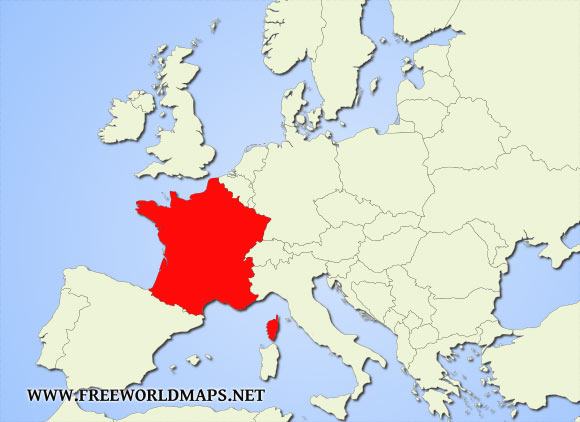
What country is highlighted on this map?

a)

England

b)

France

c)

Germany

d)

Canada

32.

Which is the idea that God had chosen a ruler?

a)

Divine inheritance

b)

'Cause for

c)

Divine right

d)

Divine privilege

33.

Thousands of people were accused of disloyalty to the revolution and guillotined for their crimes during...

a)

the Reign of Napoleon

b)

the Reign of Louis XVI

c)

the Reign of Benevolence

d)

the Reign of Terror

34.

The agricultural revolution led to Britain’s industrialization (mass production) because…

a)

It created universal male suffrage

b)

It greatly increased the number of people working in agricultural fields

c)

It encouraged the fair and equal treatment of workers on farms and in factories

d)

It destroyed the cottage industry and made people look for work to work in factories

e)

It led to new inventions as well as urban industrialization

35.

This was NOT a cause of the French Revolution

a)

France was deeply in debt

b)

Inequality of French social classes

c)

ideas of the Enlightenment thinkers

d)

Religious issues

36.
Huguenots were Protestants from which country?
a)
England
b)
France
c)
Austria
d)
Sweden
37.

Centralizing political power was important for __________ during the Age of Absolutism

a)

Citizens

b)

Absolute Monarchs

c)

The Peasants

d)

Muslim Rulers

38.

“The state of nature has a law of nature to govern it. . . no one ought to harm another in his life, health, liberty, or possessions. . .” --Two Treatises on Government, 1690

Who wrote the passage from Two Treatises on Government?

a)

John Locke

b)

Montesquieu

c)

Rousseau

d)

Voltaire

39.
Enlightenment philosopher who believed to limit government, that it should be divided into separate branches that shared power.
a)
John Locke
b)
Montesquieu
c)
Rousseau
d)
Voltaire
40.
What was the "scorched Earth" strategy?
a)
None of these
b)
Napoleon burned the Russian cities to the ground to break their will
c)
Great Britain's strategy at the Battle of Trafalgar
d)
The Russians burned their cities, factories, farms, and railroads so Napoleon could not use them
41.
The French Revolution was inspired by _______________ thinkers.
a)
Scientific Revolution
b)
Clergy
c)
Enlightenment
d)
Revolutionary
42.

The Storming of the Bastille is considered to be the start to the French Revolution

a)

True

b)

False

43.
In November 1803 a slave army finally defeated Europe’s greatest military power, in their new Constitution the Haitians inserted a quote from the American Revolution _____. 
a)
Free at last, free at last
b)
Don’t tread on me
c)
No taxation without representation
d)
Live free, or die
44.
The French Revolution battle cry Liberty, Equality, and Fraternity inspired the Haitian slaves to revolt in ___.
a)
1789
b)
1790
c)
1791
d)
1792
45.
Where was Napoleon defeated?
a)
Ghent
b)
Paris
c)
Waterloo
d)
Wesley Chapel
46.
What is a coup d'etat?
a)
Overthrow of the government by the Military
b)
Overthrow of the government by the people
c)
When the public votes to change their constitution
d)
Military tactic using artillery and flanking infantry
47.
Napoleon's Code of Laws he instituted to consolidate power throughout Continental Europe
a)
Shariah Law
b)
English Common Law
c)
Napoleonic Code
d)
Code of Hammurabi
48.
What was the result of Napoleon's invasion of Russia?
a)
None of these
b)
Napoleon conquered Russia, but while he was invading the British invaded France
c)
Napoleon retreated to focus on the Haitian Revolution
d)
Napoleon lost 95% of his army, and retreated back to France
49.
When Napoleon escaped exile and returned to France, Great Britain and Prussia invaded. Which Battle in Belgium did they meet Napoleon?
a)
Toulon
b)
Austerlitz
c)
Waterloo
d)
Trafalgar
50.
The great French empire that Napoleon created eventually fell after the unsuccessful invasion of Russia. Why was the invasion considered a great disaster for Napoleon? 
a)
There was a massive air attack by the Russians that wiped out most of Napoleons army
b)
Russia's scorched-earth policy and cold winter wiped out most of Napoleons army
c)
The Battle of the Bulge wiped out most of Napoleons army
d)
The newly formed United States allied with Russia to wipe out most of Napoleons army
51.
The French people welcomed Napoleon because…
a)
they hoped he would fix the famine that France was experiencing
b)
he completely disagreed with the ideas of the French Revolution
c)
he was the son of King Louis XVI
d)
he promised to bring law and order to France after the chaos of the Reign of Terror
52.

Do you know what Galileo invented?

a)

the telescope

b)

the telegram

c)

the telephone

d)

the television

53.

The process that is used today by scientists to conduct experiments is called the

(a)  

54.

Galileo improved what invention that was used to look further into space?

a)

Quadrant

b)

Telescope

c)

Sail

55.
A series of steps used by scientists to solve a problem or answer a question. 
a)
scientific method
b)
recipe
c)
data collection
d)
metric system
56.
A series of steps used by scientists to solve a problem or answer a question. 
a)
scientific method
b)
recipe
c)
data collection
d)
metric system
57.

A Paris prison that housed weapons used in the revolution

a)

Third Estate

b)

Estates General

c)

_Bastille

d)

National Assembly

58.

The Jacobin leader who set out to build a “republic of virtue”, and was later beheaded. Lead the Reign of Terror

a)

King Henry

b)

Louis X

c)

Louis XVI

d)

Maximilien Robespierre

59.

The period when Robespierre ruled France as a dictator and thousands of political figures and citizens were executed

a)

Tennis Court Oath

b)

Reign of Terror

c)

Estates General

d)

Bastille

60.

In English history, the Magna Carta (1215) and the English Bill of Rights (1689) both reinforced the concept of

a)

self-government

b)

religious freedom

c)

limited monarchy

d)

freedom of speech

61.

What king and queen signed the Bill of Rights before being sworn in?

a)

James and Helen

b)

William and Mary

c)

Catherine and Henry

d)

Edward and Margaret

62.

How is the Revolution which led to the Bill of rights called?

a)

The infamous Revolution

b)

The Bill of Rights Revolution

c)

The Parliamentary Revolution

d)

The Glorious Revolution

63.

The main purpose of the Congress of Vienna was to do which of the following?

a)

decide how to control the Industrial Revolution

b)

decide how to stop socialism from spreading any further throughout Europe

c)

decide how to put Europe back together after the Fall of Napoleon’s Empire and create a Balance of Power on the Continent of Europe

d)

decide how to keep Great Britain from becoming the most powerful European Country

64.
Why did the Congress of Vienna return absolute monarchs to power in Europe after the Napoleonic Wars?
a)
to restore order and the balance of power
b)
to encourage the spread of nationalism
c)
to promote the spread of Enlightenment ideas
d)
to protect the power of the Catholic Church
65.

fought for freedom of speech and opposed religious intolerance and corruption in government

a)

John Locke

b)

Thomas Hobbes

c)

Montesquieu

d)

Rousseau

e)

Voltaire

66.

Enlightenment philosopher who did not agree with censorship and thought people should have freedom of expression

a)

Voltaire

b)

Denis Diderot

c)

Mary Wollstonecraft

d)

Adam Smith

67.
Enlightenment philosopher who did not agree with censorship.
a)
Voltaire
b)
Denis Diderot
c)
Mary Wollstonecraft
d)
Adam Smith
68.

Which of the following did Voltaire most value?

a)

An orderly society with strictly enforced laws

b)

The freedom to express one's opinions

c)

Living according to the religious teachings of the Church

d)

Loyalty to the crown

69.
People can never be trusted.
a)
Hobbes
b)
Locke
70.
Everyone has the right to life, liberty and property.
a)
Hobbes
b)
Locke
71.
People never have a right to rebel against government.
a)
Hobbes
b)
Locke
72.
The 6-step procedure based on observation and experimentation is called...  
a)
Planetary Model
b)
Philosophical Method
c)
Pavlov's Hierarchy of Needs
d)
the Scientific Method
73.

Which of Montesquieu's ideas influence the organization of the U.S. government, as outlined in the Constitution?

a)

A government needs strict laws to keep people in order

b)

The use of reason helps people understand the world

c)

A separation of powers will keep any one branch of government from becoming too strong

d)

People must question everything except their own existence

74.

Which scientists emphasized that past science and

knowledge should be doubted until proven to be true rather than

accepted on faith.

a)

Torricelli

b)

Descartes

c)

Farenheit

d)

Vesalius

e)

Galileo