
 Worksheets
Quizizz Week #22
Total questions: 25
Worksheet time: 28mins
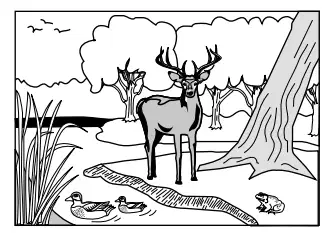
During cellular respiration, what is the direct source of the energy used in the cells of consumers in the ecosystem represented below?
the Sun
enzymes
the atoms making up inorganic molecules
the chemical bonds in organic molecules
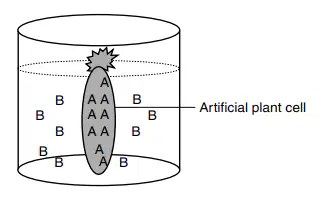
Molecules A and B are commonly found in plant cells. When tested, it was discovered that molecule A quickly passed through the artificial plant cell membrane. Molecule B did not pass through.
The locations of molecules A and B at the beginning of the experiment are shown. Which statement best describes what was observed when the setup was examined 20 minutes later?
Molecule A remained inside the artificial cell and molecule B remained outside.
Only molecule A was found both inside and outside the artificial cell.
Only molecule B was found both inside and outside the artificial cell.
Both molecules A and B were found inside and outside the artificial cell.
Mad cow disease is a fatal disease that destroys brain tissue. Researchers have found that a prion protein, which is an abnormally constructed molecule, is responsible. Which statement best describes the characteristics a protein must have to function correctly?
A protein is a long chain of amino acids folded into a specific shape.
A protein is a long chain of simple sugars folded into a specifi c shape.
A protein is made of amino acids synthesized into a short, circular chain.
A protein is made of simple sugars synthesized into a short, circular chain.
The reproductive structure in a female mammal that produces sex cells is the
ovary
placenta
testes
uterus
The diagram below represents a laboratory experiment involving sucrose and water molecules in a cellophane bag which functions in the same way as dialysis tubing.
Which statement correctly explains the rise of liquid in the tube at the end of the experiment?
The concentration of sucrose molecules increased as water molecules entered the bag. This concentration increase pushed the liquid up the tube.
Water entered the bag due to the lower concentration of water inside. The extra water pushed the liquid up the tube as the bag filled.
Sucrose indicator entered the bag and reacted with the sucrose molecules. The reaction made the bag increase in size and pushed the liquid up the tube.
Sucrose molecules moved out of the bag and up the tube while water moved out, causing the rise of liquid in the tube.
Anhidrosis is the inability to sweat normally. If the human body cannot sweat properly, it cannot cool itself, which is potentially harmful. Anhidrosis most directly interferes with
a feedback mechanism that maintains homeostasis
an immune system response to harmless antigens
the synthesis of hormones in the circulatory system
the enzymatic breakdown of water in cells
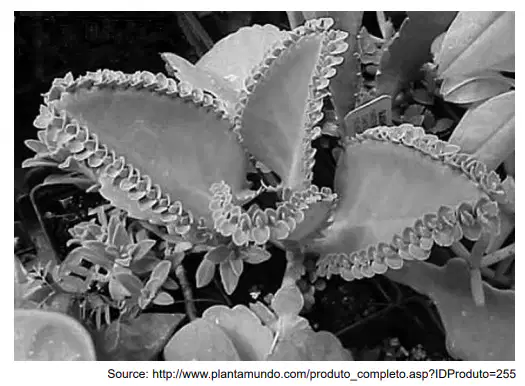
Many tiny plants can be seen developing asexually along the edge of the mother-of-thousands plant leaf, as shown in the photo below. The tiny plants eventually drop to the ground and grow into new plants of the same species.
One way this form of reproduction differs from sexual reproduction is
more genetic variations are seen in the offspring
there is a greater chance for mutations to occur
the offspring and the parents are genetically identical
the new plants possess the combined genes of both parents
The process of transferring energy during respiration occurs in a series of steps. This prevents too much heat from being released at one time. Maintaining an appropriate temperature is beneficial to an organism because
enzymes need a proper range of temperatures to catalyze vital reactions
cellular waste products can only be excreted in cooler temperatures
hormones can only produce antibodies if temperatures are not excessive
nutrients diffuse faster into cells when temperatures are lower
Fruits and vegetables exposed to air begin to brown because of a chemical reaction in their cells. This may result in these foods being thrown out. Some people have found that adding lemon juice (citric acid) to apple slices keeps them from turning brown. The prevention of browning is likely the result of
increasing the concentration of enzymes
increasing the temperature
slowing the rate of enzyme action
maintaining the pH
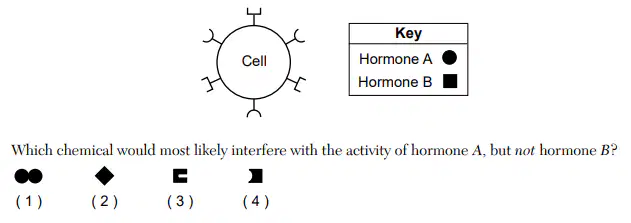
A cell with receptors for two different hormones is represented below.
1
2
3
4
When a plant is in a hot and dry environment, the guard cells may close the stomate openings in the leaves. This action will directly
maintain homeostasis by reducing the evaporation of water
harm the plant by cutting off its oxygen supply
maintain homeostasis by preventing carbon dioxide from entering
harm the plant by cutting off its energy supply
Each of the cells present in a woman contains a complete set of chromosomes. The only exceptions are her
skin cells
nerve cells
egg cells
lung cells

X most likely represents
the nucleus
sunlight
the mitochondrion
carbohydrates
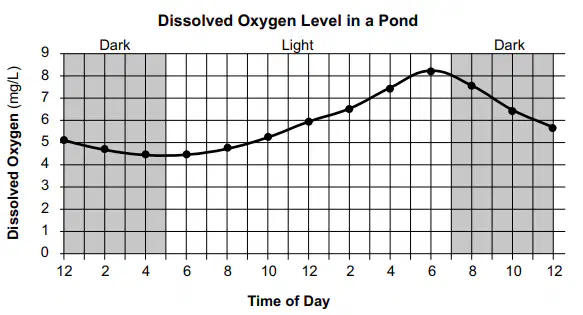
The graph below shows changes in dissolved oxygen in a pond in the summertime over a 24-hour period.
What is the most likely reason for the variation in the dissolved oxygen levels in the pond over the 24-hour period?
The increased light during the day decreases the oxygen produced by photosynthesis.
Photosynthesis produces more oxygen during the day than is used by respiration.
Respiration is reduced at night, so the oxygen produced by photosynthesis increases.
More producers are active at night, so the dissolved oxygen increases.
The graph below shows changes in dissolved oxygen in a pond in the summertime over a 24-hour period.
A large population of fish was introduced into the pond. During which part of the day would these fish affect the dissolved oxygen level in the pond?
both day and night, because respiration is occurring all the time in plants and animals
nighttime, because no respiration is occurring
daytime, because that is when plants are most active
neither day nor night, because only plants produce oxygen
Bacteria reproduce asexually by a process known as binary fission. In binary fission, the bacterium’s single chromosome is copied and the cell splits in half, with each new cell receiving a copy of the chromosome. The biggest advantage that binary fission often has over sexual reproduction is that
there is more genetic variety in the resulting cells
the genetic material comes from two parents
the offspring inherit only favorable genes
a large number of identical offspring are produced
Which two body systems provide humans with the raw materials necessary for their cells to release energy?
muscular and skeletal
endocrine and nervous
digestive and respiratory
reproductive and circulatory
Cells possess structures that perform specific jobs. Which statement correctly pairs a cell structure with a function it performs in the cells?
The cell membrane synthesizes proteins for cell processes.
The mitochondria provide energy for cell processes.
Ribosomes regulate which materials enter and leave the cell.
Vacuoles transfer genetic information from one cell to another.
Cell membranes inside the cells that line the stomach pump hydrogen ions from areas of low concentration inside the cells to areas of higher concentration outside the cells. Which activity produces the ATP that makes this pumping possible?
cellular respiration
active transport
carbohydrate digestion
enzyme synthesis
Usually, snakes reproduce sexually. However, some female copperhead snakes sometimes produce offspring asexually without sperm from a male. Compared with snakes formed by sexual reproduction, the offspring of these asexually reproducing snakes
have more genetic variation
have limited genetic variation
contain more DNA than the parent
grow larger than the parent
Photosynthesis and cellular respiration both involve the gases carbon dioxide and oxygen. Which statement best identifies how these gases are involved in the two processes?
Photosynthesis and cellular respiration both use carbon dioxide and release oxygen.
Cellular respiration uses oxygen and releases carbon dioxide, while photosynthesis uses carbon dioxide and releases oxygen.
Cellular respiration uses carbon dioxide and releases oxygen, while photosynthesis uses oxygen and releases carbon dioxide.
Photosynthesis and cellular respiration both use oxygen and release carbon dioxide.
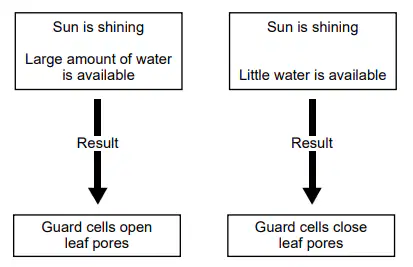
The diagrams below represent a response that occurs in the guard cells of a plant.
The changes in the guard cells’ activity illustrate
an immune response intended to limit water use
passive transport in response to the Sun shining
a feedback mechanism to control water loss
genetic manipulation caused by the presence or absence of water
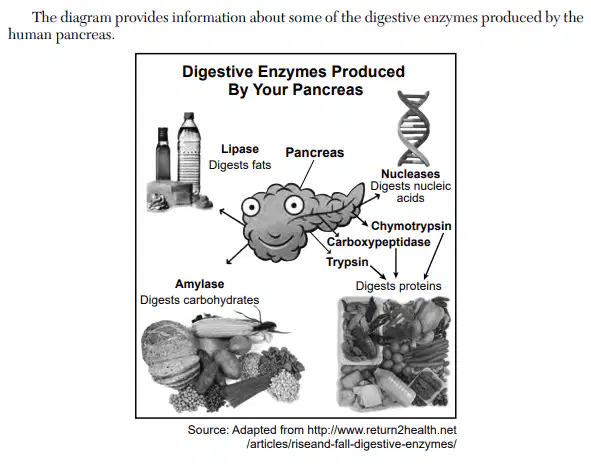
The activity of nuclease enzymes would most likely result in the release of
four different kinds of molecular bases
a variety of different amino acids
glucose
hormones
The end products resulting from the action of amylase would most likely be
starches and proteins
carbon dioxide and water
amino acids
simple sugars
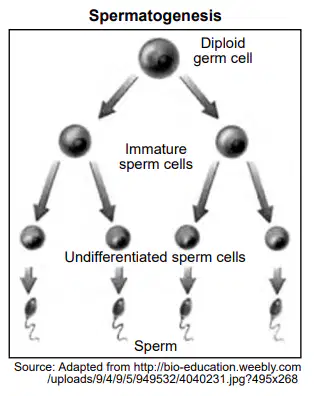
The process of meiotic division in human males is represented below.
This process produces four sperm cells, each with
all of the genetic information contained in the diploid germ cell
one-quarter of the genetic information contained in the diploid germ cell
twice the genetic information found in the diploid germ cell
one-half of the genetic information found in the diploid germ cell

